
Why This Camera & Lens Are Great for Panoramas
If you want to learn how to shoot panorama with Canon EOS R5 & Pentax DA 10-17mm f/3.5-4.5 ED Fisheye, you’re pairing a high-resolution, low-noise full-frame mirrorless body with a compact, ultra-wide fisheye zoom. The R5’s 45MP full-frame sensor (approx. 36×24 mm) delivers excellent dynamic range around base ISO (~14 EV) and clean files up through mid ISOs, while its robust IBIS helps when shooting handheld scouting frames. The pixel pitch is about 4.4 µm, which preserves fine detail that panoramic stitching software can exploit.
The Pentax DA 10–17mm is a diagonal fisheye designed for APS-C. On the R5, that means two practical options: shoot in APS-C crop mode (1.6×, ~17.6MP output) for clean coverage without severe vignetting, or accept strong vignetting on full-frame at the widest end and crop later. For 360° panoramas, APS-C crop mode is the sensible route—your stitcher will still achieve excellent equirectangular output because fisheye lenses require fewer shots for full coverage. Autofocus is less important for panoramas; manual focus at the hyperfocal distance is more consistent. The fisheye’s distortion is expected and beneficial for pano work since stitching software models it accurately.
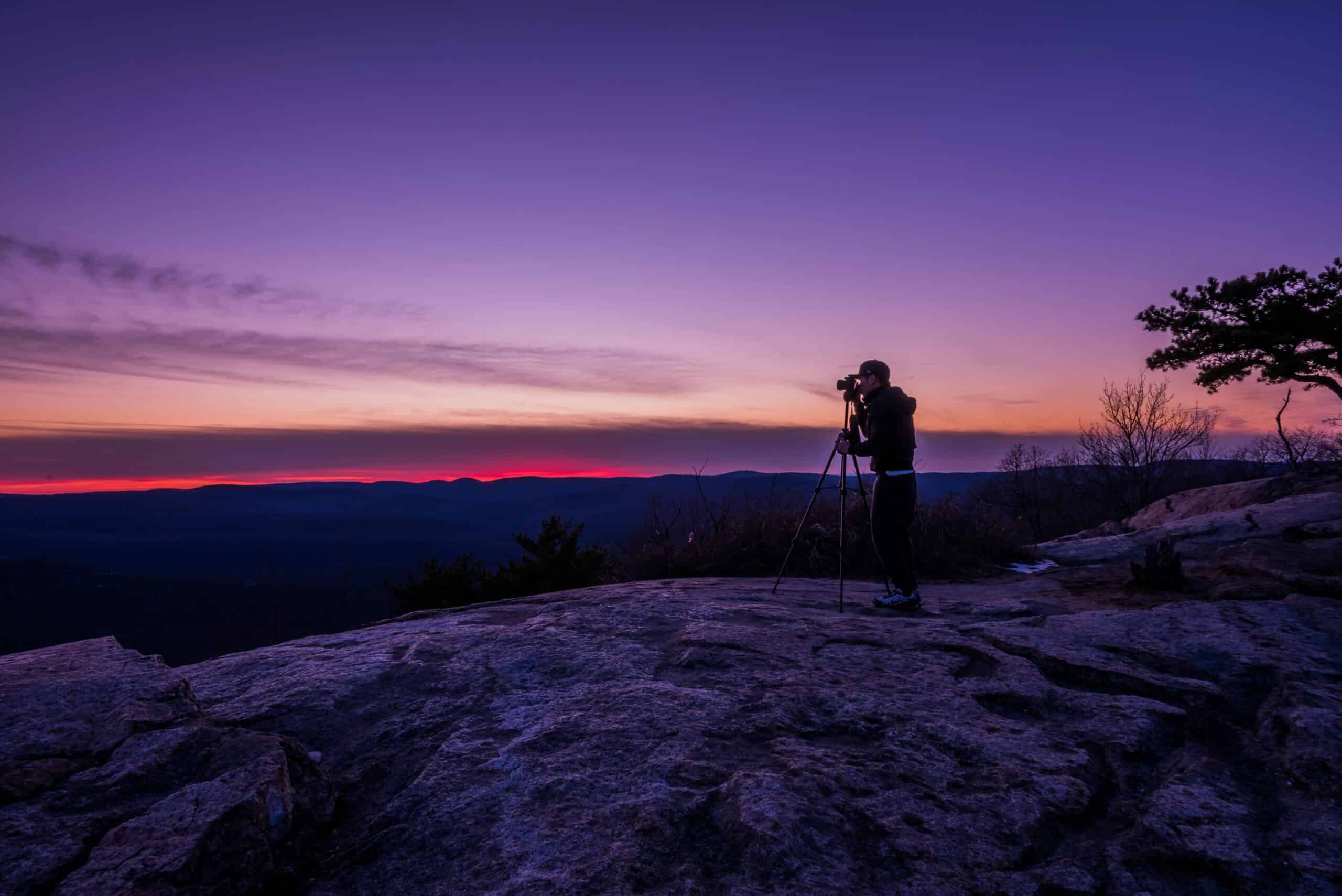
Quick Setup Overview
- Camera: Canon EOS R5 — Full-frame (45MP), excellent DR at ISO 100–200, clean up to ISO 1600; IBIS up to ~8 stops (disable on tripod).
- Lens: Pentax DA 10–17mm f/3.5–4.5 ED Fisheye — diagonal fisheye zoom (APS-C), good central sharpness, typical fisheye CA/purple fringing at edges; use 1.6× crop mode on the R5 for full coverage.
- Estimated shots & overlap (APS-C crop mode):
- At 10mm: 6 shots around (60° yaw) + zenith + nadir, 30–35% overlap.
- At 14mm: 8 shots around (45° yaw) + zenith + nadir, 30% overlap.
- At 17mm: 10 shots around + zenith + nadir, 30% overlap.
- Difficulty: Intermediate (easy with a calibrated panoramic head).
Planning & On-Site Preparation
Evaluate Shooting Environment
Assess light (harsh sun vs. soft shade vs. interiors), reflective surfaces (glass, glossy floors), and movement (people, trees, cars). For windows and glass, keep the front element as close as safely possible (a few centimeters) to reduce reflections and flare. Note wind speed for outdoor or rooftop work—gusts can shift your rig mid-exposure.
Match Gear to Scene Goals
The R5’s DR helps retain highlight detail in skies while keeping shadows clean at base ISO; for interiors and sunsets, bracketed HDR is your friend. The Pentax 10–17’s fisheye field of view minimizes the number of shots required for a full 360 photo. Trade-off: the extreme FOV can amplify flare; shield the lens from direct light and lock white balance for consistent color.
ISO tolerance on the R5: for tripod-based panoramas, aim for ISO 100–200 outside, and ISO 200–800 indoors. ISO 1600 is usable with careful noise reduction, but lower ISO is always better when you can lengthen exposure.
Pre-shoot Checklist
- Power and storage: fully charged batteries, ample fast cards.
- Optics: clean front/rear elements; check sensor for dust.
- Tripod: level the base; verify pano head calibration and tightly secured clamps.
- Safety: weigh down tripod in wind; tether on rooftops/poles; check car mount torque and traffic laws.
- Backup: shoot a second safety round at the same yaw positions; consider a second tilt row for the zenith if you have bright lights overhead.
Essential Gear & Setup
Core Gear
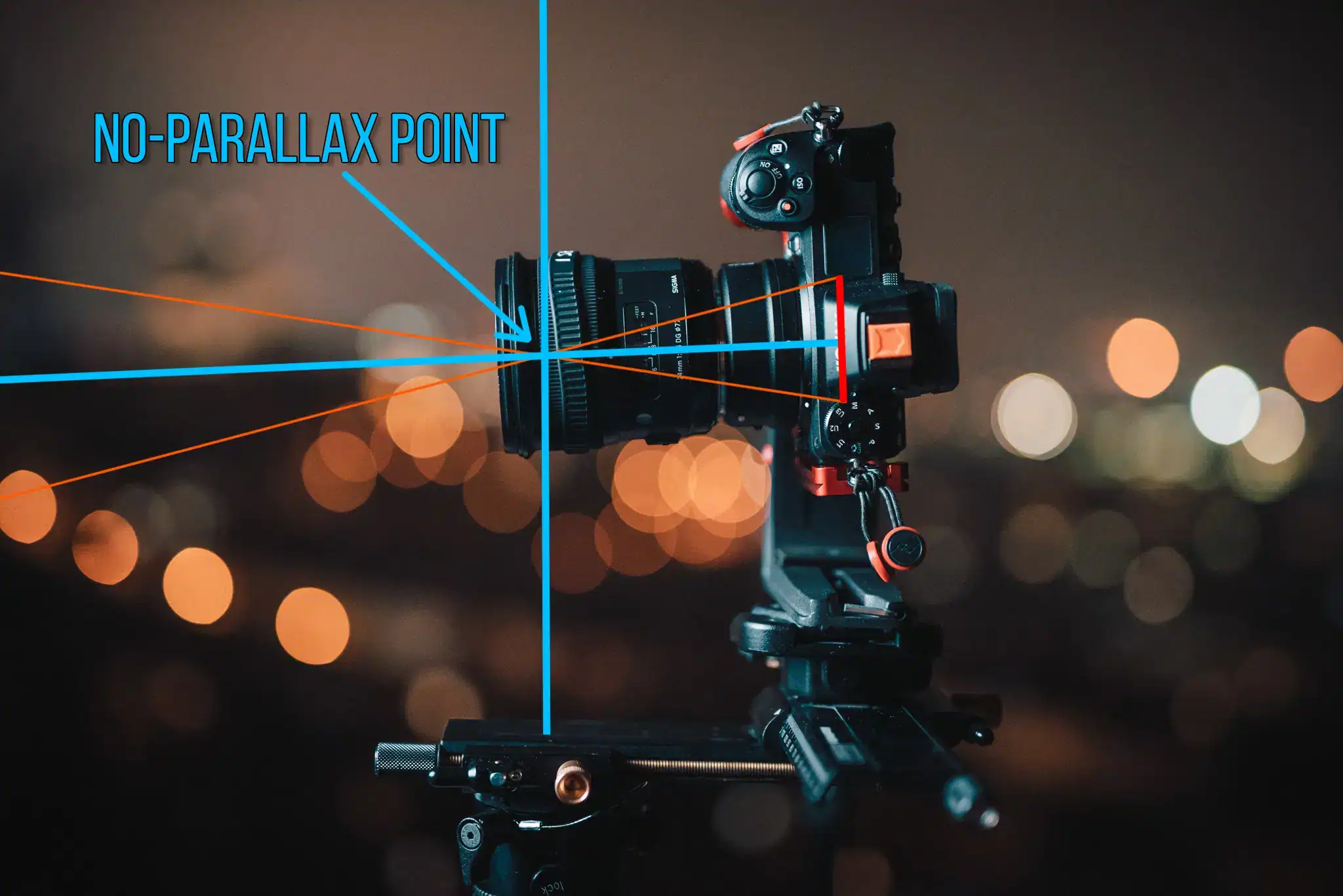
- Panoramic head: enables rotation around the lens’s no-parallax (entrance pupil) point to eliminate parallax. This is crucial for clean stitches, especially indoors with near objects.
- Stable tripod with leveling base: a level yaw axis speeds capture and reduces horizon corrections later.
- Remote trigger or app: use 2-sec timer or remote to prevent vibrations; avoid full electronic shutter under LED lighting to prevent banding.
Optional Add-ons
- Pole or car mount: tether everything; watch wind loading; stay away from overhead lines; pre-check your mount for play and resonance.
- Lighting aids: a small LED panel can lift deep shadows in interiors (avoid moving lights between frames).
- Weather protection: rain covers, silica gel, and a lens hood (if removable) to reduce flare.
Mounting Note: Pentax K to Canon RF
The Pentax DA 10–17mm is a K-mount APS-C lens. Use a K-to-RF adapter. Since this lens lacks an aperture ring, choose an adapter that provides an aperture control lever. Then, enable APS-C crop on the R5: Menu → Shoot → Crop/Aspect ratio → 1.6×.
Step-by-Step Shooting Guide
Standard Static Scenes
- Level and align: level the tripod. On the pano head, slide the camera forward/back until near and far objects remain aligned while yawing—this marks the nodal point for your zoom setting (e.g., 10mm). Make witness marks on your rail for repeatability.
- Manual everything: set Manual exposure, Manual focus, and locked white balance (e.g., Daylight outside, or a Kelvin value indoors). Shoot RAW.
- Capture sequence: at 10mm in APS-C crop, shoot 6 frames around with 60° yaw increments at 0° tilt, then shoot the zenith (+60 to +90°, 2 shots 180° apart if needed) and a nadir frame for tripod patching.
- Nadir cleanup: either shoot a handheld nadir with the tripod moved aside, or plan to patch in post.
HDR / High Dynamic Range Interiors
- Bracket ±2 EV (3 or 5 frames) at each yaw position to balance bright windows and shadowy rooms. The R5’s AEB can automate this; shoot in high-quality RAW.
- Keep WB locked to avoid color shifts between brackets. Consider f/8 for sharpness and consistent depth of field; let shutter speed vary.
Low-Light / Night Scenes
- Use tripod, remote/timer, and disable IBIS. Start at f/4–f/5.6, 1/30–1/60 s, ISO 400–800. If stars or city lights are present, lean on longer shutters rather than higher ISO.
- Enable Long Exposure NR only if needed; it doubles capture time per frame. Many prefer to apply noise reduction in post.
Crowded Events
- Two-pass method: first pass quickly for coverage, second pass waiting for gaps to reduce ghosting. Use masks during stitching to choose the cleanest regions.
- Keep shutter at 1/200 s or faster if you want to freeze moving people and flags. Consider a slightly higher ISO (400–800).
Special Setups (Pole / Car / Drone)
- Secure and tether: all clamps closed, safety lines attached, and a spotter if possible. Balance the pole; avoid swinging.
- Vibration and wind: use faster shutter speeds (1/250–1/500 s) and shoot an extra overlap to help the stitcher reject blurred frames.
Recommended Settings & Pro Tips
Exposure & Focus
| Scenario | Aperture | Shutter | ISO | Notes |
|---|---|---|---|---|
| Daylight outdoor | f/8–f/11 | 1/100–1/250 | 100–200 | Lock WB to Daylight; shield front element from sun. |
| Low light/night | f/4–f/5.6 | 1/30–1/60 | 400–800 | Tripod, remote; disable IBIS on tripod. |
| Interior HDR | f/8 | Bracket ±2 EV | 100–400 | Expose for midtones; blend in post. |
| Action / moving crowd | f/5.6–f/8 | 1/200+ | 400–800 | Two-pass capture; mask in post. |
Critical Tips
- Manual focus near the hyperfocal distance: at 10mm APS-C and f/8, focusing around 0.6–1 m keeps foreground to infinity acceptably sharp.
- Nodal calibration: start with the camera slid forward until the entrance pupil sits roughly above the yaw axis; refine by aligning a near object against a far object and yawing. Make and label marks for 10mm, 14mm, 17mm positions.
- White balance lock: mixed light can vary by angle; a fixed Kelvin value (e.g., 3200–3600 K for tungsten-heavy interiors) improves stitch consistency.
- RAW > JPEG for panos: wider dynamic range and better CA/fringing correction around fisheye edges.
- IBIS and stabilization: turn off IBIS on tripod to avoid sub-pixel sensor shifts that complicate stitching; leave it on only for handheld scouting shots.
Custom Modes on R5
- C1: Daylight pano — M mode, ISO 100, f/8, target shutter, WB Daylight, IBIS Off, timer 2 s.
- C2: Interior HDR — M mode, f/8, ISO 100–200, AEB ±2 EV (3–5 frames), WB Kelvin, IBIS Off.
Field-Tested Scenarios & Shot Counts
Indoor Real Estate (tight rooms)
Use 10mm, APS-C crop, 6 around + zenith + nadir. Bracket ±2 EV. Keep the lens close to room center to minimize distortion on walls. Watch for reflections in TVs and mirrors; shoot extra frames if moving subjects appear in windows or hallways.
Outdoor Sunset (high contrast)
10–14mm, 6–8 around + Z + N. Bracket ±2 EV or even ±3 EV if the sun is in frame. Start just before sunset and repeat after the sun dips to reduce extreme highlights. Try a quick second pass for denoised sky blending.
Event Crowds (motion)
10mm, 6 around at 1/200 s or faster, ISO 400–800, no HDR to keep timing short. Shoot two full rotations, then mask the cleaner segments in post. Ask subjects to pause briefly if possible.
Rooftop/Pole Shooting
14mm often balances coverage and reduced flare from lights. Use 8 around + Z + N, faster shutter (1/250–1/500 s), and shoot additional overlap. Always tether your rig and mind wind gusts.
Stitching & Post-Processing
Software Workflow
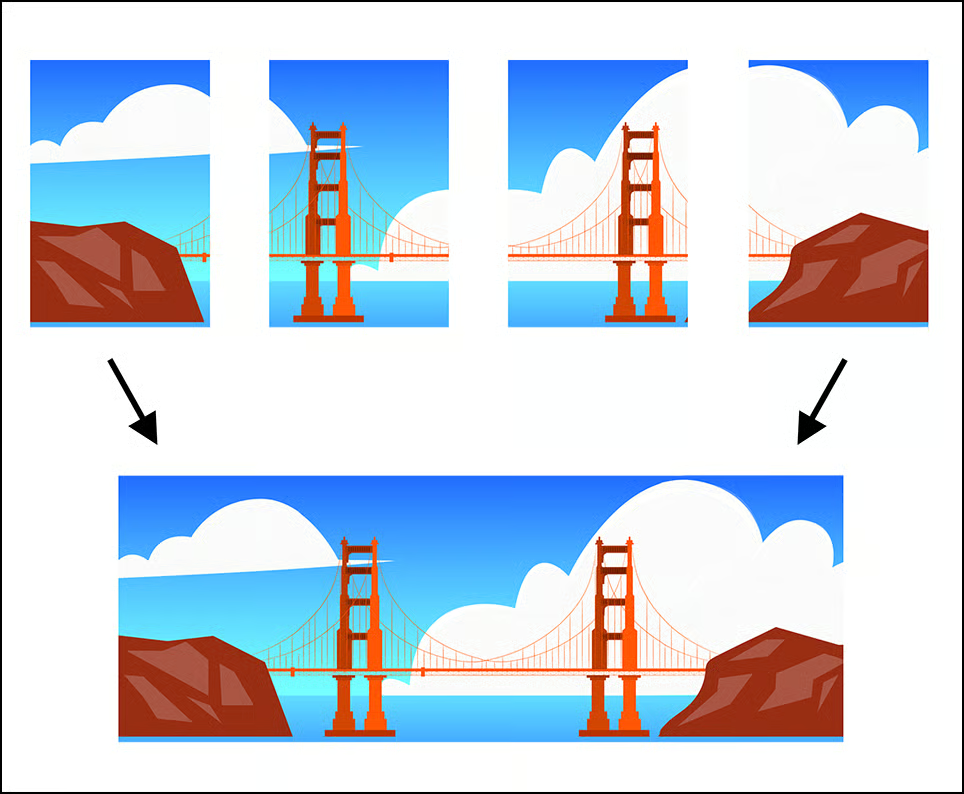
Import RAWs, correct chromatic aberration and vignetting lightly, and keep WB consistent. In PTGui or Hugin, set lens type to fisheye, use APS-C crop setting in your metadata or specify the sensor size manually. Fisheye shots stitch easily with 25–35% overlap; 6-around is typically robust. Optimize control points, straighten horizon, and check for ghosts around moving subjects. For the R5 APS-C crop + 10mm fisheye with 6-around, expect 8K–12K wide equirectangular outputs with clean detail depending on your overlap and bracket count. See spherical resolution guidance for DSLRs to estimate final pano resolution at various focal lengths.
Many pros favor PTGui for speed and masking tools, while Hugin remains an excellent open-source alternative. Lightroom/Photoshop can handle simple panos, but dedicated tools are faster for full 360 photos and HDR blending. For very bright windows, fuse HDR first, then stitch; or use PTGui’s built-in HDR merge per camera position.
Cleanup & Enhancement
- Nadir patch: clone manually, use content-aware fill, or replace with a logo patch. AI tools help when floor texture is repetitive.
- Refine color: adjust WB, curves, and use selective HSL to tame color casts from mixed lighting.
- Noise reduction: apply tasteful NR for interiors/night; mask to protect detail in edges and signage.
- Leveling: set horizon and verticals; correct roll/yaw/pitch inside PTGui or after export.
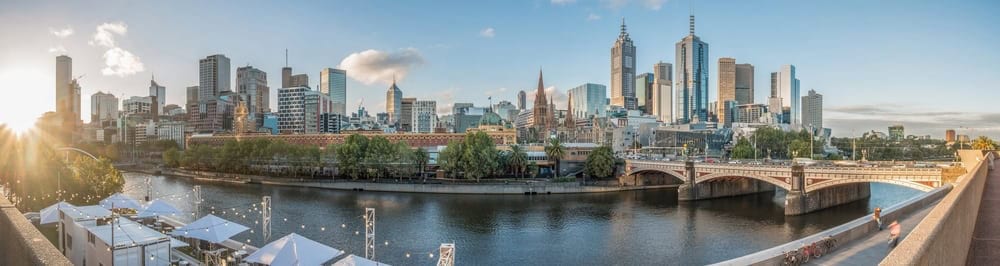
- Export: equirectangular 2:1 at 8K–12K for web/VR platforms; save a 16-bit TIFF master plus a high-quality JPEG for delivery.
Disclaimer: verify each software’s latest documentation, especially for RAW handling and HDR workflows.
Useful Tools & Resources
Deep Dives & Tutorials
To master nodal alignment and high-end VR workflows, see this panoramic head tutorial for step-by-step alignment tips. Panoramic head setup guide
For an overview of DSLR/mirrorless 360 capture and stitching fundamentals, this VR creation guide is a strong reference. Using a DSLR/mirrorless to shoot and stitch a 360 photo
PTGui remains a top performer for complex panoramas and HDR merges, with powerful masking and optimization. PTGui review and why it’s favored by pros
Estimate output resolution and plan your capture with this technical reference. DSLR spherical resolution (Panotools)
Video: Hands-on Panoramic Head Setup
Hardware Shortlist
- Panoramic heads: Nodal Ninja, Leofoto, or equivalent with fore-aft and vertical adjustment.
- Tripods: carbon fiber legs, leveling base, hook for ballast.
- Remotes: wireless or app-based triggers; 2-sec timer as backup.
- Mounts: pole extensions, car suction rigs (industrial grade), safety tethers.
Disclaimer: brand names are for search reference; confirm compatibility and safety ratings on official sites.
Common Mistakes & How to Avoid Them
- Parallax error: always rotate around the no-parallax point. Recalibrate if you change focal length.
- Exposure flicker: use full Manual exposure and locked white balance; don’t let auto settings drift across yaw angles.
- Tripod shadows/footprint: shoot a dedicated nadir or patch later.
- Ghosting from movement: capture two passes and mask; raise shutter speed if needed.
- Night noise: keep ISO modest (400–800), use longer exposures, and apply targeted noise reduction.
- IBIS on tripod: disable to prevent micro-jitter that confuses the stitcher.
Frequently Asked Questions
- Can I shoot handheld panoramas with the Canon EOS R5?
Yes for quick tests or casual 360s, but expect more stitching corrections. Use high shutter speeds (1/200+), IBIS On, and ample overlap (40%+). For professional results, a leveled tripod with a pano head is strongly recommended.
- Is the Pentax DA 10–17mm wide enough for a single-row 360?
In APS-C crop mode at 10mm, yes—6 shots around plus zenith and nadir is a reliable pattern. At 14–17mm, go to 8–10 around. Always verify coverage by checking the zenith and nadir gaps.
- Do I need HDR for interiors with bright windows?
Usually. Bracket ±2 EV (3–5 frames) at each position. The R5’s clean base ISO files blend well, preserving exterior views and interior details without pushing shadows too hard.
- How do I avoid parallax issues with this setup?
Mount the R5 on a proper panoramic head and align rotation with the lens’s entrance pupil for your chosen focal length (e.g., 10mm). Calibrate by aligning a near and far object and yawing until relative positions don’t shift.
- What ISO range is safe on the EOS R5 for low light panoramas?
On a tripod, aim for ISO 100–400 for best quality. ISO 800 is fine for many scenes; ISO 1600 can work with careful noise reduction. Favor longer shutter speeds over raising ISO when possible.
Safety, Reliability & Data Management
On rooftops or poles, always use safety tethers and consider wind loading. Keep bystanders clear of tripod legs. In busy environments, warn nearby people before rotating the rig. Protect gear from moisture; carry a microfiber cloth for condensation on the fisheye front element. For data integrity, shoot to dual cards if possible (RAW to primary, JPEG previews to secondary) and back up to a mobile drive after the session. Keep a second exposure round when time allows—insurance against missed frames or motion artifacts.
Wrap-Up
That’s how to shoot panorama with Canon EOS R5 & Pentax DA 10-17mm f/3.5-4.5 ED Fisheye: leverage the R5’s dynamic range and clean files, use APS-C crop for full lens coverage, calibrate your panoramic head for the fisheye, and capture efficient 6- to 10-shot rotations with dependable overlap. With solid technique, careful WB/exposure control, and a disciplined post workflow in PTGui or Hugin, you’ll produce sharp, immersive 360 photos suitable for virtual tours, editorial features, or social VR.