Why This Camera & Lens Are Great for Panoramas
If you want to know how to shoot panorama with Canon EOS R5 & Peleng 8mm f/3.5, you’re pairing a high-resolution, modern mirrorless body with a classic ultra‑wide fisheye. The Canon EOS R5 is a 45MP full-frame (36×24 mm) camera with excellent dynamic range at base ISO (around 13.5 EV), Dual Pixel AF II, and in-body stabilization (IBIS). Its pixel pitch is roughly 4.39 µm, which means it resolves fine detail well—useful when you need to enlarge an equirectangular output or deliver crisp virtual tours. The Peleng 8mm f/3.5 is a manual-focus, manual-aperture circular fisheye that covers 180°+ field of view. On a full-frame sensor, it typically produces a circular image with black borders, which is ideal for 360×180 capture with the minimum number of shots. Distortion is strong (as with all fisheyes), but stitching tools correct this easily when you use a calibrated panoramic head.
This combo excels because the fisheye reduces the number of frames required, speeding up capture on location. The R5’s robust RAW files preserve highlight and shadow detail for HDR composites, and its clean ISO 100–800 performance keeps noise controlled. Note that the Peleng requires a mechanical adapter to the Canon RF mount and offers no electronic communication; you’ll focus and set aperture manually. That’s not a downside for panoramas—manual control is preferred for consistency across frames.
Quick Setup Overview
- Camera: Canon EOS R5 — Full-frame, 45MP (8192×5464), excellent base ISO DR (~13.5 EV), IBIS up to 8 stops (disable on tripod).
- Lens: Peleng 8mm f/3.5 — circular fisheye, full manual, 180°+ FOV, best sharpness around f/5.6–f/8, moderate CA and flare susceptibility.
- Estimated shots & overlap: With an 8mm circular fisheye on full-frame: 3–4 shots around at 120°–90° spacing; add a dedicated nadir for clean tripod removal. Aim for ~30–40% overlap between frames. In tight interiors or near objects, prefer 4-around + nadir for safer coverage.
- Difficulty: Easy to intermediate (easy shooting, but you must calibrate the nodal point for clean stitching).
Planning & On-Site Preparation
Evaluate Shooting Environment
Look for moving subjects (people, trees, traffic), reflective glass, bright windows, and overhead light sources. For interiors with glass, position the setup at least 0.5–1 m away from glass and avoid pointing directly into spotlights to reduce flare. In very bright windows vs dark rooms, plan for HDR bracketing. Outdoors, watch the sun position; slight pivots can minimize lens flare and ghosting with ultra-wides. Avoid shooting over reflective floors or very near objects unless you’ve nailed your no-parallax alignment.
Match Gear to Scene Goals
The R5’s high resolution and strong dynamic range pair perfectly with the Peleng when you need fast 360 capture. The fisheye minimizes frame count, which reduces ghosting from movement and speeds up pole/rooftop work. ISO tolerance is excellent: keep to ISO 100–200 for best detail; in dim interiors, ISO 400–800 on the R5 is still clean enough for high-quality tours when exposed properly. Fisheyes do exaggerate edges—it’s fine for equirectangular output, but avoid placing straight lines near the periphery if you plan traditional wide pano crops.
Pre-shoot Checklist
- Charge batteries, clear cards, pack microfiber for lens and sensor cleaning.
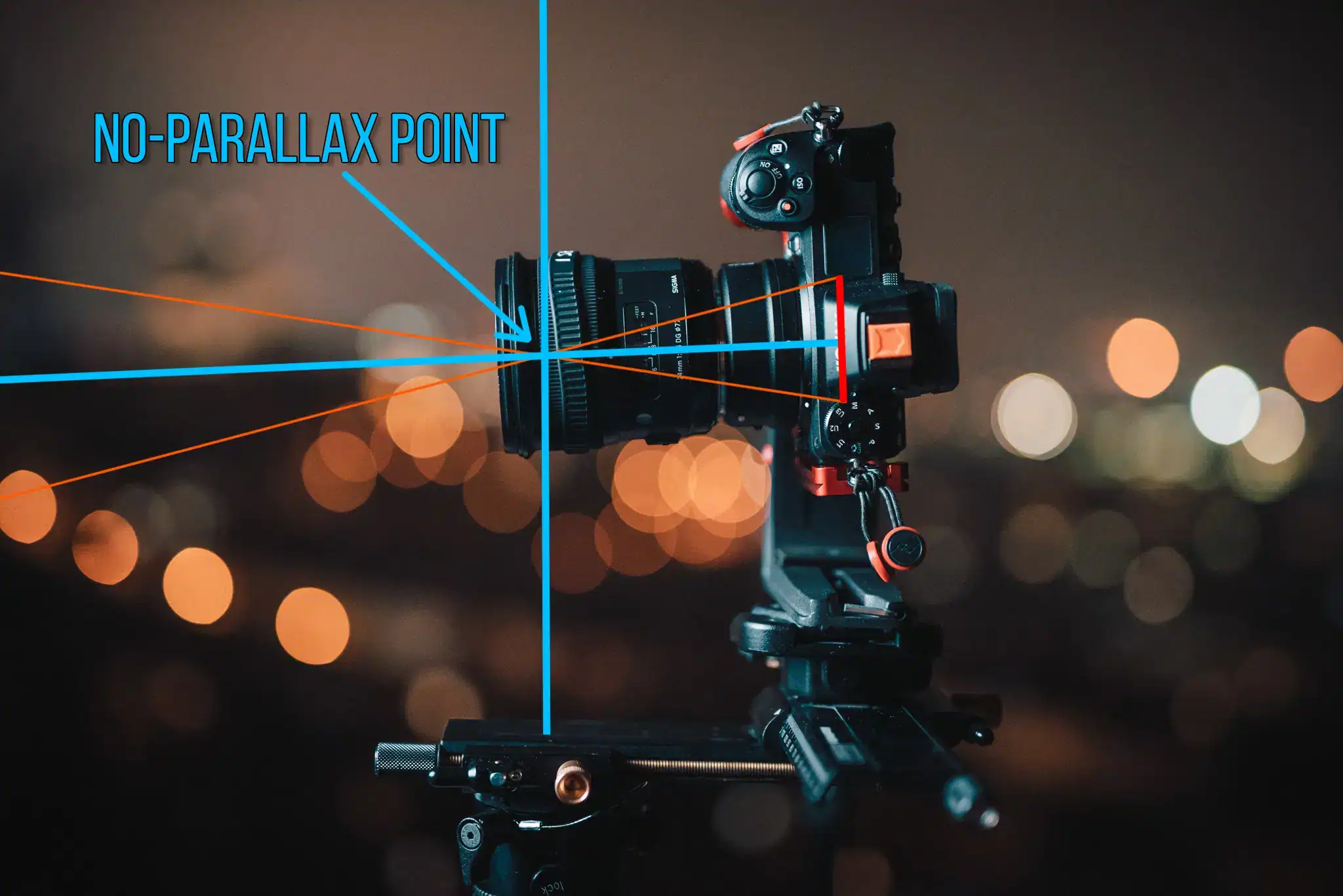
- Level your tripod; verify your panoramic head is calibrated for the Peleng’s entrance pupil (no-parallax point).
- Safety checks: secure your tripod in wind; on rooftops or car mounts, use tethers and verify clamps; avoid traffic and power lines.
- Backup workflow: shoot an extra safety round—either a second ring or an additional nadir—to rescue difficult stitches.
Essential Gear & Setup
Core Gear
- Panoramic head: lets you rotate the camera around the lens’s entrance pupil to eliminate parallax between near/far objects. Calibrate once and note down rail positions for this lens.
- Stable tripod with leveling base: a leveling base saves time and keeps horizons consistent across frames.
- Remote trigger or Canon Camera Connect app: avoid vibrations. Use a short shutter delay if you don’t have a remote.
Optional Add-ons
- Pole or car mount: only for experienced users. Wind and vibration can ruin sharpness and cause drift—always use a safety tether and test at lower speeds/height first.
- Small LED panels for low-light interiors to lift shadows without changing color temperature too much.
- Rain covers and silica gel packs for damp or coastal shoots; a lens hood or ring can reduce flare but mind fisheye coverage.
Video: Set Up Your Panoramic Head
Seeing the process is often easier than reading it. The short video below shows the essentials of leveling, rail adjustments, and avoiding parallax.
For an in-depth written walkthrough, this panoramic head tutorial from 360 Rumors is excellent. How to set up a panoramic head
Step-by-Step Shooting Guide
Standard Static Scenes
- Level the tripod and align the nodal point. Use two vertical objects (one near, one far) and rotate—adjust your rails until there’s no relative shift. Record your rail settings for the Peleng on the R5 so you can set up fast next time.
- Set manual exposure and lock white balance. For consistency across frames, shoot Manual mode. Pick a fixed Kelvin WB (e.g., 5200K daylight outside; 3200–4000K under tungsten/LED). Disable Auto Lighting Optimizer and any exposure bracketing unless you’re doing HDR.
- Capture the round. With an 8mm circular fisheye on full frame:
- Fast method: 3 shots around at 120° yaw increments; add a nadir if you need a clean floor patch.
- Safe method (recommended near objects): 4 shots around at 90° yaw increments; add a dedicated nadir.
Aim for 30–40% overlap. Rotate the head using degree marks. Use EFCS (electronic first curtain) or a 2-second timer to avoid vibrations.
- Take the nadir. Tilt up or remove the camera briefly to capture a clean ground plate for tripod removal. Many editors let you patch with an external graphic or clone stamp.
HDR / High Dynamic Range Interiors
- Enable bracketing. The R5 supports AEB; common pano sets are 3 or 5 frames at ±2 EV. For bright windows, 5× ±2 EV often preserves both highlights and deep shadows.
- Lock white balance. Mixed lighting will shift color—keep WB fixed. Shoot RAW for most latitude.
- Work methodically. Shoot all brackets per angle before rotating to the next yaw. Use a remote or set a delay to avoid micro-shake.
Low-Light / Night Scenes
- Use a tripod and disable IBIS. On a tripod, IBIS can introduce sensor drift—turn it off. Use ISO 100–400 where possible; ISO 800 is still clean on the R5 with proper exposure.
- Slow shutter, steady technique. It’s fine to shoot 1/2–2 seconds at f/4–f/5.6 on a locked-down setup. Use EFCS or full electronic shutter to minimize vibration and shutter shock.
- Avoid bright point lights hitting the fisheye. A small change in yaw can reduce flare significantly.
Crowded Events
- Two-pass approach. Do a fast first pass to lock coverage, then a second pass for clean plates when people move out of key areas.
- Shorten intervals. With only 3–4 frames per sphere, you can wait for micro-gaps; later blend in post using masks.
- Mind security and safety. Keep gear tethers short and be visible; ask an assistant to spot for you.
Special Setups (Pole / Car / Drone)
- Pole: Use a carbon pole and a compact head. Keep the pole as vertical as possible and increase overlap (4-around + nadir). Wind is the enemy—stabilize with a guy line if needed.
- Car mount: Keep speed low, avoid strong vibrations, and consider higher shutter speeds (1/200–1/500) to freeze motion. Always use a safety tether and test in a controlled area.
- Drone: This lens/body combo is not drone-friendly; consider integrated 360 cameras for aerials.
Recommended Settings & Pro Tips
Exposure & Focus
| Scenario | Aperture | Shutter | ISO | Notes |
|---|---|---|---|---|
| Daylight outdoor | f/8–f/11 | 1/100–1/250 | 100–200 | Lock WB (daylight) |
| Low light/night | f/4–f/5.6 | 1/30–1/60 (tripod) or longer | 400–800 | Tripod & remote; avoid pushing ISO too far |
| Interior HDR | f/8 | Bracket ±2 EV | 100–400 | Balance windows & lamps |
| Action / moving subjects | f/5.6–f/8 | 1/200+ | 400–800 | Freeze motion, double pass |
Critical Tips
- Manual focus: Set the Peleng to manual focus, use magnified live view. For most scenes, focus slightly past 1 m at f/8 to approximate hyperfocal. Take a quick test shot and zoom in.
- Nodal calibration: The Peleng’s entrance pupil sits forward of the lens mount—use the near/far alignment method and mark your rail positions with tape or a scribe line. Recheck if you change adapters.
- White balance lock: Use a fixed Kelvin rather than AWB to avoid stitching seams from color shifts.
- RAW over JPEG: The R5’s CR3 files have far more latitude for HDR, highlight recovery, and noise reduction.
- Stabilization: Disable IBIS on tripod to prevent sub-pixel drift between frames. The Peleng has no optical IS, so there’s nothing to switch on the lens.
- Menu must-do: With a manual lens, enable “Release shutter without lens” in the R5’s menu so the camera fires without electronic contacts.
Stitching & Post-Processing
Software Workflow
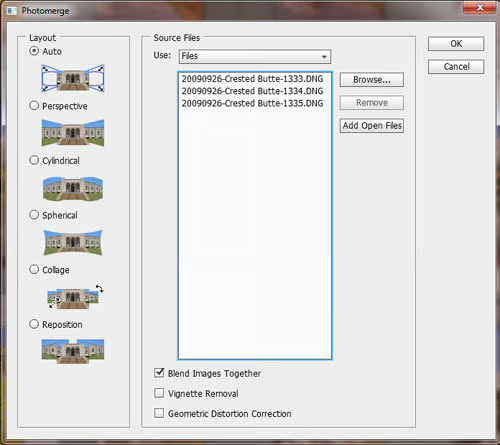
Fisheye panoramas stitch reliably in PTGui, Hugin, and other dedicated tools. Import all frames (or merged HDRs), set lens type to fisheye (circular), and specify focal length (8 mm). With a circular fisheye, 3–4-around workflows are common—your software will handle defishing and optimize control points. Overlap in the 25–35% range is a good starting point. If you shot HDR brackets, merge them first to a middle-toned 16-bit TIFF or use PTGui’s built-in exposure fusion. PTGui’s optimizer and masking tools make short work of minor ghosting or parallax from moving subjects. For more general guidance, see this PTGui review and workflow overview. Fstoppers PTGui review
Cleanup & Enhancement
- Nadir patch: Export a layered PSD/TIFF and use masks or a floor patch logo. Some AI tools remove tripods quickly, then finish with manual cloning for perfection.
- Color and noise: Apply global color corrections first, then local adjustments. Night panoramas benefit from gentle luminance NR and color NR in the shadows.
- Leveling: Use the horizon/vertical straightening tools in your stitcher. Set pitch/roll/yaw precisely for headset or web viewers.
- Export: For VR/360 players, export equirectangular 2:1 at 12k–16k on the R5 if your system can handle it; for web tours, 8k is often sufficient and fast.
For platform-specific recommendations and file formats (JPG vs TIFF, bit depth, metadata), consult the Oculus Creator docs on DSLR/MLS workflows. Using a DSLR or mirrorless camera to shoot and stitch a 360 photo
Useful Tools & Resources
Software
- PTGui (pro-grade stitching, masks, HDR/fusion)
- Hugin (open source, powerful control point tools)
- Adobe Lightroom / Photoshop (HDR merge, color, cloning)
- AI tripod removal or inpainting tools (optional speed-ups)
Hardware
- Panoramic heads: Nodal Ninja, Leofoto, or similar
- Carbon fiber tripods with leveling base
- Wireless remote shutter (or app)
- Pole extensions, car suction mounts with safety tethers
Disclaimer: Names are for search reference. Verify the latest specifications and manuals for your gear and software.
Want a broad overview of gear and lens choices for virtual tour capture? This updated DSLR/MLS guide offers practical comparisons. DSLR virtual tour guide
Common Mistakes & How to Avoid Them
- Parallax error: Always align the entrance pupil; a few minutes of calibration saves hours of retouching.
- Exposure or color shifts: Shoot manual exposure and fixed white balance; disable auto ISO and image “optimizers.”
- Tripod shadows and missing nadir: Capture a dedicated nadir frame and patch it cleanly in post.
- Ghosting from movement: Use 4-around for more overlap; shoot two passes and mask in post.
- Night noise: Keep ISO low, expose to the right without clipping, and use longer shutter times on a solid tripod.
- IBIS drift: Turn off in-body stabilization on a tripod to maintain pixel-to-pixel alignment.
Field-Tested Scenarios
Indoor Real Estate
Use 4-around + nadir at f/8, base ISO, and bracket 5× ±2 EV for bright windows. Place the tripod away from mirrors and glass to avoid self-reflections. The R5’s files tolerate deep shadow lifts; keep highlights safe and correct interior color casts later.
Outdoor Sunset
Shoot 3-around for speed if there’s wind; add an extra frame toward the sun for safety. Try f/8, ISO 100, and keep flare under control by shading the lens between frames if needed. A quick second pass after the sun sets can provide cleaner sky plates to blend.
Event Crowds
Go 3-around and work quickly. Time your rotations to when groups move. In post, mask overlapping areas to remove duplicates or ghosts. Use higher shutter speeds (1/200+) and ISO 400–800 to freeze motion.
Rooftop or Pole
Prefer 4-around for resilience and 1/250 s or faster if wind is present. Keep the pole vertical, tether everything, and avoid overhead lines. Remember that even slight flex can cause misalignment—accept smaller apertures and a touch more ISO to keep shutter speeds safe.
Car-Mounted Capture
Only on closed roads or controlled environments. Use a low car speed, shoot 4-around with 1/500 s, and mask moving ground/objects later. Safety first: double-check suction cups, add a secondary tether, and test your setup at a standstill before rolling.
Safety & Gear Protection
Fisheye panoramas invite ambitious placements—rooftops, poles, and roadside shots. Always prioritize safety. Use tethers, keep away from edges and traffic, and watch for overhead hazards. In wind, shorten the pole and add guy lines. In rain or spray, use a rain cover and wipe the Peleng’s front element between shots to avoid water spots that are hard to remove in stitching.
Frequently Asked Questions
-
Can I shoot handheld panoramas with the Canon EOS R5?
Yes, but it’s risky with a circular fisheye if you have near objects. Handheld 3‑around can work outdoors with distant subjects, yet you’ll likely see parallax near railings or furniture. A small travel tripod with a pano head dramatically improves consistency and stitch quality.
-
Is the Peleng 8mm f/3.5 wide enough for single‑row 360?
Yes. On full-frame, it’s a circular fisheye with 180°+ coverage, so 3–4 shots around typically cover the full sphere; add a nadir for a clean floor. For tight interiors or near objects, use 4-around for more overlap.
-
Do I need HDR for interiors with bright windows?
Usually. Window highlights can be several stops brighter than interiors. Bracket 3–5 frames at ±2 EV and merge before stitching (or use exposure fusion in PTGui). The R5’s RAWs handle merges well with minimal noise.
-
How do I avoid parallax issues with this setup?
Calibrate the entrance pupil on your panoramic head: align a near and far object, rotate the rig, and adjust the rails until there’s no relative movement. Record the rail distances for the Peleng and your adapter so you can repeat the setup quickly.
-
What ISO range is safe on the EOS R5 in low light?
For tripod-based panoramas, ISO 100–400 is ideal; ISO 800 is still very usable. If you must go higher, expose carefully and plan for targeted noise reduction in post.
-
Can I set up Custom Modes (C1/C2) for pano?
Yes—save manual exposure, fixed WB, manual focus aids, EFCS, and IBIS Off. It speeds up field work and prevents missed settings after a battery swap.
-
How can I reduce flare with a fisheye?
Use your body or a flag to shade the lens between frames, avoid pointing directly at point light sources when possible, and consider a slight tilt or yaw adjustment to keep the sun/lamps just outside the frame boundary in at least some shots to blend later.
-
What’s the best tripod head for this?
A compact panoramic head with fore/aft and lateral rails (e.g., Nodal Ninja, Leofoto) is ideal. Degree markings help precise yaw increments for 3–4-around capture. A leveling base under the head saves time.
Bonus: Pole Use Example
When you need a higher vantage point for crowds or property exteriors, a pole rig keeps your footprint small while still enabling a full 360 capture. Be mindful of wind, stabilize the base, and increase your overlap to 4-around plus a nadir.
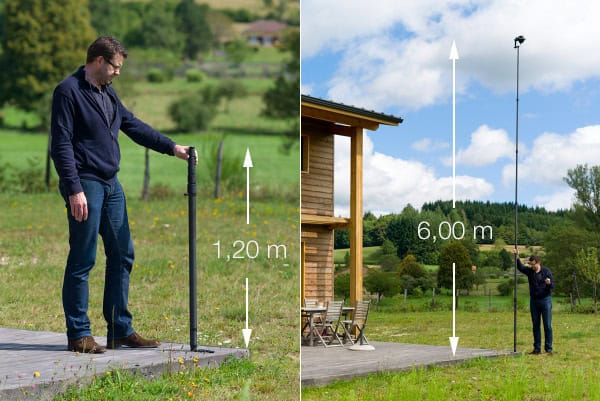
If you’re curious about resolution trade-offs with different lenses and shot counts, the Panotools wiki has a helpful reference on spherical resolution. DSLR spherical resolution
Further Reading
For broader panorama technique and community-sourced tips, check this Q&A thread covering best practices for 360 panoramas. Best techniques to take 360 panoramas