
Why This Camera & Lens Are Great for Panoramas
The Canon EOS R5 paired with the Laowa 4mm f/2.8 Circular Fisheye is a uniquely fast, ultra‑wide combination for 360° work. The R5’s 45MP full‑frame sensor (36×24 mm, ~4.39 µm pixel pitch) delivers excellent detail and ~13–14 stops of usable dynamic range at base ISO 100, while reliable color science and strong low‑ISO noise performance make clean, flexible RAWs for stitching. The Laowa 4mm is a fully manual circular fisheye that projects a round image with an immense ~210° diagonal field of view. That means you can cover a full sphere with fewer frames than with rectilinear or diagonal fisheyes—ideal when time is limited or people are moving.
Compatibility note: the Laowa 4mm f/2.8 Circular Fisheye is designed for APS‑C/MFT coverage and is available in several mirrorless mounts, including RF in many regions. On the EOS R5, enable 1.6× crop (or let the camera auto‑crop if supported). You’ll get an APS‑C crop of ~17 MP per frame with a circular image—still plenty for high‑quality virtual tours. Compared with rectilinear lenses, a circular fisheye reduces the number of shots required, though you’ll have pronounced distortion at the perimeter of the circle (which stitching software understands). The R5’s IBIS is excellent, but when shooting on a tripod, turn it off to prevent micro‑blur during long exposures.
Quick Setup Overview
- Camera: Canon EOS R5 — Full Frame (36×24 mm), 45MP, excellent DR at ISO 100–200 (≈13–14 stops), strong color depth, reliable AF even in low light.
- Lens: Laowa 4mm f/2.8 Circular Fisheye — manual focus/aperture, circular projection (~210° diagonal FOV), very wide; typical lateral CA present but manageable in post; sharp center from f/4, best overall consistency around f/5.6–f/8.
- Estimated shots & overlap (field tested with circular fisheye):
- 2 around at 180° yaw can cover 360×180 in many scenes (fastest), but seams may be tricky with close foregrounds.
- 3 around at 120° yaw is the safe standard; optional handheld nadir to cover tripod.
- Overlap target: 25–35% between adjacent frames.
- Difficulty: Easy–Moderate (2/5) — fewer frames, but nodal alignment still matters.
Planning & On-Site Preparation
Evaluate Shooting Environment
Assess light, motion, and reflective surfaces. For interiors, note window hotspots and mixed color temperatures (daylight vs tungsten). If you must shoot through glass, get the fisheye front element close to the pane (2–5 cm) and use a black cloth/hood around the lens to minimize reflections. Outdoors, watch for low sun angles that can flare a circular fisheye; use your body or a flag to shade the lens where possible.
Match Gear to Scene Goals
The EOS R5 & Laowa 4mm combo excels when you need speed with high quality. The R5’s dynamic range and color at base ISO keep highlights under control while preserving shadow detail. For interiors, ISO 200–400 is very clean; ISO 800 remains strong and is a safe upper bound for most pano work if you’re on a tripod. The circular fisheye minimizes shot count—perfect for crowded events, tight rooms, or rooftops in wind—but remember the inevitable fisheye distortion. Software will correct this into an equirectangular panorama, but you should maintain healthy overlap and consistent exposure.
Pre-shoot Checklist
- Power and storage: fully charge batteries; bring spares. Use large, fast cards to handle bracketing and bursts.
- Clean optics and sensor: circular fisheyes see everything; dust and smudges are far more visible.
- Tripod and pano head: level the base, verify nodal alignment marks for this lens, and ensure clamps are secure.
- Safety checks: consider wind loads on rooftops or poles; use tethers; avoid overhanging railings. For car mounts, obey local laws and never obstruct the driver’s view.
- Backup workflow: if time allows, shoot a second pass. A quick safety round at a slightly different yaw often saves a project.
Essential Gear & Setup
Core Gear
- Panoramic head: A proper panoramic head lets you rotate around the lens’s entrance pupil (often called the nodal point) to control parallax. This is critical when objects are close to the camera or when shooting interiors with furniture and railings.
- Stable tripod with leveling base: A leveling base speeds setup and keeps the horizon true. Even with a circular fisheye, consistent level ensures a straighter stitch and minimal roll correction later.
- Remote trigger or Canon Camera Connect app: Fire without touching the camera; use a 2 s timer if needed. Disable IBIS and any lens IS on the tripod to avoid micro‑shake.
Optional Add-ons
- Pole or car mount: Great for elevated or dynamic perspectives. Use guy lines/tethers, check the load rating, and mind wind. Rotate slower to reduce motion blur and rolling‑shutter wobble.
- Lighting aids: Constant LED fill for interior corners if HDR isn’t desirable; keep illumination even and consistent to avoid stitching exposure mismatches.
- Weather protection: A lightweight rain cover and microfiber cloths; water droplets on a fisheye are extremely difficult to clone out.
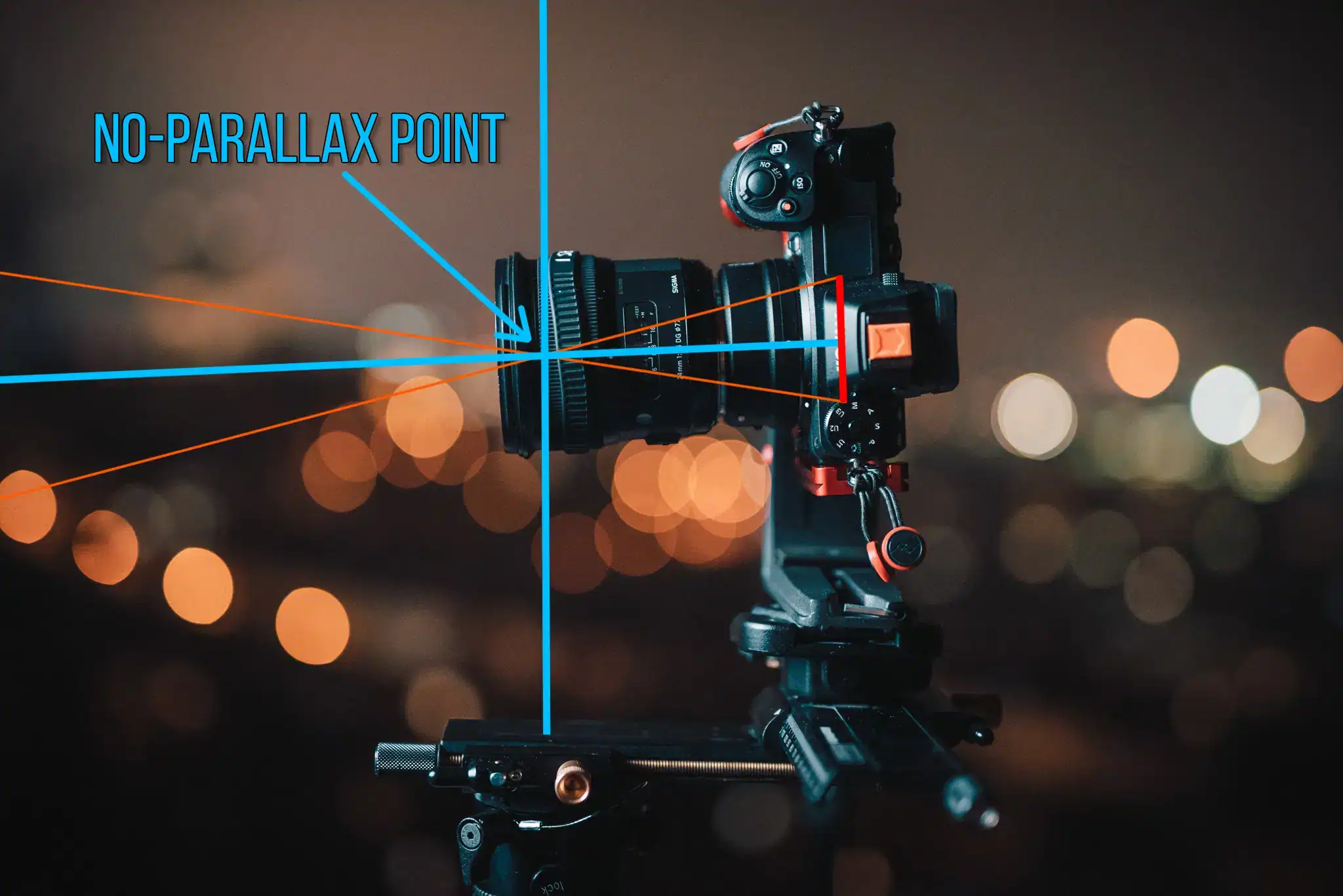
New to pano heads and alignment? This concise panoramic head tutorial covers the fundamentals and common pitfalls. Panoramic head basics and setup
Step-by-Step Shooting Guide
Standard Static Scenes
- Level the tripod and align the nodal point: On your panoramic head, slide the camera forward/back until foreground and background objects stay aligned as you pan. With a circular fisheye, the entrance pupil is near the lens’s aperture plane; use a test with a vertical pole 0.5–1 m in front and a far background to refine alignment.
- Set manual exposure and lock white balance: Use Manual (M) exposure and a fixed Kelvin WB (e.g., 5400K daylight or a custom reading). Consistency prevents banding and color shifts in the stitch.
- Focus and aperture: Use manual focus. With a 4mm lens, depth of field is vast; set focus slightly beyond 1 m. Shoot at f/5.6–f/8 for best edge consistency and flare control.
- Capture sequence:
- Fastest: 2 shots around, yaw 0° and 180°, level pitch. Works outdoors with distant foregrounds.
- Safer: 3 shots around, yaw 0°/120°/240°, level pitch. Clean seams even in tighter spaces.
- Optional nadir: Tilt down a few degrees for a ground shot or shoot a handheld nadir offset to patch the tripod later.
HDR / High Dynamic Range Interiors
- Bracket ±2 EV (3–5 frames): With bright windows, bracketed exposures preserve highlight detail and interior shadow tone. The R5’s base ISO RAWs handle merging well.
- Keep WB locked: Bracketing with auto WB causes color flicker across frames; lock a Kelvin value or use a custom white balance shot.
- Sequence suggestion: For each yaw position, shoot your full bracket set before rotating. This keeps motion differences easy to mask.
Low-Light / Night Scenes
- Use longer exposures on a solid tripod: Aim for ISO 100–400. The R5’s files remain clean; avoid pushing ISO when you can extend shutter to 1–10 s.
- Disable IBIS and use a remote: Prevent sub‑pixel blur. Use EFCS or electronic shutter to reduce vibration if light sources don’t band.
- Watch flare: Streetlights and neon across a 210° FOV can cause internal reflections; shade with your hand or reposition slightly to move problem lights near the circle edge.
Crowded Events
- Two passes strategy: First, shoot a quick 3‑around pass for coverage. Second, wait for gaps and reshoot problem frames to get clean backgrounds.
- Masking later: In PTGui or Hugin, use masks to keep preferred people positions and remove ghosting across frames.
- Avoid parallax errors: Keep the tripod planted; even small shifts become visible with nearby subjects.
Special Setups (Pole / Car / Drone)
- Pole shots: Keep rotations slow and deliberate. Use a safety tether and pay attention to wind. For rooftops or balconies, never lean over edges with un‑tethered gear.
- Car‑mounted: Only when safe and legal. Use secure suction mounts plus a safety line. Shoot at stops or low speed; vibrations can cause blur and misalignment.
Recommended Settings & Pro Tips
Exposure & Focus
| Scenario | Aperture | Shutter | ISO | Notes |
|---|---|---|---|---|
| Daylight outdoor | f/8–f/11 | 1/100–1/250 | 100–200 | Lock WB to Daylight or Kelvin 5200–5600 |
| Low light/night | f/4–f/5.6 | 1/30–1 s+ | 100–400 (800 if needed) | Tripod, remote; turn IBIS off on tripod |
| Interior HDR | f/8 | Bracket ±2 EV (3–5 frames) | 100–400 | Preserve windows; merge before stitching or use exposure fusion |
| Action/moving subjects | f/5.6–f/8 | 1/200+ | 400–800 | Use two passes and later masking |
Critical Tips
- Manual focus near hyperfocal: With 4mm, set slightly beyond 1 m at f/5.6–f/8 for “everything sharp.” Avoid refocusing mid‑sequence.
- Nodal calibration: Place a light stand ~50 cm from the lens and a distant background line. Pan the head and adjust the fore/aft rail until relative position stays constant. Mark your rail position for the R5 + Laowa combo.
- White balance lock: Set one WB and keep it. Mixed lighting? Consider a custom WB or correct per frame in RAW, but keep the same value for all shots.
- RAW over JPEG: 14‑bit RAW preserves DR and color nuance, critical for HDR merges and seam‑free grades.
- IBIS/IS usage: Handheld single‑row panos benefit from IBIS; on a tripod, turn IBIS off in the R5 menu to avoid micro‑movement.
Stitching & Post-Processing
Software Workflow
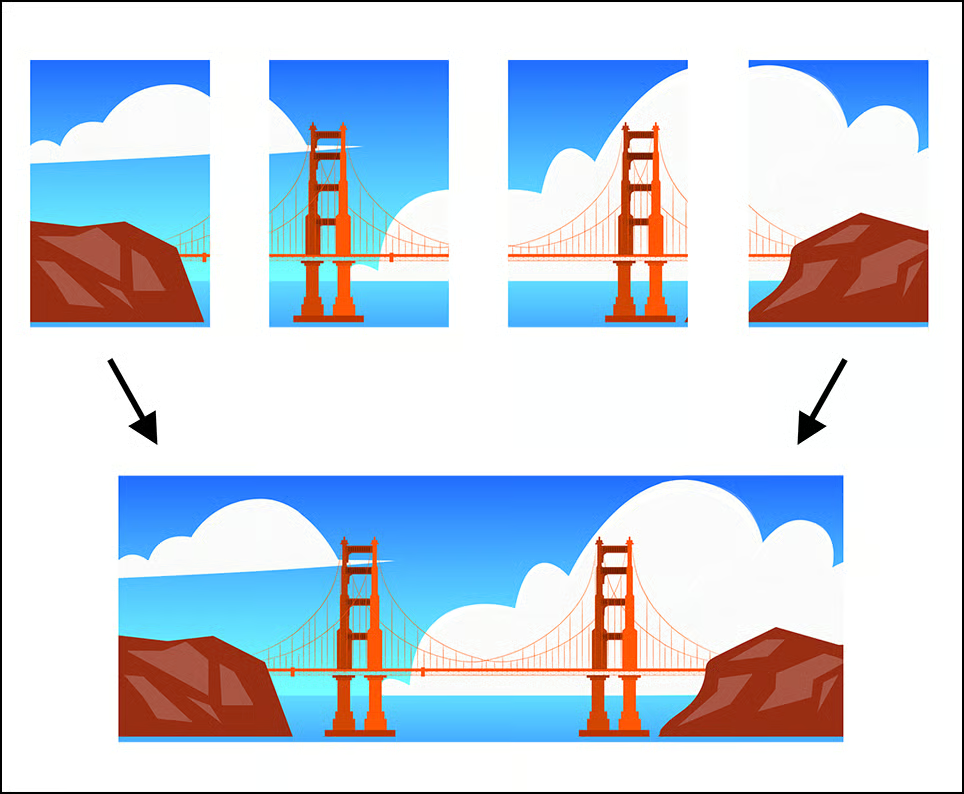
Import RAWs, apply a consistent baseline treatment (exposure, WB, chromatic aberration fixes), and either pre‑merge HDR brackets (Lightroom/ACR) or use exposure fusion in your stitcher. In PTGui or Hugin, set Lens Type to Fisheye Circular with ~210° FOV for the Laowa 4mm. For a 2‑shot workflow, you’ll likely need careful control point placement and masks around the tripod. Target overlap of 25–35% between frames. PTGui’s optimizer handles circular fisheyes well and can auto‑level horizons from EXIF if the tripod was close to level. For most projects, aim for 2:1 equirectangular output and export levels for web (8–12K wide) or archival (12–16K+ when brackets and source quality allow). For additional reading on why PTGui is the industry workhorse, see this overview. PTGui review and benefits for pro panoramas
Cleanup & Enhancement
- Nadir patch: Shoot an offset nadir plate or use content-aware fill/AI patching. For branded tiles or busy floors, manual cloning yields cleaner results.
- Color and noise: Sync color corrections across frames; mild noise reduction at ISO 400–800 maintains texture.
- Leveling: Use the horizon/verticals tool to correct roll/yaw/pitch for a natural horizon and plumb verticals.
- Export: Deliver as equirectangular JPEG/TIFF (2:1) for VR platforms or virtual tour builders. See this DSLR/mirrorless 360 guide for platform considerations. Using a DSLR/mirrorless to shoot and stitch a 360 photo
Learn by Watching
For a visual walkthrough of pro stitching steps and project organization, this video is a solid companion reference.
Useful Tools & Resources
Software
- PTGui panorama stitching
- Hugin (open source alternative)
- Lightroom / Adobe Camera Raw / Photoshop
- AI tripod removal tools (e.g., generative fill)
Hardware
- Panoramic heads (e.g., Nodal Ninja, Leofoto)
- Carbon fiber tripods with leveling bases
- Wireless remotes or intervalometers
- Pole extensions / car mounts with safety tethers
For broader camera/lens considerations in virtual tours, this guide is a helpful benchmark. DSLR/mirrorless virtual tour lens guide
Disclaimer: software/hardware names provided for search reference; check official sites for details.
Common Mistakes & How to Avoid Them
- Parallax error: Not aligning the entrance pupil causes seams around nearby objects. Calibrate once and mark your rails.
- Exposure flicker: Auto mode changes frame to frame; use manual exposure and locked WB.
- Tripod shadows and nadir mess: Plan a nadir shot or keep a clean patching method ready.
- Ghosting from moving subjects: Mask in post or shoot a second pass for clean areas.
- High‑ISO noise at night: The R5 handles ISO 800 well, but longer tripod exposures at ISO 100–400 always look cleaner.
- IBIS left on: Turn it off on a tripod to prevent micro‑blur, especially at long exposures.
Field‑Tested Scenarios
Indoor Real Estate
Shoot 3 around at f/8, ISO 100–200, bracket ±2 EV to keep window view and interior detail. Leveling matters to keep walls vertical. A handheld nadir shot (camera moved slightly away from tripod) simplifies floor patching.
Outdoor Sunset
Sun near the frame edge can flare a circular fisheye. Use your body or a flag between frames to shade. Underexpose by ~0.3–0.7 EV to protect highlights and lift shadows later.
Event Crowds
Use the 2‑around method to minimize the time people have to move. Then reshoot any busy segment. Later, mask in the clean frame to remove duplicates and ghosting.
Rooftop / Pole Shooting
Wind is your main enemy. Lower the pole height slightly to gain stability. Use a strap or tether and shoot 3 around for stronger overlaps; rotate slowly and let the system settle between shots.
Frequently Asked Questions
-
Can I shoot handheld panoramas with the Canon EOS R5?
Yes, for quick single‑row or 2‑around sequences in bright light. Enable IBIS for handheld work and use faster shutters (1/200+). However, for precise 360×180 stitches—especially indoors or with close objects—a tripod and pano head are strongly recommended.
-
Is the Laowa 4mm f/2.8 wide enough for a single‑row 360?
Yes. With ~210° diagonal FOV, you can often cover a full sphere with 2 shots around (180° apart); 3 shots around at 120° is safer and cleaner at close range. Add a nadir if you need the tripod fully removed.
-
Do I need HDR for interiors with bright windows?
Usually. Bracket ±2 EV (3–5 frames) to capture window views while keeping interior shadows clean. Merge brackets before stitching or use exposure fusion in PTGui/Hugin.
-
How do I avoid parallax issues with this setup?
Use a panoramic head and align the entrance pupil by sliding the camera along the rail until foreground and background stay aligned during rotation. Mark the correct fore/aft position for the R5 + 4mm combo to repeat quickly.
-
What ISO range is safe on the EOS R5 in low light for panos?
ISO 100–400 is ideal for clean, detailed results. ISO 800 remains very usable; beyond that, prefer longer shutter times on a tripod rather than raising ISO further.
-
Can I set up Custom Modes for pano on the R5?
Yes. Save a “Pano” profile (e.g., Manual exposure, fixed WB, IBIS off, self‑timer 2 s) to C1/C2. You’ll set up faster and reduce mistakes under time pressure.
-
How do I reduce flare with a circular fisheye?
Avoid strong backlight directly entering the lens, shade with a flag/hand between frames, keep the front element spotless, and stop down to f/5.6–f/8 if flare persists.
-
What’s the best tripod head for this combo?
A compact, two‑rail panoramic head (e.g., Nodal Ninja or similar) with fine scale markings. You need fore/aft adjustment to place the entrance pupil over the rotation axis and a rotator with click‑stops at 120° for a clean 3‑around workflow.
Extra Notes on Quality & Delivery
Because the Laowa 4mm is a circular fisheye on the R5’s 1.6× crop, each frame is ~17 MP. Well‑shot 3‑around sets typically yield 8K–12K equirectangulars with excellent clarity for web viewing and VR tours. If you need extreme resolution (gigapixel walls), a multi‑row rectilinear workflow is better, but it’s slower and more complex. For typical real estate, venue, or travel virtual tours, this combo is fast and more than sharp enough.
For an additional primer on the geometry of pano resolution and coverage, see this community technical reference. Understanding spherical resolution