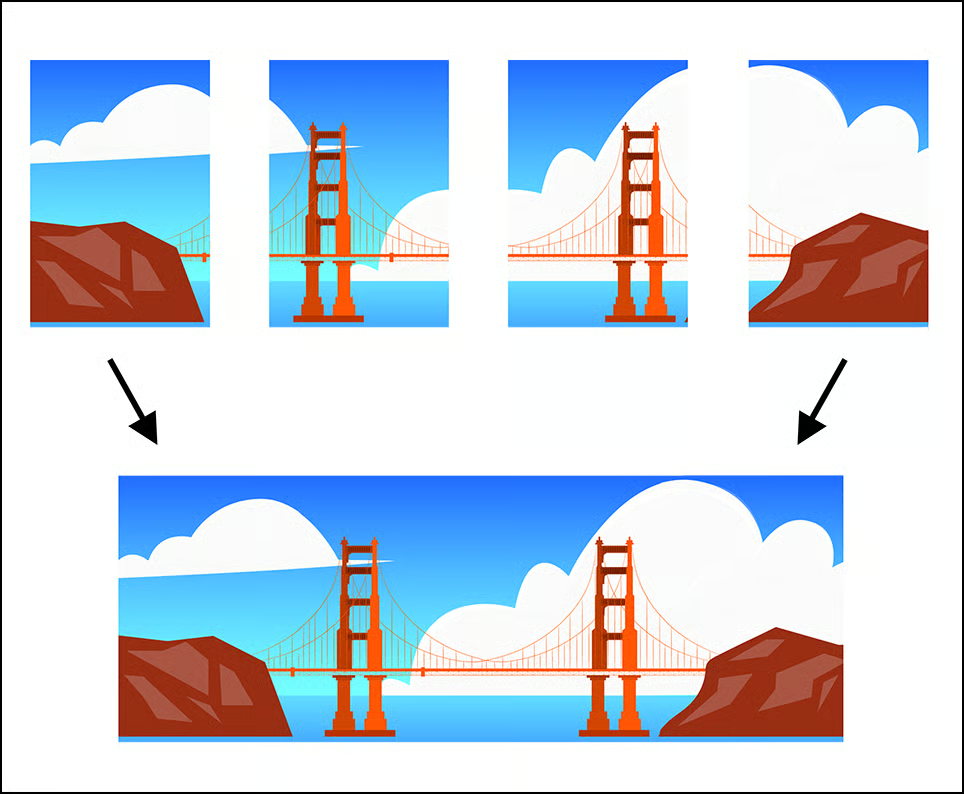
Why This Camera & Lens Are Great for Panoramas
The Canon EOS R5 paired with the Canon EF 8–15mm f/4L Fisheye USM is one of the most versatile and reliable combos for creating high‑quality 360° photos and panoramas. The R5’s 45MP full‑frame sensor (36×24mm) and ~4.4µm pixel pitch deliver excellent fine detail, while the camera’s strong base dynamic range (~13.5–14 EV at ISO 100) helps keep skies, interiors, and shadow detail intact. In-body image stabilization (IBIS) provides up to 8 stops of stabilization with many lenses and still works well with adapted EF glass using the Canon EF–EOS R adapter.
The EF 8–15mm f/4L is a fisheye zoom that can be used as a circular fisheye at 8mm (projecting a circular image on full frame) or as a diagonal fisheye at 15mm (filling the frame, 180° diagonal FoV). For panoramas, this flexibility is gold: use 8mm when you want to cover a full sphere with very few shots (fast capture, fewer seams), or go to 12–15mm if you want more pixels on scene features and cleaner edges. Optically, the lens is sharp from f/5.6–f/8, with fisheye distortion that stitchers handle easily. Chromatic aberration is present at the edges (as with most fisheyes) but is predictable and easy to correct in post.
Autofocus is fast (USM), but for panoramas you’ll often lock focus manually at hyperfocal for consistency. The EOS R5’s excellent EVF, fine-grained focus peaking, and responsive manual controls make it easy to set exposure and focus consistently across frames. With this combo, learning how to shoot panorama with Canon EOS R5 & Canon EF 8–15mm f/4L Fisheye USM is straightforward and scalable—from quick outdoor spins to high‑end interior HDR tours.
Quick Setup Overview
- Camera: Canon EOS R5 — Full-frame 45MP (8192×5464), ~4.4µm pixel pitch, excellent base ISO 100 DR (~13.5–14 EV), strong IBIS, dual card slots (CFexpress + SD UHS‑II).
- Lens: Canon EF 8–15mm f/4L Fisheye USM — Fisheye zoom; circular at 8mm, diagonal at 15mm. Very good sharpness f/5.6–8; typical fisheye CA at edges; remove the lens hood at 8mm on full frame to avoid vignetting.
- Estimated shots & overlap (field‑tested):
- 8mm (circular): 4 around (90° yaw) + nadir; add zenith only if necessary.
- 10mm: 5 around (≈72°) + nadir, optional zenith.
- 12mm: 6 around (60°) + zenith + nadir.
- 15mm (diagonal): 8 around (45°) + zenith + nadir.
- Difficulty: Easy–Intermediate. Few shots at 8–10mm make it beginner‑friendly; 12–15mm increases resolution and complexity (more shots).
Planning & On-Site Preparation
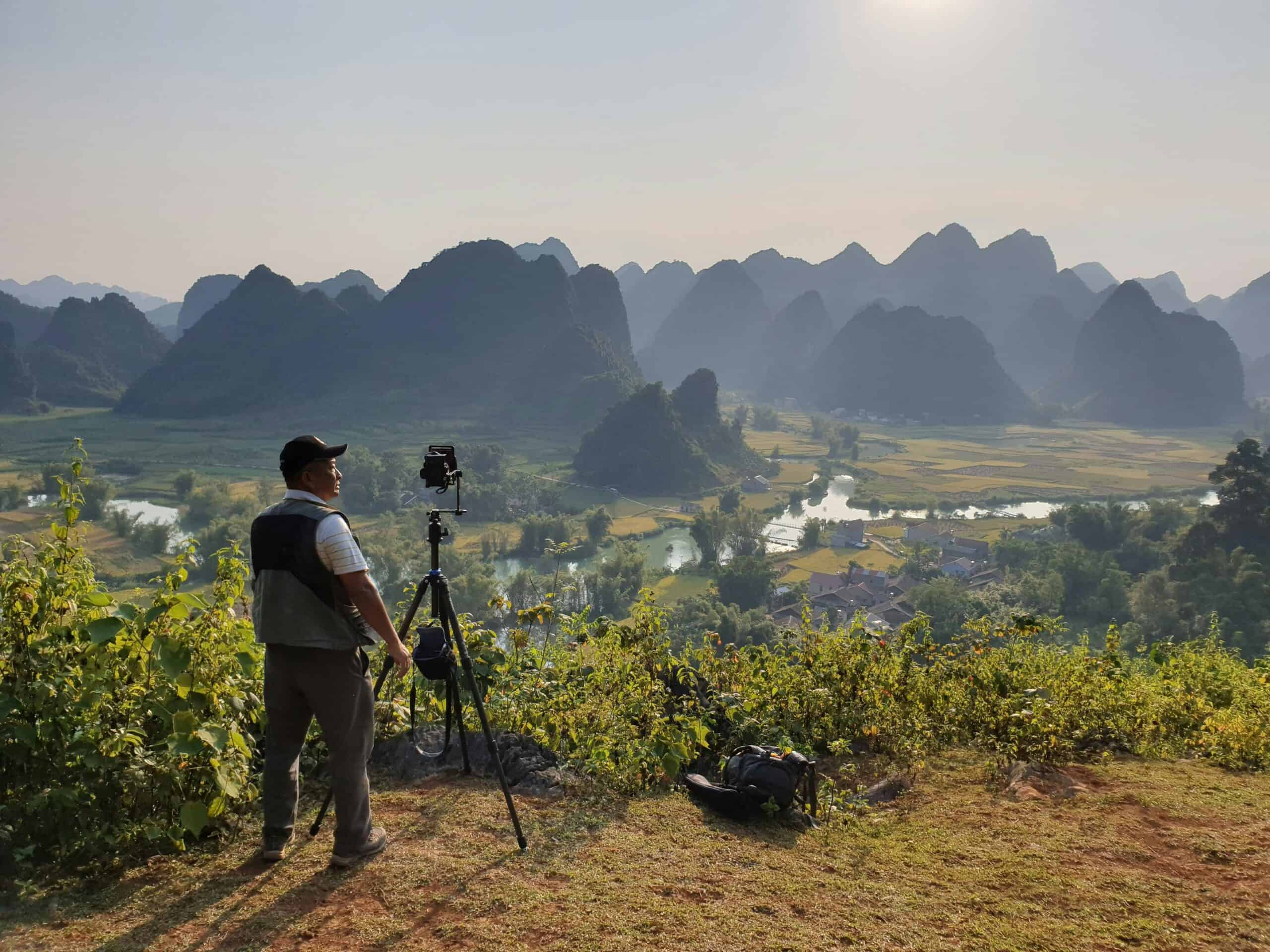
Evaluate Shooting Environment
Check light quality and direction (harsh backlight can cause flare with fisheyes), note reflective surfaces (glass, water, polished floors), and anticipate movement (people, cars, trees). If you’re shooting through glass, get close (1–3cm), shade the lens with your hand or a rubber hood, and shoot perpendicularly where possible to reduce reflections and ghosting.
Match Gear to Scene Goals
The R5’s dynamic range and clean low‑ISO files excel in daylight landscapes and interiors with mixed lighting. Indoors, ISO 400–800 on the R5 stays very clean; at night, 800–1600 is usable with careful exposure and noise reduction. The EF 8–15mm lets you go fast at 8–10mm (fewer frames, fewer stitching seams) or capture more pixels per feature at 12–15mm (more frames, more detail). If you anticipate a lot of movement (crowds, events), favor 8–10mm to shorten capture time.
Pre-shoot Checklist
- Battery & storage: Charge two batteries; format cards. Consider writing RAWs to both cards for redundancy.
- Clean optics: Dust on a fisheye is highly visible; clean lens and sensor.
- Tripod & head: Leveling base, panoramic head calibrated to the lens’s no‑parallax (entrance pupil) point.
- Safety: Check wind, secure rooftop rails, use a tether on poles or car mounts; never shoot near edges without proper safety.
- Backup workflow: Shoot a second full round if time allows; if something moves, you’ll have options to mask.
Essential Gear & Setup
Core Gear
- Panoramic head: This aligns the lens’s entrance pupil over the rotation axis to eliminate parallax. Without it, close objects won’t stitch cleanly.
- Stable tripod + leveling base: Leveling shortens setup and keeps horizons straight. Carbon fiber helps in wind.
- Remote trigger or Canon Camera Connect app: Prevents vibration and allows timed or bracketed sequences without touching the camera.
Optional Add-ons
- Extension pole or car mount: Great for elevated or vehicle shots; always use safety tethers and respect wind loads and traffic laws.
- Lighting aids: Small LED panels for dark interiors; keep them out of the lens’s 180° FoV.
- Weather protection: Rain covers, microfiber cloths, and gaffer tape for quick on‑site fixes.
Step-by-Step Shooting Guide
Standard Static Scenes
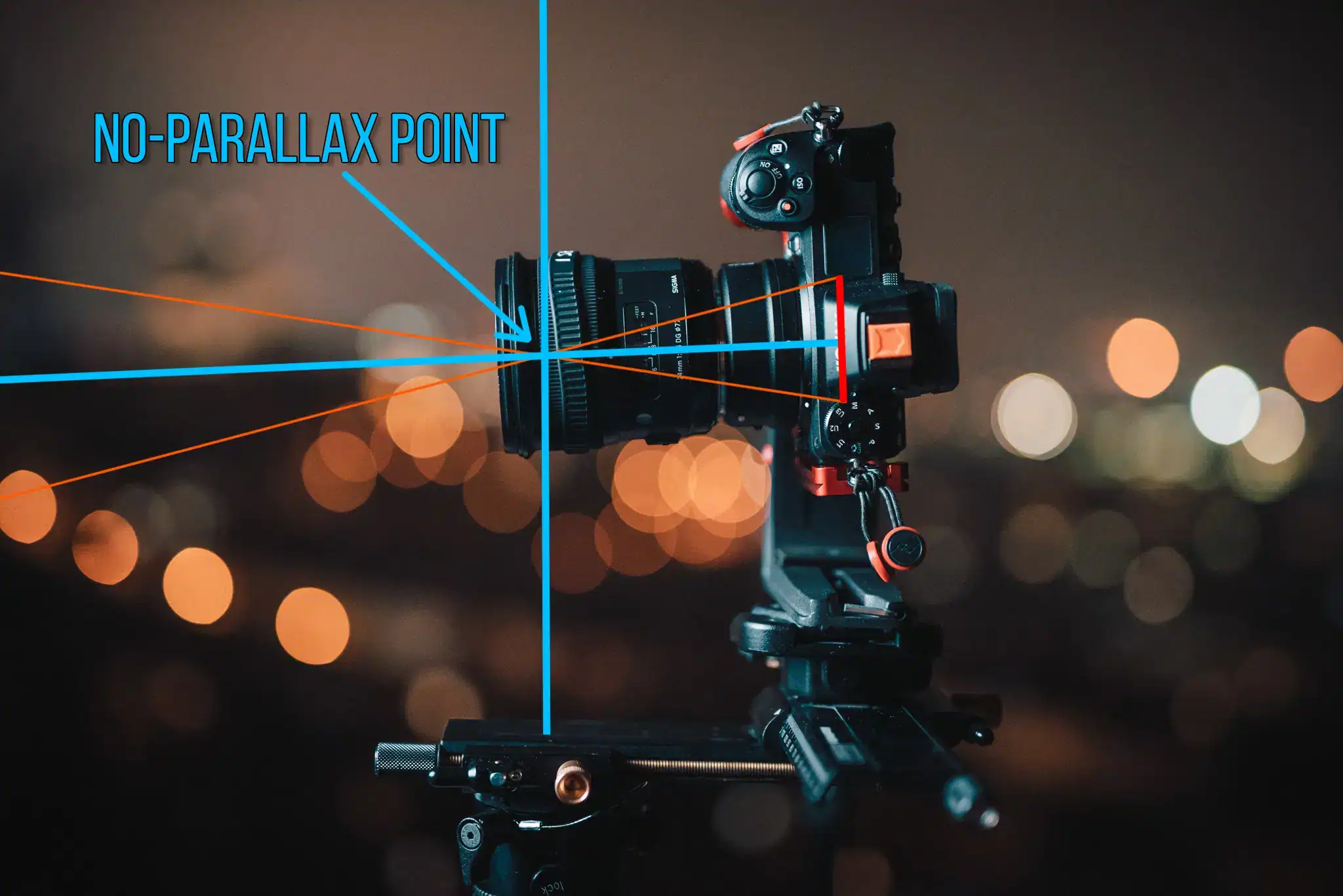
- Level the tripod and align the nodal point:
- Mount the R5 + EF 8–15mm on a panoramic head using an EF–RF adapter.
- Calibrate by placing two vertical objects (one near, one far) in the edge of the frame. Rotate the head; adjust the fore-aft rail until the near/far alignment doesn’t shift. Repeat at your chosen focal length (8mm, 10mm, 12mm, 15mm).
- Lock exposure and white balance:
- Set Manual mode. Meter a mid‑tone area, then lock values (e.g., f/8, 1/125s, ISO 100–200 for daylight).
- Set WB to Daylight/Tungsten/Kelvin as needed. Avoid Auto WB to prevent color shifts across frames.
- Capture with consistent overlap:
- At 8mm: shoot 4 frames around at 90° yaw increments. Tilt slightly up (5–10°) if you want extra sky coverage.
- At 10–12mm: 5–6 around (≈72°–60°), then a zenith and nadir.
- At 15mm: 8 around (45°) + zenith + nadir.
- Take a clean nadir frame: After the main round(s), lift the camera off the tripod and shoot the ground (same exposure/WB) to patch out the tripod later.
HDR / High Dynamic Range Interiors
- Bracket exposures: Use AEB on the R5 with ±2EV (3 or 5 frames). For very bright windows, consider ±3EV if your workflow supports it.
- Keep WB fixed and use RAW: Consistent color and maximum latitude for highlights and shadows.
- Shoot bracketed sets for each rotation position before moving to the next to keep alignment and timing consistent.
Low-Light / Night Scenes
- Stabilize and keep ISO moderate: Start at ISO 400–800; let shutter drop to 1/15–1/4s on a solid tripod. Use IBIS only if handheld; turn it off on a locked tripod to avoid micro‑vibrations.
- Use a remote or 2‑sec timer: Prevents shake. Consider electronic first curtain shutter for minimal vibration.
Crowded Events
- Two-pass method: Shoot a quick full round for background plates, then a second pass waiting for gaps in moving people.
- Mask in post: In PTGui or Photoshop, mask people to keep only the clean background or choose the best frames per region.
Special Setups (Pole / Car / Drone)
- Pole shooting: Use a lightweight panoramic head and a guy line or strap. Keep rotations deliberate; brace the pole against your body. Avoid high winds.
- Car-mounted: Only on private/controlled property or where permitted. Secure mounts, use safety tethers, and keep shutter speeds high (1/250s+) to mitigate vibration.
- Drone: The R5 is heavy; this is niche. If using a platform that supports it, ensure proper CG balance and legal compliance.
Field Case Studies
Indoor Real Estate (Window View)
Use 12mm for more pixels on furniture and vertical lines. Settings: f/8, ISO 100–200, AEB ±2EV (5 frames). 6 around + zenith + nadir. Lock WB to 4000–5000K to balance warm lamps and daylight. Mask moving curtains or flickering lights in post.
Outdoor Sunset
To catch dynamic clouds with minimal seams, go 8–10mm. Settings: f/8, 1/125s, ISO 100. 4–5 around + nadir. Shield the lens from direct sun to reduce flare; shoot a second pass when the sun dips if needed for highlight control.
Event with People
Stay at 8mm for speed. Settings: f/5.6–f/8, 1/200s, ISO 400–800. Two passes, mask crowds later. Keep your rotation cadence consistent so subjects don’t warp between frames.
Rooftop/Pole
Use 8mm to minimize time aloft. Settings: f/5.6, 1/250s, ISO 200–400. Safety tethers mandatory. Brace against wind; avoid gusty days.
Recommended Settings & Pro Tips
Exposure & Focus
| Scenario | Aperture | Shutter | ISO | Notes |
|---|---|---|---|---|
| Daylight outdoor | f/8–f/11 | 1/100–1/250 | 100–200 | Lock WB (Daylight). Avoid flare with careful framing. |
| Low light/night | f/4–f/5.6 | 1/30–1/60 (tripod) or faster handheld | 400–800 (up to 1600 if needed) | Tripod + remote; turn off IBIS on locked tripod. |
| Interior HDR | f/8 | Bracket ±2 EV (3–5 shots) | 100–400 | Balance windows and shadowed areas; RAW only. |
| Action / moving subjects | f/5.6–f/8 | 1/200+ | 400–800 | Freeze motion; consider two-pass capture. |
Critical Tips
- Manual focus at hyperfocal: At 8–12mm and f/8, set focus just shy of infinity; confirm with magnified live view. Disable AF to keep focus consistent across frames.
- Nodal (entrance pupil) calibration: Calibrate at the focal length you’ll use. Mark your rail positions for 8, 10, 12, and 15mm to speed future setups.
- White balance lock: Use Kelvin or a fixed preset. Mixed lighting? Set a middle value and correct globally in post.
- RAW over JPEG: Fisheyes push edges; RAW keeps more highlight and color latitude for defish and blend steps.
- IBIS usage: On tripod, IBIS OFF for safety. Handheld or pole? IBIS ON helps at slower shutter speeds.
- Lens hood: Remove at 8mm on full frame to prevent hood intrusion into the circular image.
Stitching & Post-Processing
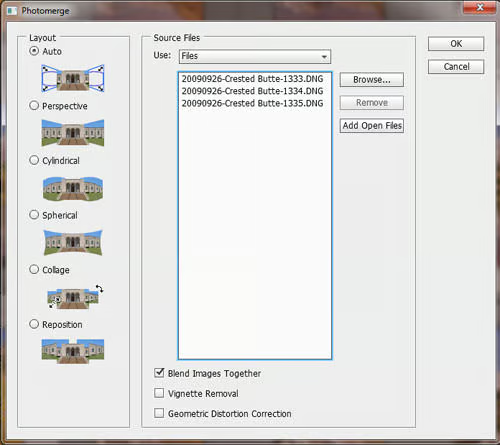
Software Workflow
For this lens, fisheye-aware stitchers like PTGui and Hugin are ideal. Fisheye frames stitch fast with fewer images, but they may show more stretching near poles. For the EF 8–15mm, set the lens type to fisheye in your software, ensure correct focal length/EXIF, and use 25–35% overlap as a baseline (more at 12–15mm). Industry practice is ~25–30% for fisheye and ~20–25% for rectilinear coverage. Export a 16-bit equirectangular TIFF for best editing latitude. For 360 players, deliver high-quality JPEGs with careful compression to keep fine detail intact.
If you bracketed, merge HDR either in the stitcher (PTGui Pro) or first in Lightroom/Photoshop, then stitch. Masking tools are your friend for removing moving people, tripod legs, and flare ghosts. For more on pano heads and technique, see this panoramic head tutorial for a deeper primer. Panoramic head setup guide
Cleanup & Enhancement
- Tripod/nadir patch: Use a logo patch, AI fill, or manual clone to remove the tripod. A dedicated nadir shot speeds this up.
- Color & noise: Balance temperature/tint globally; apply selective noise reduction to shadows (especially ISO 800–1600 night shots).
- Horizon leveling: Use the stitcher’s pitch/roll controls to straighten. The R5’s internal level helps, but always double‑check.
- Export formats: For VR, export equirectangular 2:1 (e.g., 12000×6000) or higher; for web, optimize JPEG quality ~85–92.
Want a practical walk‑through? This video is a good companion to the written workflow below.
For a critical review of PTGui’s strengths and features relevant to fisheye workflows, see this in‑depth overview. Why PTGui remains a top tool for panoramas
Useful Tools & Resources
Software
- PTGui (Pro for HDR and masking)
- Hugin (open source, solid fisheye support)
- Lightroom / Photoshop (RAW prep, cleanup, export)
- AI‑based object removal for nadir patching
Hardware
- Panoramic heads: Nodal Ninja, Leofoto, Fanotec
- Carbon fiber tripods and leveling bases
- Wireless remote shutters / intervalometers
- Pole extensions and safe car mounting solutions
For a complete DSLR/mirrorless 360 pipeline overview (capture to publishing), this guide from Meta is a solid reference. Using a DSLR or mirrorless camera to shoot and stitch a 360 photo
Disclaimer: Names provided for search reference; check official sites for up‑to‑date specs and compatibility.
Common Mistakes & How to Avoid Them
- Parallax error: Calibrate the entrance pupil and lock it. Don’t change focal length mid‑shoot.
- Exposure flicker: Manual exposure and fixed WB. Avoid Auto ISO and Auto WB for multi‑frame panoramas.
- Tripod shadows and footprints: Shoot a nadir frame or patch later. Time your capture to avoid harsh overhead sun if possible.
- Ghosting from movement: Use shorter capture sets (8–10mm), mask in post, or time shots between movement.
- Night noise and blur: Keep ISO moderate (400–800), use a remote, and disable IBIS on a locked tripod.
- Flare with fisheye: Shade the front element with your hand (out of frame), recompose to keep the sun just off the edge, or capture a hand‑blocked frame to blend later.
Frequently Asked Questions
- Can I shoot handheld panoramas with the Canon EOS R5?
Yes, especially at 8–10mm where fewer frames are needed. Use fast shutter speeds (1/200s+), IBIS ON, and keep overlap generous (30–40%). However, for critical work or interiors with near objects, a panoramic head on a tripod is strongly recommended to avoid parallax.
- Is the EF 8–15mm f/4L wide enough for a single-row 360?
At 8–10mm, yes—4 to 5 shots around can cover a full sphere, with an extra nadir (and sometimes zenith) for clean coverage. At 12–15mm, you’ll need more shots (6–8 around) plus zenith and nadir, but you’ll gain more pixel density on the scene.
- Do I need HDR for interiors with bright windows?
Usually. The R5 has strong dynamic range, but window‑to‑interior contrast can exceed a single exposure. Bracket ±2EV (3–5 frames) and merge in PTGui Pro or Lightroom for clean, natural highlights and shadow detail.
- How do I avoid parallax issues with this fisheye?
Calibrate the entrance pupil at your chosen focal length (e.g., 8mm). Use a proper panoramic head with fore‑aft and lateral adjustments. Keep the lens fixed during the entire sequence; don’t zoom mid‑shoot.
- What ISO range is safe on the R5 in low light?
For tripod work, prioritize ISO 100–400 and lengthen shutter. For handheld/pole, ISO 400–800 is safe; 1600 is usable with careful exposure and noise reduction. Expose to protect highlights and clean up shadows in post.
- Can I set up Custom Shooting Modes (C1/C2) for pano on the R5?
Yes. Create a pano preset with Manual exposure, fixed WB, RAW, manual focus, drive mode to single shot (or AEB for HDR), and IBIS OFF (tripod use). Save to C1/C2 to speed up field work.
- How can I reduce flare with a fisheye?
Avoid direct sun hitting the front element. Use your hand or a small flag just outside the frame to shade the lens and shoot an extra frame to blend. Slightly recompose to keep the sun near the edge, then patch in post if needed.
- What’s the best tripod head for this setup?
Look for a compact panoramic head with precise fore‑aft adjustment and a rotator with click‑stops at 45°, 60°, 72°, and 90°. Nodal Ninja and Leofoto models are popular and well‑supported. For a deeper buying/technique guide, see this DSLR 360 resource. DSLR/mirrorless 360 camera & lens guide
Safety, Reliability & Backup Workflow
The EOS R5 and EF 8–15mm are weather‑sealed, but not waterproof. In rain or blowing sand, use a cover and clean the front element regularly—fisheyes see everything, including drops and dust. On rooftops and poles, use safety tethers and avoid crowded or windy environments. For cars, only mount where legal and safe. Always keep one hand on the rig when possible.
Set the R5 to write RAW to both cards for redundancy (CFexpress + SD). After critical shots, review a frame at 100% to check sharpness and exposure. If time allows, shoot a second full round as insurance—especially for client work and travel scenes you cannot reshoot.
Examples & Visual References