
Why This Camera & Lens Are Great for Panoramas
The Canon EOS R3 paired with the Tokina ATX-i 11–20mm f/2.8 is a powerful, budget-smart combo for high-quality panoramas, especially if you already own EF-S glass. The R3’s full-frame 24.1MP stacked sensor delivers fast readout, robust autofocus, and excellent low-light performance. When you mount the EF-S Tokina via the Canon EF–EOS R adapter, the camera automatically switches to 1.6× crop mode for perfect coverage, yielding approximately 9.5–10MP per frame. That’s more than enough for multi-image 360 photos, virtual tours, and large stitched composites, because your final resolution scales up with the number of frames.
Technically, the R3’s pixel pitch is about 6.0 µm with wide dynamic range at base ISO (approximately 13–14 stops at ISO 100). Real-world: ISO 100–800 is clean, ISO 1600–3200 remains very usable when exposed properly. In-body image stabilization (IBIS) is excellent for handheld shooting but should be disabled on a tripod to avoid micro-vibrations.
The Tokina ATX-i 11–20mm f/2.8 is a rectilinear ultra-wide zoom designed for APS-C. It gives an effective 17.6–32mm full-frame equivalent field of view on the R3’s crop mode, with fast f/2.8 for low light and interiors. Expect mild barrel distortion at 11mm, some lateral CA at the edges, and very good center sharpness stopped down (f/5.6–f/8). As a rectilinear lens (not fisheye), it captures straight lines better for architecture, but it requires more shots than a fisheye to complete a full 360×180 spherical pano—still very doable with a solid panoramic head and good overlap.
Quick Setup Overview
- Camera: Canon EOS R3 — Full-frame 24.1MP stacked sensor, approx. 13–14 stops DR at ISO 100, IBIS up to ~8 stops, outstanding AF. In APS-C crop with EF-S lens: ~9.5–10MP output per frame.
- Lens: Tokina ATX-i 11–20mm f/2.8 — Rectilinear ultrawide for APS-C; constant f/2.8; good sharpness by f/5.6–f/8; mild barrel distortion at 11mm; manageable lateral CA.
- Estimated shots & overlap (tested targets):
- At 11mm (APS-C): 3 rows of 12 shots each (−30°, 0°, +30°) with ~30% overlap + 1–3 zenith + 1–3 nadir (≈ 38–42 frames total) for a clean spherical 360.
- At 15mm (APS-C): 3 rows × 14 shots + 2–3 zenith + 2–3 nadir (≈ 44–48 frames) for higher detail or gigapixel ambitions.
- At 20mm (APS-C): 4 rows × 14–16 shots + 2–3 zenith + 2–3 nadir (≈ 60–70 frames) for highest detail, best for print or heavy cropping.
- Difficulty: Moderate. Rectilinear ultrawide requires good nodal alignment and disciplined overlap, but rewards you with straighter lines and higher stitched resolution.
Planning & On-Site Preparation
Evaluate Shooting Environment
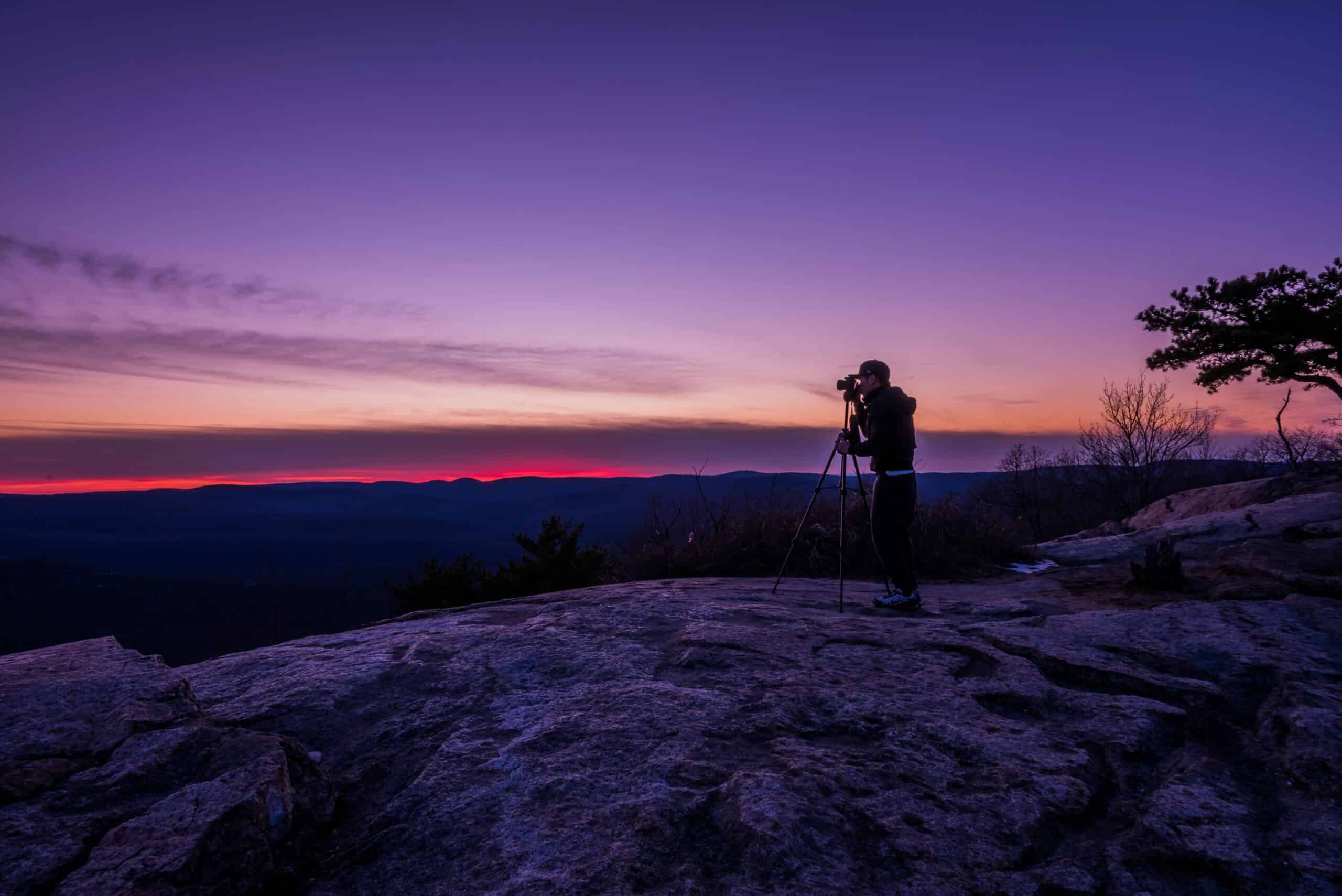
Before setting up, scan the scene for bright windows, mixed lighting, reflective surfaces, and moving elements (people, cars, trees). In glass-heavy interiors, avoid standing too close to glass—keep at least 50–100 cm distance to reduce flare, ghosting, and self-reflections. For outdoor golden hour, note sun position to avoid direct flare into your ultrawide front element; if unavoidable, plan overlaps so any flare lands in redundant areas that can be masked in post.
Match Gear to Scene Goals
The EOS R3’s clean ISO at 100–800 and robust DR help retain highlight detail and clean shadows—key for interiors with bright windows. The Tokina’s rectilinear projection preserves straight lines for architecture and real estate. Indoors, combine ISO 100–400 and f/8 for edge-to-edge sharpness; outdoors, f/8–f/11 is the sweet spot. While a fisheye can reduce shot count, the Tokina’s rectilinear rendering produces more natural edges and less stretching in facades, at the cost of more frames. If time is limited, prioritize the 11mm end to reduce frames and increase overlap safety.
Pre-shoot Checklist
- Power & storage: Full batteries, dual cards if possible. The R3’s large files and burst brackets add up fast.
- Optics clean: Wipe front/rear elements; dust on ultrawides shows easily against skies and windows.
- Tripod leveling & pano head calibration: Leveling base saves time; verify your nodal point marks (see below).
- Safety: On rooftops or in wind, lower tripod height, add a weight bag, and tether the rig when elevated or on poles.
- Backup capture: Shoot a second safety pass if the scene is critical or crowded. It saves reshoots.
Essential Gear & Setup
Core Gear
- Panoramic head: A proper pano head lets you rotate around the lens’s no-parallax point (NPP), eliminating parallax and stitching errors. Once NPP is set for 11mm and 20mm, mark your rails for repeatable setup.
- Stable tripod with leveling base: A leveling base speeds up leveling so your yaw increments are true—critical for consistent overlap.
- Remote trigger or Canon app: Use a wireless remote or the Canon Camera Connect app to avoid shake. Enable 2-second timer if needed.
Optional Add-ons
- Pole or car mount: Excellent for overhead or moving perspectives. Always use a safety tether, monitor wind, and reduce speed/rotation to limit vibration.
- Lighting aids: Small LED panels or bounced flash can lift shadows in dark interiors, but keep lighting consistent across frames to avoid patchy stitches.
- Weather protection: Rain covers and lens hoods reduce flare and protect glass. Keep silica gel in bag for humid shoots.
Step-by-Step Shooting Guide
Standard Static Scenes
- Level tripod and align the nodal point:
Mount your R3 + Tokina on the pano head. Slide the lens fore–aft on the rail until foreground and background features stay aligned while panning. Mark this rail position for 11mm and another for 20mm. Repeat until ghosting is minimal.
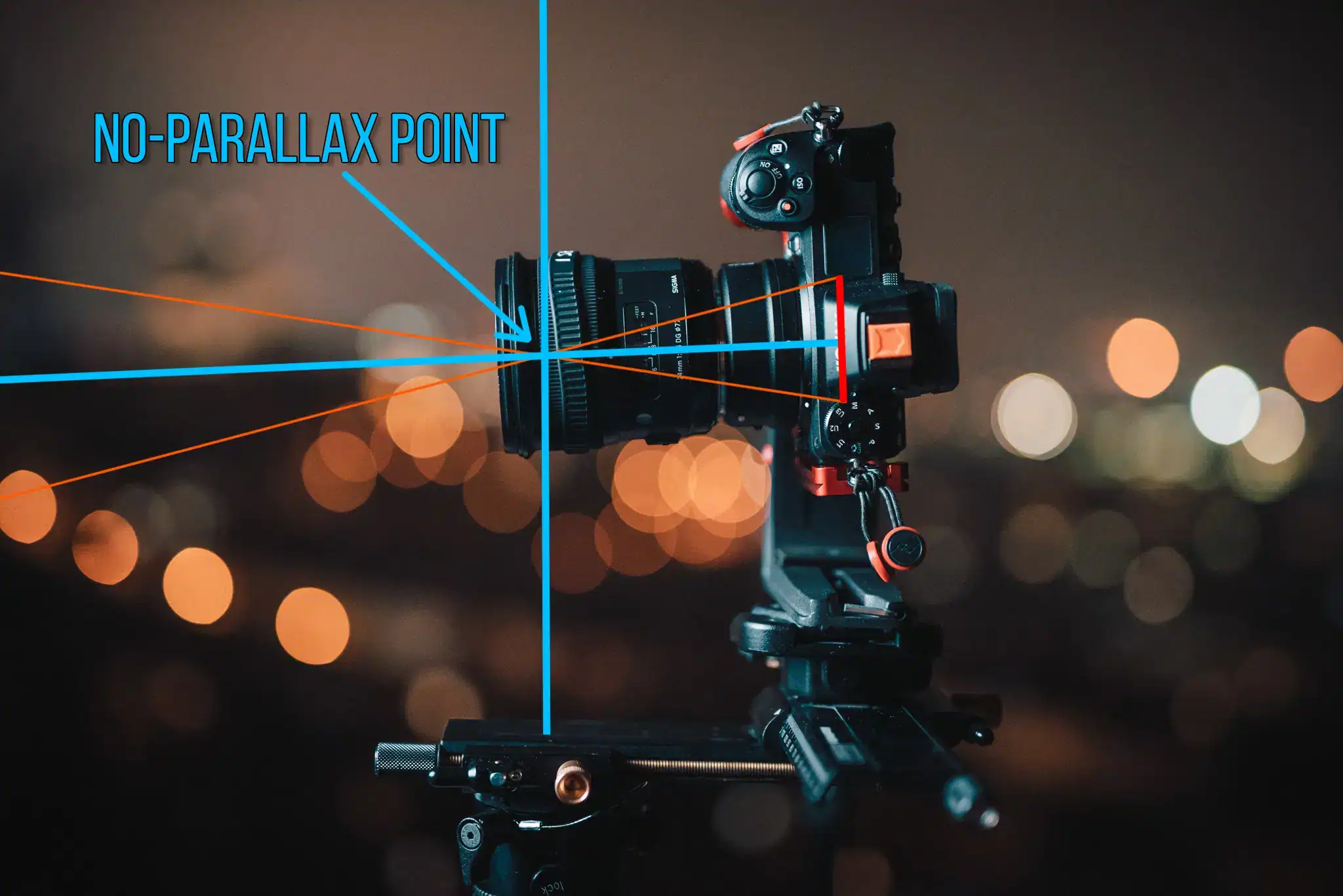
Align rotation around the lens’s no-parallax point (NPP) to eliminate stitching errors at overlap seams. - Manual exposure and locked white balance:
Switch to M mode and set a baseline exposure. Lock white balance (Daylight, Tungsten, or custom Kelvin) to prevent color shifts between frames. Shoot RAW for maximum latitude.
- Capture with disciplined overlap:
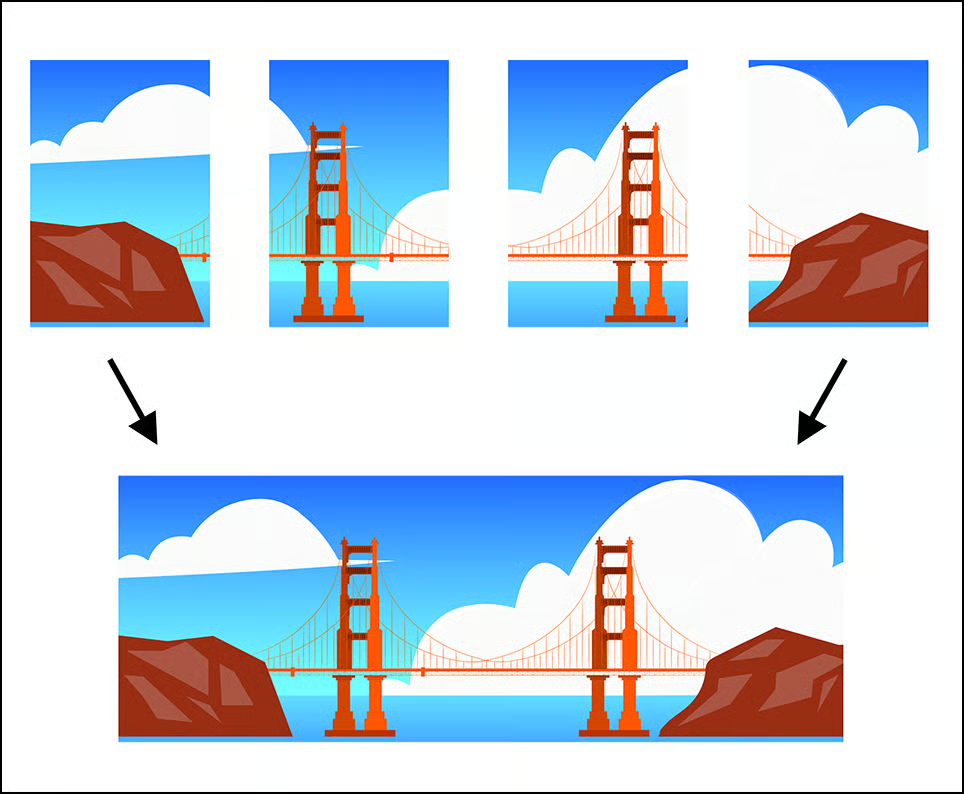
At 11mm, use ~30% overlap. For full spherical panos with this rectilinear lens: shoot three rows (−30°, 0°, +30°), 12 frames each, then add zenith and nadir. Keep your yaw increments consistent; many pano heads have click-stops.
- Take a clean nadir (ground) shot:
After the main set, tilt the camera down to capture the area under the tripod. Some workflows offset the tripod or use a handheld nadir shot to help patch the legs later.
HDR / High Dynamic Range Interiors
- Bracket ±2 EV (3–5 frames):
Use AEB on the R3 for 3, 5, or 7 frames (±2 EV is typically enough) to balance bright windows and interior shadows. Keep the same focus, aperture, and WB across brackets.
- Minimize flicker and banding:
Under LED lighting, use mechanical shutter and enable Anti-Flicker to reduce banding. Keep ISO at 100–400 when possible; increase exposure time rather than ISO when on a tripod.
Low-Light / Night Scenes
- Longer exposures, stable mount:
For night cityscapes, use f/4–f/5.6, ISO 400–800, and slower shutters (1–8 seconds). Turn IBIS off on a tripod. Use a remote or 2s timer.
- Noise control:
The R3 handles ISO 1600–3200 respectably, but expose to the right to keep shadows clean. Consider one extra safety pass in case of wind shake or moving lights.
Crowded Events
- Two-pass strategy:
First pass captures the geometry. Second pass, wait for gaps in foot traffic to fill the overlaps. In post, mask people to reduce ghosting.
- Faster shutter:
Use 1/200s+ at f/5.6–f/8 and ISO 400–800 to freeze motion when people are close to the camera.
Special Setups (Pole / Car / Elevated)
- Secure everything:
Use a lightweight head and tether the camera when on a pole. Avoid gusts; keep the pole vertical; rotate slowly to maintain overlap. On car mounts, reduce speed, avoid bumpy roads, and consider a gyro or damped head.
- Plan your overlaps generously:
Increase overlap to 40% when vibration is possible. Take an extra pass to ensure coverage.
Recommended Settings & Pro Tips
Exposure & Focus
| Scenario | Aperture | Shutter | ISO | Notes |
|---|---|---|---|---|
| Daylight outdoor | f/8–f/11 | 1/100–1/250 | 100–200 | Lock WB (Daylight); RAW for latitude |
| Low light/night | f/4–f/5.6 | 1/30–8s | 400–800 | Tripod, remote; IBIS off |
| Interior HDR | f/8 | Bracket ±2 EV (3–5 frames) | 100–400 | Mechanical shutter; Anti-Flicker on |
| Action / moving subjects | f/5.6–f/8 | 1/200+ | 400–800 | Two-pass capture for masking |
Critical Tips
- Manual focus at hyperfocal:
At 11mm f/8 on APS-C, hyperfocal distance is about 0.8 m; at 20mm f/8 it’s about 2.7 m. Focus once, then switch to MF to lock focus across the set.
- Nodal point calibration:
Set the camera over a near object and distant background, pan, and adjust fore–aft until there’s no relative motion. Mark the rail. Repeat for 11mm and 20mm. A dedicated panoramic head guide can help refine your setup. See this panoramic head tutorial.
- White balance lock:
Use Kelvin (e.g., 5600K for daylight) or a custom WB card to maintain color consistency across frames and brackets.
- RAW vs JPEG:
Shoot RAW for maximum DR and consistent color grading. JPEGs can suffer from banding and WB shifts across a pano sequence.
- IBIS and stabilization:
Turn IBIS and lens IS off on a tripod. Stabilization can introduce blur when the camera is perfectly fixed.
Stitching & Post-Processing
Software Workflow
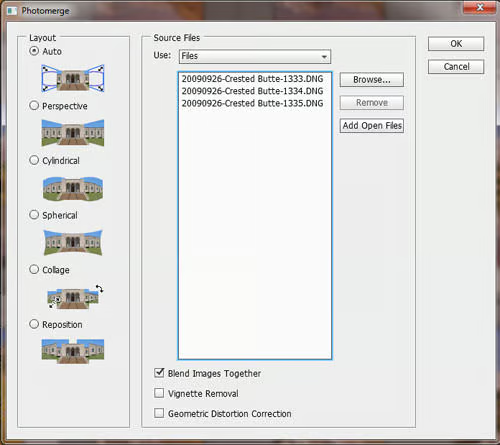
PTGui and Hugin are top-tier for 360 panoramas, with PTGui offering very fast control point generation and masking. Rectilinear lenses like the Tokina are straightforward to stitch when overlaps are ample and the nodal point is correct. For overlap, use about 25–30% for fisheye and 30–40% for rectilinear ultrawide to be safe. After stitching, output an equirectangular image for VR viewers or flatten to a standard pano for web and print. For a full guide to pro stitching with a mirrorless camera, Meta’s Creator documentation is concise and practical. Read the DSLR/mirrorless 360 photo guide.
PTGui remains a favorite among working pano shooters for speed and accuracy in complex scenes and HDR merges. See why many consider PTGui the go-to for complex panoramas.
Cleanup & Enhancement
- Tripod/nadir patch: Use PTGui’s Viewpoint Correction or patch with a clean nadir shot. Clone/heal or use AI-based patching tools for speed.
- Color and noise: Balance white balance across frames, apply gentle noise reduction on shadows (especially ISO 1600–3200 night work).
- Level the horizon: Ensure yaw/pitch/roll are correct. Architectural lines should be vertical unless intentionally stylized.
- Export: Save a 16-bit TIFF master and a high-quality JPEG equirectangular (e.g., 12000×6000 px) for VR platforms or virtual-tour players.
For background theory on pano geometry and recommended focal lengths, the Panotools wiki is a goldmine. Explore DSLR spherical resolution guidelines.
Video: Setting Up a Panoramic Head
Visual learners: this walkthrough complements the nodal calibration steps above.
If you’re new to pano heads or want a second perspective, this practical primer offers a solid grounding. DSLR/virtual tour camera & lens guide.
Useful Tools & Resources
Software
- PTGui panorama stitching
- Hugin open source
- Lightroom / Photoshop for RAW development and retouching
- AI tripod removal/patch tools for quick nadir cleanup
Hardware
- Panoramic heads: Nodal Ninja, Leofoto, or equivalent with fore–aft and vertical rails
- Carbon fiber tripods with leveling base
- Wireless remote shutters
- Pole extensions and vehicle mounts (with safety tethers)
Disclaimer: product names are provided for research convenience; check official specs and documentation for the latest details.
Common Mistakes & How to Avoid Them
- Parallax errors: Always align the no-parallax point and lock down your rails before serious work.
- Exposure flicker: Shoot in full manual, lock WB, and avoid auto ISO. Use mechanical shutter under LED lighting.
- Tripod shadows and footprints: Plan your sun angle or capture a clean nadir for patching later.
- Ghosting from movement: Two-pass strategy in crowds and use PTGui masks to choose the clean subjects.
- Night noise and blur: Keep ISO moderate (400–800), use longer shutters with a stable tripod, and IBIS off.
- Poor overlap: Stick to 30–40% with rectilinear ultrawides; take an extra frame if in doubt.
Field-Proven Scenarios with the EOS R3 + Tokina 11–20mm
Indoor Real Estate (Window Views)
Set the Tokina to 11mm, f/8, ISO 100–200. Use bracketing ±2 EV (3–5 frames) and mechanical shutter to avoid LED banding. Shoot three rows of 12 with 30% overlap, plus zenith and nadir. The R3’s DR and clean low ISO make it easy to pull detail in both window highlights and interior shadows. Turn off IBIS on the tripod. Lock WB at a neutral Kelvin (e.g., 4500–5000K) to avoid oscillating color between frames.
Outdoor Sunset (High Contrast)
Golden hour is where the R3’s DR shines. Use f/8–f/11, ISO 100–200, and bracket ±2 EV if the sun is in frame. Consider shooting two full passes: one at base exposure for the sky, one slightly brighter for foreground shadows. Mask in post. Keep lens hood on to reduce flare and angle the camera so the sun lands in an overlap rather than mid-frame.
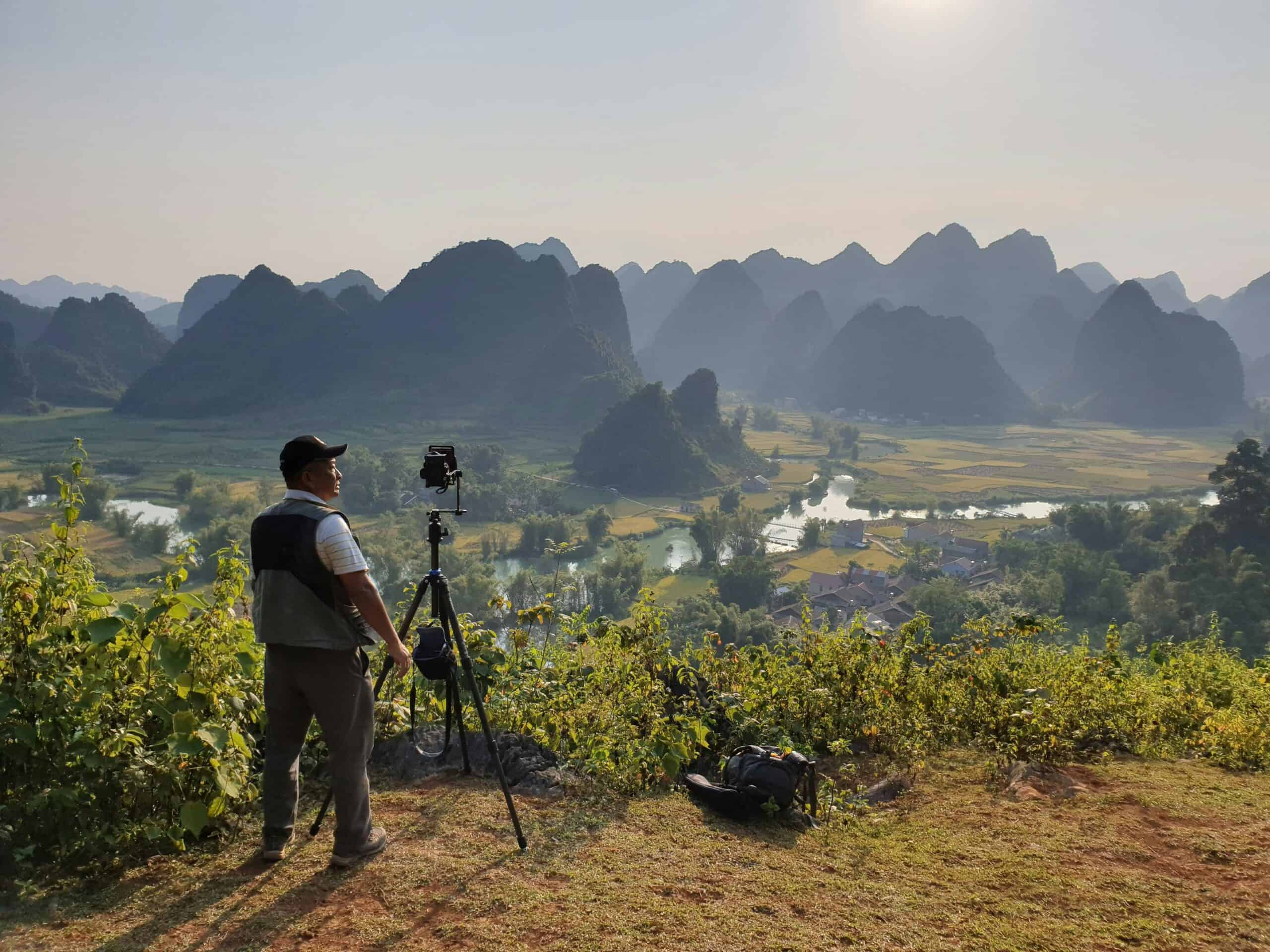
Crowded Event or Street
Shoot at 11–15mm, f/5.6–f/8, 1/200s+, ISO 400–800. Do a fast first pass to lock geometry, then a slower second pass to catch gaps. In PTGui, use masks to select the cleanest subjects and remove duplicates/ghosts. Keep your pano head level and rotation increments consistent; you’ll thank yourself later in post.
Rooftop or Pole Capture
Use a lightweight head and secure the rig with a tether. Increase overlap to 40% to offset movement. Shoot at f/8, ISO 200–400, and faster shutters when wind picks up. If vibrations are visible on magnified LCD playback, add another pass and consider shorter exposures with slightly higher ISO.
Car-Mounted Drive-By
Mount low and rigid, reduce speed, and use 1/500s at f/5.6–f/8, ISO 800–1600 depending on light. Expect to fix parallax only if your NPP holds precisely; usually, you’ll get best results when the camera is static, but careful planning can yield impressive drive-by panos for backgrounds and VFX plates.
Frequently Asked Questions
- Can I shoot handheld panoramas with the Canon EOS R3?
Yes, especially outdoors at 11–15mm with fast shutter speeds. However, for 360×180 spherical panos, a tripod and pano head are strongly recommended to maintain nodal alignment and predictable overlap for error-free stitching.
- Is the Tokina ATX-i 11–20mm f/2.8 wide enough for a single-row 360?
Not for a full spherical 360×180. As a rectilinear ultrawide on APS-C, you’ll typically need multiple rows plus zenith and nadir. A single row can capture a cylindrical pano, but not the full sphere.
- Do I need HDR for interiors with bright windows?
Usually yes. Bracket ±2 EV (3–5 frames). The R3’s DR is solid, but windows often exceed it. PTGui can merge HDR brackets and stitch in one step for clean, natural results.
- How do I avoid parallax issues with this setup?
Use a panoramic head and align the no-parallax point. Mark your fore–aft rail positions for 11mm and 20mm so you can repeat the setup quickly on future shoots.
- What ISO range is safe on the R3 for low light panoramas?
ISO 100–800 is effectively clean; ISO 1600–3200 remains very usable when exposed well. Prefer longer exposures on a tripod instead of pushing ISO.
Safety, Limitations, and Trustworthy Workflow
Using an EF-S lens on the EOS R3 locks the camera into 1.6× crop mode, reducing single-frame resolution to around 9.5–10MP—which is normal and not a disadvantage for multi-frame panos. Ensure you have the Canon EF–EOS R adapter and test fit before client work. On rooftops, poles, or vehicle rigs, prioritize safety: tether the camera, confirm all clamps are fully tightened, and keep bystanders clear.
In post, keep a redundant backup strategy. Copy the card to two separate drives before editing. Export a master 16-bit TIFF and a web-ready JPEG. If you rely on client delivery platforms, also store a local copy of the final equirectangular image and the PTGui project file for future edits.
For a deeper dive into panoramic head setup and pro standards, review this step-by-step guide after you practice the basics. Set up a panoramic head for high-end 360 photos.