
Why This Camera & Lens Are Great for Panoramas
The Canon EOS R3 paired with the Pentax DA 10–17mm f/3.5–4.5 ED Fisheye is an unconventional but potent panorama combo when set up correctly. The R3 is a 24.1MP full‑frame, stacked CMOS mirrorless body with excellent high‑ISO performance, deep buffer, and in‑body image stabilization (IBIS) that can assist handheld shooting. Its full‑frame sensor (approx. 36×24mm) gives strong dynamic range (~14 stops at base ISO) and a pixel pitch of roughly 6.0 μm—big, forgiving pixels that keep noise low and gradients clean in 360 photos.
The Pentax DA 10–17mm is a fisheye zoom designed for APS‑C. On an EOS R3, you’ll mount it with a K‑to‑RF adapter; most adapters are manual, and because the DA 10–17 lacks an aperture ring, choose an adapter that includes an aperture control lever so you can stop down. Two realistic paths work well:
- Use the EOS R3 in 1.6× APS‑C crop mode to avoid vignetting. At 10–12mm, this lens behaves as a diagonal fisheye (~180° diagonal at the wide end), which is ideal for efficient 360° capture.
- Use full frame with the lens hood removed and zoom toward ~14–17mm to reduce corner cutoff. Expect more edge stretch than rectilinear glass, but you gain coverage with fewer shots, and stitching is generally easier.
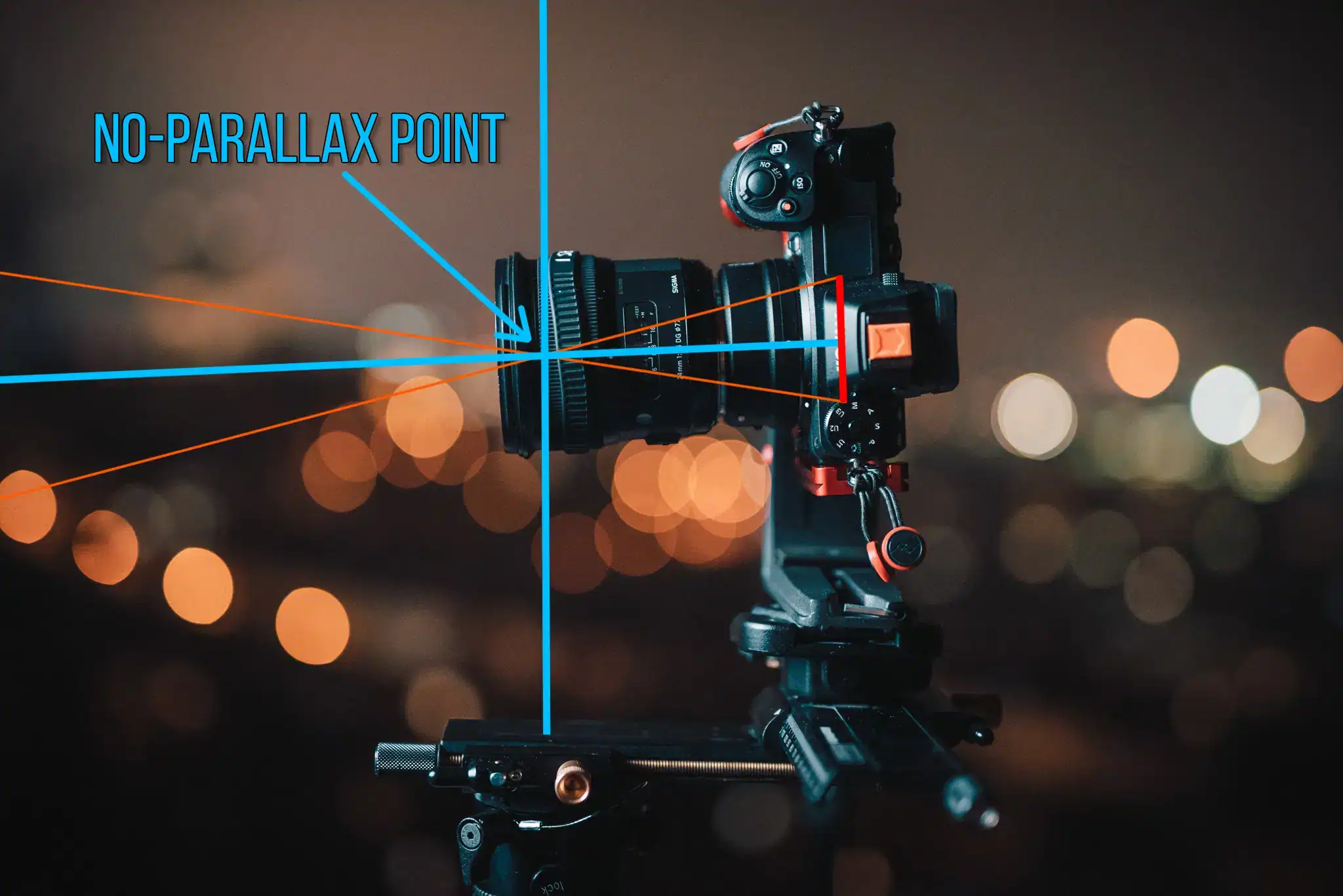
Because it’s a fisheye, geometric distortion is intentional and predictable—perfect for panorama stitching software like PTGui or Hugin. With careful nodal (entrance pupil) alignment on a panoramic head, you’ll minimize parallax and produce seamless, high‑resolution 360 photos. If you’ve been wondering how to shoot panorama with Canon EOS R3 & Pentax DA 10-17mm f/3.5-4.5 ED Fisheye, this guide gives you a clear, field‑tested workflow.
Quick Setup Overview
- Camera: Canon EOS R3 — Full Frame, 24.1MP stacked CMOS, IBIS, excellent AF, strong low‑light performance.
- Lens: Pentax DA 10–17mm f/3.5–4.5 ED Fisheye — diagonal fisheye zoom (APS‑C), sharpest around f/5.6–f/8, moderate chromatic aberration (correctable), extremely wide FOV at 10–12mm.
- Mounting: K‑to‑RF adapter with aperture control. Expect manual focus and manual aperture operation.
- Estimated shots & overlap (tested baselines):
- APS‑C crop at 10–12mm (diagonal fisheye): 6 around (60° steps) + zenith + nadir, 25–30% overlap.
- Full‑frame at ~14–17mm (hood removed): 6–8 around + zenith + nadir, 25–30% overlap.
- Difficulty: Moderate — easy capture counts thanks to fisheye FOV, but requires nodal alignment and careful adapter use.
Planning & On-Site Preparation
Evaluate Shooting Environment
Panorama projects succeed or fail in the planning. Study your scene for dynamic range (bright windows vs dark corners), reflective surfaces (glass, polished floors, cars), and movement (people, trees, traffic). If shooting near windows, get as close and as perpendicular as possible to reduce reflections and ghosting; a rubber lens hood pressed to glass can help. In outdoor sunsets, expect intense contrast—plan for HDR bracketing. On rooftops or in wind, prioritize safety: tether your gear and reduce sail area.
Match Gear to Scene Goals
The EOS R3’s dynamic range and clean files up to ISO 1600–3200 make it great for interiors and dusk. For stitched 360s, ISO 100–400 gives the best color depth. The fisheye’s advantage is efficiency—fewer frames with more overlap mean faster capture and fewer stitching seams. The tradeoff is distortion at edges; parallax errors can become visible if the nodal point isn’t aligned. For crowded events, the R3’s responsive shutter and IBIS help you work quickly; for interiors, lock the camera down and bracket methodically.
Pre-shoot Checklist
- Battery & storage: Fully charge and bring spares; 64–128GB cards for bracketing rounds.
- Optics clean: Fisheye fronts invite fingerprints—clean the front element and sensor.
- Tripod leveling: Use a leveling base or half‑ball; a level platform speeds rotation and stitching.
- Pano head calibration: Verify your entrance pupil settings for this lens at the chosen focal length.
- Safety: On rooftops/poles/cars, tether the camera, mind wind gusts, and keep bystanders clear.
- Backup workflow: Shoot one complete “safety” round. If time allows, shoot a second pass at a different exposure.
Essential Gear & Setup
Core Gear
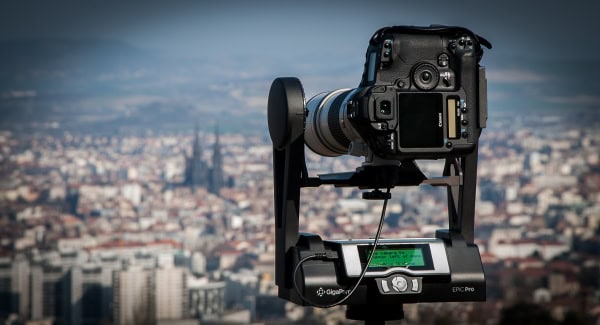
- Panoramic head: A two‑axis head with fore‑aft and left‑right rails lets you align the lens’s entrance pupil (nodal point) over the rotation axis. This eliminates parallax—critical for sharp stitches near the camera.
- Stable tripod with leveling base: Leveling simplifies rotation and keeps the horizon consistent across frames.
- Remote trigger or Canon app: Minimize vibration. On tripod, use 2‑sec timer or a remote release.
Optional Add-ons
- Pole or car mount: For elevated or vehicle‑mounted 360s. Use guy lines, safety tethers, and avoid high winds.
- Lighting aids: Small LED panels or off‑camera flash for dark rooms if HDR isn’t desirable.
- Weather protection: Rain covers and lens cloths; fisheyes pick up raindrops easily on the front element.
Step-by-Step Shooting Guide
Standard Static Scenes
- Level tripod & align nodal point. Set your panoramic head so the entrance pupil (not the front element) sits directly over the yaw axis. Use two vertical objects (one near, one far). Rotate left/right; adjust the fore‑aft rail until relative motion disappears.
- Manual exposure & locked white balance. Switch to M mode; set WB to Daylight/Tungsten/Custom as appropriate. This prevents flicker and color shifts across frames.
- Frame sequence with tested overlap. For APS‑C crop at 10–12mm: shoot 6 around at 0° pitch, 60° apart, plus a zenith and a nadir. For FF at ~14–17mm (hood removed): 6–8 around depending on your overlap comfort, plus zenith and nadir.
- Take the nadir. After the “around” and zenith frames, tilt down or offset the tripod, or use a handheld nadir shot for cleaner tripod removal.
HDR / High Dynamic Range Interiors
- Bracket ±2 EV (e.g., 3 or 5 frames) to retain window detail and shadow depth. Keep the same aperture; vary shutter speed.
- Lock WB and disable auto ISO. Consistency reduces stitching artifacts and banding.
- Use exposure delay or remote trigger. Prevents vibration blur at slow shutter speeds.
Low-Light / Night Scenes
- Use longer exposures on a stable mount. For the EOS R3, ISO 100–400 will maximize dynamic range; ISO 800 is still clean if necessary.
- Turn off IBIS on a locked tripod to avoid micro‑jitters; leave it on only if handheld.
- Use the 2‑sec timer or remote, and shield the lens from stray streetlights to reduce flare.
Crowded Events
- Shoot two passes: one quickly for coverage, the second waiting for gaps in foot traffic at each heading.
- Mask moving people in post. Favor frames where subjects don’t overlap seams.
- Consider slightly higher shutter speeds (1/200–1/500) and ISO 400–800 to freeze motion.
Special Setups (Pole / Car / Drone)
- Pole work: Tether the camera, minimize rotation speed, and avoid winds over 10–12 m/s. A fisheye reduces frame count, which is safer on a pole.
- Car mounts: Use vibration‑damped suction rigs, secure safety lines, and plan routes with smooth pavement. Stop to shoot when possible.
- Drones: The DA 10–17 isn’t drone‑friendly; consider dedicated aerial workflows if you need airborne capture.
Recommended Settings & Pro Tips
Exposure & Focus
| Scenario | Aperture | Shutter | ISO | Notes |
|---|---|---|---|---|
| Daylight outdoor | f/8–f/11 | 1/100–1/250 | 100–200 | Lock WB (Daylight); enable lens shading correction in post |
| Low light/night | f/4–f/5.6 | 1/30–1/60 (or longer on tripod) | 400–800 | Remote trigger; IBIS off on tripod, on if handheld |
| Interior HDR | f/8 | Bracket ±2 EV | 100–400 | Balance windows & lamps; keep aperture fixed |
| Action / moving subjects | f/5.6–f/8 | 1/200+ | 400–800 | Freeze motion; consider two‑pass method |
Critical Tips
- Manual focus at hyperfocal: At 10–12mm, set f/8 and focus just past 1 m; everything to infinity will be sharp. Use focus peaking/magnification on the R3.
- Nodal calibration: Start with the fore‑aft rail so the tripod socket sits roughly under the lens midpoint; refine by aligning near/far objects. Mark your rail scales for 10, 12, 14, and 17mm.
- White balance lock: Mixed lighting causes color shifts; lock a custom WB from a gray card or pick a Kelvin value and keep it consistent.
- RAW capture: Always shoot RAW for panorama scenes. It maximizes dynamic range and simplifies CA and vignetting correction.
- IBIS: On tripod, turn off IBIS to prevent micro‑motion; enable it if you must shoot handheld panos.
Stitching & Post-Processing
Software Workflow
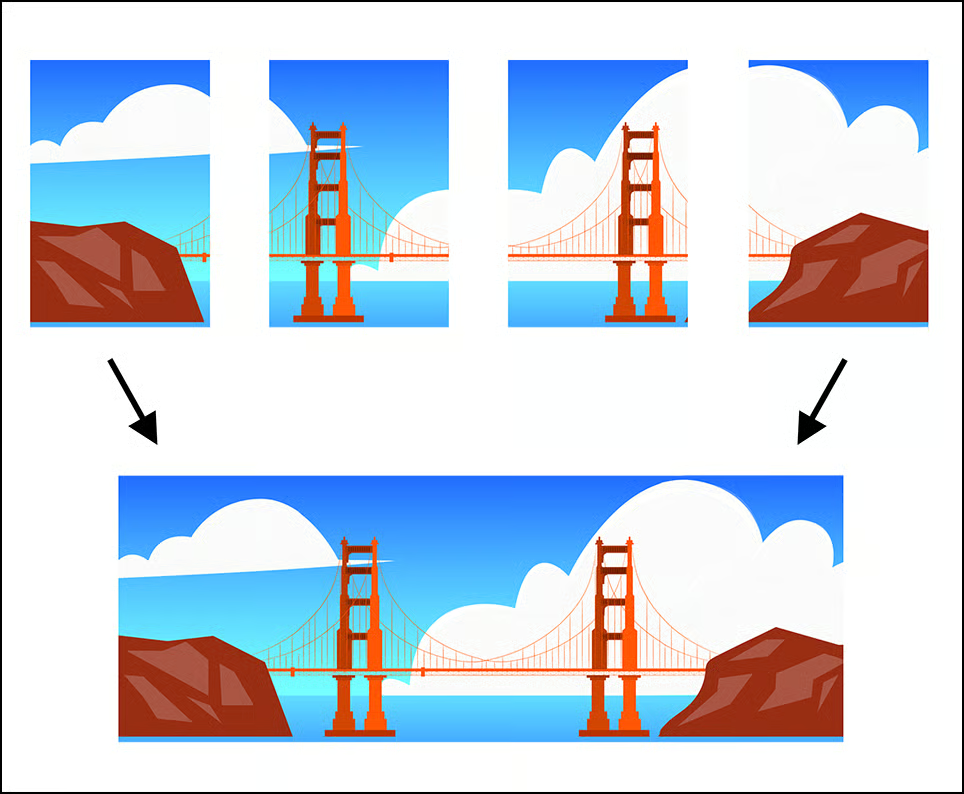
Import your RAW files into Lightroom or your preferred converter. Correct chromatic aberration and vignetting lightly (don’t overdo), align exposure across frames if needed, then export 16‑bit TIFFs to a stitcher. PTGui is the industry workhorse for fisheye 360s thanks to robust control point detection and true fisheye lens models; Hugin is a solid open‑source alternative. For fisheyes, 25–30% overlap is ideal; rectilinear lenses prefer 20–25% with more frames. After stitching, output an equirectangular panorama in 2:1 aspect for VR viewers. For tool deep‑dives, see this PTGui review and workflow overview at Fstoppers. Why PTGui excels for complex panoramas
Cleanup & Enhancement
- Nadir patch: Export a layered panorama to Photoshop; use Content‑Aware Fill, AI tools, or clone stamp to remove the tripod. Dedicated nadir patchers and logos make this fast.
- Color consistency: Balance mixed lighting with HSL and selective WB adjustments. Apply noise reduction sparingly for low‑light frames.
- Geometry: Level the horizon and correct yaw/pitch/roll. In PTGui, use the “Straighten” function or the Viewpoint tool for tricky nadirs.
- Delivery: Export 8K–16K equirectangular JPEGs for the web. For VR, follow platform specs; see Meta’s DSLR 360 guidance for best practices. DSLR 360 export considerations for VR platforms
Useful Tools & Resources
Software
- PTGui panorama stitching
- Hugin (open source)
- Lightroom / Photoshop / Affinity Photo
- AI tripod removal tools (Content‑Aware, Generative Fill)
Hardware
- Panoramic heads (Nodal Ninja, Leofoto, Sunwayfoto)
- Carbon fiber tripods with leveling base
- Wireless remote shutters
- Pole extensions and vehicle mounts with safety tethers
Disclaimer: brand names are for research reference; verify compatibility and specs on official sites.
A clear walk‑through of panoramic head fundamentals—perfect before your first calibration.
For a broader overview and lens selection strategies for 360 tours, this guide is also helpful. DSLR/Mirrorless 360 tour camera & lens guide
Common Mistakes & How to Avoid Them
- Parallax error → Calibrate the entrance pupil and don’t bump the rails mid‑shoot.
- Exposure flicker → Use full manual exposure and locked WB; avoid Auto ISO.
- Tripod shadows → Capture a clean nadir or plan a patch in post.
- Ghosting from movement → Shoot multiple passes and mask moving subjects.
- High‑ISO noise → Keep ISO ≤800 when possible on the R3; use a tripod and longer shutter.
- Adapter issues → Use a K‑to‑RF adapter with aperture control; test operation before critical work.
Real-World Case Studies
Indoor Real Estate (Bright Windows)
Use APS‑C crop at 10–12mm for efficient 6‑around capture. Shoot bracketed ±2 EV, f/8, base ISO 100–200. Keep the panoramic head perfectly level to guard against ceiling seam issues. In PTGui, enable exposure fusion HDR or preprocess brackets in Lightroom for consistent tonality.
Outdoor Sunset Landscape
Full frame at ~14–15mm (hood removed) for a slightly narrower FOV and cleaner corners. Manual exposure at f/8, ISO 100; meter for mid‑tones and consider a 5‑frame bracket if sun is in frame. Watch for flare; shield the front element during the frames pointed toward the sun.
Event Crowds
Handheld is possible with the EOS R3 and IBIS if you accept a higher frame count and careful panning. Use 1/250s, ISO 400–800, f/5.6. Shoot two passes and mask in post. Note: handheld panoramas are more sensitive to parallax; keep elbows tucked and rotate from the camera.
Rooftop / Pole Work
Switch to fewer frames with the fisheye (6‑around) to reduce exposure time in wind. Lower the pole between shots if gusts spike. Always tether. Capture a second safety round; micro‑blur from one bad frame can ruin an entire 360.
Frequently Asked Questions
- Can I shoot handheld panoramas with the Canon EOS R3?
Yes, especially outdoors in good light. The R3’s IBIS helps, but expect more frames and careful rotation around your body’s axis to minimize parallax. For critical work or interiors, a tripod with a panoramic head is still best.
- Is the Pentax DA 10–17mm wide enough for a single‑row 360?
In APS‑C crop at 10–12mm, yes. Plan on 6 shots around plus a zenith and nadir. On full frame with the hood removed and zoomed to ~14–17mm, you can still do a single row but may prefer 6–8 around for safer overlap.
- Do I need HDR for interiors with bright windows?
Usually. The R3 has solid dynamic range, but bracketing ±2 EV (3–5 frames) preserves window detail and clean shadows, simplifying post work and avoiding halos.
- How do I avoid parallax issues with this combo?
Use a panoramic head and calibrate the entrance pupil for your chosen focal length. Keep the camera level, don’t move the tripod between frames, and avoid nearby foreground objects when possible.
- What ISO range is safe on the EOS R3 for low light panoramas?
For top quality, ISO 100–400. ISO 800 remains very usable on the R3; beyond that, noise increases. Since you’re on a tripod most of the time, favor longer shutter speeds over higher ISO.
- Can I set up Custom Modes to speed up pano work?
Yes—store manual exposure, manual WB, single shot drive, IBIS off (tripod), focus peaking on, and the APS‑C crop state to C1/C2. One click and you’re ready to shoot.
- How do I reduce flare with a fisheye?
Avoid pointing directly into strong lights when possible; use your hand or a flag just out of frame to shade the lens, clean the front element, and consider slightly changing your rotation starting angle to keep the sun near a seam for easier masking.
- What’s the best tripod head for this setup?
A two‑axis panoramic head with precise rail scales (e.g., Nodal Ninja/Leofoto) is ideal. Ensure the vertical arm can clear the R3’s grip and that the fore‑aft rail has enough travel to dial in the entrance pupil for 10–17mm.
Safety, Quality, and Workflow Confidence
Tether your camera on rooftops and poles, keep bystanders outside the fall zone, and never leave the tripod unattended in wind. On the quality side, shoot RAW, lock exposure and WB, verify overlap on‑site, and always capture a second safety round. For a deeper primer on head setup and best practices, this panoramic head tutorial is a concise reference. Panoramic head setup essentials
Technical Notes Specific to the EOS R3 + DA 10–17mm
- Adapter choice: Use a K‑to‑RF adapter with mechanical aperture control. Without it, you’ll be stuck wide open.
- Lens hood: Removing the hood reduces vignetting on full frame at ~14–17mm. Inspect corners; if dark, either zoom in slightly or switch to APS‑C crop.
- Focus: Manual only with most adapters. Enable focus peaking and magnification; set focus once and leave it.
- Shutter: Electronic first curtain or mechanical both work. Use 2‑sec timer to avoid vibration.
- Resolution math: APS‑C crop reduces single‑frame resolution to ~10MP, but panorama stitching multiplies pixel count. A 6‑around + Z/N pano will produce a large equirectangular usable for 8K or higher web delivery.
Walkthrough of stitching strategy and control point refinement in PTGui.
Wrap-Up
If you need a fast, reliable workflow for how to shoot panorama with Canon EOS R3 & Pentax DA 10-17mm f/3.5-4.5 ED Fisheye, lean into the fisheye’s efficiency and the R3’s robust files. Calibrate the nodal point, lock down exposure and WB, and maintain clean overlap. Whether you opt for APS‑C crop for predictable coverage or full‑frame with the hood off for maximum sensor use, this combo can deliver crisp, immersive 360° panoramas with minimal frames and smooth stitches—indoors, outdoors, and even on a pole when conditions allow.