
Why This Camera & Lens Are Great for Panoramas
If you want to know how to shoot panorama with Canon EOS R3 & Nikon Z 14-24mm f/2.8 S and get professional, high-resolution results, you’re pairing a fast, low-noise full-frame mirrorless body with one of the sharpest ultra-wide rectilinear zooms available. The Canon EOS R3 uses a 24.1 MP full-frame stacked CMOS sensor (approx. 6.0 µm pixel pitch), excellent for clean files, fast readout, and strong highlight protection. Expect roughly 13.5 EV of dynamic range at base ISO and very usable ISO 1600–3200 when needed. The body’s ergonomics, responsive shutter, and robust weather sealing make it ideal for long sessions on a tripod.
The Nikon Z 14-24mm f/2.8 S is a rectilinear zoom that stays remarkably sharp corner-to-corner, with low coma and well-controlled chromatic aberration. At 14 mm, it delivers an expansive field of view (diagonal ~114°, horizontal ~104°, vertical ~81°) that’s perfect for multi-row spherical panoramas. Stopped down to f/8–f/11, it’s crisp across the frame, which helps pano stitches align cleanly even with fine textures like foliage and brickwork.
Important mount note: this lens is designed for Nikon Z mount and does not have a native or widely available smart adapter to Canon RF. Because it’s fully electronic (no aperture ring, no mechanical linkage), you cannot reliably control aperture or focus on an EOS R3. If you are committed to this exact lens, the practical options are: use a Nikon Z body for capture, or choose a functional RF-mount alternative (e.g., Canon RF 15–35mm f/2.8L) for the R3. The techniques below apply directly to the lens’s field of view and to similar ultra-wide rectilinears on the R3.
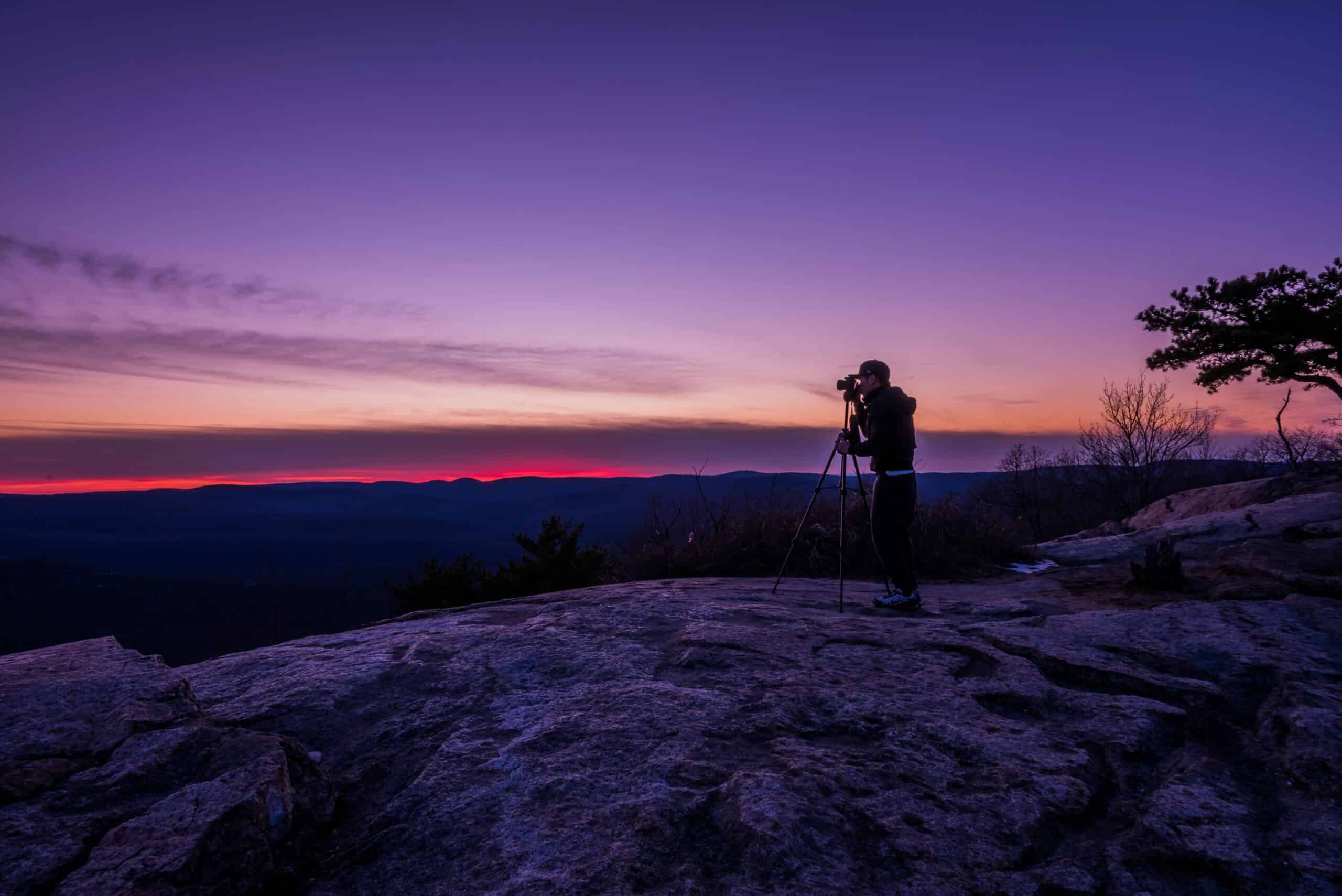
Quick Setup Overview
- Camera: Canon EOS R3 — Full-frame, 24.1 MP stacked CMOS, strong DR, excellent high-ISO, 8-stop IBIS with compatible lenses (turn off on tripod).
- Lens: Nikon Z 14-24mm f/2.8 S — Ultra-wide rectilinear zoom; best sharpness at f/5.6–f/11; low CA and good flare resistance for an ultra-wide.
- Estimated shots & overlap (Full Frame, rectilinear, ~25–30% overlap):
- At 14 mm: 3 rows around recommended. Safe set: 6 shots per row at yaw 60° for three rows (+45°, 0°, −45°) = 18, plus zenith + nadir = 20 total.
- Minimal at 14 mm (experienced users): 5 shots per row at yaw 72° for three rows = 15, plus zenith + nadir = 17 total (requires careful coverage).
- At 24 mm: 7 shots per row at yaw ~50–55°, three rows = 21, plus zenith + nadir = 23 total for high-resolution stitches.
- Difficulty: Moderate. Fewer shots than longer focal lengths, but requires careful nodal alignment and controlled exposure.
Planning & On-Site Preparation
Evaluate Shooting Environment
Scan the scene for motion (people, trees, traffic), reflective surfaces (glass, polished floors), and strong light sources (sun, neon, spotlights). If you’re shooting through glass, work square to the pane and place the lens as close as practical while avoiding contact to reduce reflections; a rubber lens hood helps. In windy conditions, lower the tripod legs, hang weight from the center column, and use a remote trigger. For sunrise/sunset, bracket exposures to preserve highlights and shadows across the entire sweep.
Match Gear to Scene Goals
The EOS R3’s low noise floor and responsive shutter are perfect for fast multi-row captures and mixed lighting. It handles ISO 100–400 for outdoor daylight and ISO 400–1600 indoors without visible banding or harsh color noise in RAW. The Nikon Z 14-24mm f/2.8 S at 14–18 mm keeps shot counts reasonable while maintaining straight lines for architecture and real estate. Fisheyes need fewer frames but can complicate edge detail and require “defishing”; this rectilinear zoom balances realism and efficiency.
Pre-shoot Checklist
- Power and storage: fully charged batteries, large/fast card, and one spare. Clean front/rear elements and check for sensor dust.
- Tripod/panoramic head: level base, test your detents/click-stops, confirm nodal alignment at the chosen focal length.
- Safety: tether gear on rooftops or over railings; watch wind gusts; double-check clamps; use a safety strap on poles/car mounts.
- Backup workflow: shoot a redundant pass (especially zenith/nadir) in case of alignment issues or people moving through frames.
Essential Gear & Setup
Core Gear
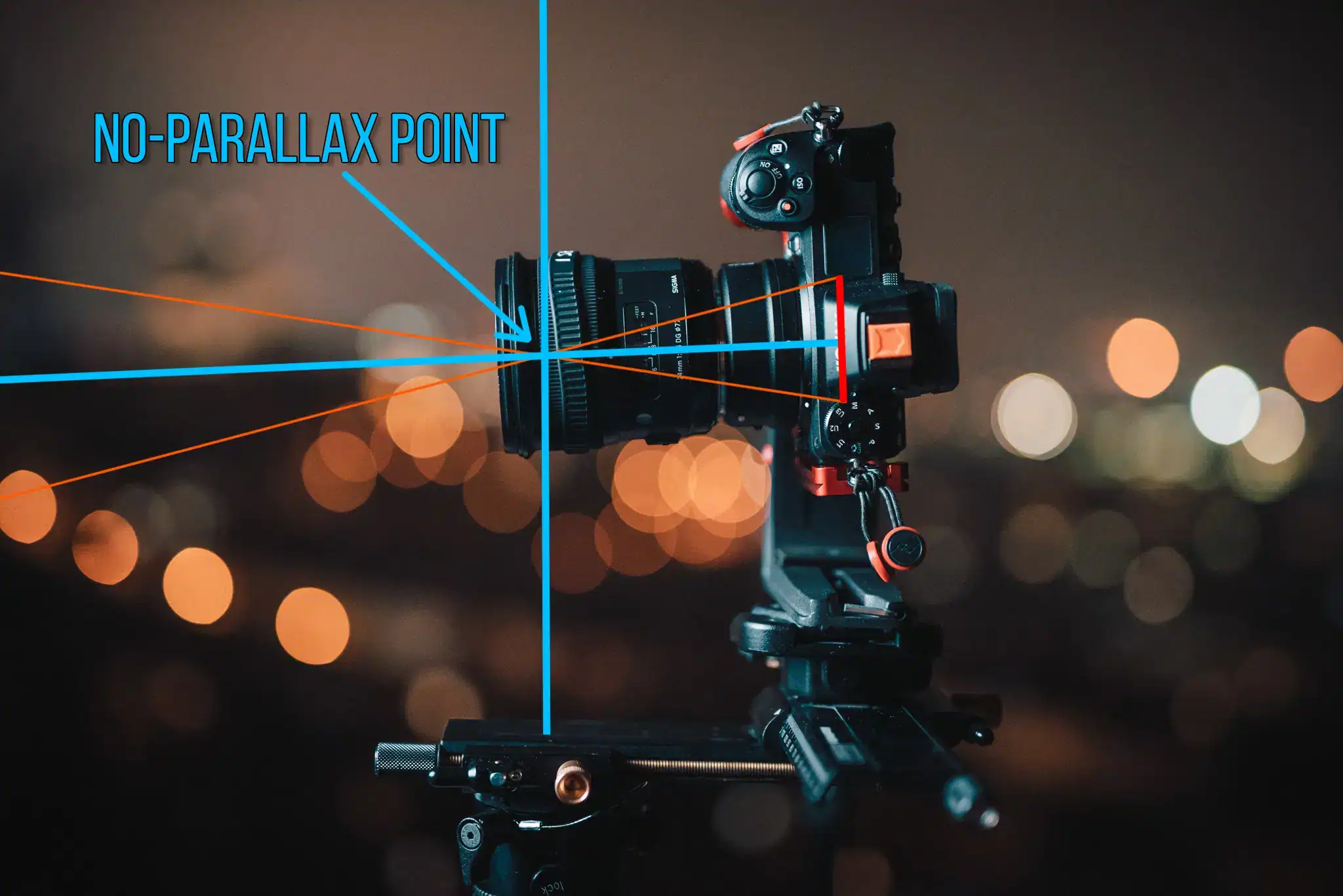
- Panoramic head: Enables nodal (no-parallax) alignment. This is essential for interiors, architecture, and any scene with near objects. Aligning the entrance pupil prevents foreground/background shifts that cause stitching errors.
- Stable tripod with leveling base: A leveling base speeds setup and keeps your rows consistent so you don’t lose overlap at the poles.
- Remote trigger or app: Use a cable release or camera app to avoid micro-shake during long exposures and low-light frames.
Optional Add-ons
- Pole or car mount: Useful for elevated or vehicle panoramas. Always tether the rig, avoid high winds, and account for vibration with faster shutter speeds.
- Lighting aids: Small LED panels or bounced speedlights for interiors to balance contrast; keep light consistent across frames.
- Weather protection: Rain covers, microfiber towels, and a rocket blower. Moisture or dust on an ultra-wide is painfully obvious.
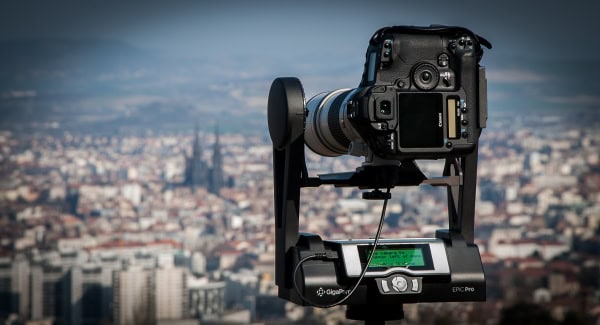
Step-by-Step Shooting Guide
Standard Static Scenes
- Level tripod and align nodal point: Mount your pano head, level the base, and set the lens at your chosen focal length (e.g., 14 mm). Calibrate the no-parallax point by aligning two vertical objects at different distances and rotating the rig; adjust fore-aft until the objects do not shift relative to each other. Mark this position on the rail for speed next time.
- Manual exposure and white balance: Set M mode and use a middle frame to meter. Lock ISO, shutter, aperture, and white balance (Daylight, Cloudy, or Kelvin). Consistency avoids visible seams and color flicker in the stitch.
- Capture sequence with overlap: For 14 mm, use three rows (e.g., +45°, 0°, −45°) with 6 frames per row at 60° yaw increments for a safe stitch. Verify histogram and adjust if highlights clip.
- Zenith and nadir: Tilt up and capture the zenith, then tilt down for the nadir. For clean tripod removal, shoot a separate nadir frame after moving the tripod slightly and patch later.
HDR / High Dynamic Range Interiors
- Bracket ±2 EV (3–5 frames): For bright windows and dark corners, use AEB in manual mode. Keep WB locked to avoid color shifts across brackets.
- Consistency: Maintain the same bracket count and order for every position. This helps batch merge in PTGui or Lightroom before stitching.
Low-Light / Night Scenes
- Long exposures: Start around f/4–f/5.6, ISO 400–800 on the R3, and lengthen shutter as needed. Use EFCS or mechanical shutter to minimize artifacts, and turn off IBIS on a tripod to prevent micro-vibrations.
- Stability: Remote release or 2 s timer. Allow 1–2 seconds after rotating before triggering the shutter to let any vibrations settle.
Crowded Events
- Two passes: Make a fast primary pass for coverage, then a second pass waiting for gaps. This gives you clean plates to mask people in post.
- Shutter speed: Use 1/200 s or faster at f/5.6–f/8 and ISO 400–800 to freeze motion and avoid ghosting.
Special Setups (Pole / Car / Drone)
- Pole: Balance the rig and keep rotations slow. Choose a faster shutter (1/250–1/500 s) to counter sway; tether the camera and avoid crowded areas.
- Car mount: Use powerful suction cups and safety straps. Plan a route with smooth pavement. Shoot at off-peak hours to reduce moving occlusions.
Real-World Case Studies
Indoor Real Estate
Shoot at 14–18 mm, f/8, ISO 100–200, bracket ±2 EV. Keep verticals straight by leveling the head carefully. Watch mixed lighting; set WB to a neutral Kelvin (e.g., 4000–4500 K) to reduce green/magenta shifts from LEDs.
Outdoor Sunset
Expose for highlights (don’t blow the sunlit clouds) and bracket if needed. A 3-row capture at 14 mm preserves sky and foreground detail. Shoot fast as light changes per frame; the EOS R3’s response helps keep exposure consistent across rows.
Events and Crowds
Set a faster shutter and do the double-pass method. Mark your tripod spot with gaffer tape to maintain exact position if you need to pause between rows.
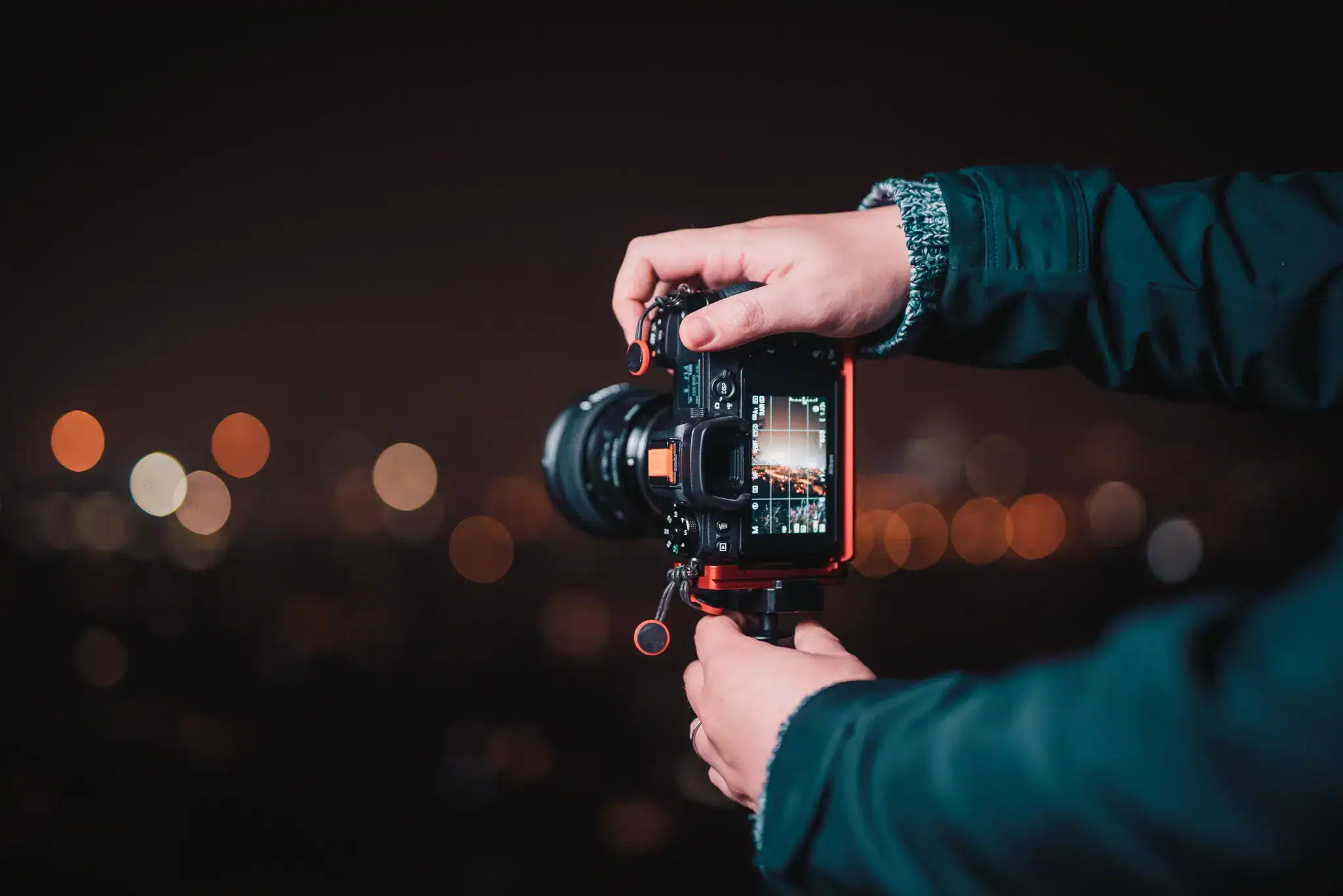
Recommended Settings & Pro Tips
Exposure & Focus
| Scenario | Aperture | Shutter | ISO | Notes |
|---|---|---|---|---|
| Daylight outdoor | f/8–f/11 | 1/100–1/250 | 100–200 | Lock WB (Daylight/Kelvin). Use 3-row at 14 mm for full sphere. |
| Low light/night | f/4–f/5.6 | 1/30–1/60 | 400–800 | Tripod + remote; keep IBIS off on tripod; consider longer shutter instead of higher ISO. |
| Interior HDR | f/8 | Bracket ±2 EV | 100–400 | Merge brackets before stitching or let PTGui handle HDR stitching. |
| Action / moving subjects | f/5.6–f/8 | 1/200+ | 400–800 | Use two-pass method to capture clean plates for masking. |
Critical Tips
- Manual focus: Use magnified live view to set focus just beyond hyperfocal distance at your chosen aperture. Then set the lens to MF to lock focus.
- Nodal point calibration: Start with the lens roughly centered over the tripod’s rotation axis. At 14 mm, expect the entrance pupil to be forward of the sensor plane; fine-tune with the near/far alignment method and mark your rail.
- White balance lock: Mixed lighting causes headaches; lock WB to a Kelvin value rather than Auto to avoid panel-to-panel shifts.
- RAW capture: Shoot RAW for maximum DR and consistent color grading across panels. The R3’s 14-bit RAW files grade cleanly.
- IBIS/IS: Disable stabilization when on a rigid tripod to avoid sensor micro-movements that can blur long exposures.
Stitching & Post-Processing
Software Workflow
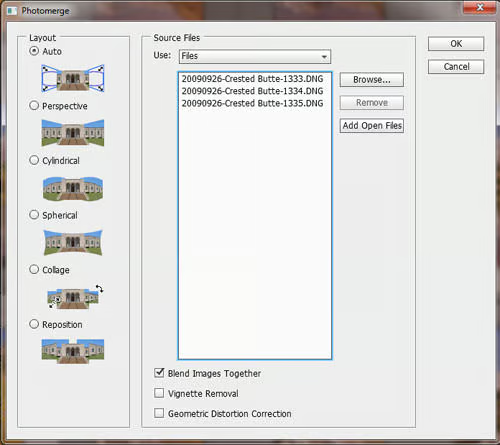
For rectilinear ultra-wides, PTGui is exceptionally reliable and fast. You can batch-align a full 3-row set, auto-generate control points, and optimize yaw/pitch/roll in minutes. Hugin is a solid open-source alternative. Lightroom/Photoshop can stitch simple single-row panoramas but are less flexible with multi-row 360s. Industry guidelines suggest ~20–25% overlap for rectilinears; for trouble-free results, use 25–30% at ultra-wide focal lengths, especially with close foregrounds. For background reading on head setup, see this panoramic head tutorial. Panoramic head setup best practices
Cleanup & Enhancement
- Nadir patch: After stitching to an equirectangular projection, patch the tripod using a clean nadir plate, AI fill, or clone/heal tools.
- Color and noise: Match color temperature across the panorama and apply gentle noise reduction, especially if you used ISO 800+ at night.
- Leveling: Use horizon-level tools in PTGui or your editor; correct yaw/pitch/roll for a comfortable viewer experience.
- Export: Save as 16-bit TIFF for archival edits or high-quality JPEG/WEBP at 8–12k pixels wide for web/VR. Follow platform specs for maximum sizes.
If you’re new to multi-row stitching, this in-depth PTGui overview is helpful for choosing projections and optimizing control points. Why PTGui excels for complex panoramas
Video Walkthrough
Want a visual guide to multi-row technique and stitching flow? Watch this practical tutorial and follow along with your own test set.
For platform-specific deliverables and viewer publishing tips, this guide from Meta/Oculus is concise and practical. Using a DSLR/mirrorless to shoot and stitch a 360 photo
Useful Tools & Resources
Software
- PTGui panorama stitching
- Hugin (open source)
- Lightroom / Photoshop for RAW and finishing
- AI tripod removal and sky replacement tools for quick cleanup
Hardware
- Panoramic heads (Nodal Ninja, Leofoto, Sunwayfoto) with fore-aft rails
- Carbon fiber tripods with leveling bases
- Wireless remote shutters or smartphone control
- Pole extensions and car suction mounts with safety tethers
Disclaimer: software/hardware names provided for search reference; check official sites for specs and compatibility.
Common Mistakes & How to Avoid Them
- Parallax error: Always align the lens’s entrance pupil over the rotation axis; test with near/far objects before the real shoot.
- Exposure flicker: Manual exposure and locked white balance prevent visible seams and gradients in the stitch.
- Tripod shadows and legs: Capture a clean nadir plate and patch it during post.
- Ghosting from movement: Use two passes, faster shutter speeds, and mask in post-processing.
- Night noise and blur: Keep ISO moderate (400–800) on the R3, lengthen shutter on a steady tripod, and disable IBIS.
Frequently Asked Questions
- Can I mount the Nikon Z 14–24mm f/2.8 S on the Canon EOS R3?
Not reliably. This lens is fully electronic and there is no widely available smart adapter for Z-to-RF. You won’t have aperture or AF control. To use this exact lens, shoot on a Nikon Z body or choose an RF ultra-wide with similar FOV for the R3. Technique remains identical.
- Is 14 mm wide enough for a single-row 360?
No. At 14 mm rectilinear you should plan a multi-row capture to cover zenith and nadir cleanly. A practical starting pattern is 3 rows of 6 frames (60° yaw spacing) plus zenith and nadir (about 20 frames total).
- Do I need HDR for interiors with bright windows?
Usually, yes. Bracket ±2 EV (3–5 frames) at each position to preserve both view-through windows and interior shadows. Merge before stitching or let PTGui handle HDR panoramas automatically.
- How do I avoid parallax issues with ultra-wides?
Use a panoramic head and align the entrance pupil (no-parallax point). Position two vertical objects near and far, rotate, and adjust the fore-aft rail until there’s no relative shift. Mark the rail position for 14 mm and 24 mm separately.
- What ISO range is safe on the EOS R3 in low light?
For tripod-based panoramas, ISO 100–800 is the sweet spot. The R3 handles ISO 1600–3200 well in a pinch, but prefer longer shutter times when possible to preserve dynamic range and color depth.
- Can I set custom modes for pano work?
Yes. Save a pano profile to C1 or C2 with manual exposure, fixed WB (Kelvin), RAW, IBIS off, and MF. You can save a second custom mode for HDR with AEB enabled.
- How do I reduce flare at 14 mm?
Avoid pointing directly into harsh light sources, shade the front element with your hand or a flag, and clean the lens meticulously. Shoot a second frame with your hand removed to plate out any accidental shading in post.
- What’s the best tripod head for this setup?
A multi-row panoramic head with a vertical and horizontal rotator and precise detents. Look for adjustable fore-aft rails and clear scales so you can repeat your nodal alignment at 14, 18, and 24 mm.
Safety, Limits, and Workflow Confidence
Always load-test clamps and plates, especially over crowds, traffic, or balconies. Use redundant straps for poles and car rigs, and avoid windy days with tall poles. Protect your files with dual card recording (if available) and a field backup to your phone or a portable SSD after critical shoots. The EOS R3 battery and weather sealing are robust, but always carry spares and a rain cover. For technique deep-dives and more pano math, this resource helps you plan shot counts and coverage across focal lengths. Panotools spherical resolution guide