Why This Camera & Lens Are Great for Panoramas
If you want to know how to shoot panorama with Canon EOS R3 & Nikon AF-S 8-15mm f/3.5-4.5E ED Fisheye, this combo can deliver fast, reliable capture with extremely wide coverage. The Canon EOS R3 is a 24.1 MP full-frame mirrorless with a stacked CMOS sensor, roughly 6.0 µm pixel pitch, excellent readout speed, and robust dynamic range around 14 stops at base ISO. In practice, that means low noise, good shadow recovery, and dependable color for 360 photo workflows. The Nikon AF-S 8-15mm is a fisheye zoom providing circular 180° at 8mm and diagonal 180° at 15mm. For panoramas, a fisheye dramatically reduces the number of shots needed, speeding up capture and minimizing stitching seams.
Distortion is intentional with fisheye; modern stitching software remaps it seamlessly to an equirectangular panorama. The main caveat is mount compatibility: you’ll need a Nikon F-to-Canon RF adapter. Because this lens is an E-type (electromagnetic diaphragm), full electronic control (aperture and AF) requires a “smart” adapter that explicitly supports Nikon E lenses. If your adapter is a dumb/mechanical type, you won’t be able to change the aperture on this lens (it will stay wide open). For panoramas that’s workable—since we often shoot stopped down—but not ideal. Always verify your adapter’s capabilities before the shoot. If your adapter doesn’t provide aperture control, plan to work at the lens’s wide-open setting and compensate with shutter/ISO, or consider an alternative lens with manual aperture control.
Quick Setup Overview
- Camera: Canon EOS R3 — Full-frame (36×24 mm), 24.1 MP stacked CMOS, approx. 14-bit RAW, excellent AF and robust build.
- Lens: Nikon AF-S 8-15mm f/3.5-4.5E ED Fisheye — Fisheye zoom; circular 180° at 8mm; diagonal 180° at 15mm; sharp centrally, some CA/softness near edges (typical fisheye behavior).
- Estimated shots & overlap (tested guidance on full-frame):
- 8mm (circular): 4 around (90° yaw) + optional zenith + nadir; target 30–40% overlap.
- 12mm (diagonal fisheye): 6 around (60° yaw) + zenith + nadir; target 25–30% overlap.
- 15mm (diagonal fisheye): 8 around (45° yaw) + zenith + nadir; target 25–30% overlap.
- Difficulty: Moderate. The fisheye reduces shots, but nodal alignment and adapter considerations add complexity.
Planning & On-Site Preparation
Evaluate Shooting Environment
Look at light direction, contrast, and movement. Glass walls or glossy floors cause reflections and ghosting, especially with fisheyes. If shooting through glass, keep the lens as close as possible (1–2 cm) to reduce internal reflections, and use a black cloth or rubber hood to block stray light. Wind and vibration matter for long exposures; ensure the tripod is secure and lower the center column for stability.
Match Gear to Scene Goals
The EOS R3’s dynamic range and low-light performance make it excellent for interior HDR panorama and night scenes. In real estate interiors, expect to bracket to handle windows. For outdoor sunsets, the R3’s shadow recovery is forgiving if you slightly underexpose highlights. The fisheye lens is ideal when you want fewer shots and faster capture—great for crowds or rooftops—at the expense of fisheye projection that must be reprojected in software. The EOS R3 comfortably handles ISO 100–800 with very clean files; ISO 1600 is still usable when needed, but keep it conservative for best stitch consistency.
Pre-shoot Checklist
- Charge batteries and bring spares; R3 battery life is solid, but bracketing multiplies frames.
- Format high-speed cards and enable file-numbering continuity for post-organization.
- Clean lens front element thoroughly; fisheyes see everything, including dust and smudges.
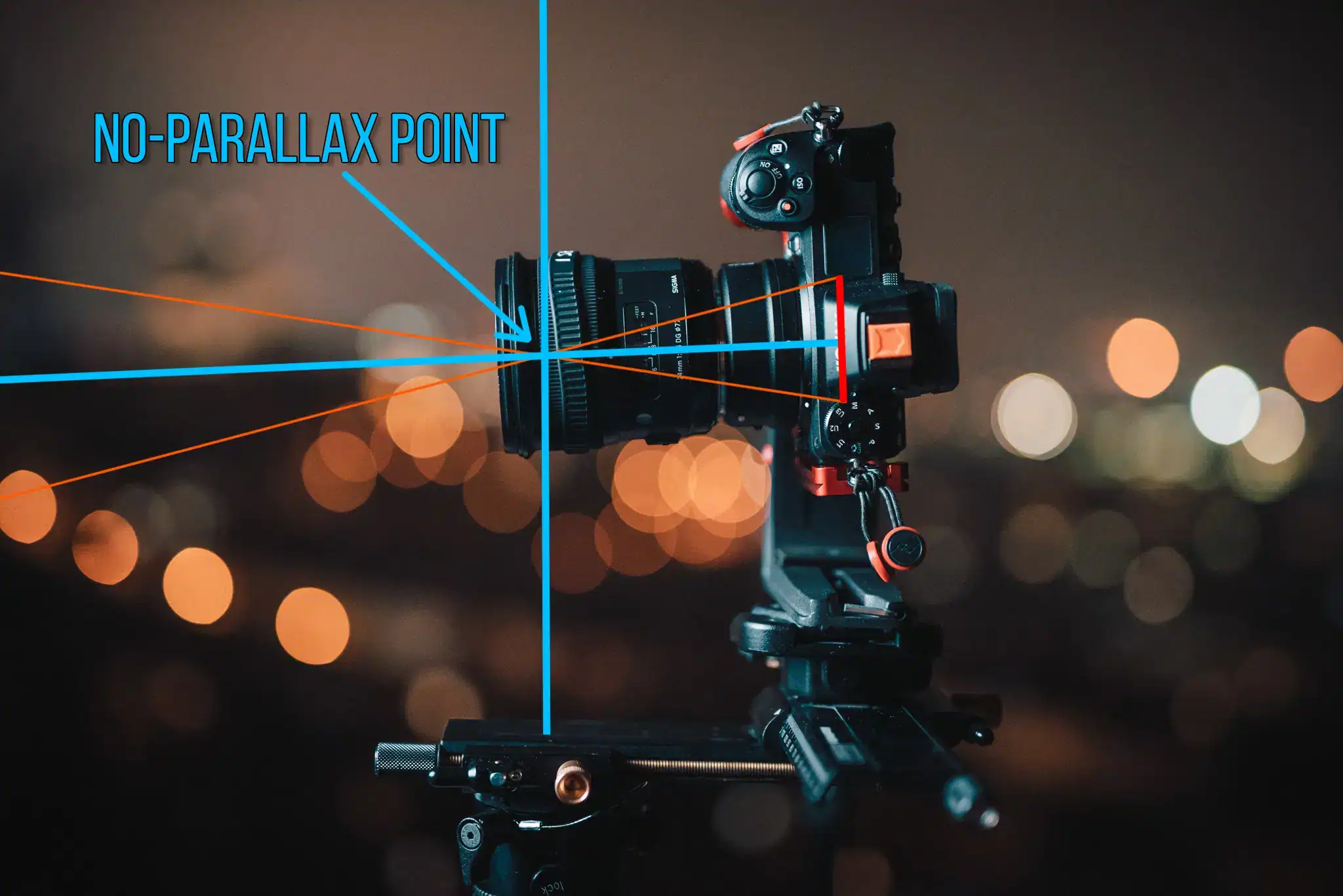
- Calibrate your panoramic head for the lens’s entrance pupil (no-parallax point) and write down the rail markings.
- Level the tripod with a leveling base; a level platform speeds stitching alignment.
- Safety: On rooftops or poles, use a safety tether. Mind wind gusts and people traffic.
- Backup workflow: If time allows, shoot a second full pass. It saves projects when one frame is soft or obstructed.
Essential Gear & Setup
Core Gear
- Panoramic head: A rotator with vertical arm keeps the lens rotating around its entrance pupil to minimize parallax. This is mandatory for multi-row or close-quarters scenes.
- Stable tripod with leveling base: Quick leveling reduces errors and helps the software maintain a straight horizon.
- Remote trigger or Canon Camera Connect app: Fire without touching the camera to avoid micro-shake, especially at slower shutters.
- RF adapter for Nikon F lens: Prefer a smart adapter that supports Nikon E-type aperture control. If your adapter doesn’t, plan your exposure strategy accordingly.
Optional Add-ons
- Pole or car mount: Use a safety tether, inspect bolts before every shoot, and beware of wind load. Slow your rotation to reduce motion blur.
- Lighting aids: Small LED panels to lift shadows in dim interiors; keep color temperature consistent to avoid mixed WB.
- Weather protection: Rain cover and lens hood; even a few droplets will be painfully obvious with a fisheye.
Step-by-Step Shooting Guide
Standard Static Scenes
- Level tripod and align the entrance pupil: On your panoramic head, slide the camera so the lens rotates around its entrance pupil. Test by placing two vertical objects (one near, one far) and pan—adjust until there’s no relative shift.
- Manual exposure and locked white balance: Set M mode to keep exposure consistent across frames. Choose a fixed Kelvin WB (e.g., 5500K daylight outdoors; 3200–4000K indoors) to avoid color shifts that complicate stitching.
- Frame sequence and overlap:
- 8mm circular: 4 shots around at 0° pitch (90° yaw steps). Optionally add a tilted-up zenith and a tilted-down nadir for clean poles and ground.
- 12mm diagonal: 6 around (60° steps) plus zenith and nadir.
- 15mm diagonal: 8 around (45° steps) plus zenith and nadir for safe coverage.
- Take a dedicated nadir: Tilt down 30–60° or remove tripod and shoot a handheld patch. You’ll use this to cover the tripod in post.
HDR / High Dynamic Range Interiors
- Bracket for windows and mixed lighting: Use AEB with 3–5 shots at ±2 EV. Keep ISO low (100–400) and aperture around f/8 for sharpness.
- Lock white balance and focus: Consistent WB avoids color flicker across brackets; manual focus prevents AF shifts between frames.
- Maintain sequence: Shoot all brackets per angle before rotating to the next to minimize motion inconsistencies.
Low-Light / Night Scenes
- Favor longer shutter over higher ISO: The EOS R3 stays very clean at ISO 100–800 and usable at 1600; tripod stability is your friend.
- Use a remote or self-timer: Prevent vibrations. Turn off IBIS when on a solid tripod to avoid micro-corrections.
- Watch bright point sources: Fisheyes exaggerate flare. Shade the lens with your hand just outside the frame if needed.
Crowded Events
- Two-pass method: First capture your full set quickly. Then do a second pass, waiting for gaps to minimize moving subject overlap.
- Use faster shutter (1/200+): Reduces subject smear. In post, mask the cleaner people positions from the second pass.
Special Setups (Pole / Car / Rooftop)
- Secure everything: Use tethers and check clamps. On cars, avoid highways; wind buffeting will ruin frames.
- Rotate slower and increase overlap: Helps your stitcher find robust control points despite vibration.
- Mind your shadow: For pole work, plan the sun position to avoid casting the photographer’s shadow across frames.
Recommended Settings & Pro Tips
Exposure & Focus
| Scenario | Aperture | Shutter | ISO | Notes |
|---|---|---|---|---|
| Daylight outdoor | f/8–f/11 | 1/100–1/250 | 100–200 | Lock WB (Daylight/Kelvin). Polarizers are not recommended for 360. |
| Low light/night | f/4–f/5.6 | 1/30–1/60 (or longer on tripod) | 400–800 (≤1600) | Use remote; turn off IBIS on tripod. |
| Interior HDR | f/8 | Bracket ±2 EV (3–5 shots) | 100–400 | Expose for windows in one bracket, shadows in another. |
| Action / moving subjects | f/5.6–f/8 | 1/200+ | 400–800 | Two-pass capture; mask movement in post. |
Critical Tips
- Manual focus near hyperfocal: At 8–12mm, set focus slightly past 1 m, stop to f/8; confirm with magnified live view. Avoid AF hunting between frames.
- Nodal calibration: Tape-mark your rail positions for 8mm, 12mm, and 15mm. Re-check when you change focal length.
- White balance lock: Use Kelvin rather than Auto WB. Mixed lighting can shift frame-to-frame and complicate blending.
- RAW capture: 14-bit RAW maximizes dynamic range and color fidelity for HDR and de-ghosting.
- Stabilization: On a tripod, disable IBIS. With this adapted lens, AF and IBIS metadata may be limited—don’t rely on stabilization when precision is critical.
- Adapter reality: If your adapter cannot control the E-type aperture, plan exposure around wide-open shooting or consider borrowing a compatible smart adapter for stopped-down sharpness.
Stitching & Post-Processing
Software Workflow
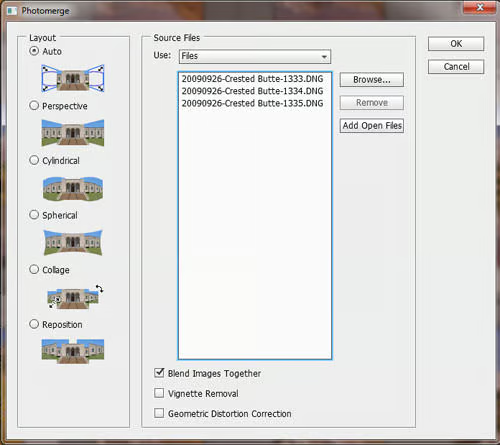
PTGui and Hugin are industry standards for 360 stitching. Fisheye input is well supported and often stitches faster with fewer control-point issues. Aim for 25–30% overlap with fisheye sets. Export as 2:1 equirectangular for VR. On a 24 MP body using a circular fisheye at 8mm (4-around), expect an equirectangular around 8K–10K pixels wide with good technique; diagonal fisheye sets (6–8 around) can push higher. For best results, enable lens type “Fisheye” and let the software read EXIF (if your adapter passes it). When metadata is missing, manually set focal length and projection. For reference on spherical resolution and practical limits, see the Panotools wiki. Useful background on spherical resolution.
Cleanup & Enhancement
- Nadir patch: Shoot a clean ground plate and use PTGui’s Viewpoint Correction or clone/AI tools to remove the tripod.
- Color and noise: Apply a subtle, consistent curve and noise reduction, especially in shadow brackets for night scenes.
- Leveling: Use the stitcher’s horizon tool. The more level you were on-site, the less correction you’ll need.
- Export: Deliver high-quality JPEG or 16-bit TIFF equirectangulars. For the web, 8K (8000×4000) is a popular balance of quality and performance.
PTGui is widely regarded as the most reliable tool for complex pano sets; if you’re shopping for software, reviews like this are a helpful starting point. Why many pros choose PTGui for panoramas.
Useful Tools & Resources
Software
- PTGui panorama stitching (fast, robust control points, good HDR handling)
- Hugin (open-source alternative with strong fisheye support)
- Lightroom / Photoshop (RAW prep, color, cleanup)
- AI tools for tripod removal and object cleanup
Hardware
- Panoramic heads: Nodal Ninja, Leofoto, and similar modular systems
- Carbon fiber tripods: rigid yet portable for rooftops and travel
- Leveling bases: fast setup; keep horizons straight
- Wireless remotes: minimize camera shake
- Pole extensions / car mounts: plan safety tethers and controlled environments
Disclaimer: software/hardware names provided for search reference; confirm current specs and compatibility on official sites.
If you’re new to panoramic heads, this tutorial clarifies principles and setup in a practical way. Panoramic head basics and alignment tips.
Video: Practical panoramic head setup and capture flow.
Common Mistakes & How to Avoid Them
- Parallax error: Always align to the entrance pupil. Re-check when changing focal length between 8, 12, and 15mm.
- Exposure flicker: Use manual exposure and a fixed Kelvin white balance; avoid Auto ISO and Auto WB.
- Tripod shadows and crew reflections: Plan the sun angle and capture a clean nadir for patching.
- Ghosting from moving people or trees: Use two-pass shooting and mask the clean frames in post.
- High ISO noise at night: Keep ISO ≤800 when possible; use longer shutter with remote release.
- Adapter limitations: Test your F-to-RF adapter before a paid job. Confirm aperture control on E-type lenses.
Field-Proven Scenarios
Indoor Real Estate (Window Contrast)
Mount the EOS R3 on a leveled panoramic head. Set WB to ~3600K if tungsten dominates, or 4000–4500K for mixed LEDs. Use f/8, ISO 100–200, and bracket ±2 EV (3–5 shots). At 12mm, capture 6 around + zenith + nadir with 25–30% overlap. In PTGui, enable HDR Merge, mask out moving ceiling fans, and patch the nadir with a clean plate shot.
Outdoor Sunset (High DR Skyline)
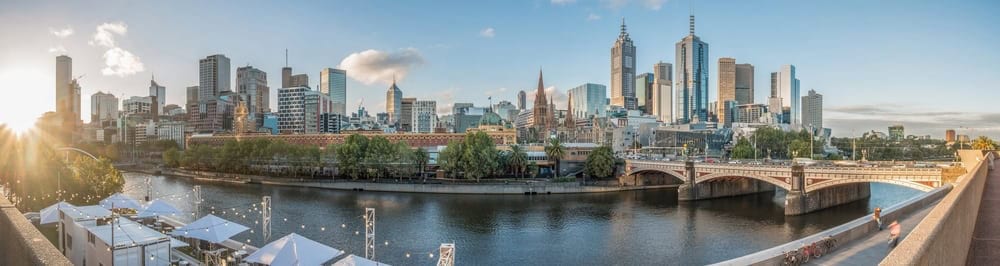
Use 8mm circular for speed (4 around + Z/N). Slightly underexpose to preserve highlights (−0.7 EV), ISO 100, f/8, shutter variable by meter. Consider a second darker pass for the sun zone. Blend in post using exposure fusion or HDR, and fine-tune color with a gentle S-curve. The R3’s shadow latitude helps recover foreground detail cleanly.
Event Crowds (Fast Coverage)
At 8mm, the fisheye keeps the shot count low; go 4 around quickly at 1/250, f/5.6, ISO 400–800. Then repeat the set, waiting for gaps. In PTGui, use masks to keep the least obstructed areas. This combo is fast and robust under time pressure.
Rooftop Pole (Wind Safety)
Use a carbon fiber pole with a safety tether. Angle into the wind and keep shutter ≥1/250 at f/5.6–f/8. Increase overlap to 35% to compensate for micro-motions. Always preview your frames for blur before leaving—shoot one more set as backup.
Adapter & Compatibility Notes (Important)
The Nikon AF-S 8-15mm f/3.5-4.5E ED uses an electromagnetic diaphragm. Many generic F-to-RF adapters do not provide electronic aperture control for E-type lenses. Without a compatible smart adapter, you may be stuck at the lens’s default aperture (wide open). That’s not ideal for panoramas where f/8 is a sweet spot. Before a job, test your adapter’s:
- Aperture control: Can you set f/8–f/11 reliably?
- EXIF pass-through: Helps stitchers auto-detect focal length and projection.
- AF and stabilization: Not required for pano, but good to know; rely on manual focus anyway.
If your current adapter lacks aperture control, consider renting a smart adapter or, as a fallback, plan exposures at the wide-open setting and compensate with shutter/ISO—while accepting some edge softness typical of fisheyes wide open.
For a broader overview of DSLR/mirrorless 360 workflows and lens choices, see this practical guide from Oculus. Using a DSLR or mirrorless to shoot and stitch a 360 photo.
Frequently Asked Questions
- Can I shoot handheld panoramas with the EOS R3?
Yes for partial panos, but for full 360 with near objects it’s risky. Handheld increases parallax and creates stitching errors. If you must, use the 8mm setting (fewer frames), high shutter (>1/250), and keep your rotation as consistent as possible. For professional results, use a leveled tripod and panoramic head.
- Is the Nikon 8-15mm wide enough for single-row 360 on full-frame?
Absolutely. At 8mm circular fisheye, 4 shots around plus optional zenith/nadir will cover a full sphere. At 12–15mm (diagonal fisheye), use 6–8 shots around plus zenith and nadir for reliable coverage.
- Do I need HDR for interiors with bright windows?
Usually yes. Bracket ±2 EV (3–5 shots) per position to balance window highlights and interior shadows. The EOS R3 can recover shadows well, but bracketing avoids noise and preserves color in extreme contrast.
- How do I avoid parallax issues with this lens?
Mount the camera on a calibrated panoramic head and align the entrance pupil. Mark your rail positions for 8, 12, and 15mm. Re-check alignment whenever you change focal length or adapter spacing.
- What ISO range is safe on the EOS R3 in low light?
For critical panoramas, ISO 100–800 is the sweet spot, with 1600 acceptable when needed. Prefer longer shutter times on a tripod over higher ISO for cleaner stitches and better color.
- Can I set Custom Modes (C1/C2) for faster pano setup?
Yes. Save Manual exposure, fixed WB, manual focus, drive mode (single or AEB), and stabilization OFF to a custom mode. It speeds up consistency across different locations.
- How do I reduce flare with a fisheye?
Avoid placing the sun or bright fixtures near the frame edge; shade the lens with your hand just outside the field of view. Clean the front element meticulously—any smudge will glow with a fisheye.
- What’s the best panoramic head type for this setup?
A compact, arca-based multi-row head with precise fore-aft and lateral adjustment (e.g., Nodal Ninja-style) is ideal. Make sure the vertical arm can position the lens’s entrance pupil above the yaw axis, and that the rotator has positive detents for your chosen shot count.
Safety, Limitations & Trustworthy Practices
Always tether gear on rooftops or poles and keep bystanders clear. In traffic or windy conditions, don’t risk elevated mounts. Be honest about the adapter limitations with this lens—aperture control may be restricted depending on your F-to-RF adapter. For robust technique and troubleshooting discussions, community knowledge bases are invaluable. A curated Q&A like this is a handy reference when refining your approach. Community tips for 360 panorama techniques.