
Why This Camera & Lens Are Great for Panoramas
This guide shows you how to shoot panoramas—up to full 360×180—using a Canon EOS R3 and a rectilinear ultra‑wide zoom like the Fujifilm XF 10–24mm f/4 OIS WR. Important note up front: the Fujifilm XF 10–24mm is an X‑mount APS‑C lens and does not natively mount on the Canon EOS R3’s RF mount. There is no practical electronic adapter that preserves aperture control and AF. In practice, you have two excellent paths:
- Use the EOS R3 with a similar RF ultra‑wide zoom (e.g., RF 14–35mm f/4L IS or RF 15–35mm f/2.8L IS). The techniques and shot counts below apply directly—simply match field of view (10mm on APS‑C ≈ 15mm full‑frame).
- Use the Fujifilm XF 10–24mm on a Fuji X‑series body and follow the same panorama workflow. The settings, overlap, and nodal alignment steps are identical because the lens is rectilinear.
Why the EOS R3 is a powerhouse for panoramas: its 24.1 MP full‑frame stacked BSI sensor delivers excellent dynamic range at base ISO (≈14 stops), fast readout (reduces rolling artifacts when panning), strong high‑ISO performance (clean to ISO 1600 for most pano use), and superb ergonomics. The XF 10–24mm f/4 OIS WR (on a Fuji X body) or an RF equivalent on the R3 provides a very wide rectilinear field of view for architecture and interiors without fisheye bending, at the cost of needing more frames than a fisheye. Together, this approach yields sharp, low‑distortion 360 photos, with predictable stitching and straight lines—ideal for real estate, architecture, and landscape panos.
Quick Setup Overview
- Camera: Canon EOS R3 — Full‑frame 24.1 MP stacked CMOS; pixel pitch ≈6 µm; excellent DR at ISO 100; very usable ISO 100–1600 for pano.
- Lens: Fujifilm XF 10–24mm f/4 OIS WR — rectilinear APS‑C zoom; sharpest around f/5.6–f/8; moderate distortion at 10mm that’s easily profiled; OIS rated around 3.5 stops. Note: not mount‑compatible with EOS R3; use as reference for FOV and technique or pair with a Fuji X body. On R3, choose a similar RF ultra‑wide (RF 14–35/4 or RF 15–35/2.8).
- Estimated shots & overlap (rectilinear ultra‑wide):
- ≈15mm full‑frame (or 10mm APS‑C): single row 360° cylindrical — 8–10 shots around at 30% overlap; for full spherical 360×180 — 8 around at 0°, 6 at +45°, 6 at −45°, plus 1 zenith, 1 nadir (≈22–24 frames).
- ≈24–35mm full‑frame (or 16–24mm APS‑C): increase to 12–16 around per row; likely three rows + Z/N (≈36–50 frames).
- Difficulty: Moderate — easy with a panoramic head; more demanding at longer focal lengths and in low light.
Planning & On-Site Preparation
Evaluate Shooting Environment
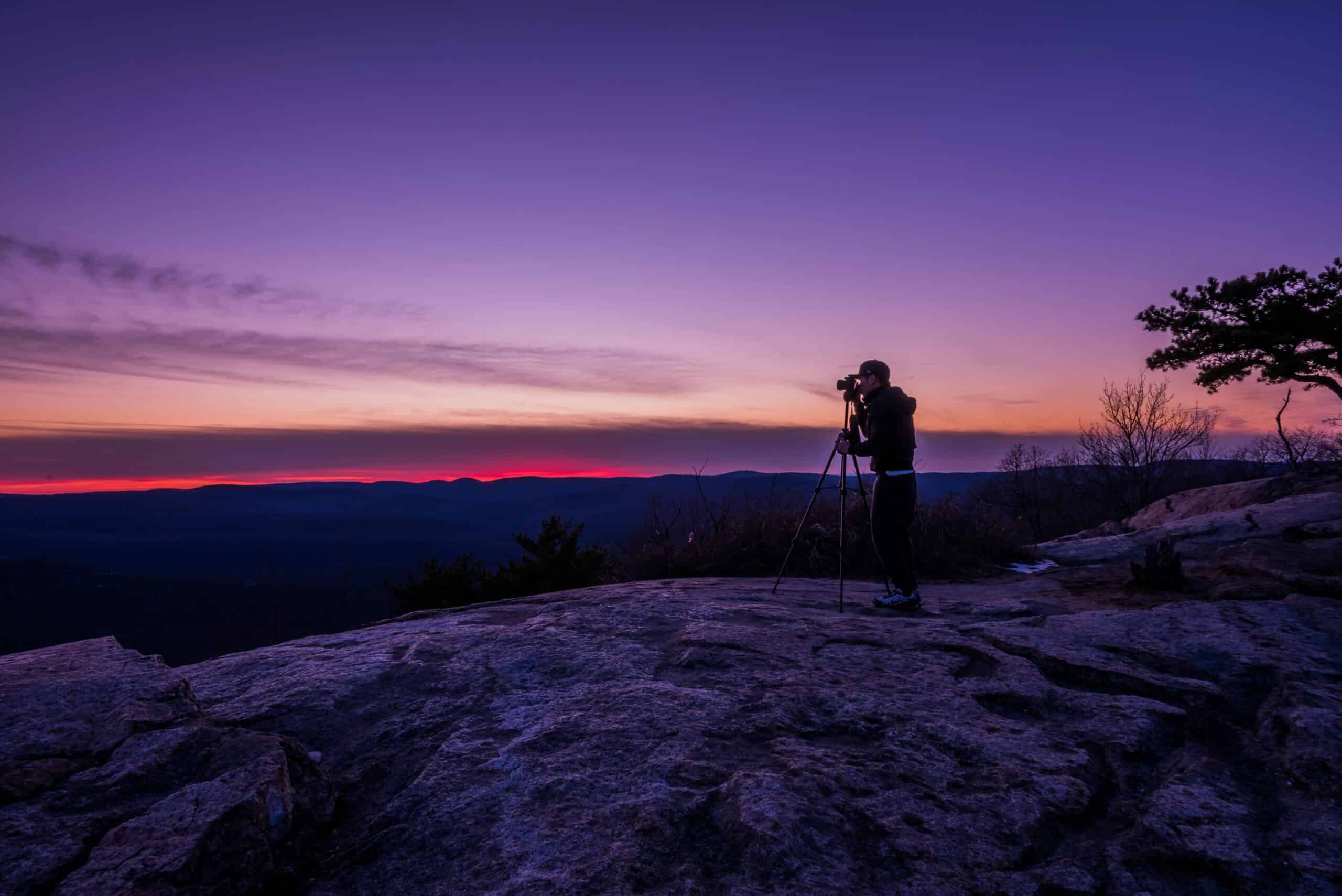
Walk your scene and note light direction, reflective surfaces (glass, polished stone), and moving elements (people, traffic, foliage). If shooting through glass, get the front element close (1–2 cm) and use a rubber lens hood to minimize reflections and ghosting. For sunsets or backlit scenes, anticipate flare; plan your rotation to keep intense light sources off-axis where possible and bracket for HDR to preserve highlights.
Match Gear to Scene Goals
For interiors and architecture, a rectilinear ultra‑wide is ideal for keeping walls straight. On the EOS R3, pair a lens that matches the XF 10–24mm’s FOV (RF 14–35 at 14–16mm mimics 10–11mm APS‑C). The R3’s dynamic range helps tame mixed lighting when bracketing HDR; it comfortably handles ISO 100–800 with clean results, and ISO 1600 in a pinch. For outdoor landscapes and cityscapes, the R3’s stacked sensor readout minimizes rolling artifacts when rotating rapidly—useful in wind or on a pole.
Pre-shoot Checklist
- Power & storage: fully charged batteries; dual card redundancy; format cards.
- Optics: clean lens and sensor; bring microfiber and a rocket blower.
- Tripod & pano head: level base; verify nodal point settings for your chosen focal length.
- Safety: weigh down tripod in wind; use a tether on rooftops or poles; avoid overhangs and unsafe perimeters.
- Workflow: shoot one complete safety round; consider a second round with slightly different exposure as backup.
Essential Gear & Setup
Core Gear
- Panoramic head: lets you align the lens’s entrance pupil (nodal point) over the rotation axis to eliminate parallax between near/far objects—critical for clean stitches in tight interiors.
- Stable tripod with leveling base: speeds setup; a leveled base means the horizon stays constant as you rotate.
- Remote trigger or camera app: minimize vibration; an electronic first curtain or self‑timer also helps.
Optional Add-ons
- Pole or car mount: fantastic for elevated city views or vehicle POVs. Safety first—use rated clamps, tethers, and avoid high winds. Expect vibrations; use faster shutter speeds and more overlap.
- Lighting aids: small LED panels to fill shadowy interiors; gels to balance color temperature.
- Weather protection: rain covers and silica packs; keep a towel for lens drying in fog/mist.
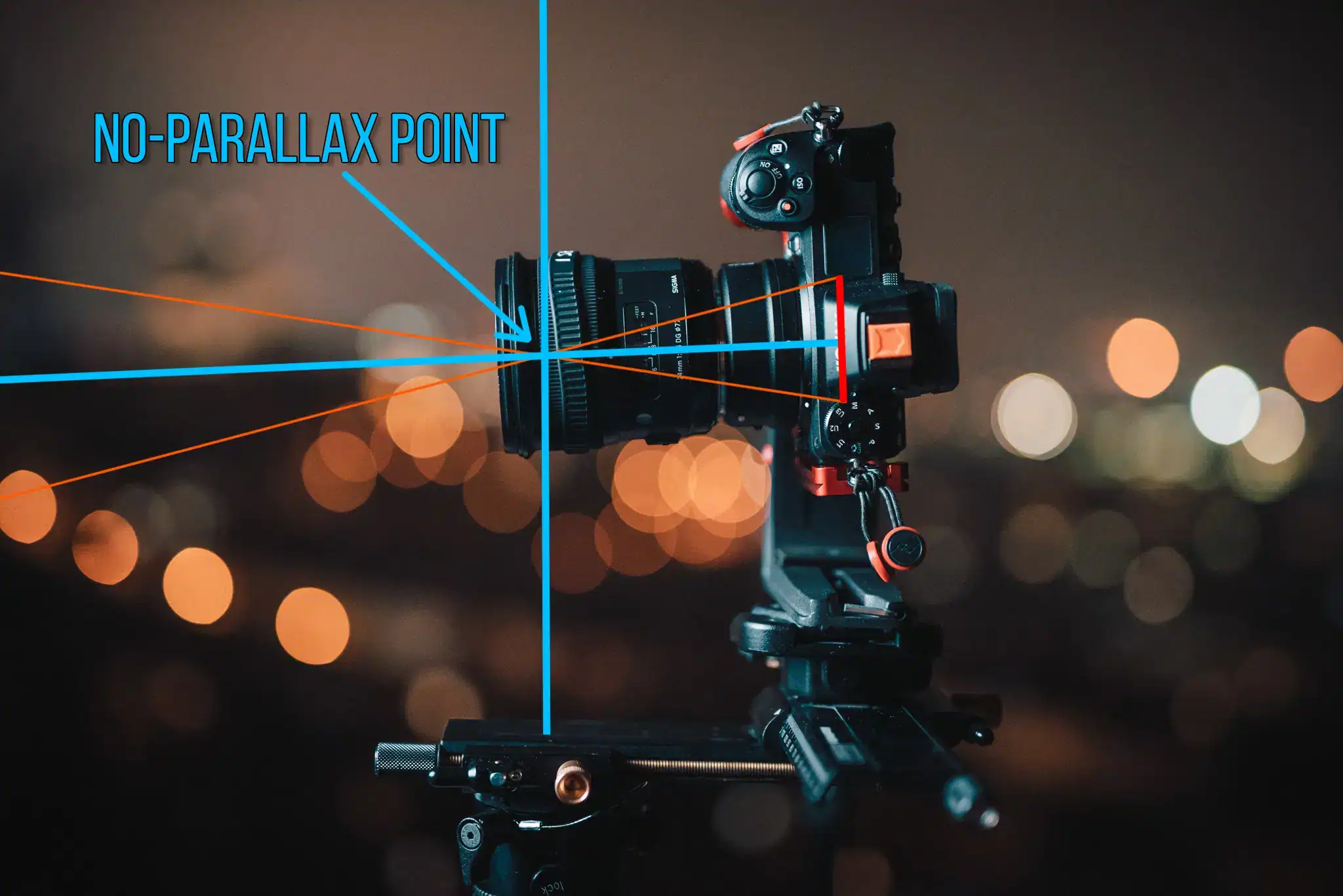
If you’re new to panoramic heads and nodal alignment, this step-by-step primer is excellent for getting started: Panoramic head tutorial.
Step-by-Step Shooting Guide
Standard Static Scenes
- Level and lock: level the tripod with a leveling base or by adjusting leg length. Mount the panoramic head and ensure the rotator’s index marks are visible.
- Nodal calibration: aim at two vertical objects (one near, one far). Rotate left/right. Adjust the fore‑aft rail until the relative alignment of the two objects stays constant. Mark the rail for each focal length you use frequently. For ultra‑wides, expect the entrance pupil to sit roughly 80–95 mm forward of the sensor plane—verify for your lens.
- Manual exposure and WB: set M mode. Dial a consistent exposure based on mid‑scene readings; lock white balance (Daylight outside; custom Kelvin indoors). Disable auto‑ISO and auto‑WB to avoid flicker and color shifts across frames.
- Focus: manual focus at or near the hyperfocal distance (e.g., at 15mm FF equivalent, f/8, focus around 1.2–1.5 m for sharpness front to infinity). Use magnified live view to confirm.
- Frame cadence: for ~15mm FF (or 10mm APS‑C) single‑row 360°, shoot 8–10 frames at 30% overlap. For full spherical, do three rows: 0°, +45°, −45°, then a separate zenith and nadir shot. Rotate consistently using the rotator click stops.
- Nadir shot: tilt up the camera 90° for zenith. For nadir, either: a) shift the tripod slightly while keeping the nodal point over the same ground spot and shoot, or b) shoot a handheld patch frame after moving the tripod out.
HDR / High Dynamic Range Interiors
- Bracket exposures: 3–5 frames at ±2 EV is a solid starting point; in scenes with bright windows, consider 5–7 frames up to ±4 EV.
- Lock WB: set a fixed Kelvin or a custom preset to avoid bracket-to-bracket color shifts. Shoot RAW to maximize highlight recovery and shadow lift.
- Consistency first: keep shutter as the only changing parameter if possible; keep aperture at f/8 and ISO fixed.
Low-Light / Night Scenes
- Stability: use a solid tripod and remote release. On a tripod, disable IBIS and lens IS to avoid micro‑vibrations.
- Exposure: f/4–f/5.6, ISO 200–800 on EOS R3 (1600 if needed), shutter as required (1–10 s). For starry skies, use shorter shutters and more frames to prevent star trailing.
- Overlap: increase overlap to 35–40%, as high ISO noise and dark edges can confuse stitchers.
Crowded Events
- Two passes: first pass captures composition quickly; second pass waits for gaps to reduce ghosting.
- Masking plan: in post, choose the best region from each frame. If needed, shoot extra frames targeting problematic moving subjects.
Special Setups (Pole / Car / Drone)
- Pole: use a lightweight head, keep shutter ≥1/250 s, increase overlap, and rotate slowly to reduce sway. Tether the pole; avoid strong wind.
- Car mount: use vibration‑damping clamps; stop the vehicle for each shot if possible. Rolling shots demand very fast shutter and may still cause motion parallax—plan accordingly.
Recommended Settings & Pro Tips
Exposure & Focus
| Scenario | Aperture | Shutter | ISO | Notes |
|---|---|---|---|---|
| Daylight outdoor | f/8–f/11 | 1/100–1/250 | 100–200 | Lock WB to Daylight; avoid clipping highlights |
| Low light/night | f/4–f/5.6 | 1/30–1/2 s (tripod) | 200–800 | Disable IBIS/OIS on tripod; use remote release |
| Interior HDR | f/8 | Bracket ±2 EV (3–5 frames) | 100–400 | Prioritize window detail; unify color temps |
| Action / moving subjects | f/5.6–f/8 | 1/200+ | 400–800 | Freeze motion; shoot two passes for masking |
Critical Tips
- Manual focus and hyperfocal: at 15mm FF equivalent and f/8, set focus around 1.2–1.5 m. Take a test shot at 100% to confirm corner sharpness.
- Nodal alignment: once you find the entrance pupil for a specific focal length, mark your rail. Keep a small card in your bag with “10mm APS‑C ≈ rail X mm; 14mm FF ≈ rail Y mm.”
- White balance lock: mixed lighting creates nasty seams; use a grey card to set custom WB in interiors.
- RAW over JPEG: RAW preserves dynamic range and color headroom, critical when blending HDR or correcting white balance.
- Stabilization: on a tripod, turn off IBIS/OIS. Handheld or on a pole, stabilization can help; test for edge sharpness at slower speeds.
- R3 custom modes: assign a “Pano” setup (M mode, WB fixed, manual focus, IS off, 2 s timer) to C1/C2 for instant recall.
Stitching & Post-Processing
Software Workflow
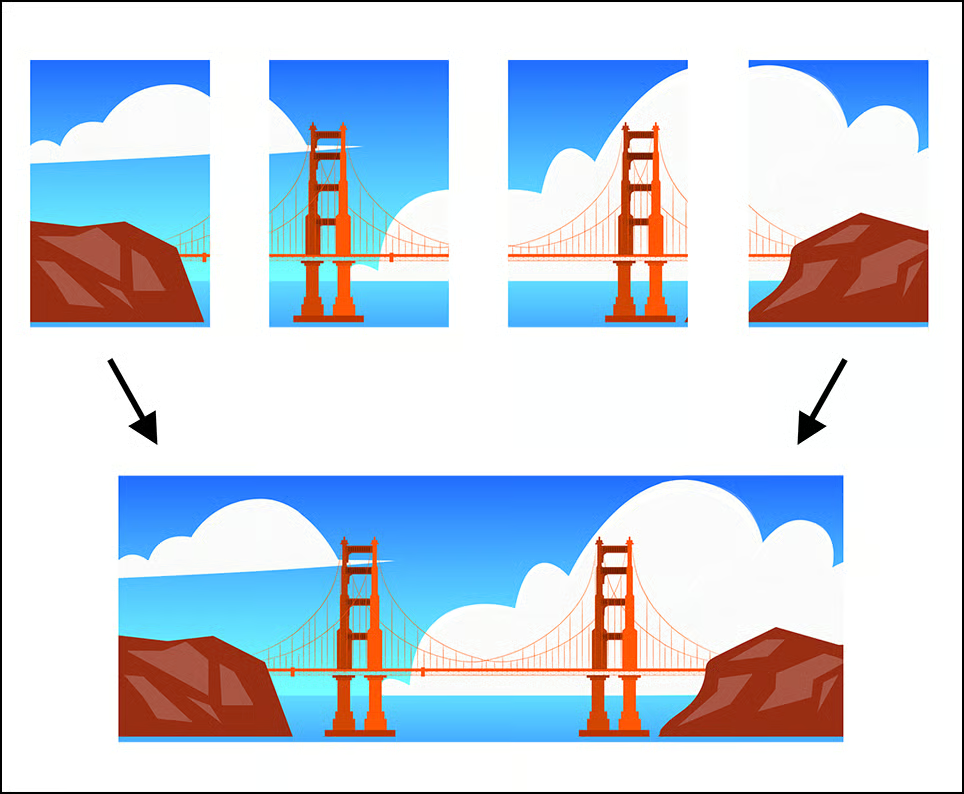
Import RAW files and apply a consistent baseline (lens profile off if your stitcher handles it, fixed WB, identical sharpening/NR). For multi‑row 360s, PTGui is an industry standard with powerful control points and masking. Hugin is an excellent open‑source alternative. Rectilinear lenses typically need 20–30% overlap per frame; fisheyes can get by with fewer shots but require defishing and careful masking around heavy distortion. Consider starting your stitch with the middle row and adding zenith/nadir last for stability. For in‑depth PTGui guidance and why pros rely on it, see this overview: PTGui review and workflow notes.
Cleanup & Enhancement
- Nadir patch: export a layered output from PTGui/Hugin and clone out the tripod in Photoshop, or use an AI content‑aware fill. For virtual tours, a branded nadir patch is standard.
- Color & noise: unify color temperature across the sphere; apply gentle noise reduction in deep shadows (night panos).
- Leveling: use the stitcher’s optimizer to correct roll/pitch/yaw. Ensure the horizon is level and straight.
- Export: for VR and web, export equirectangular 2:1 (e.g., 12000×6000 px JPEG). Keep a 16‑bit TIFF master for archival edits and future re‑exports.
For general DSLR/mirrorless 360 publishing guidance to VR platforms, this primer is clear and up to date: Using a mirrorless/DSLR to shoot and stitch a 360 photo.
Video: See the Process
Watching a full capture-to-stitch walkthrough helps cement the steps. Here’s a solid video overview of technique and workflow:
For deeper theory on how many pixels your rig can produce for true spherical panos, this technical reference is useful: DSLR spherical resolution.
Useful Tools & Resources
Software
- PTGui — robust multi‑row stitching, HDR blending, and masking.
- Hugin — open‑source panoramic stitcher with control‑point tools.
- Lightroom / Photoshop — RAW prep, color unification, nadir patching.
- AI tripod removal tools — speed up nadir cleanup for high‑volume work.
Hardware
- Panoramic heads: Nodal Ninja, Leofoto, or Really Right Stuff multi‑row heads.
- Carbon fiber tripod: stable yet portable (look for 28–32 mm leg sections).
- Leveling base: 30–60 mm ball leveling base saves time on site.
- Wireless remote: intervalometer or camera app to avoid touching the setup.
- Pole/car mounts: use safety tethers, rated clamps, and practice in safe areas first.
Disclaimer: brand names are for reference; confirm current specs and compatibility on manufacturer sites.
Common Mistakes & How to Avoid Them
- Parallax errors: always align the nodal point. Use near/far alignment checks and mark your rail once dialed in.
- Exposure flicker: shoot manual exposure and fixed white balance; disable auto‑ISO and auto‑WB.
- Tripod shadows and footprints: plan the sun angle; capture a clean nadir patch frame.
- Ghosting from movement: shoot two passes; mask moving people/vehicles in post.
- Soft edges at night: turn off stabilization on the tripod; use a remote and longer exposures at low ISO.
- Mount mismatch (this combo): the XF 10–24 does not mount on the EOS R3; use an RF ultra‑wide on the R3, or put the XF 10–24 on a Fuji X body. The workflow here still applies 1:1.
Frequently Asked Questions
- Can I shoot handheld panoramas with the Canon EOS R3?
Yes, for single‑row cylindrical panos in good light. Use faster shutter speeds (1/250+), higher overlap (40%), and fixed exposure/WB. For full 360×180 or interiors, a tripod and pano head give far more reliable results.
- Is the Fujifilm XF 10–24mm f/4 OIS WR wide enough for a single‑row 360?
For a complete spherical 360×180, you’ll generally need multi‑row with a rectilinear ultra‑wide. At 10mm APS‑C (~15mm FF equiv), plan on 8–10 frames for a single‑row 360° horizontal pano, but add upper/lower rows plus zenith/nadir for full sphere (≈22–24 frames total).
- Do I need HDR for interiors with bright windows?
Usually yes. Bracket ±2 EV in 3–5 frames, or extend to ±4 EV for high‑contrast rooms. This preserves window detail and clean shadow tonality for a polished real‑estate look.
- How can I avoid parallax issues?
Use a panoramic head and align the entrance pupil over the rotator axis. Calibrate with near/far objects and mark your rail position for each focal length. Keep the camera’s position fixed between frames.
- What ISO range is safe on the EOS R3 for low‑light panoramas?
For best quality, keep ISO at 100–800 on a tripod. ISO 1600 is still very usable if you need a faster shutter on a pole or in wind. Prioritize longer exposures over higher ISO when stability permits.
- Can I set up custom shooting modes on the R3 for panos?
Yes. Save a “Pano” mode to C1/C2/C3 with M exposure, fixed WB, MF at hyperfocal, stabilization off (for tripod), self‑timer or remote enabled, and your preferred exposure base (e.g., f/8, ISO 100).
- What’s the best tripod head for this setup?
A multi‑row panoramic head with precise fore‑aft and lateral adjustments. Look for indexed rotators (e.g., 30° or 45° click stops), Arca‑Swiss compatibility, and a compact, rigid build.
Field‑Tested Scenarios
Indoor Real Estate
At 15mm FF equivalent, shoot three rows (+45°/0°/−45°) with 8 shots per row, plus zenith and nadir, bracketing ±2 EV. Lock WB to a custom Kelvin based on a grey card. Mask people and reflections during stitching.
Outdoor Sunset
Meter for highlights and bracket 5 frames at ±2 EV. Use f/8, ISO 100–200, and 1/60–1/250 s. Keep the sun just off‑axis to reduce flare. If a strong flare persists in one frame, reshoot that column slightly tilted to give the stitcher a clean alternative.
Event Crowds
Shoot two complete passes. First pass quickly captures the base pano; second pass fills gaps by waiting for clean areas. In post, mask moving subjects using the calmer frames. Push shutter speed to 1/200–1/400 and ISO 400–800 to freeze motion.
Rooftop / Pole Shooting
Use a lightweight head, tether everything, and keep rotations slow. Increase overlap to 40% to compensate for wobble. Favor f/5.6–f/8 and 1/250+ shutter. When wind picks up, lower the pole or reschedule—safety first.
Car‑Mounted Capture
Whenever possible, shoot stationary. If rolling, use very fast shutter (1/1000+), wider overlap, and be prepared for masking out parallax‑induced seams around close objects. Consider capturing at off‑peak hours to reduce traffic.

For more panorama best practices from the virtual tour world, see this concise Q&A overview: DSLR/virtual tour FAQ and gear guide.
Compatibility Note: EOS R3 & XF 10–24mm
The Fujifilm XF 10–24mm f/4 OIS WR is an X‑mount APS‑C lens and does not mount on the Canon RF system. There is no widely available adapter that provides electronic aperture control and autofocus for this lens on an EOS R3. For EOS R3 users, choose an optically similar RF ultra‑wide (RF 14–35/4, RF 15–35/2.8, or a rectilinear prime like RF 16/2.8). The field of view and rectilinear behavior will match the guidance in this article, including shot counts, overlap, and nodal alignment practices.
Safety, Reliability, and Backup Workflow
- Wind and edges: weigh down your tripod; keep a safe distance from ledges; never lean over barriers with a pole.
- Weatherproofing: use rain covers for body and lens; carry silica gel; wipe off sea spray immediately to avoid salt etching.
- Redundancy: shoot a complete second round in critical jobs; use dual card recording; keep a backup battery and microfiber on you.
- Data integrity: dump cards to two drives after the shoot; keep one off‑site or in cloud storage.