
Why This Camera & Lens Are Great for Panoramas
If you want to master how to shoot panorama with Canon EOS R3 & Canon RF 14-35mm f/4L IS USM, you’re starting with a professional-grade combo that’s fast, reliable, and optically excellent for multi-row 360° capture. The Canon EOS R3 uses a 24.1MP full-frame stacked BSI CMOS sensor (approx. 36 × 24 mm) with large ~6 μm pixels. That pixel size provides low noise and solid dynamic range at base ISO (around 13.5 EV measured by independent testers), which is ideal when you need consistent, clean frames for stitching. The stacked design minimizes rolling shutter and supports silent shooting—handy in quiet interiors or events.
The RF 14-35mm f/4L IS USM is a rectilinear ultra-wide zoom (not a fisheye), which means straight lines remain straight—great for architecture and real estate. At 14mm on full frame, the diagonal field of view is about 114°, giving you very wide coverage. Corner sharpness is good by f/5.6–f/8, and lateral CA is well controlled by lens profiles. Its optical stabilization pairs with the R3’s in-body stabilization to help when you’re handheld or on a pole, though you should disable stabilization on a solid tripod to avoid micro-vibrations. RF mount compatibility keeps everything native—fast AF when needed, precise manual focus, and full EXIF for organized workflows.
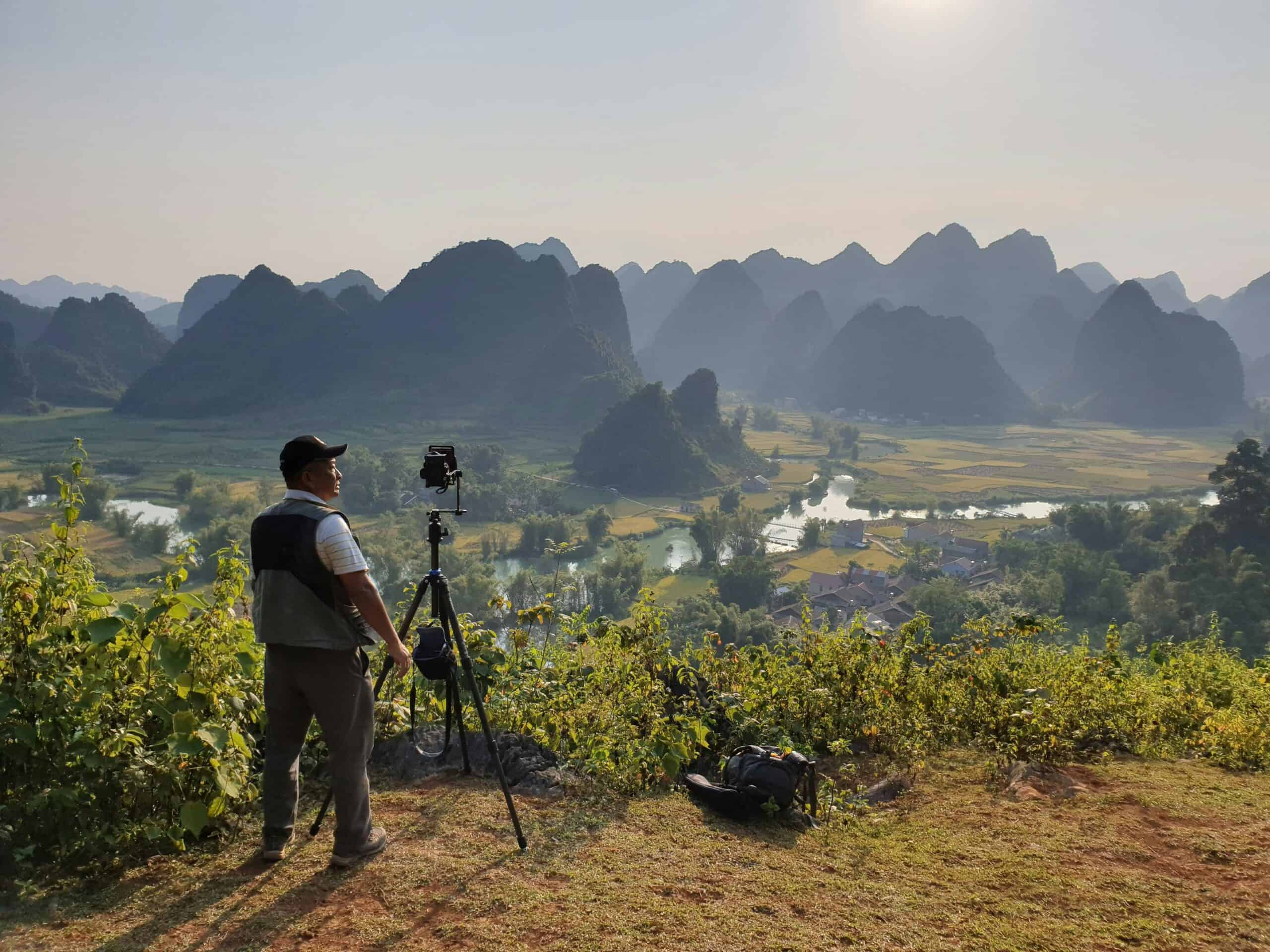
Quick Setup Overview
- Camera: Canon EOS R3 — Full-frame 24.1MP stacked BSI sensor; excellent low-light performance, robust dynamic range, silent/electronic shutter options.
- Lens: Canon RF 14-35mm f/4L IS USM — Rectilinear zoom; sharp from f/5.6–f/8; some barrel distortion at 14mm corrected in profiles; stabilized for handheld/pole capture.
- Estimated shots & overlap (tested guidance):
- 14mm (rectilinear) full 360×180: two rows around, 8 shots per row with ~30% overlap (≈16), plus zenith + nadir = ~18 frames.
- 20mm: two rows of 10 with ~30% overlap (≈20), plus zenith + nadir = ~22 frames.
- 35mm (gigapixel style): 12 shots per row × 3 rows + Z/N = ~38; add rows for more resolution.
- Difficulty: Intermediate — precise nodal alignment and multi-row technique recommended.
Planning & On-Site Preparation
Evaluate Shooting Environment
Scan for bright windows, reflective glass, mirrors, or moving elements like foliage and crowds. In glassy interiors, shoot slightly perpendicular to panes and keep the lens 10–30 cm from glass to reduce reflections and ghosting. For outdoor sunsets, watch for extreme dynamic range—plan HDR brackets and steady support. In busy environments, identify repeating patterns and occlusions to make later masking easier.
Match Gear to Scene Goals
The EOS R3’s robust dynamic range and low noise floor let you bracket confidently for HDR panoramas without falling apart in the shadows. With the RF 14-35mm, rectilinear geometry preserves straight lines in interiors. Use 14–20mm for most 360s (fewer frames, more overlap). The R3 is clean up to ISO 1600 in most real-world 360 panoramas, though you’ll usually prefer ISO 100–400 on tripod. If you must handhold, the R3’s IBIS + lens IS can stabilize at slower shutter speeds, but for perfect stitches, a tripod and panoramic head remain the gold standard.
Pre-shoot Checklist
- Charge batteries and carry spares. Use dual-card recording on the R3 (CFexpress + SD) for instant backup.
- Clean lens and sensor; smudges are far more noticeable in big stitched skies and walls.
- Level your tripod and verify panoramic head calibration (nodal/entrance pupil alignment).
- Safety: On rooftops or in wind, use a weight hook, leash the camera, and keep one hand on the rig. For car mounts, double-check suction cups/clamps and add a safety tether.
- Workflow safety: After your full pass, shoot one extra safety round—same settings and angles—to cover surprises.
Essential Gear & Setup
Core Gear
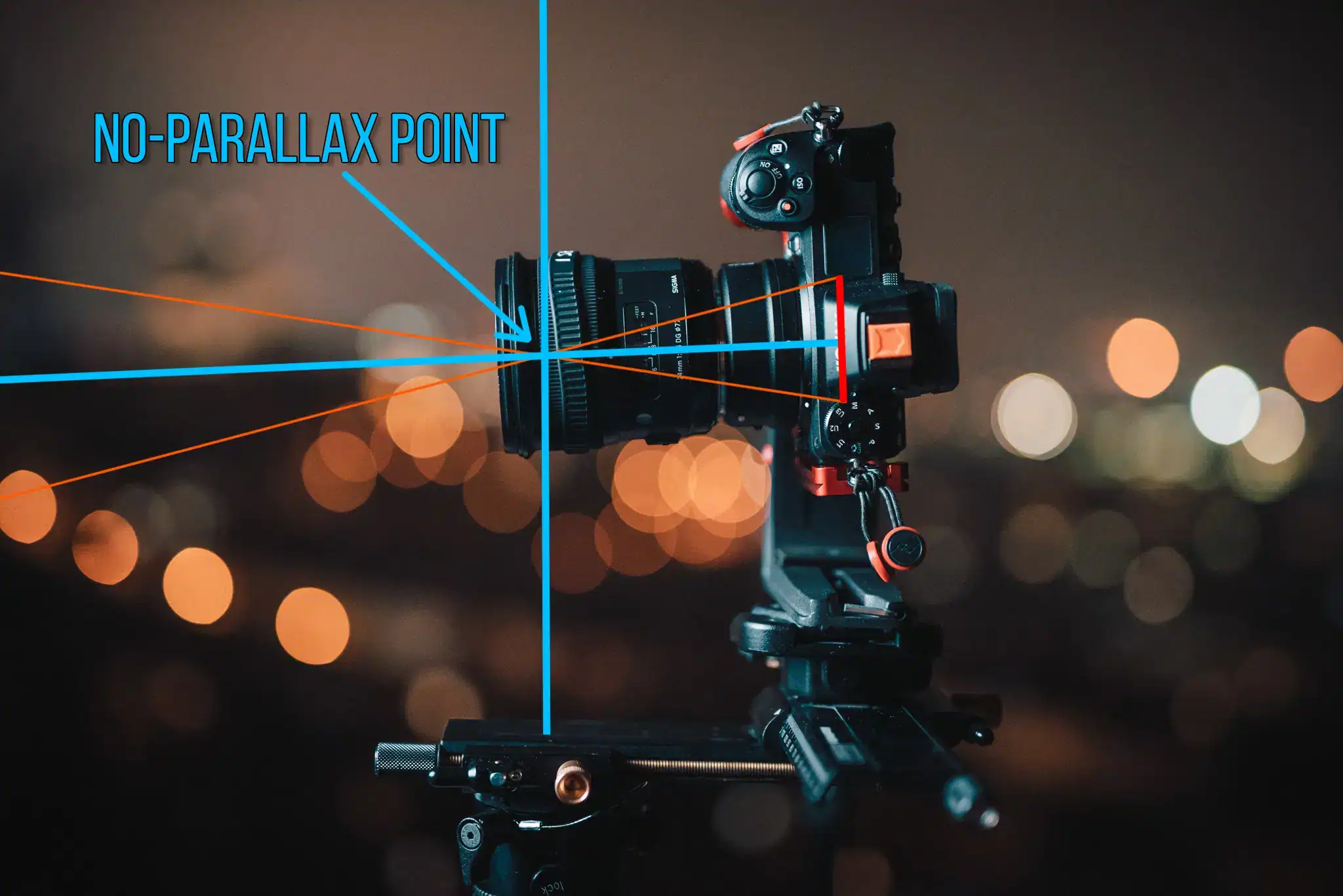
- Panoramic head: Allows rotation around the lens’s entrance pupil (nodal point) to eliminate parallax. Calibrate it once; mark the rails to speed future setups.
- Stable tripod with leveling base: A leveling base makes it much faster to get a true horizon without fighting tripod legs.
- Remote trigger or Canon Camera Connect app: Prevents vibrations and keeps cadence consistent across frames.
Optional Add-ons
- Pole or car mount: Fantastic for elevated 360s or moving shots, but mind wind and vibration. Use tethers and keep shutter speeds higher.
- Lighting aids: Small LED panels for dim interiors; keep color temperature consistent.
- Weather protection: Rain cover, silica packs, and lens hood to shield front element from spray.
Want a deeper primer on panoramic heads and no-parallax rotation? See this panoramic head tutorial for step-by-step fundamentals. Panoramic head setup guide
Watch: Panoramic Head Setup (Video)
Quick visual refresher on aligning your panoramic head and building a clean capture sequence.
For VR-focused guidance from a production perspective, also review this methodical tutorial from Meta’s creator docs. Set up a panoramic head for high-end 360 photos
Step-by-Step Shooting Guide
Standard Static Scenes
- Level and lock: Level the tripod using the leveling base. Activate the R3’s electronic level to verify horizon and pitch.
- Align the nodal point: On a multi-rail pano head, adjust the fore-aft and vertical rails so foreground and background features do not shift relative to each other as you pan. As a starting estimate for the RF 14-35mm:
- At 14mm, the entrance pupil is roughly ~90 mm forward of the sensor plane;
- At 24mm, ~75–80 mm; at 35mm, ~70–75 mm.
Fine-tune on-site with the parallax test; mark your rails once dialed in.
- Set manual exposure and white balance: Lock exposure in M mode and set a fixed white balance (e.g., Daylight or custom Kelvin). This prevents flicker and color casts between frames.
- Focus: Switch to MF. At 14mm, f/8, the hyperfocal distance is roughly 0.8 m—focusing around 0.8–1.0 m keeps everything from about 0.4 m to infinity acceptably sharp. Use magnified live view to nail it.
- Capture sequence:
- Row 1 (tilt +30°): 8 shots around with ~30% overlap.
- Row 2 (tilt −30°): 8 shots around, same headings for easier stitching.
- Zenith: 1–2 frames pointing straight up (rotate 90° between the two).
- Nadir: 1–2 frames pointing straight down for tripod removal.
Keep a consistent rotation rhythm and use a remote or self-timer to avoid shake.
HDR / High Dynamic Range Interiors
- Bracket ±2 EV (3–5 frames if needed): This balances bright windows and interior shadows without pushing ISO too high.
- Lock white balance: Keep WB fixed across all brackets and frames for predictable stitching and tonemapping.
- Sequence options: Either bracket per heading (capture all exposures before rotating) or shoot a full LDR pass, then a second pass one stop brighter, and third pass darker. The first method is safer for moving subjects.
Low-Light / Night Scenes
- Tripod and timer: Use a sturdy tripod and 2-second timer or remote. The R3 is clean at ISO 400–800; prefer base ISO with longer shutter if the scene is static.
- Stabilization: Disable IBIS and lens IS on tripod to prevent micro-movements during long exposures.
- Shutter mode: Use electronic first curtain (EFCS) or mechanical. Avoid full electronic under LED lighting to prevent banding.
Crowded Events
- Two-pass strategy: First pass quickly for coverage; second pass wait for gaps. Later, mask the clean areas where motion was minimal.
- Shutter speed: 1/200 s or faster to freeze people if you don’t plan to mask extensively.
- Silent shooting: The R3’s silent mode is perfect for unobtrusive capture—just watch out for LED banding with electronic shutter.
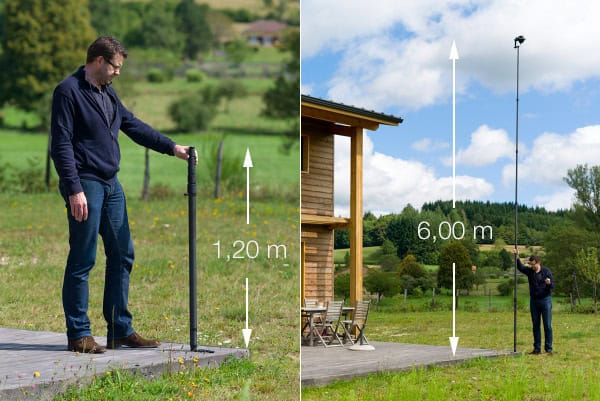
Special Setups (Pole / Car / Elevated)
- Rig safety: Use a safety tether and check all clamps. Wind adds leverage—rotate more slowly to reduce sway.
- Shutter speed bias: Bump ISO to hold 1/250–1/500 s when on a pole or vehicle mount to fight vibration blur.
- IS on: Keep IBIS and lens IS enabled when not on a rigid tripod.
Real-World Scenarios
Indoor Real Estate
Use 14–16mm to minimize frames and keep verticals straight. Bracket ±2 EV around ISO 100–200 at f/8. Turn off IS on tripod. Watch mirrors and glass; shoot slight angles to avoid reflections and keep yourself out of frame.
Outdoor Sunset
Expose for midtones, bracket for sun-side shots. A two-row 14mm set with 30% overlap plus zenith/nadir handles complete coverage. Consider a soft grad in post rather than on lens for consistency across frames.
Event Crowds
Go faster shutter, higher ISO 400–800, f/5.6–f/8. Shoot two passes and plan to mask. Silent mode keeps you unobtrusive, but switch to mechanical if interior LEDs cause banding.
Rooftop/Pole Shooting
Wind planning is key. Use a carbon pole and lanyard. Keep shutter 1/250–1/500 s; enable IS; shoot extra coverage for safety. In post, pick the sharpest frames per heading.
Car-Mounted Capture
Only on closed courses or with appropriate permissions. Use high shutter (1/500–1/1000 s), higher ISO, and shoot in bursts at each heading. Stabilization on. Expect more stitching cleanup due to motion.
Recommended Settings & Pro Tips
Exposure & Focus
| Scenario | Aperture | Shutter | ISO | Notes |
|---|---|---|---|---|
| Daylight outdoor | f/8–f/11 | 1/100–1/250 | 100–200 | Lock WB (Daylight or 5200–5600K) |
| Low light/night | f/4–f/5.6 | 1/30–1/60 (tripod) | 100–800 | Use remote; IS off on tripod; EFCS/mechanical shutter |
| Interior HDR | f/8 | Bracket ±2 EV | 100–400 | Expose midtone base; merge HDR before stitching or use PTGui HDR |
| Action / moving subjects | f/5.6–f/8 | 1/200+ | 400–800 | Freeze motion; two-pass strategy for masking |
Critical Tips
- Manual focus at hyperfocal distance: At 14mm f/8, focus ≈0.8–1.0 m for front-to-back sharpness.
- Nodal calibration: Use two vertical reference points (near and far). Pan left-right; adjust fore-aft rail until their relative position stays fixed. Mark rail scales for 14mm, 20mm, 24mm, 35mm.
- White balance lock: Avoid auto WB drift across the panorama; use Kelvin or a preset.
- RAW over JPEG: More DR for highlight recovery and better color consistency after stitching.
- Stabilization: On tripod, disable IBIS and lens IS. Handheld/pole: enable both.
- Shutter mode: EFCS/mechanical for reliability. Full electronic can band under some LEDs.
- Sequence discipline: Always rotate the same direction and count headings; use a click-stop rotator when possible.
Stitching & Post-Processing
Software Workflow
For professional control, PTGui remains a top choice thanks to fast control point generation, HDR merging, and viewpoint correction. Hugin is a solid open-source alternative. Lightroom/Photoshop work for simpler sweeps but are less flexible for multi-row 360s. With a rectilinear 14mm, plan 25–30% overlap to give the optimizer enough data, especially near edges where distortion increases. Fisheye lenses require fewer shots but need defishing; rectilinear needs more frames yet keeps architectural lines truer. If you haven’t tried PTGui, this review explains why many consider it the best all-around tool for complex panoramas. Why PTGui excels at complex panoramas
HDR Strategy
Either pre-merge HDR brackets per heading (e.g., in Lightroom) and then stitch the HDR frames, or feed brackets directly to PTGui to create an HDR panorama in one pass. Pre-merging offers more control over deghosting; PTGui’s native HDR is faster and keeps alignment consistent.
Cleanup & Enhancement
- Nadir patch: Shoot a dedicated nadir frame and use viewpoint correction or an AI/removal tool to patch the tripod area cleanly.
- Color consistency: Apply global WB and tone curve before export; then, fine-tune local contrast and saturation.
- Noise reduction: Apply mild NR to shadow brackets; avoid over-smoothing texture.
- Leveling: Use horizon/vertical guides in PTGui or your editor to correct roll, yaw, and pitch.
- Export: Produce 8K–12K equirectangular JPEG/TIFF for web/VR. For VR platforms, export as 2:1 equirectangular with correct metadata. More VR workflow guidance here. Shooting and stitching DSLR 360 photos for VR
Disclaimer: Always review the latest documentation for your chosen software—features and recommended steps evolve.
Useful Tools & Resources
Software
- PTGui panorama stitching
- Hugin open source
- Lightroom / Photoshop
- AI tripod removal tools
Hardware
- Panoramic heads (Nodal Ninja, Leofoto)
- Carbon fiber tripods
- Leveling bases
- Wireless remote shutters
- Pole extensions / car mounts
Disclaimer: Product names are for search/reference; verify compatibility and specs on official sites.
Common Mistakes & How to Avoid Them
- Parallax error → Ensure entrance pupil alignment; do a quick near/far test before shooting the full set.
- Exposure flicker → Shoot manual exposure and lock white balance.
- Tripod shadows or feet → Capture a nadir shot and patch cleanly in post.
- Ghosting from movement → Use two-pass capture and mask in post.
- Night noise → Keep ISO low on tripod; use longer exposures and bracket if needed.
- Banding with LEDs → Avoid full electronic shutter indoors; use EFCS or mechanical.
Frequently Asked Questions
-
Can I shoot handheld panoramas with the Canon EOS R3?
Yes, the R3’s IBIS plus the RF 14-35mm’s IS can stabilize handheld multi-row sets if you keep shutter speeds high (1/200–1/500 s) and overlap generously (30–40%). However, for perfect 360×180 results, a tripod and panoramic head are strongly recommended.
-
Is the RF 14-35mm f/4L wide enough for a single-row 360?
Not for a full sphere. At 14mm rectilinear, a single row won’t cover zenith and nadir adequately. Plan for two rows around plus separate zenith/nadir shots (~18 frames total) for a complete 360×180.
-
Do I need HDR for interiors with bright windows?
Usually yes. Bracket ±2 EV (3–5 exposures) to retain window detail and clean shadows. Merge HDR per heading before stitching or let PTGui handle HDR internally for a faster pipeline.
-
How do I avoid parallax issues with this lens?
Calibrate the entrance pupil on your pano head. Start around ~90 mm forward of the sensor plane at 14mm, then fine-tune using near/far alignment checks. Mark the rail once dialed in for fast setups.
-
What ISO range is safe on the EOS R3 for low light panoramas?
On tripod, use ISO 100–400 and lengthen shutter. Handheld/pole, ISO 400–1600 is still very clean on the R3. Prioritize exposure consistency and sharpness over squeezing the lowest ISO.
Safety, Care, and Reliability Tips
Wind can topple even heavy tripods—hang a weight and keep a hand on the rig while rotating. Disable stabilization on tripod; enable it for handheld or pole work. Avoid pointing into direct sun for long periods; the R3 and lens can get hot, and sensor risk increases if the sun is concentrated by the wide front element. Use the R3’s dual-card recording for instant backups. Keep a microfiber cloth handy; dust on ultra-wide lenses is conspicuous in skies. Finally, take an extra safety round—the minute it adds can save hours later.
For more fundamentals and troubleshooting wisdom from the broader community, this classic Q&A thread compiles time-tested techniques. Best techniques for 360 panoramas
Putting It All Together
With a calibrated panoramic head, the Canon EOS R3’s clean files, and the RF 14-35mm’s rectilinear rendering, you can produce crisp, high-resolution 360° panoramas for real estate, architecture, events, and immersive landscapes. Keep exposure and color locked, overlap generously, and plan for zenith/nadir coverage. Once you’re comfortable, push further—add more rows at 35mm to build gigapixel spheres or mount the rig on a pole for elevated perspectives.