Why This Camera & Lens Are Great for Panoramas
If you want to master how to shoot panorama with Canon EOS R3 & Canon EF 8-15mm f/4L Fisheye USM, you’re building on a proven, pro-grade combo. The EOS R3 is a 24.1MP full-frame mirrorless camera with a stacked BSI CMOS sensor and DIGIC X processor. It delivers excellent dynamic range at base ISO (about 13.5–14EV at ISO 100), fast readout with minimal rolling shutter, and class-leading low-light performance. Its relatively large pixel pitch (~6.0 µm) tolerates higher ISO cleanly, making it a forgiving body for dusk, interiors, and night 360° capture. The R3’s IBIS helps handheld work, while on a tripod you can turn IBIS off for absolute stability.
The Canon EF 8-15mm f/4L Fisheye USM is a versatile fisheye zoom that offers a true 180° circular fisheye at 8mm (on full frame) and a 180° diagonal fisheye at 15mm. For panoramas, this means fewer shots to complete a full sphere, faster workflows, and fewer seams to retouch. Being an EF lens, it mounts to the R3 with a Canon EF–EOS R adapter while retaining autofocus, EXIF, and excellent optical performance. At 8–10mm, you can stitch a 360 with as few as 4 around shots plus a nadir, while at 12–15mm you’ll get a cleaner diagonal fisheye render with 6–8 around. Expect classic fisheye distortion (intended), moderate chromatic aberration that’s easily corrected in post, and strong flare resistance for an ultrawide—though you’ll still want to watch for the sun in frame.
Quick Setup Overview
- Camera: Canon EOS R3 — Full-frame (36×24mm), 24.1MP, stacked BSI CMOS; excellent low-light, ~13.5–14EV DR at ISO 100; pixel size about 6.0 µm.
- Lens: Canon EF 8-15mm f/4L Fisheye USM — Circular/diagonal fisheye zoom; sharp from f/5.6–f/8; CA well-controlled and easily corrected; robust L-series build.
- Estimated shots & overlap (field-tested):
- 8mm (circular fisheye, full frame): 4 shots around at 90° yaw, plus optional zenith and nadir for clean coverage; 30–35% overlap.
- 12–15mm (diagonal fisheye): 6 shots around at 60° yaw + zenith + nadir; for extra safety in tight interiors, 8 around at 45°.
- Difficulty: Easy–Moderate. The fisheye’s wide FOV makes stitching straightforward; careful nodal alignment is still required for near objects.
Planning & On-Site Preparation
Evaluate Shooting Environment
Scan for movement (people, trees, vehicles), reflective surfaces (glass, polished floors), and strong point light sources. For glass views, keep your camera 30–60 cm from the pane to reduce reflections and ghosting; use a dark cloth or shade if unavoidable. In interiors, note mixed lighting (tungsten, LED, window daylight)—it affects white balance and can cause color shifts across frames.
Match Gear to Scene Goals
The EOS R3’s robust dynamic range handles bright windows and shadowy corners well, while the EF 8-15mm fisheye reduces shot count—critical when crowds move or sunset light changes rapidly. Indoors, ISO 200–800 on the R3 remains clean; for real estate HDR panoramas, bracket ±2EV at ISO 100–400. The fisheye advantages are speed and overlap simplicity; the trade-off is fisheye distortion at the edges (normal and correctable in software) and sensitivity to parallax if your nodal point isn’t dialed in.
Pre-shoot Checklist
- Charge batteries, bring spares; use large/fast cards (CFexpress recommended for speed; UHS-II as backup).
- Clean lens and sensor; a single dust spot will repeat around the sphere.
- Level tripod, check panoramic head calibration for the EF 8-15mm at your chosen focal length.
- Safety: weigh down tripod in wind; use tethers and safety lines on rooftops or car mounts. Never lean over edges while operating a pole.
- Backup workflow: capture an extra pass if time allows, and consider an alternate exposure pass for insurance (e.g., a second HDR bracket set).
Essential Gear & Setup
Core Gear
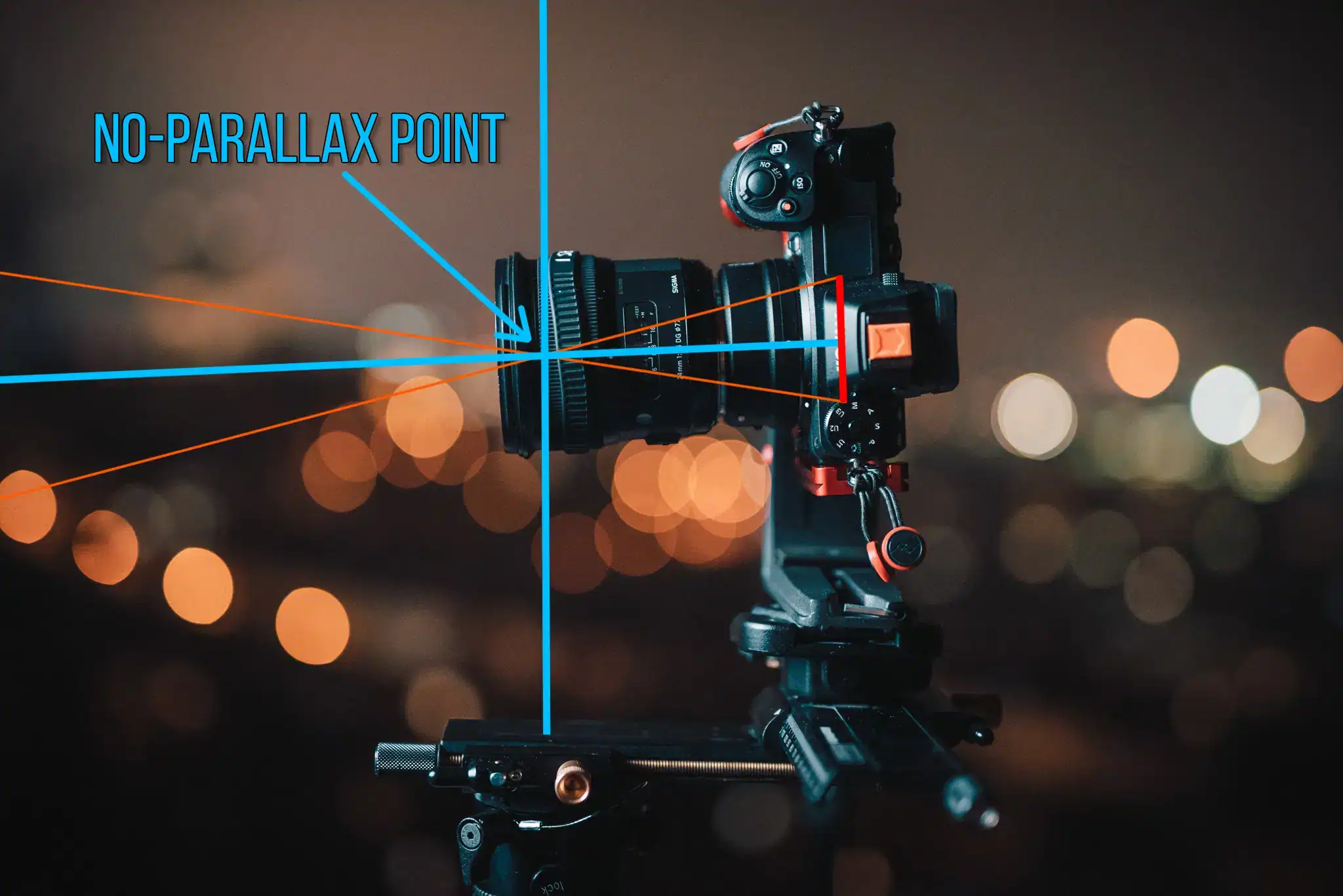
- Panoramic head: A precise pano head lets you rotate around the lens’s entrance pupil (nodal point), minimizing parallax so near and far objects align for stitching. Use fore-aft and lateral adjustments to position the lens center over the rotation axis.
- Stable tripod with leveling base: A leveling base lets you zero the head in seconds, keeping yaw rotation perfectly horizontal—this greatly reduces stitching distortion.
- Remote trigger or Canon Camera Connect app: Trigger without touching the camera, and use 2-second self-timer if you have no remote. This reduces vibration in long exposures.
Optional Add-ons
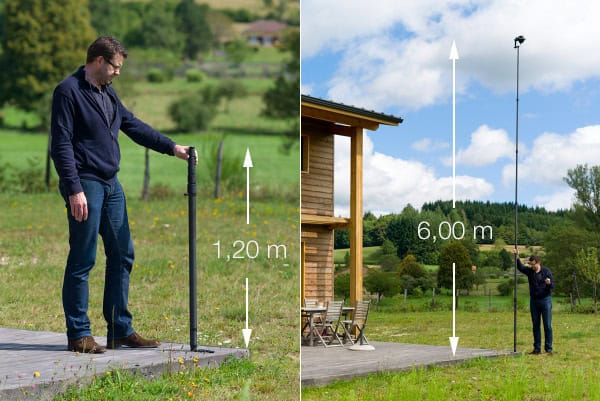
- Pole or car mount: For rooftop or aerial-like perspectives, use a carbon pole with a compact pano head. Always tether gear, respect wind limits, and keep shutter speeds fast (>1/250–1/1000) to fight sway and vibration.
- Lighting aids: Small LED panels for balancing dark interiors; use sparingly to avoid hotspots.
- Weather protection: Rain covers and lens cloths. The EF 8-15’s bulbous front element loves to catch raindrops; protect it between shots.
Step-by-Step Shooting Guide
Standard Static Scenes
- Level the tripod and align the nodal point: Mount the R3 + EF 8-15 on your pano head with the EF–RF adapter. Slide the rail so the lens’s entrance pupil sits over the yaw axis. Verify by aligning two vertical objects (one near, one far) and rotating 30–45°; adjust until their relative position does not shift.
- Manual exposure and locked white balance: Set M mode, choose a consistent exposure from a mid-brightness frame, and lock WB (Daylight for sun; Tungsten or custom for interiors). Disable Auto Lighting Optimizer and any exposure “helpers” that can vary frame-to-frame.
- Capture with tested overlap:
- At 8mm (circular fisheye): Shoot 4 around at 90° steps. Tilt slightly up (5–10°) to ensure sky coverage; shoot a dedicated nadir after rotating the column away from the tripod legs.
- At 12–15mm (diagonal fisheye): Shoot 6 around (60° steps) + zenith + nadir. In tight spaces, add 2 extra around shots for safety.
- Take the nadir (ground) frame: Either lean the tripod for a quick handheld nadir or move the column aside and shoot downward. This makes tripod removal and floor patching much easier in post.
HDR / High Dynamic Range Interiors
- Bracket ±2EV (3–5 frames): For windows and bright fixtures, set AEB to 3 or 5 frames spaced 2EV apart. Keep ISO low (100–400) and aperture around f/8 for sharpness.
- Lock WB and focus: Use manual focus, and switch IBIS off on a tripod. Consistency across brackets is essential to avoid stitching seams with color shifts.
Low-Light / Night Scenes
- Use longer exposures on a stable mount: f/4–f/5.6, 1/10–1/30 sec, ISO 200–800 on the R3 remain very clean. Use the 2-second timer or a remote.
- Beware LED banding: If shooting under LED signs/lighting, prefer mechanical shutter or 1st-curtain mechanical to reduce banding risk during rotation.
Crowded Events
- Two-pass method: Shoot a full pass to anchor the scene, then a second pass waiting for gaps in movement. You’ll later mask the clean segments during stitching.
- Slightly faster shutter: Aim for 1/200–1/500 at f/5.6–f/8, ISO 400–800 to freeze motion without sacrificing too much noise performance.
Special Setups (Pole / Car / Rooftop)
- Secure gear and tether: Use safety lines and lock the pano head; check wind direction and gusts. Pole shots with a fisheye are manageable due to fewer frames required—minimize time overhead.
- Vibration management: For car mounts, use high shutter speeds (1/500–1/1000) and higher ISO if needed. Keep rotations fewer and faster at 8mm to reduce time exposed to vibration.
Video: Pano Head Setup Basics
Seeing the nodal alignment and rotation flow in action is invaluable. The short video below reinforces the fundamentals before you head out.
Recommended Settings & Pro Tips
Exposure & Focus
| Scenario | Aperture | Shutter | ISO | Notes |
|---|---|---|---|---|
| Daylight outdoor | f/8–f/11 | 1/100–1/250 | 100–200 | Lock WB to Daylight to avoid color shifts |
| Low light/night | f/4–f/5.6 | 1/10–1/60 | 200–800 | Tripod + remote; R3 remains clean to ISO 1600 if needed |
| Interior HDR | f/8 | Bracket ±2EV (3–5 frames) | 100–400 | Balance windows, lock WB, disable ALO |
| Action / moving subjects | f/5.6–f/8 | 1/200+ | 400–800 | Two-pass capture for masking moving people |
Critical Tips
- Manual focus at hyperfocal: At 8–10mm, set MF slightly in front of infinity (use magnified live view) and tape the ring if needed. You’ll keep near-to-far sharpness without AF hunting between frames.
- Nodal point calibration: Start by aligning two verticals (near and far) and adjust the fore-aft rail until they don’t shift when yawing. Mark the rail position for 8mm and 15mm separately on your pano head for repeatability.
- White balance lock: Mixed lighting causes stitching seams. Shoot a grey card indoors and set a custom WB if you need perfect consistency.
- RAW over JPEG: 14-bit RAW from the R3 gives extra latitude to fix color and exposure mismatches and to de-fringe CA from the fisheye.
- IBIS on/off: Handheld—leave IBIS on. Tripod—turn it off to avoid micro-jitters during exposure.
- Shutter mode: Prefer mechanical (or electronic 1st curtain) for artificial light to reduce banding. Full electronic is fine outdoors with continuous light.
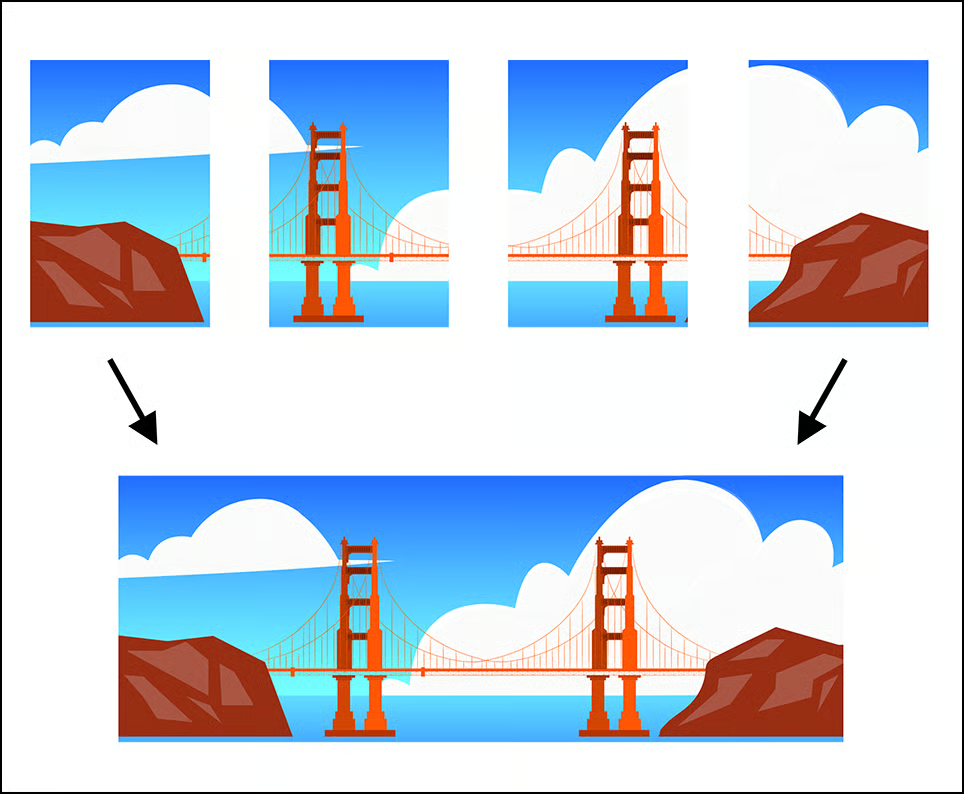
Stitching & Post-Processing
Software Workflow
For this setup, PTGui is a top pick thanks to robust fisheye support, masking, HDR fusion, and fast optimization. Set lens type appropriately (circular fisheye at 8mm; full-frame/diagonal fisheye near 15mm), define crop circle if using 8mm, and aim for 30–35% overlap. Hugin and Lightroom/Photoshop can work too, but PTGui’s control points and masking give you more control over moving subjects and tricky seams. Industry guidance generally recommends ~25–35% overlap for fisheyes and ~20–25% for rectilinear lenses. For VR platforms, export equirectangular 2:1 at 8192×4096 (8K) or higher if needed. For more on professional pano tools and technique, see this PTGui overview from Fstoppers. PTGui review and best practices
Cleanup & Enhancement
- Nadir patch: Use PTGui’s Viewpoint correction or export to Photoshop for cloning. Dedicated AI tools can speed up tripod removal.
- Color and noise: Apply consistent color grading across all frames. For low light, noise reduction (luminance and color) should be applied lightly to protect details.
- Leveling: Use horizon and vertical line tools to correct roll/yaw/pitch for a comfortable VR view.
- Export: Save 16-bit TIFF for archival and an 8-bit JPEG for web. For VR/360 viewers, stick to standard equirectangular 2:1 output.
For a refresher on panoramic head setup and professional capture flow, the Oculus creator docs are a solid reference. Set up a panoramic head (Oculus guide)
Useful Tools & Resources
Software
- PTGui panorama stitching
- Hugin (open source)
- Lightroom / Photoshop for raw and retouching
- AI tools for tripod/nadir removal
Hardware
- Panoramic heads (Nodal Ninja, Leofoto, Sunwayfoto)
- Carbon fiber tripods with leveling base
- Wireless remote shutters or Canon Camera Connect
- Pole extensions / vehicle suction car mounts (with safety tethers)
If you’re new to nodal alignment, this tutorial covers principles and common pitfalls. Panoramic head: how and why
Common Mistakes & How to Avoid Them
- Parallax error: Calibrate the entrance pupil for 8mm and 15mm separately, and keep near objects away from the lens when possible.
- Exposure flicker: Manual exposure, manual WB, and fixed ISO—do not mix Auto ISO or Auto WB mid-shoot.
- Tripod shadows and footprints: Capture a clean nadir and patch later; avoid bright low-angle sun casting tripod shadows.
- Ghosting from moving subjects: Use masks/control points in PTGui; consider two-pass capture at events.
- High ISO noise at night: Keep ISO moderate (200–800); increase exposure time instead if you’re on a tripod.
- Lens flare with fisheye: Shade the lens when the sun is near the frame; avoid smudges that exacerbate flare.
Real-World Scenarios (Field Notes)
Indoor Real Estate
R3 + EF 8-15mm at 12–15mm, f/8, ISO 100, bracketed ±2EV. Use 6 around + zenith + nadir. Lock WB to a custom preset. Keep the camera 1.2–1.4 m high for natural perspective. Watch for mirrors—position yourself so you can mask your reflection between frames.
Outdoor Sunset
At 8mm, 4 around + nadir to minimize time as light changes fast. Meter the brightest sky away from the sun; expose slightly to the right without clipping highlights and consider a lightweight HDR (±2EV, 3 frames) only for the sky-facing shots. Stitch and blend carefully to avoid banding in gradients.
Crowd/Event
Use 8mm for speed. Shoot one fast set at 1/250–1/500, f/5.6, ISO 400–800. Then wait for gaps and do a second pass of problem frames (e.g., blocked key subjects). Mask in PTGui to keep the clean segments.
Rooftop or Pole
Attach a safety tether. Use 8mm, 4 around to reduce time in the wind. Shutter at least 1/250; raise ISO if needed. Keep the pole vertical and plan a quick nadir patch later.
Car-Mounted Capture
Only in controlled, safe environments. Use a rigid mount; check local regulations. Shutter 1/500–1/1000, ISO as needed, and avoid heavy traffic where parallax and motion artifacts will be impossible to mask.
Frequently Asked Questions
- Can I shoot handheld panoramas with the Canon EOS R3?
Yes. The R3’s IBIS helps, especially at 8mm, and you can complete a sphere with 4 around shots quickly. Keep shutter 1/125+ and use consistent framing. However, for critical interior work or tight spaces, a tripod with a pano head is strongly recommended to prevent parallax and horizon drift.
- Is the Canon EF 8-15mm f/4L Fisheye USM wide enough for a single-row 360?
Absolutely. At 8mm on full frame, it’s a circular fisheye with ~180° FOV, so 4 around often covers the sphere (add nadir/zenith for cleaner results). At 12–15mm (diagonal fisheye), plan 6 around + zenith + nadir.
- Do I need HDR for interiors with bright windows?
In many cases, yes. Bracket ±2EV (3–5 frames) at f/8, ISO 100–400. The R3 has solid DR, but HDR will preserve window detail and clean shadows, making stitching easier and reducing noise in the dark areas.
- How do I avoid parallax issues with this lens?
Use a pano head and align the entrance pupil. Calibrate by aligning near/far verticals and adjusting the fore-aft rail until there’s no relative shift while rotating. Mark separate rail positions for 8mm and 15mm and reuse them for speed and consistency.
- What ISO range is safe on the EOS R3 in low light?
ISO 100–400 is optimal; ISO 800–1600 remains very usable on the R3. For tripod-based night panoramas, favor longer exposures over pushing ISO to keep color depth and dynamic range.
- Can I save custom pano settings on the R3?
Yes. Assign a Custom Shooting Mode (C1/C2) with Manual exposure, fixed WB, MF, IBIS off (for tripod), and your preferred bracketing and drive mode. This speeds up field setup.
- How do I reduce flare with a fisheye?
Keep the front element spotless, avoid direct backlight when possible, and use your hand or a flag just outside the frame to shade the lens. Slightly adjust yaw so the sun sits closer to a stitch seam where it’s easier to manage.
- What panoramic head works best for the R3 + EF 8-15?
Choose a compact, rigid head with fine fore-aft adjustment (e.g., Nodal Ninja or Leofoto). Add a leveling base beneath for fast setup. Make sure the rail length accommodates the R3 body and EF–RF adapter.
Safety, Limitations & Honest Advice
The EF 8-15mm’s bulbous front element is exposed—always use the cap when moving between shots, and keep a microfiber cloth handy. On rooftops or poles, prioritize safety: tether gear, avoid edges, and respect wind limits. Under LED or fluorescent lights, prefer mechanical shutter to avoid banding. Be aware that circular fisheye frames at 8mm capture everything—watch your feet, tripod legs, and any crew just outside your intended scene. Finally, always do a quick review on-site; if something looks off, run a second pass. It’s faster to re-shoot than to fix huge errors in post.
For broader background on DSLR/mirrorless 360 capture, these guides are reliable references: Using a mirrorless camera to shoot and stitch a 360 photo.