
Why This Camera & Lens Are Great for Panoramas
Looking for a reliable, field-proven combo for high‑quality 360 photos? Here’s how to shoot panorama with Canon EOS R3 & 7Artisans 10mm f/2.8 II Fish‑Eye the right way. The Canon EOS R3 is a 24.1MP full‑frame stacked CMOS mirrorless body with excellent low‑noise performance, roughly 6.0 µm pixel pitch, and ~13.5–14 EV dynamic range at base ISO. That means you can expose for bright highlights and still lift the shadows cleanly—ideal for HDR panoramas and high‑contrast scenes. The in‑body image stabilization (IBIS) is a bonus for handheld frames, but you’ll typically disable it on a tripod for stitching precision.
The 7Artisans 10mm f/2.8 II is a manual, diagonal fisheye built for full‑frame RF mount. It delivers an ultra‑wide field of view approaching 180° diagonally, which dramatically reduces the number of shots needed for a full spherical panorama. Stopped down to f/5.6–f/8, it’s crisp across the frame, with manageable lateral chromatic aberration and typical fisheye edge stretching. Because it’s fully manual (aperture and focus), it’s predictable during multi‑frame workflows, and focus peaking on the EOS R3 makes fast, repeatable focusing easy.
In short: the R3’s robust sensor and ergonomics, combined with the 7Artisans 10mm fisheye’s huge coverage, make a fast, dependable, and cost‑effective 360° capture rig for real estate, events, and outdoor scenes.
Quick Setup Overview
- Camera: Canon EOS R3 — Full Frame, 24.1 MP, stacked CMOS; approx. 6.0 µm pixel pitch; ~13.5–14 EV DR at ISO 100; excellent high‑ISO handling.
- Lens: 7Artisans 10mm f/2.8 II Fish‑Eye (RF mount) — manual focus/aperture, diagonal fisheye coverage, best sharpness f/5.6–f/8, some lateral CA at edges (easily corrected in post).
- Estimated shots & overlap: At 10mm diagonal fisheye on full frame: 6 shots around at 60° yaw increments + 1 zenith + 1 nadir (≈30% overlap). For extra safety or moving crowds, do 8 around.
- Difficulty: Easy–Medium. Fisheye reduces shot count, but nodal calibration still matters.
Planning & On‑Site Preparation
Evaluate Shooting Environment
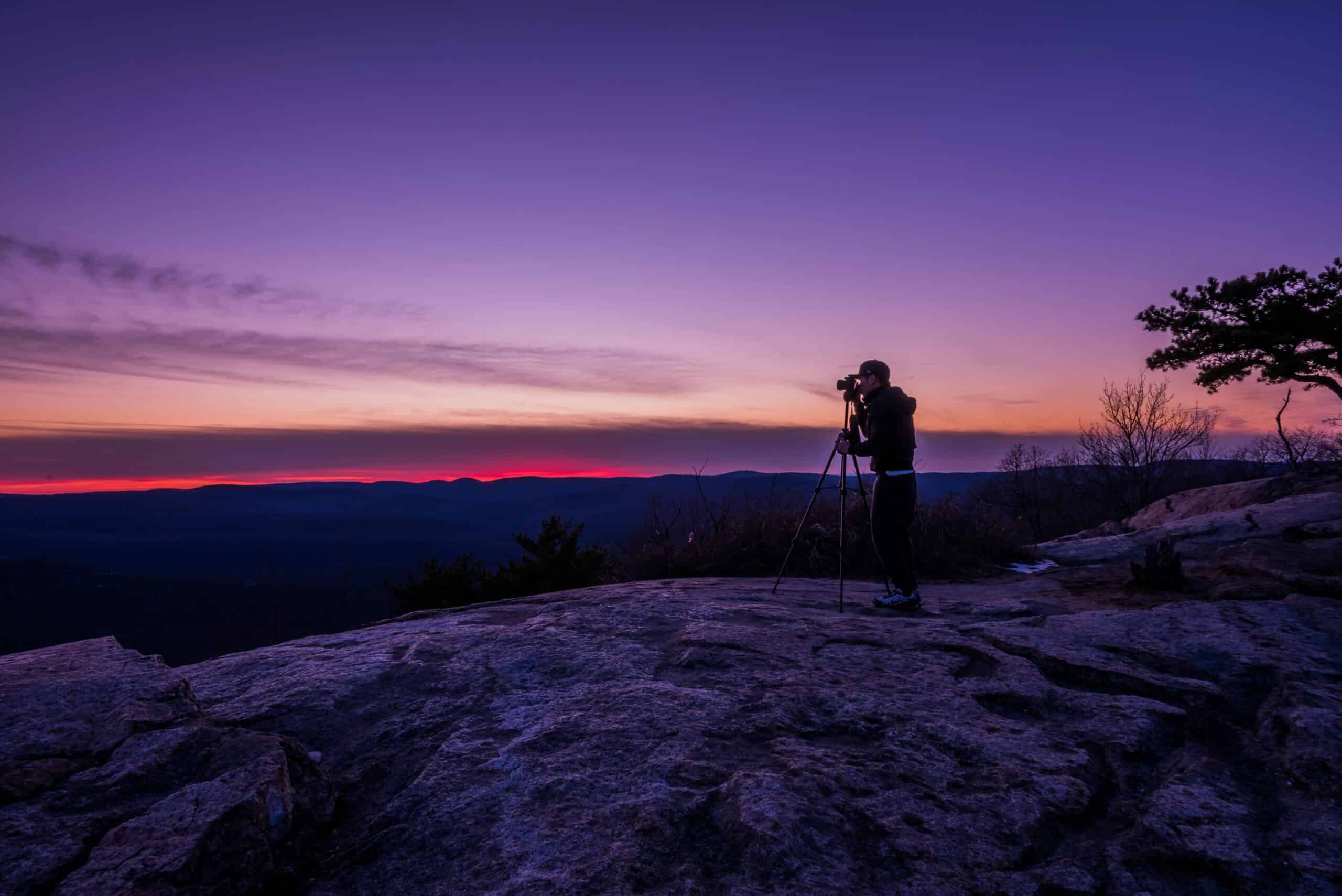
Before setting up, scan the scene: light direction, reflective surfaces (glass, cars, water), moving elements (people, trees in wind), and potential flare sources (sun, point lights). If you must shoot through glass, keep the front element as close as possible (1–3 cm) to reduce reflections and ghosting; use a cloth “blackout” hood if necessary. Check for obstacles that might hide in the fisheye edges and create stitching mismatches (thin railings, close chairs).
Match Gear to Scene Goals
The Canon EOS R3’s dynamic range and low‑light capability let you bracket HDR without excessive noise. Realistically, ISO 100–800 is “clean,” 1600 is still strong, and 3200 remains usable with good noise reduction. The 7Artisans 10mm fisheye minimizes shot count for fast captures—great when crowds move or wind shakes the rig. Expect pronounced fisheye geometry (that will map cleanly in pano software) and some edge stretching, which is normal and helpful in stitching.
Pre‑shoot Checklist
- Charge batteries; format fast cards. The R3’s dual slots (CFexpress Type B + SD UHS‑II) are great for RAW to both as backup.
- Clean the lens and sensor; fisheye elements easily show smudges and flare.
- Tripod: verify leg locks, check the leveling base, and confirm pano head rail markings.
- Safety: assess wind loads, use a tether/leash on rooftops or poles, and avoid overhead lines. Never shoot from ledges without proper restraints.
- Backup workflow: when time allows, shoot a second full pass. It saves projects if one frame has motion blur or a passerby steps into your overlap.
Essential Gear & Setup
Core Gear
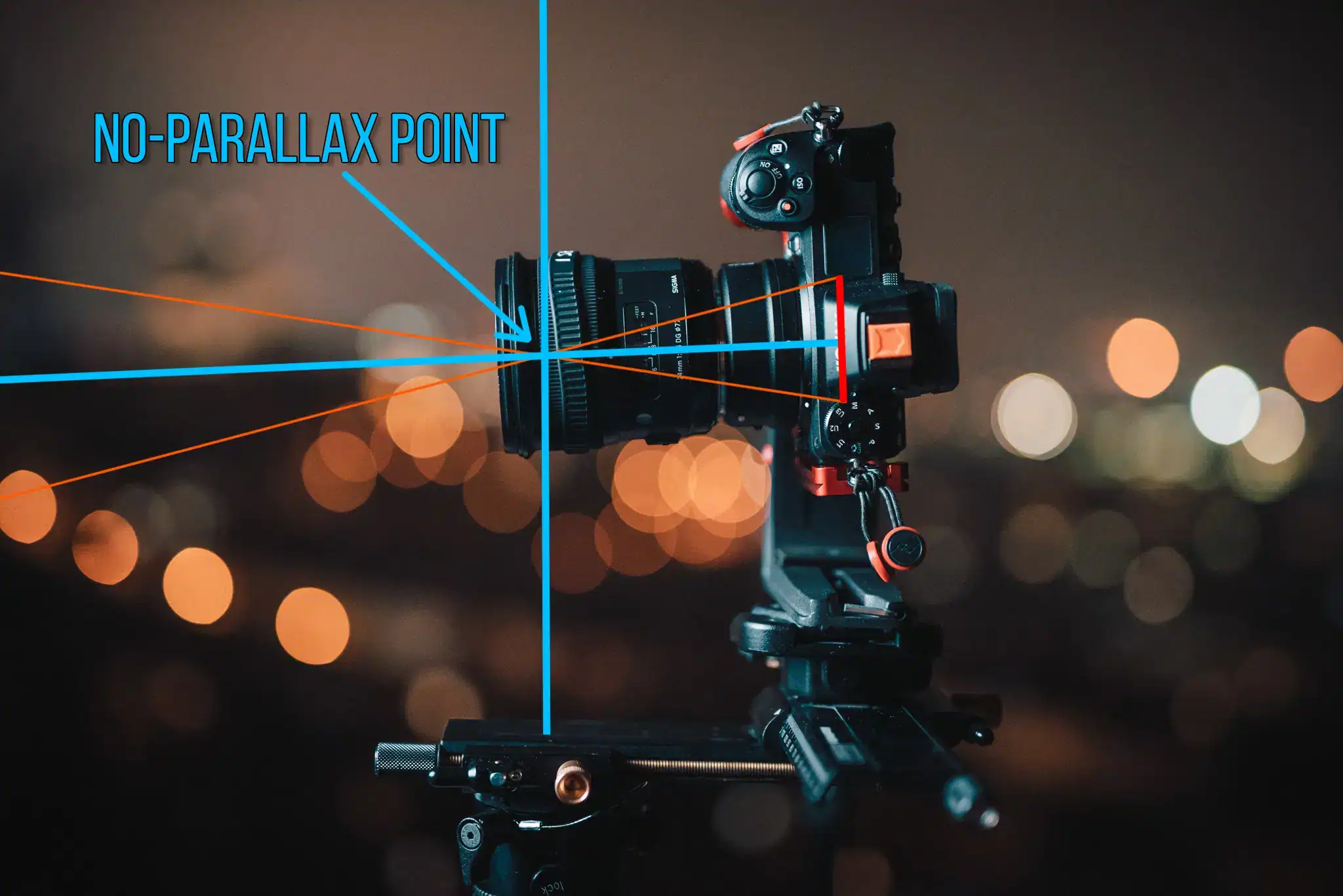
- Panoramic head: Lets you place the lens’s entrance pupil (nodal point) over the rotation axis to eliminate parallax. This is critical in tight interiors with near objects.
- Stable tripod with leveling base: Faster setup and fewer horizon errors. A half‑ball or leveling bowl is ideal.
- Remote trigger or Canon Camera Connect app: Avoids introducing vibration when you fire the shutter.
Optional Add‑ons
- Pole or car mount: For elevated views or vehicle‑based capture. Use safety lines, consider wind load, and keep speed low to avoid vibration blur.
- Lighting aids: Small LED panels for dark corners; avoid moving light sources between frames.
- Weather protection: Lens hood ring, rain cover, microfiber cloths; a fisheye’s bulbous front element needs extra care.
Step‑by‑Step Shooting Guide
Standard Static Scenes
- Level and align: Level the tripod via the base, then confirm with the R3’s electronic level. Mount the pano head and align the lens’s entrance pupil above the rotation axis.
- Manual exposure + WB: Switch to M mode. Set WB to a fixed preset (daylight/tungsten) or Kelvin value so color stays consistent. Disable auto ISO; pick a single ISO for the entire set.
- Focus and aperture: Use focus peaking and magnification to focus at, or slightly beyond, hyperfocal. With a 10mm fisheye, f/8 gives generous depth. Switch to MF and don’t touch the ring afterwards.
- Capture sequence: At 10mm FE on FF, shoot 6 frames around at 60° steps. Add 1 zenith (tilt up) and 1 nadir (tilt down). Aim for ~30% overlap. For maximum reliability in difficult patterns (fences, tiles), do 8 around.
- Nadir for tripod removal: Take an extra ground frame by tilting down or shifting the rig slightly, which makes patching the tripod much easier in post.
HDR / High Dynamic Range Interiors
- Bracket sets: Use AEB with ±2 EV (3–5 frames) to control bright windows versus interior shadows. The R3 handles bracketing quickly and reliably.
- Keep WB locked: A stable white balance prevents bracket‑to‑bracket shifts that complicate stitching and blending.
- Consistent aperture: Don’t change f‑stop between brackets. Let the shutter time vary while ISO stays fixed (preferably 100–400 indoors).
Low‑Light / Night Scenes
- Long exposures: Use a sturdy tripod, turn IBIS OFF to prevent micro‑drift on long exposures, and use a remote or 2‑sec timer.
- ISO choices: Start at ISO 100–200. If wind or moving subjects force faster shutter times, ISO 800–1600 remains very usable on the R3.
- Watch hotspots: Street lamps and neon signs can create flare on fisheyes—shade when possible and avoid pointing directly unless needed.
Crowded Events
- Two passes: First pass quickly for coverage; second pass wait for gaps. You can mask people later for clean seams.
- Shorter step angles: Use 8 around for more overlap. It gives you extra pixels to mask moving subjects cleanly.
- Communicate: If possible, ask bystanders for 10–15 seconds of stillness during each sweep.
Special Setups (Pole / Car / Elevated)
- Secure everything: Use a safety tether, tighten clamps, and verify balance. On a pole, rotate slowly between shots to minimize vibration.
- Shutter strategy: Bump ISO to maintain 1/125–1/250 on a pole. For car‑mounted work, pick very short exposures and shoot at low speeds in controlled areas.
Recommended Settings & Pro Tips
Exposure & Focus
| Scenario | Aperture | Shutter | ISO | Notes |
|---|---|---|---|---|
| Daylight outdoor | f/8–f/11 | 1/100–1/250 | 100–200 | Lock WB (Daylight); keep IBIS off on tripod |
| Low light / night | f/4–f/5.6 | 1/30–1/60 (tripod) or faster if windy | 400–800 (1600 if needed) | Remote release; check for flare sources |
| Interior HDR | f/8 | Bracket ±2 EV (3–5 frames) | 100–400 | Set AEB; keep aperture/ISO constant |
| Action / moving subjects | f/5.6–f/8 | 1/200+ | 400–800 | Two-pass capture for clean masks |
Critical Tips
- Manual focus at hyperfocal: On a 10mm FE at f/8, focusing a little past 1 m often covers to infinity. Use focus peaking on the R3, then don’t refocus mid‑set.
- Nodal point calibration: Place two vertical objects (one near, one far) in overlap; rotate the camera. Adjust the fore‑aft rail until the objects stay aligned while panning. Mark your rail positions for this lens.
- White balance lock: Use Kelvin or a fixed preset. Mixing auto WB across frames causes stitch seams or color flicker in HDR.
- RAW shooting: The R3’s 14‑bit RAW gives you more shadow latitude and better color. Disable in‑camera lens corrections for consistency.
- IBIS/Lens IS: Turn OFF stabilization on a tripod to prevent micro‑jitter. For handheld panos, IBIS can help, but still use higher shutter speeds.
- Keep the lens clean: Fisheyes are unforgiving. Smudges become bright smear arcs when the sun hits the glass.
Stitching & Post‑Processing
Software Workflow
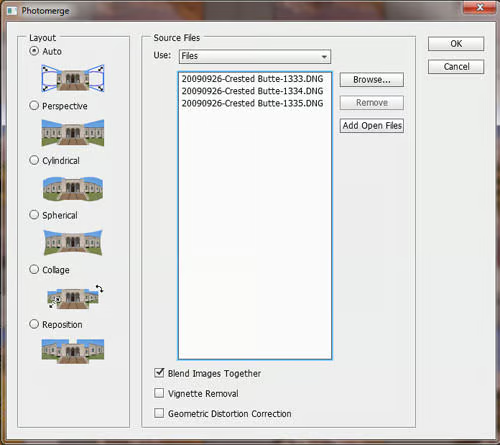
Import RAWs to Lightroom or your favorite RAW converter. Apply a consistent profile, remove chromatic aberration, and keep white balance uniform across the set. Export 16‑bit TIFFs to a dedicated stitcher such as PTGui or Hugin. With a diagonal fisheye, 25–30% overlap is ideal and easily recognized by these apps; rectilinear lenses typically need 20–25% overlap but many more frames. For complex interiors or minimal textures, manually validate control points and enable “optimize lens parameters” to refine the fisheye model. For more on why PTGui remains a top choice, see this overview after you’ve tried a demo build. PTGui review and why it excels for complex panoramas.
Cleanup & Enhancement
- Nadir patch: Export a layered PSD from PTGui or use a separate nadir frame. Heal/clone, or try AI tripod removal utilities.
- Color harmony: After stitching, apply subtle HSL and white balance tweaks. Watch for mixed lighting (tungsten vs daylight) and local correct if needed.
- Noise and sharpening: The R3 tolerates moderate sharpening. Use masking and luminance NR on high‑ISO night sets.
- Horizon leveling: In PTGui/Hugin, set verticals and re‑center. Confirm yaw/pitch/roll are corrected before final export.
- Final deliverables: For VR, export an 8–12K equirectangular (2:1). Save a master TIFF and a compressed JPEG for web viewers.
How many megapixels will your final panorama be? It depends on shot count and overlap. The Panotools community maintains a helpful reference for estimating spherical resolution. Estimate final equirectangular resolution based on your lens and shots.
Useful Tools & Resources
Software
- PTGui panorama stitching
- Hugin open source stitcher
- Lightroom / Photoshop for RAW and retouching
- AI tripod removal tools for faster nadir cleanup
Hardware
- Panoramic heads (Nodal Ninja, Leofoto) — precise entrance pupil alignment
- Carbon fiber tripods — stable and light for field work
- Leveling bases — faster setup and straighter horizons
- Wireless remote shutters — reduce vibration
- Pole extensions / car mounts — elevated or mobile perspectives
Disclaimer: software/hardware names provided for search reference; check official sites for details.
Want a deeper primer on panoramic heads and technique? This illustrated guide is a strong starting point. Panoramic head setup tutorial.
For a broader look at shooting and publishing DSLR/mirrorless 360 photos, this platform guide covers end‑to‑end workflow considerations. Using a mirrorless camera to shoot and stitch a 360 photo.
Common Mistakes & How to Avoid Them
- Parallax error: Not aligning the entrance pupil. Use a pano head and calibrate with near/far objects.
- Exposure flicker: Auto exposure/WB shifts between frames. Use full manual and locked WB.
- Tripod shadows and footprints: Plan the nadir shot and patch later.
- Ghosting from movement: Take extra coverage passes; mask carefully in your stitcher.
- Night noise and blur: Keep ISO modest, use a remote, and shield from wind; turn off IBIS on tripod.
- Lens flare on fisheyes: Avoid direct point light angles, shade with your hand just out of frame, and clean the front element before each set.
Real‑World Case Studies
Indoor Real Estate
Set the 7Artisans 10mm to f/8 and focus once using magnification. Lock WB at 4000–4500K if dominated by warm lamps. Use 6 around + Z + N and bracket ±2 EV. Watch for mirrors: temporarily step aside between frames to avoid reflections. The R3’s clean shadows make window‑pull HDRs straightforward with minimal haloing.
Outdoor Sunset Overlook
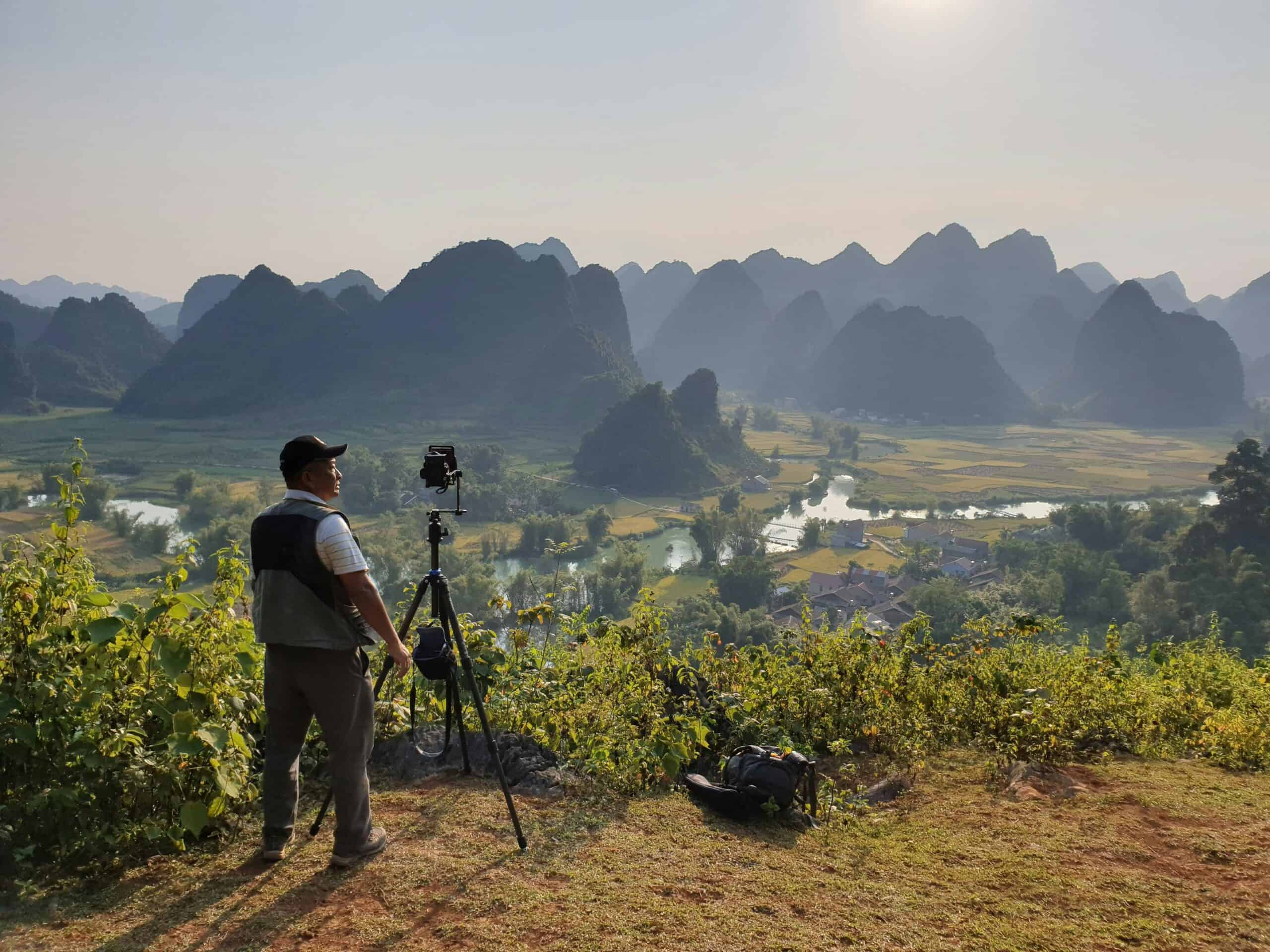
Arrive early to level the tripod and pre‑meter the scene at ISO 100. As the sun sets, shoot one panorama during golden hour and one during blue hour. The difference in ambience gives you creative options. Use a grad filter if you must, but HDR bracketing is usually cleaner for 360s. Beware of lens flare—slightly shield the sun side and take a second frame if needed to blend out a flare artifact.
Crowded Event Floor
Choose 8 around for more overlap. Work quickly at 1/200–1/250, ISO 800–1600 if necessary. Mark your pan angles on the head to avoid hesitation. In PTGui, mask along consistent flooring to align seams cleanly when people move between frames.
Rooftop on a Windy Day
Hang a small weight from the tripod, shorten leg extensions, and shoot at 1/125+ to mitigate sway. Even with a fisheye, wind vibration can blur fine details. Consider a second pass to guarantee tack‑sharp results.
Frequently Asked Questions
-
Can I shoot handheld panoramas with the Canon EOS R3?
Yes, especially outdoors in bright light. Use IBIS ON, faster shutter speeds (1/200+), and overlap generously (8–10 frames around). However, for critical 360s—especially interiors with close objects—a tripod and pano head are strongly recommended to avoid parallax errors.
-
Is the 7Artisans 10mm f/2.8 II wide enough for single‑row 360s?
Yes. On full frame, it’s a diagonal fisheye with near‑180° diagonal FOV, so a single horizontal row of 6 frames plus zenith and nadir reliably covers full 360×180. For “insurance” in complex environments, you can use 8 around.
-
Do I need HDR for interiors with bright windows?
Usually. Even with the R3’s strong dynamic range, bracketing ±2 EV (3–5 frames) preserves view‑through windows and clean interior shadows. Keep WB and aperture fixed; let shutter vary.
-
How do I avoid parallax issues with this setup?
Use a panoramic head and calibrate the entrance pupil (no‑parallax point). Adjust the fore‑aft rail until a near/far alignment stays fixed as you pan. Record your rail marks for this lens and the R3 so you can repeat it quickly next time.
-
What ISO range is safe on the EOS R3 in low light?
ISO 100–800 is essentially clean. ISO 1600 remains strong, and 3200 is usable with careful noise reduction. Favor lower ISO plus a tripod whenever possible for the cleanest stitches.
-
Can I set up Custom Shooting Modes (C1/C2) for pano?
Absolutely. Save Manual mode, fixed WB, RAW, IBIS OFF (for tripod), MF, and your preferred bracketing to a custom mode. It speeds up field work and ensures consistency.
-
How do I reduce flare on a fisheye?
Avoid pointing directly at strong point light sources when possible, shade the lens with your hand just out of frame, and keep the front element spotless. If a flare appears in one frame, shoot an extra and blend in post.
-
What tripod head is best for this combo?
A dedicated panoramic head with fore‑aft and lateral rails (e.g., Nodal Ninja or a compact Leofoto) ensures precise entrance pupil alignment for the 10mm fisheye and makes complex interiors stitch cleanly.
Safety, Reliability & Data Workflow
Use a tether or safety line any time your rig is on a rooftop, balcony, or pole. Keep clear of edges and avoid overhead cables. In wind, reduce tripod height and add weight. For data safety, record RAW to both cards (CFexpress + SD) and back up to a portable SSD as soon as you return. Name panoramas by location and sequence (e.g., 2025‑10‑City‑Rooftop‑SetA) to simplify stitching later.
If you’re new to panoramic heads, an illustrated primer can flatten the learning curve before your first client shoot. Panoramic head basics and alignment tips.
Wrap‑Up: Why This Rig Works
The Canon EOS R3 brings robust ergonomics, speed, and clean files; the 7Artisans 10mm f/2.8 II fisheye delivers huge coverage that keeps your shot count low and stitching simple. With solid technique—entrance pupil alignment, manual exposure and WB, and consistent overlap—you’ll produce sharp, low‑noise 360s for real estate, events, and outdoor landscapes. As you refine your process in PTGui/Hugin and adopt a dependable backup workflow, you’ll find this combo punches well above its cost and weight class.