Why This Camera & Lens Are Great for Panoramas
The Canon EOS 6D and 6D Mark II are full-frame DSLRs that deliver dependable image quality, solid battery life, and robust ergonomics—qualities you want when shooting 360° panoramas on a tripod or pole. Their 36×24 mm sensors provide clean files with good color depth and low noise at moderate ISO, while the large pixels (approx. 6.55 µm on the 6D, 5.76 µm on the 6D Mark II) keep detail and dynamic range healthy, especially at ISO 100–400.
The Sigma 15mm f/1.4 DG DN Diagonal Fisheye Art is a specialized ultra-wide with a 180° diagonal field of view. A diagonal fisheye on full-frame is a sweet spot for spherical panorama work: you can complete a full 360×180° capture with relatively few frames (typically 6 around plus a zenith and nadir). At f/5.6–f/8, this lens is exceptionally sharp across the frame, and as a fisheye, its projection makes stitching easier and more tolerant of minor overlap variations.
Important compatibility note: as of 2025, the Sigma 15mm f/1.4 DG DN Fisheye Art is available in Sony E and L-Mount. It is not natively compatible with Canon EF-mount DSLRs (6D/6D Mark II) due to flange distance constraints, and there is no passive adapter that safely achieves infinity focus. To use this workflow on a 6D/6D II, choose an EF-mount diagonal fisheye of similar FOV—commonly the Sigma 15mm f/2.8 EX DG Fisheye (EF) or Canon EF 15mm f/2.8 Fisheye. The shooting approach, overlap, and stitching guidance below remain the same for a 15mm diagonal fisheye on full frame.
Quick Setup Overview
- Camera: Canon EOS 6D (20.2 MP full-frame) or 6D Mark II (26.2 MP full-frame). Base ISO dynamic range is solid; both are clean at ISO 100–200 and usable up to ISO 1600–3200 with careful exposure.
- Lens: Sigma 15mm f/1.4 DG DN Diagonal Fisheye Art (or EF-mount 15mm diagonal fisheye alternative). Projection: diagonal fisheye; excellent corner sharpness by f/5.6–f/8; minimal lateral CA when stopped down.
- Estimated shots & overlap (Full Frame, diagonal fisheye 15mm):
- Fast capture: 6 shots around at 60° yaw + 1 zenith + 1 nadir (25–30% overlap).
- High quality: 8 shots around at 45° yaw + zenith + nadir (more control points, cleaner edges).
- HDR interiors: same shot counts, but bracket 3–5 exposures per angle.
- Difficulty: Intermediate. A calibrated panoramic head makes it straightforward; handheld requires more practice.
Planning & On-Site Preparation
Evaluate Shooting Environment
Start by mapping light, movement, and reflective surfaces. Note the sun’s position for outdoor panoramas to avoid flare with a fisheye’s bulbous front element. Indoors, identify windows, mirrors, and glossy floors—expect ghosting if people or foliage move. If you shoot through glass, press the lens hood gently against the pane or keep 2–5 cm away and shade with a cloth to reduce reflections. Avoid placing the tripod too close to foreground objects; parallax gets harder to control when near-field elements cross seams.
Match Gear to Scene Goals
With the 6D/6D II, base ISO files retain color and highlight detail well. The 6D Mark II is a touch cleaner at high ISO; both do best when you expose to protect highlights. For interiors at twilight or mixed lighting, target ISO 100–400 with bracketing. The 15mm diagonal fisheye minimizes total frames and time on-site—great for fast-changing light or crowds—while accepting fisheye distortion that your stitcher will handle. If your main output is rectilinear panos or gigapixel prints, consider taking more frames or a two-row capture for higher stitched resolution and softer de-fishing.
Pre-shoot Checklist
- Charge batteries, carry spares; format fast cards.
- Clean lens and sensor; fisheyes magnify dust and flare.
- Level tripod, verify panoramic head nodal calibration for the 15mm lens and mark your rails.
- Safety: in wind or on rooftops, add weight to tripod, use a tether/leash to your belt or the structure, and keep clear of edges.
- If using a pole or car mount, inspect clamps, torque all fasteners, use redundant safety lines.
- Backup workflow: shoot a second safety round after your first pass, especially when people or clouds move.
Essential Gear & Setup
Core Gear
- Panoramic head: Keeps the entrance pupil (often called nodal point) directly over the rotation axis to prevent parallax. Use fore-aft and vertical rails to position the lens so near and far objects do not shift relative to each other when yawing the camera.
- Stable tripod with a leveling base: A half-ball or dedicated leveling base lets you level the head independently of the legs for faster setup. Leveling reduces vertical stitching errors and simplifies horizon leveling later.
- Remote trigger/app: Use a cable remote or Canon’s app (via Wi‑Fi on 6D/6D II) to avoid vibrations for sharper frames.
Optional Add-ons
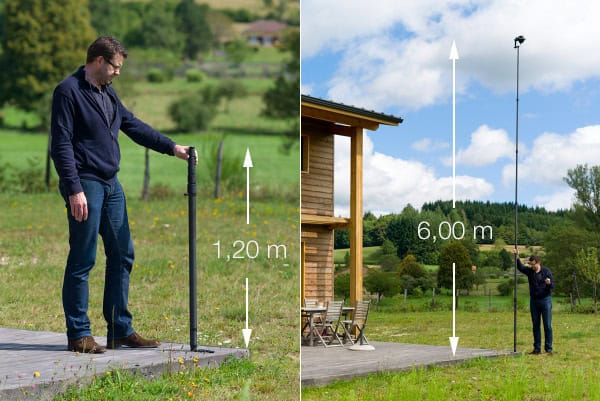
- Pole or car mount: Great for elevated or vehicle-based captures. Beware wind loading; hold the pole with two hands, keep bystanders clear, and use a guy-line when going high.
- Lighting aids: Constant LED lights or small flashes for interior fill, flagging for reflections, and a black cloth to shade glass.
- Weather protection: Rain cover for camera, gaffer tape for cable strain relief, microfiber cloth for the fisheye dome.
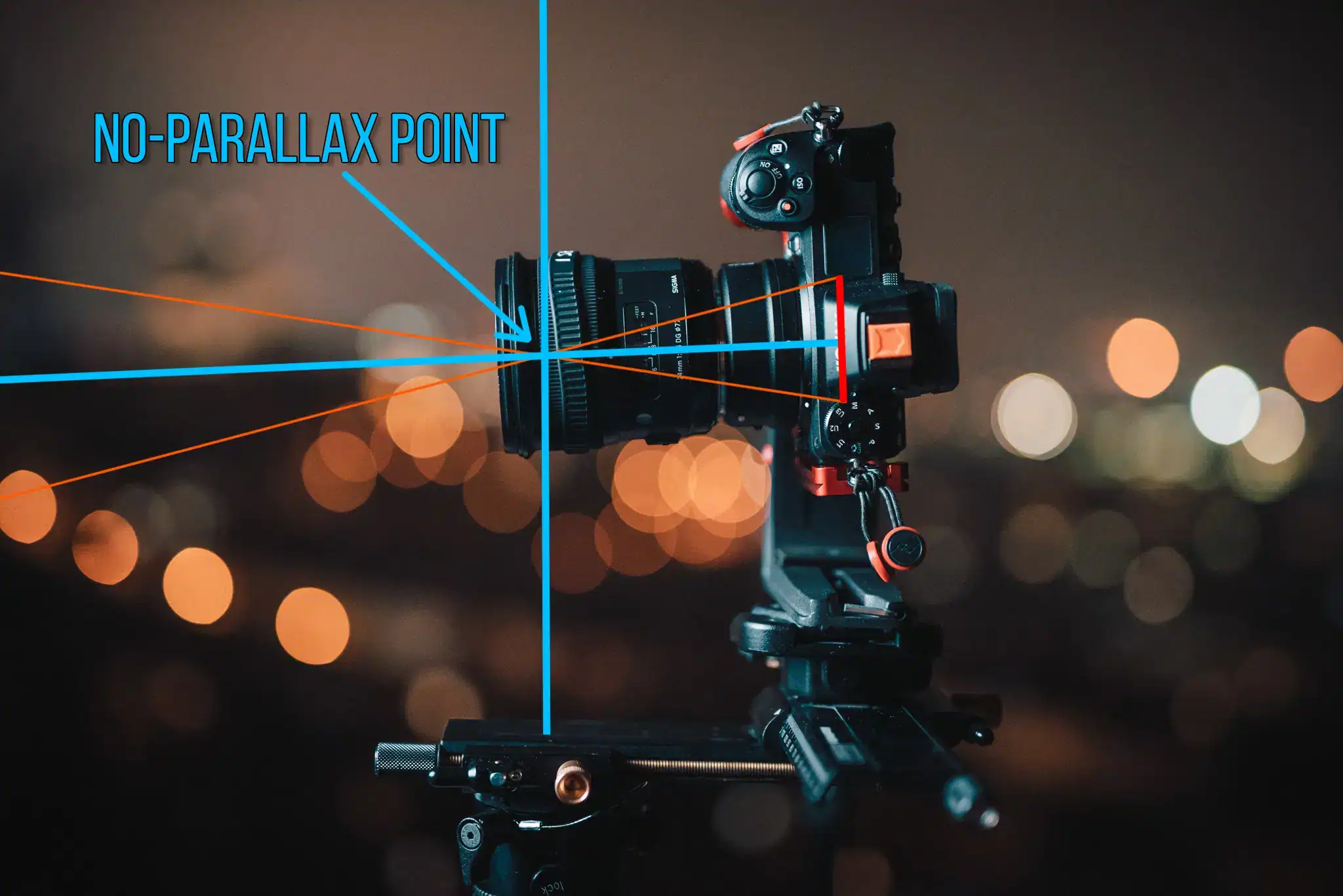
For an excellent primer on panoramic heads and nodal alignment, see this panoramic head tutorial from 360 Rumors. Panoramic head setup basics
Step-by-Step Shooting Guide
Standard Static Scenes
- Level and align: Level the base, then the head. Mount the 15mm fisheye at your saved rail marks. Verify by placing a near object (1–2 m) against a far object and yawing ±20°; if they don’t shift, you’re aligned.
- Manual exposure and WB: Set manual mode to avoid exposure flicker. Meter the brightest part you need detail in (e.g., a window) and expose to preserve highlights. Lock white balance (Daylight indoors is fine if mixed lighting; you’ll correct in RAW).
- Focus: Use Live View at 10×, focus slightly beyond the hyperfocal at f/8, then switch to MF. A fisheye at f/8 has deep DoF; avoid focus breathing between frames.
- Capture sequence:
- 6 around at 0° pitch, 60° yaw spacing. Shoot clockwise to stay consistent.
- Zenith: tilt up 60–75° and shoot one frame.
- Nadir: tilt down 60–75° and shoot one frame. For cleaner tripod removal, shoot an offset nadir by shifting the tripod slightly and capturing a patch frame.
HDR / High Dynamic Range Interiors
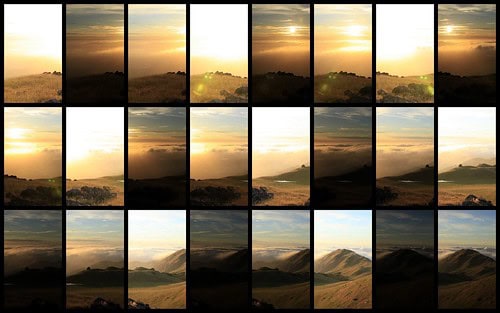
- Bracket ±2 EV (3 or 5 frames) to balance window highlights and interior shadows. Both 6D bodies support AEB; consult the manual for max frames and steps.
- Keep WB locked across brackets to prevent stitching color shifts. Use self-timer or remote to avoid shake during longer brackets.
- Watch for moving curtains, ceiling fans, or people; if they move between brackets, mask in post.
Low-Light / Night Scenes
- Use longer shutter speeds and keep ISO as low as possible. On the 6D/6D II, ISO 100–400 is best; ISO 800 is OK with good exposure; 1600–3200 is usable with careful noise reduction.
- At night, start around f/4–f/5.6, ISO 200–800, and adjust shutter to 1–10 seconds as needed. Use mirror lockup and a 2-second self-timer or a remote.
- Disable lens stabilization if your EF fisheye has it (many fisheyes don’t). IS on a tripod can cause blur.
Crowded Events
- Do two passes: one fast for coverage, one patient pass to catch gaps. Ask people to pause if possible.
- Keep your rotation consistent so moving subjects are easier to mask. Faster shutter (1/200+) helps freeze motion in key frames.
- If elements move a lot (flags, trees), prioritize those frames first.
Special Setups (Pole / Car / Drone)
- Pole: Keep the rig vertical; use an action camera bubble level at eye height. Lift slowly, let vibrations settle, then rotate the pole rather than the camera if using a fixed mount.
- Car: Use a robust suction rig or roof rack with a safety tether. Park out of wind, avoid high speeds, and shoot when the vehicle is stationary. Consider a faster single row (6 around) to minimize time on the road.
- Drone: Not applicable to the 6D directly, but the same overlap logic applies if you ever migrate to drone rigs.
Real-World Case Studies
Indoor Real Estate
Set f/8, ISO 100–200, bracket ±2 EV, and shoot 6 around + Z + N. Place the tripod central to the room to minimize parallax against walls. Watch mirror angles; shoot with the lens slightly shaded if facing windows.
Outdoor Sunset
Expose for highlights (the sun) to protect color; ISO 100; f/8; 1/125–1/250 for the horizon ring. If the sun dips during the set, do two fast rings and blend.
Event Crowds
Switch to 1/200–1/500, f/5.6–f/8, ISO 400–800. Prioritize frames with moving elements first, then fill the gaps.
Rooftop/Pole
Use a lightweight carbon fiber setup, carry a sandbag, and tether the rig. Take a safety pass at 8 around for extra overlap if wind gusts.
Car-Mounted Capture
Park safely, turn off the engine to stop vibrations, and shoot quickly: 6 around, zenith if sky detail matters, nadir patch later.
Recommended Settings & Pro Tips
Exposure & Focus
| Scenario | Aperture | Shutter | ISO | Notes |
|---|---|---|---|---|
| Daylight outdoor | f/8–f/11 | 1/100–1/250 | 100–200 | Lock WB (Daylight); expose for highlights |
| Low light/night | f/4–f/5.6 | 1/30–10s | 200–800 | Tripod and remote; consider long exposure NR off to speed up |
| Interior HDR | f/8 | Bracket ±2 EV | 100–400 | Fuse brackets consistently before stitching or in PTGui |
| Action / moving subjects | f/5.6–f/8 | 1/200+ | 400–800 | Freeze motion; double pass for clean masks |
Critical Tips
- Manual focus near hyperfocal at f/8 to keep everything sharp. Avoid refocusing between frames.
- Nodal calibration: With a 15mm fisheye, the entrance pupil is near the front group. Use a perpendicular stick or light stand close to the lens and a distant vertical line; adjust fore-aft until there is no relative shift while yawing.
- White balance lock: Prevents patchwork color in the stitch. RAW gives you headroom to equalize later.
- RAW vs JPEG: Shoot RAW for maximum dynamic range and easier highlight recovery. JPEG can work for simple daylight scenes but leaves less room for corrections.
- Stabilization: The 6D/6D II lack IBIS; if your lens has IS, turn it OFF on a tripod to prevent drift.
If you want deeper background on spherical resolution and how frames translate to final pixel output, the Panotools Wiki is a reliable reference. Understanding DSLR spherical resolution
Stitching & Post-Processing
Software Workflow
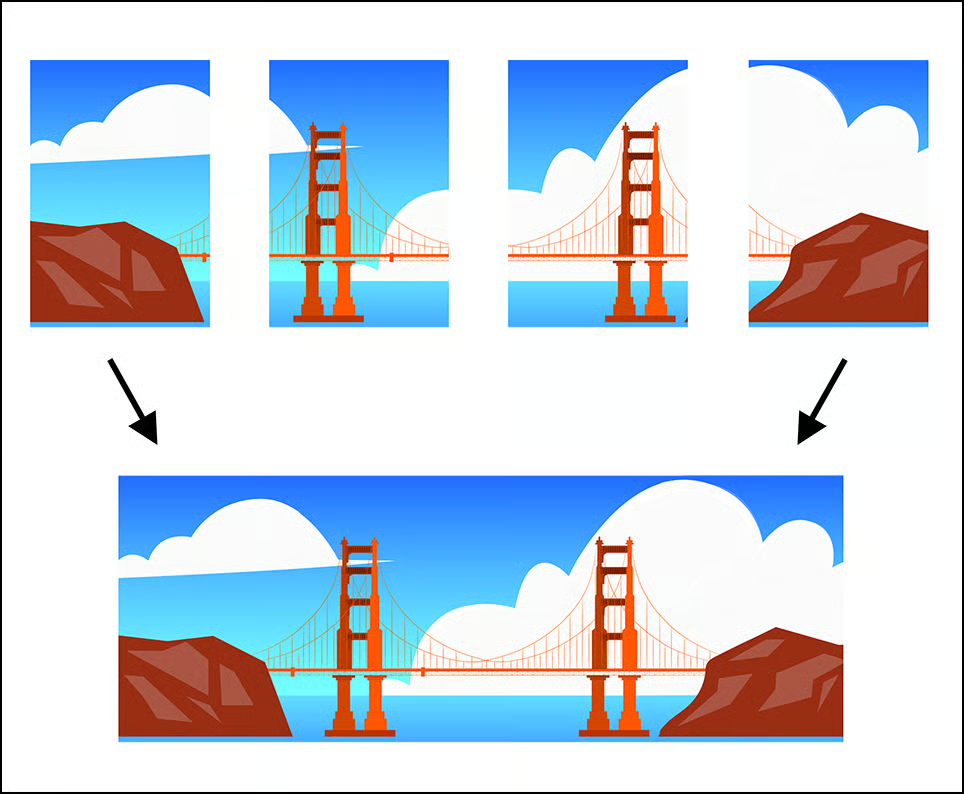
Import RAWs into Lightroom or your preferred RAW processor. Apply consistent lens profile (if available), color temp, and basic noise reduction across the set; avoid local edits before stitching. For fisheye panos, PTGui is a gold standard—its fisheye modeling and control point generation are robust, and it supports HDR merging and masking natively. Hugin is a powerful open-source alternative. Fisheye captures require fewer shots and stitch easier, while rectilinear lenses need more frames and overlap to cover the sphere. As a rule of thumb, aim for 25–30% overlap for fisheyes and 20–25% for rectilinear lenses. For a balanced overview of PTGui’s strengths, see this review. PTGui review and workflow insights
Cleanup & Enhancement
- Tripod/nadir patch: Export a down-looking patch or use PTGui’s Viewpoint Correction to blend an offset nadir shot. AI tools in Photoshop can help remove tripod legs quickly.
- Color correction: Match exposure and white balance across the seam lines; do a final global grade after the stitch.
- Noise reduction: Apply NR to the stitched pano or to RAWs prior to stitch; be consistent to avoid tonal stepping.
- Level horizon: Use “straighten” or “horizon tool” in the stitcher; align verticals for interiors.
- Export: For VR, export equirectangular JPEG at 8–12k width or TIFF/EXR for archival. Platforms like Meta, Kuula, and Panoee prefer equirectangular 2:1 aspect.
For a camera-to-VR overview specific to DSLR and mirrorless workflows, Oculus’ creator documentation is concise and practical. Using a DSLR to shoot and stitch a 360 photo
Useful Tools & Resources
Software
- PTGui panorama stitching (HDR + masking, fisheye-aware)
- Hugin open source (powerful control point tools)
- Lightroom / Photoshop for RAW and retouch
- AI tripod removal tools (Content-Aware Fill, Generative tools)
Hardware
- Panoramic heads: Nodal Ninja (Fanotec), Leofoto, Bushman Panoramic
- Carbon fiber tripods with leveling bases (e.g., 75 mm half-ball or 3/8″ leveling base)
- Wireless remote shutters or intervalometers
- Pole extensions / car mounts with redundancy (safety lines, clamps)
Disclaimer: product names for reference; check the manufacturers’ sites for updated specs. For a deeper primer on head setup, also see Oculus’ panoramic head guide. Set up a panoramic head
Common Mistakes & How to Avoid Them
- Parallax error: Always align the entrance pupil and avoid moving the tripod between frames.
- Exposure flicker: Use manual mode and locked WB; don’t mix auto-bracketed exposure with auto ISO.
- Tripod shadows: Change your body position per shot or do a clean nadir patch to clone later.
- Ghosting from moving subjects: Shoot two passes and mask in the stitcher.
- Night noise: Keep ISO conservative and extend shutter time; expose to the right without clipping highlights.
- Fisheye flare: Shield the front element from direct sun with your hand or a flag, just out of frame.
Frequently Asked Questions
- Can I shoot handheld panoramas with the Canon EOS 6D/6D Mark II?
Yes, for partial panoramas and simple 360 shots outdoors. Use 6 around with generous overlap (30–40%), fast shutter (1/250+), and keep the lens pivoting over the same point (body rotation at the waist). However, for parallax-sensitive interiors, a calibrated panoramic head is strongly recommended.
- Is the Sigma 15mm f/1.4 DG DN Fisheye Art wide enough for a single-row 360?
Yes—on full frame a 15mm diagonal fisheye typically needs 6 shots around plus a zenith and nadir to cover the full sphere. For cleaner stitches or large prints, shoot 8 around.
- Will the Sigma 15mm f/1.4 DG DN fit my Canon EOS 6D?
No. The DG DN version is for mirrorless E and L mounts and cannot be adapted to EF DSLRs with infinity focus. Use an EF-mount 15mm diagonal fisheye (e.g., Sigma 15mm f/2.8 EX DG Fisheye, Canon EF 15mm f/2.8) on the 6D/6D II; the technique and shot counts remain the same.
- Do I need HDR for interiors with bright windows?
Usually, yes. Bracket ±2 EV in 3 or 5 frames to preserve window views while keeping interior shadows clean. Merge to HDR before stitching or let PTGui fuse HDR during stitching.
- What ISO range is safe on the 6D/6D Mark II in low light?
ISO 100–400 yields the cleanest files on a tripod. ISO 800 is a good ceiling for interior HDR bases. ISO 1600–3200 is usable for events with careful NR (the 6D Mark II holds slightly better at high ISO).
- How can I reduce fisheye flare and ghosting?
Avoid direct light hitting the front element; shoot with the sun at your back when possible, shade with your hand or a flag just out of frame, and clean the glass meticulously. If flare appears in one frame, shoot an extra overlap to mask it during stitching.
- What panoramic head should I choose for this setup?
Look for a compact two-rail head with clear scales and repeatable stops (e.g., Fanotec/Nodal Ninja, Leofoto, Bushman). A leveling base speeds setup, and click-stop rotators (e.g., 6 or 8 stops per 360°) help maintain even spacing.
- Can I set custom modes on the 6D/6D II for pano work?
Yes. Save Manual exposure, fixed WB, MF, drive mode, and AEB settings to C1/C2/C3 (if available on your model) to speed up field changes.
Safety, Handling, and Trust Notes
Fisheye front elements are exposed—use the cap until you’re ready to shoot, and never place the lens face-down on rough surfaces. In wind, keep one hand on the tripod center column between shots. On rooftops and poles, use redundant safety measures and keep a safe perimeter. Back up your files in the field (dual cards aren’t available on these bodies), or at least copy to a phone or drive after the shoot.
For more background on DSLR pano techniques and camera/lens options, this DSLR virtual tour guide is a helpful read. DSLR virtual tour FAQ and gear guide