Why This Camera & Lens Are Great for Panoramas
If you want to know how to shoot panorama with Canon EOS 6D / 6D Mark II & Sigma 14-24mm f/2.8 DG DN Art, you’re already aiming for a high-quality full-frame workflow with serious sharpness. The Canon EOS 6D (20.2 MP, ~6.55 µm pixels) and 6D Mark II (26.2 MP, ~5.76 µm pixels) deliver clean files with strong high-ISO performance for nighttime cityscapes and interiors. Their large 36×24 mm sensors capture generous dynamic range (roughly ~12 EV at base ISO, depending on body and processing), which is critical when you’re blending windows and interior shadows in HDR panoramas.
Important mount note: Sigma’s “DG DN Art” is for mirrorless mounts (e.g., Sony E / L-mount) and does not physically mount to Canon EF DSLR bodies (6D/6D Mark II) due to flange distance. If you are using a 6D/6D Mark II, choose the Sigma 14-24mm f/2.8 DG HSM Art for Canon EF (not DN). The optical field-of-view and pano workflow below remain essentially the same between HSM (EF) and DN versions, so you can follow this article’s settings and shot counts. If you actually own the DN version, use a compatible mirrorless body; there is no practical adapter to mount DN to EF DSLRs.
Why a 14-24mm rectilinear zoom for panoramas? At 14mm, you get a very wide rectilinear field of view (approx. 114° diagonal, ~104° horizontal), excellent edge-to-edge sharpness, and low distortion for an ultra-wide. Rectilinear edges stretch near the frame boundary, so you want good overlap for clean stitching. The f/2.8 aperture helps in low light, while the lens’s modern coatings tame flare and chromatic aberration quite well. On a panoramic head, it’s a versatile multi-row powerhouse for 360×180 captures and high-res gigapixels.
Quick Setup Overview
- Camera: Canon EOS 6D or 6D Mark II — Full-frame (36×24 mm). Resolution: 6D = 20.2 MP; 6D II = 26.2 MP. Known for clean ISO up to 800–1600 when exposed well and good dynamic range at base ISO.
- Lens: Sigma 14-24mm f/2.8 DG HSM Art (Canon EF) / DG DN Art (mirrorless). Rectilinear ultra-wide zoom. Very sharp by f/5.6–f/8, low lateral CA, minimal coma for night cityscapes. Note: DN version does not mount on 6D/6D II; use HSM EF version on these bodies.
- Estimated shots & overlap (tested safe starting points):
- At 14mm rectilinear: 3 rows × 6 around (60° yaw steps) + 1 zenith + 1 nadir = ~20 frames (25–30% overlap).
- At 18mm: 4 rows × 8 around + Z + N = ~34 frames (25–30% overlap).
- At 24mm: 5 rows × 10 around + Z + N = ~52 frames (25–30% overlap). Use for higher-resolution gigapixel-style panos.
- Difficulty: Intermediate — rectilinear multi-row shooting requires nodal calibration and careful overlap, but results can be very high resolution.
Planning & On-Site Preparation
Evaluate Shooting Environment
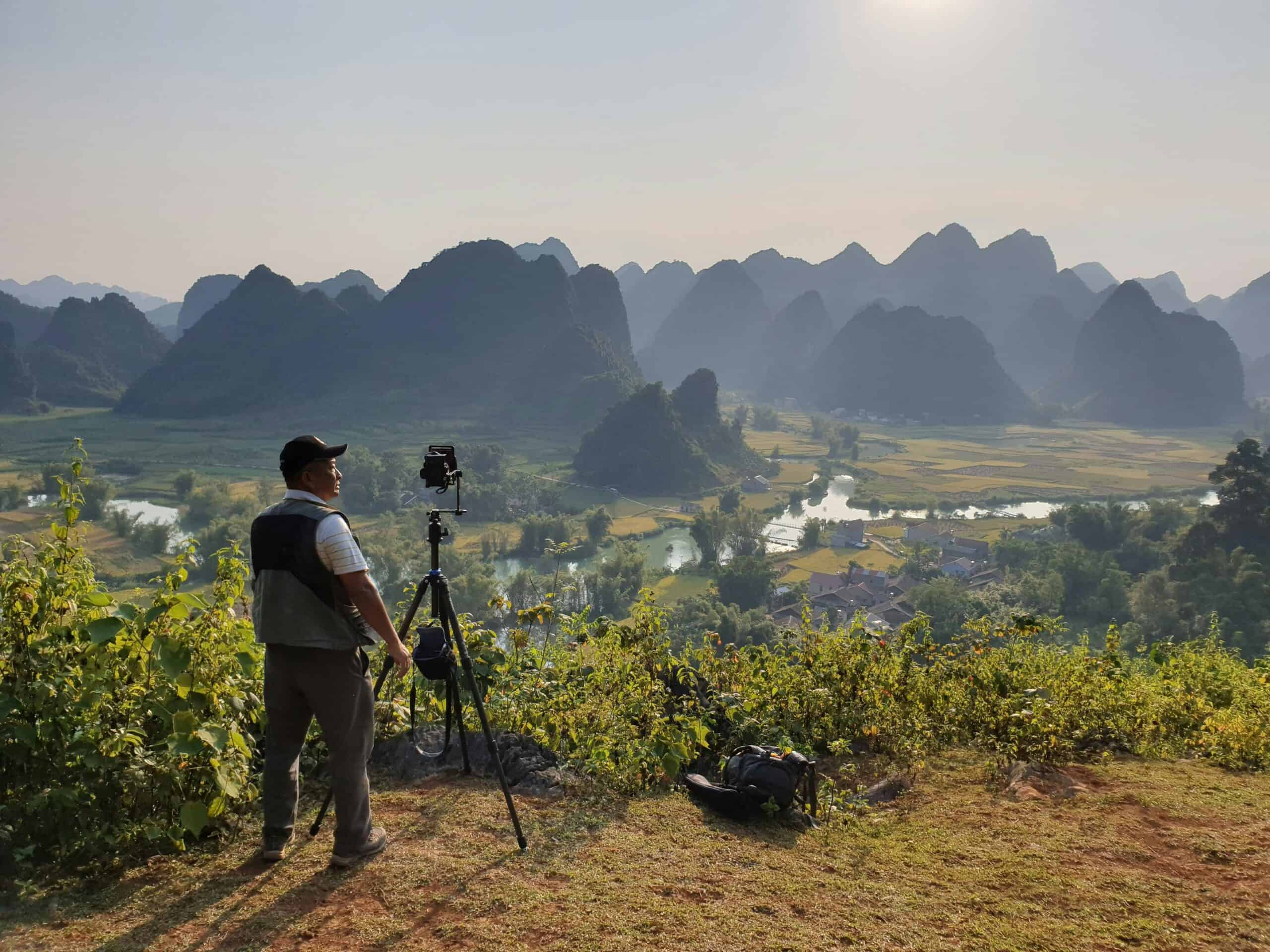
Before you set up, scan the scene. Look for moving subjects, flickering lights, reflective glass, and strong light sources near the sun. If you must shoot through glass, place the front element as close as possible (1–2 cm) and use a rubber lens hood to minimize reflections. For water, foliage, and crowds, expect to do masking in post. If wind is strong, weigh down your tripod and shorten center columns to reduce vibrations.
Match Gear to Scene Goals
The 6D/6D Mark II plus Sigma 14-24 is ideal when you want a clean multi-row 360 with flexibility: at 14mm you need fewer frames per row and faster capture in crowds; at 24mm you can produce extremely high resolution for print or detail-heavy interiors. The 6D/6D II files tolerate ISO 400–800 without breaking, and 1600 is workable if you expose to the right and denoise in post. A rectilinear 14mm takes more shots than a fisheye but avoids the fisheye look and stitches nicely in PTGui or Hugin.
Pre-shoot Checklist
- Power & media: Fully charged batteries and ample storage. Panos multiply file counts; carry at least two extra cards.
- Clean optics: Front/rear element and sensor. Dust becomes very visible in sky/ceiling areas.
- Leveling: Bring a leveling base or use your tripod’s built-in bubble. Leveling makes stitching faster and cleaner.
- Pano head calibration: Confirm your nodal (no-parallax) setting for 14mm and mark it on the rail.
- Safety: In wind, lower the tripod, add a weight, and tether. Rooftops/car mounts require a safety line; never leave gear unattended.
- Backup workflow: When in doubt, shoot a second pass for insurance.
Essential Gear & Setup
Core Gear
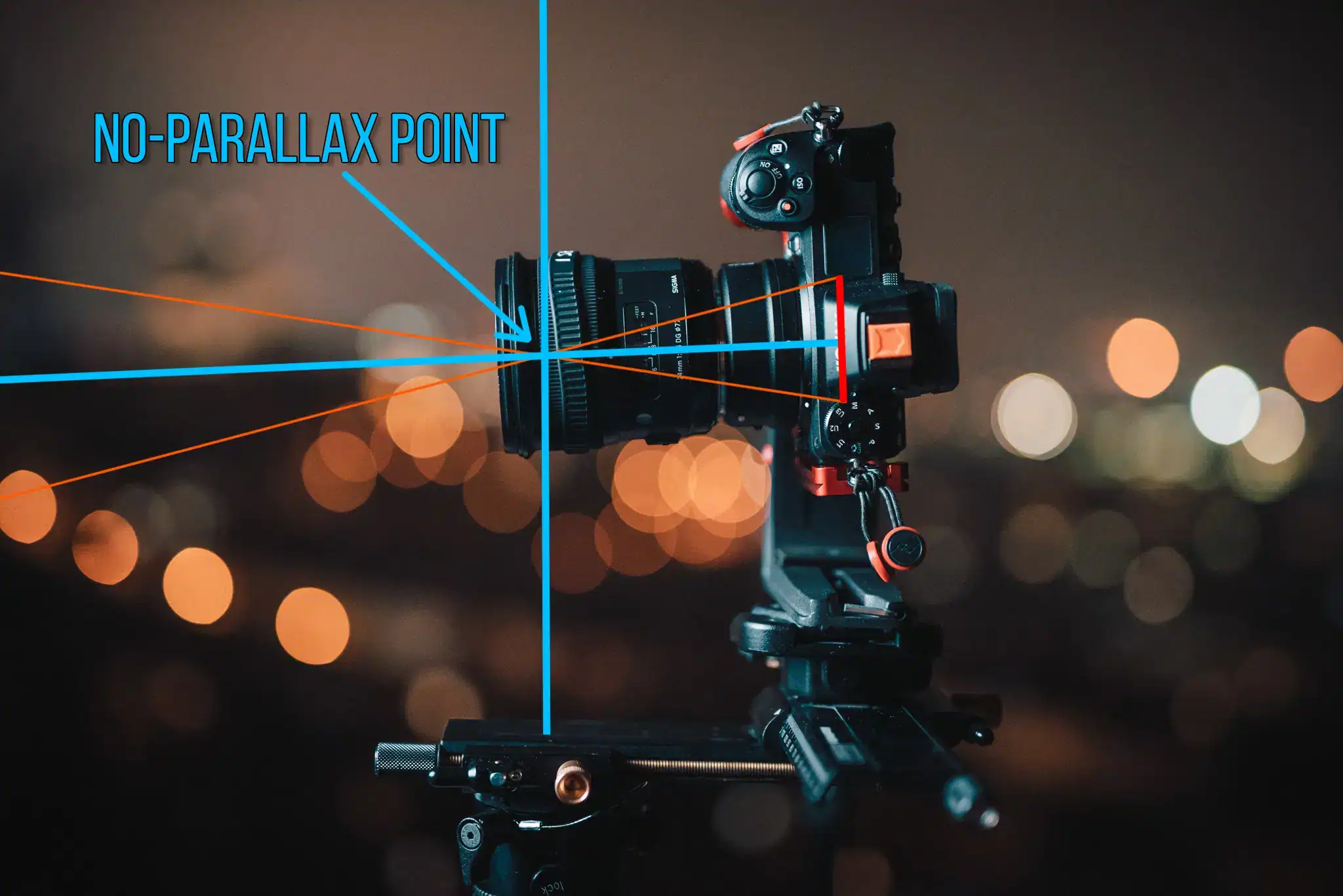
- Panoramic head: A proper multi-row panoramic head (e.g., Nodal Ninja, Leofoto) lets you center rotation on the lens’s entrance pupil (nodal point), eliminating parallax and making stitches seamless. This is critical with rectilinear ultra-wides.
- Stable tripod with leveling base: A leveling base speeds setup and keeps your yaw rotation flat, minimizing horizon corrections later.
- Remote trigger or app: Use a cable release or Canon app to avoid vibrations. Enable 2-sec timer if you don’t have a remote.
Optional Add-ons
- Pole or car mount: For elevated street views or rooftop edges. Safety first: use secondary tethers and assess wind load; poles flex and can oscillate.
- Lighting aids: Small LED panels or bounced flash for interiors. Keep lighting consistent to avoid exposure seams in a panorama pass.
- Weather protection: Rain cover for the camera, and a microfiber cloth for mist/sea spray.
Step-by-Step Shooting Guide
Standard Static Scenes
- Level and align: Level the tripod. Mount the panoramic head, set the camera at 14mm, and adjust the fore–aft rail so rotation occurs around the lens’s entrance pupil. Start with a test using overlapping vertical edges at near/far distances; adjust until there’s no relative movement when you pan.
- Manual exposure and WB: Meter the brightest portion you must preserve (e.g., sky/window), then set Manual exposure for the entire sequence. Lock white balance (Daylight/Tungsten/Kelvin) to avoid stitch color shifts.
- Capture sequence: For 14mm, shoot three rows (pitch +45°, 0°, −45°) with 6 shots around per row (60° yaw steps). Overlap 25–30%. Add one zenith (aim straight up) and one nadir (straight down) for 360×180 coverage.
- Nadir shot: After the main pass, shoot an offset nadir (move the tripod out or shoot handheld from the same point) to patch out the tripod in post.
HDR / High Dynamic Range Interiors
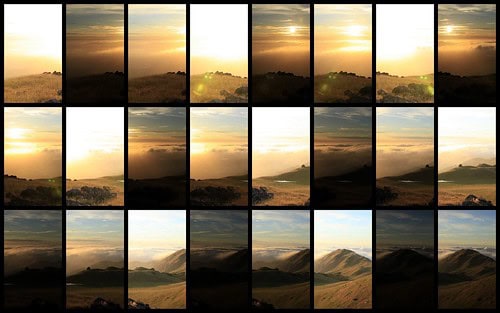
- Bracket ±2 EV (3–5 frames): For bright windows against dark interiors, use AEB with 2 EV increments. Keep aperture fixed (f/8), vary shutter speed, ISO fixed (100–200).
- Lock white balance: Choose a WB preset or Kelvin and keep it fixed across the entire bracketed pano.
- Deflicker exposure: Manual mode avoids flicker; avoid auto ISO in HDR panoramas.
Low-Light / Night Scenes
- Longer shutter on tripod: Use f/4–f/5.6 and ISO 100–800 for 6D/6D II. Don’t be afraid of 5–20 s exposures on a sturdy head; wind permitting.
- Remote trigger: Fire with a remote or 2-s timer, mirror lockup (6D/6D II), and turn off Long Exposure NR if time is tight (do NR later in post).
- Noise-safe ISO: ISO 400–800 is typically clean; ISO 1600 is usable on both 6D and 6D II with proper exposure and modern denoise.
Crowded Events
- Two passes: Do a fast “anchor” pass to lock the scene, then a second pass waiting for gaps to minimize ghosting.
- Short shutter: Aim for 1/200–1/250 s and ISO 400–800 to freeze motion. You can mask moving subjects in PTGui later.
Special Setups (Pole / Car / Elevated)
- Secure everything: Use a safety tether, check clamps, and test flex. With poles, minimize rotation speed and wait for wind lulls.
- Simplify: Consider 14mm with larger overlap to reduce the number of frames, improving your odds in unstable positions.
Recommended Settings & Pro Tips
Exposure & Focus
| Scenario | Aperture | Shutter | ISO | Notes |
|---|---|---|---|---|
| Daylight outdoor | f/8–f/11 | 1/100–1/250 | 100–200 | Lock WB (Daylight) and exposure for entire pass |
| Low light/night | f/4–f/5.6 | 1/30–multi-sec | 400–800 | Tripod + remote; expose to preserve highlights |
| Interior HDR | f/8 | Bracket ±2 EV | 100–400 | 3–5 brackets per view for bright windows |
| Action / moving subjects | f/5.6–f/8 | 1/200+ | 400–800 | Short shutter to minimize motion blur |
Critical Tips
- Manual focus at hyperfocal: At 14mm and f/8 on full-frame, focusing around 1 m keeps almost everything to infinity sharp. Use Live View magnification; then switch AF off.
- Nodal calibration: Start with the camera’s sensor plane mark (Φ). On a typical 14-24, the entrance pupil at 14mm is often roughly 90–110 mm forward of the mount; fine-tune by aligning a near pole and distant object while panning. Mark this on your rail for quick setup.
- White balance lock: Avoid Auto WB. Mixed lighting? Use a Kelvin value (e.g., 3200–4200 K indoors) to keep color consistent across frames.
- RAW all the way: Shoot RAW for maximum dynamic range and flexible white balance and denoise later.
- Stabilization: The 6D/6D II bodies don’t have IBIS, and the Sigma 14-24 lacks OS. On tripod that’s ideal—no stabilizer to switch off. If you use a stabilized lens, turn IS/OS off on tripod.
Stitching & Post-Processing
Software Workflow
Import, cull, and pre-process RAW files (lens profile, chromatic aberration correction, basic color). Then stitch in a dedicated panorama tool. PTGui is the industry favorite for control point accuracy and masking; Hugin is a capable open-source alternative. Rectilinear ultra-wides require solid overlap, but stitch very well in PTGui with adaptive control points. As a rule of thumb, use ~25–30% overlap for rectilinear and ~30%+ for complex scenes. Save a template per focal length/row layout for speed. For a PTGui overview and why pros use it, see this review by Fstoppers. PTGui: one of the best tools for panorama stitching.
Cleanup & Enhancement
- Tripod/nadir patch: Use PTGui Viewpoint correction or export to Photoshop for a clean patch/clone. There are also AI patchers that quickly remove tripod legs.
- HDR merge: In PTGui, either pre-merge brackets in Lightroom, or use PTGui’s built-in HDR mode. Keep a consistent tone-mapping strategy to avoid seams.
- Noise reduction: Apply RAW denoise before stitching or use a masked NR pass after stitching (especially for night skies/interiors).
- Level and yaw: Use horizon line controls and verticals to ensure a level equirectangular output. A level horizon is crucial for a natural VR feel.
- Export: For VR platforms, export 2:1 equirectangular JPEG/TIFF at 8192×4096 (8K) or 16384×8192 (16K) if your capture has enough resolution.
For authoritative VR publishing guidance, Oculus has a concise DSLR 360 pipeline overview. Using a DSLR to shoot and stitch a 360 photo.
Useful Tools & Resources
Software
- PTGui panorama stitching (templates, HDR, masking, viewpoint correction)
- Hugin open source (control-point editor and robust projection options)
- Lightroom / Photoshop (RAW, color, denoise, nadir patching)
- AI tripod removal tools (for faster nadir cleanup)
Hardware
- Panoramic heads: Nodal Ninja, Leofoto multi-row heads
- Carbon fiber tripods with leveling base
- Wireless remotes / intervalometers
- Pole extensions / suction car mounts with safety tethers
If you’re new to panoramic heads, this practical tutorial is a great primer. Panoramic head setup and how it works. For deeper technique discussion, see this community Q&A. Best techniques to take 360 panoramas.
Disclaimer: software/hardware names provided for search reference; check official sites for details.
Common Mistakes & How to Avoid Them
- Parallax errors: Always align the entrance pupil with a pano head. Re-check if you zoom off 14mm.
- Exposure flicker: Use Manual mode for the entire sequence; no Auto ISO.
- WB shifts: Lock WB; avoid Auto WB in mixed lighting.
- Tripod shadows & nadir gaps: Plan a dedicated nadir shot to patch later.
- Motion ghosting: Do two passes and mask in the stitcher; use shorter shutter speeds in crowds.
- Wind blur: Lower tripod, add weight, choose fewer frames (14mm, bigger overlap), and wait between shots.
Real-World Field Notes & Case Studies
Indoor Real Estate (Mixed Lighting)
On a 6D Mark II with the Sigma at 14mm, f/8, ISO 100, bracket ±2 EV across three rows. Lock WB to 4000 K for a neutral baseline in tungsten/LED mix. Use 6 shots per row, zenith/nadir included. Pre-merge HDR in PTGui to keep consistent tone mapping. Expect 18 + 2 frames per pano. The 26 MP files on the 6D II let you publish 8K equirects cleanly.
Outdoor Sunset (High DR, Wind)
6D at ISO 100, f/8, base exposure for sky highlights (avoid clipping). Bracket if needed. If wind gusts, shorten center column, add a bag weight, and use 6 shots per row to speed up. Overlap generously to give stitcher more data. A circular polarizer can cause uneven skies at ultra-wide—use sparingly.
Event Crowds (Movement)
Use 1/200 s, f/5.6–8, ISO 400–800. Shoot a fast anchor pass and a second pass waiting for gaps. In PTGui, use the masking brush to favor pass #2 where people are better placed. Rectilinear 14mm keeps people shapes more natural near edges than a fisheye would.
Rooftop / Pole Shooting
For elevated perspectives, choose 14mm with fewer frames per row. Tighten all clamps, add a tether, and rotate slowly. Vibration is your enemy; use a faster shutter or wait for wind lulls. If the pole flexes, overshoot extra frames for redundancy.
Frequently Asked Questions
- Can I shoot handheld panoramas with the Canon EOS 6D / 6D Mark II?
Yes for simple cylindrical panos, but for full 360×180 spheres you’ll get far cleaner results on a leveled tripod with a panoramic head. Handheld introduces parallax and horizon wobble, especially with rectilinear 14mm.
- Is the Sigma 14-24mm f/2.8 wide enough for a single-row 360?
For a full 360×180 sphere, single-row is not enough with a rectilinear 14mm; you need multiple rows plus zenith/nadir. For a cylindrical 360 (no top/bottom), a single row of ~6 shots at 14mm works.
- Do I need HDR for interiors with bright windows?
Usually yes. Bracket ±2 EV (3–5 exposures) so you retain both window detail and interior shadows. Merge brackets before or during stitching in PTGui.
- How do I avoid parallax issues with this lens?
Use a panoramic head and align rotation at the lens’s entrance pupil. At 14mm, start around ~90–110 mm forward of the mount as a rough baseline and fine-tune by aligning a near vertical and a distant edge while panning.
- What ISO range is safe on these cameras in low light?
ISO 100–400 is ideal. ISO 800 is typically clean; ISO 1600 remains usable with careful exposure and modern denoising. Prefer longer shutter speeds on a tripod over pushing ISO.
- Can I set Custom Shooting Modes for pano?
Yes. Save a “Pano” preset (Manual, RAW, fixed WB, f/8, typical shutter, ISO, bracketing on/off) to C1/C2 for quick recall on the 6D/6D II.
- Does the Sigma 14-24mm f/2.8 DG DN Art fit the 6D / 6D Mark II?
No. The DN version is for mirrorless mounts. Use the Sigma 14-24mm f/2.8 DG HSM Art (Canon EF) on 6D/6D II. The pano workflow and shot counts are the same.
- What panoramic head should I choose?
A compact multi-row head with marked rails (e.g., Nodal Ninja or Leofoto) that supports your camera’s weight and allows precise fore–aft adjustments. Mark your 14mm entrance pupil position for repeatable setups.
Additional References
For a concise, step-by-step panoramic head setup aimed at high-end 360 photos, see this guide. Set up a panoramic head for high-end 360 photos.