Why This Camera & Lens Are Great for Panoramas
Learning how to shoot panorama with Canon EOS 6D / 6D Mark II & Pentax DA 10-17mm f/3.5-4.5 ED Fisheye is a smart way to create immersive 360 photos with relatively few frames. The Canon EOS 6D and 6D Mark II are full-frame DSLRs known for clean high-ISO performance, reliable color, and long battery life—excellent traits for long tripod sessions and low-light interiors. Their 36×24 mm sensors deliver smooth tonal transitions and forgiving headroom for stitching. The Pentax DA 10–17mm is a diagonal fisheye zoom designed for APS-C, delivering up to 180° diagonal FOV at the wide end, which dramatically reduces the number of shots required for a full spherical panorama.
Important compatibility note: the DA 10–17mm is K-mount and APS-C. To use it on a Canon EOS 6D / 6D Mark II (EF mount), you’ll need a K-to-EF adapter. Because Canon’s EF flange distance (44.0 mm) is shorter than Pentax K (45.46 mm), you can use a thin, glassless adapter and still focus to infinity. However, DA-series lenses lack an aperture ring; you’ll need an adapter with an aperture control lever or shoot wide open. On full-frame, this lens vignettes strongly at 10–14 mm; plan to shoot at 15–17 mm or crop to the APS-C area in post. Despite those caveats, the combo remains attractive for 360 work: fewer frames per panorama, high stitch reliability, and compact handling compared with rectilinear ultrawide zooms.
Quick Setup Overview
- Camera: Canon EOS 6D (20.2 MP full frame, ~6.55 µm pixels, base ISO 100, strong high-ISO) or EOS 6D Mark II (26.2 MP full frame, ~5.76 µm pixels, Dual Pixel AF in Live View).
- Lens: Pentax DA 10–17mm f/3.5–4.5 ED Fisheye — diagonal fisheye zoom. Sharpest around f/8–f/11, some purple fringing/CA at high-contrast edges typical of fisheyes; easily corrected in post.
- Mounting: K-mount to Canon EF adapter (glassless) required. Prefer adapters with an aperture lever to set f/8–f/11. Expect vignetting on full-frame below ~15 mm; either zoom toward 17 mm or plan to crop the image to an APS-C area in post.
- Estimated shots & overlap (field-tested baselines):
- FF, 17 mm, diagonal fisheye framing: 6 around (60° yaw) + zenith + nadir, ~30% overlap. 4 around is possible outdoors with simple horizons, but 6 around stitches cleaner.
- FF, 14–15 mm with corner vignetting: 8 around (45° yaw) + zenith + nadir for safer coverage; crop edges in post.
- “APS-C crop in post” at 10–12 mm: treat coverage like APS-C fisheye—6 around + zenith + nadir.
- Difficulty: Moderate. Fisheye simplifies shot count, but the K→EF adapter and aperture control add setup complexity.
For expected pixel density in 360 output, see comparative formulas compiled by the panoramic community. This helps you estimate final equirectangular resolution based on focal length and shot count. Reference: Panotools spherical resolution
Planning & On-Site Preparation
Evaluate Shooting Environment
Start with the light. Sun placement, window brightness, and mixed color temperatures all affect stitch quality. For interiors with glass, place the lens close to the glass and shoot slightly off-axis to minimize reflections. Watch out for repetitive patterns (rails, tiles), tight foreground objects (chairs, banisters), and moving elements (people, flags, waves)—all are harder to stitch with a fisheye’s compressed perspective.
Match Gear to Scene Goals
The 6D/6D Mark II are dependable for dynamic range near 12 EV at base ISO and usable noise up to ISO 1600–3200. For indoor 360 photos, ISO 400–800 with a tripod gives clean results. The fisheye lens minimizes shot count—great for fast exterior work and dynamic scenes—but it also magnifies parallax if you’re not on the nodal point. If your scene has very close objects (under 0.8 m), ensure precise nodal alignment or add extra overlap.
Pre-shoot Checklist
- Charge batteries; bring extras. The 6D line sips power, but bracketing and Live View add up.
- Cards: shoot RAW; carry redundancy. Consider a second pass as a safety backup.
- Clean front element; fisheyes see everything. A single smudge can streak across multiple tiles.
- Level the tripod and calibrate your panoramic head’s nodal offsets for 10 mm and 17 mm.
- Safety: on rooftops or poles, tether the camera, verify wind gusts, secure with clamps. On car mounts, use safety cables and avoid public roads.
Essential Gear & Setup
Core Gear
- Panoramic head with fore-aft and lateral adjustments. Aligning the no-parallax (entrance) pupil removes foreground/background shifts as the camera rotates—critical with fisheyes.
- Stable tripod plus a leveling base. Leveling saves time and reduces roll correction in post.
- Remote trigger or Canon app in Live View. Any vibration is exaggerated with ultrawide FOVs; touch-free shooting keeps tiles sharp.
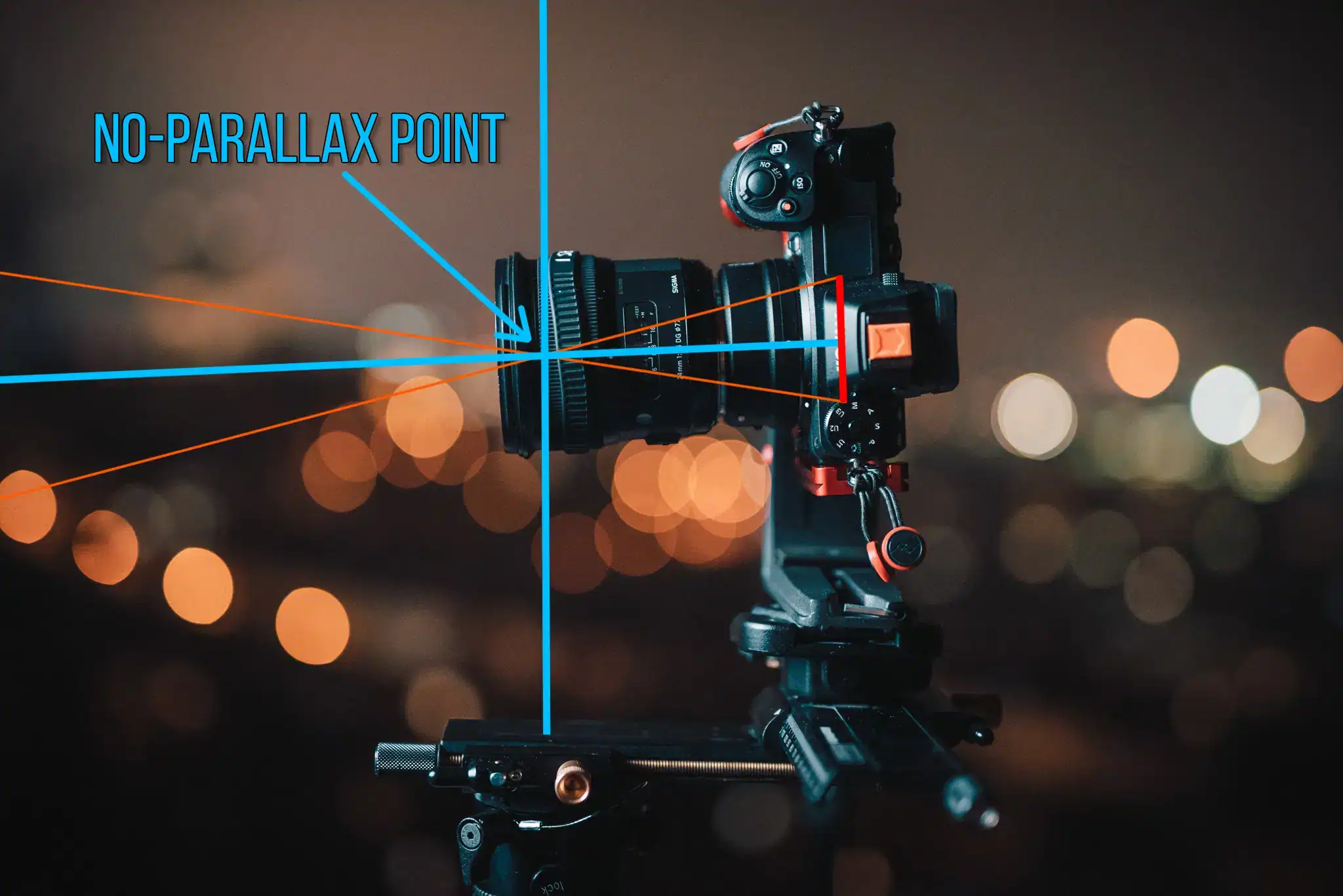
Need a deeper walkthrough on panoramic heads and entrance pupil alignment? This hands-on tutorial covers the essentials from setup to first stitch. Panoramic head setup guide
Optional Add-ons
- Pole or car mount: great for overhead or vehicle shots. Use safety tethers and avoid excessive speed or wind; vibrations blur frames and cause misalignment.
- Lighting aids: compact LED panels for interiors, especially to lift dim corners for HDR merges.
- Weather protection: rain covers and microfiber cloths. A single water droplet on a fisheye becomes a major retouch.
Adapter & Aperture Notes
Use a K→EF adapter without optics to retain infinity focus. Prefer an adapter with a built-in aperture lever that allows you to stop down to f/8–f/11. Without it, the DA 10–17mm will be stuck wide open, which reduces edge sharpness and depth of field—both undesirable for panoramas. Verify that the adapter locks firmly and the lens is not wobbling; even tiny play will introduce stitch errors.
Step-by-Step Shooting Guide
Standard Static Scenes
- Level and align. Level your tripod, then align the panoramic head so the lens’s entrance pupil sits above the rotation axis. Perform a quick near/far test with a lamppost and distant building to confirm zero parallax.
- Manual everything. Set manual exposure, manual white balance (e.g., Daylight/Cloudy/Tungsten), and manual focus. Consistency prevents flicker and color seams. Lock focus at hyperfocal (see tips below).
- Capture with overlap. With this combo, a reliable baseline is 6 around at 60° yaw increments plus a zenith and nadir. If you see corner vignetting at shorter focal lengths, shoot 8 around and crop later.
- Shoot a nadir. After the main ring, tilt down 90° for the ground. Consider a second nadir with the tripod shifted a few inches for easier patching.
HDR / High Dynamic Range Interiors
- Bracket ±2 EV in 3 or 5 frames per angle to balance windows and shadowy interiors. The 6D/6D II handle bracketed merges cleanly.
- Keep WB locked (e.g., 4000K–4500K for mixed indoor lighting), and avoid Auto WB across brackets to eliminate color flicker.
- Use a cable release and mirror lock-up (or Live View) to avoid micro-shake during long shutters.
Low-Light / Night Scenes
- Open to f/4–f/5.6 if your adapter’s lever allows it, and use longer shutters. Keep ISO as low as practical (100–800) for clean skies and shadow gradients.
- Use 2s timer or remote trigger. The 6D bodies do not have IBIS; stability is everything for pinpoint stars and neon edges.
- Take an extra full pass as a safety net; blend best frames during stitching.
Crowded Events
- Shoot two passes around. First, capture framing quickly; second, wait for gaps or ask briefly for stillness. This gives options to mask moving people later.
- Prefer 8 around for more masking flexibility and less perspective stretch on faces near the lens.
Special Setups (Pole / Car / Drone)
- Secure everything. Tighten clamps, add a tether, and check wind before raising a pole. On cars, keep speeds slow and avoid bumpy roads.
- Increase overlap. Vibrations and flex change nodal alignment slightly; shoot more frames (8–10 around) and consider faster shutter speeds (1/250s+).
Real-World Case Studies
Indoor Real Estate
At 17 mm, f/8, ISO 200, bracket ±2 EV across 6 around + zenith + nadir. Keep the camera ~1.3–1.5 m above the floor for natural perspective. Watch mirrors—shoot slightly off-axis, then mask reflections during stitching.
Outdoor Sunset Vista
Manual exposure for the highlights; shoot a second pass exposed for shadows if you prefer manual blending. Use 6 around at f/8, ISO 100, 1/125–1/250s. Avoid shooting straight into the sun with the fisheye; a slight yaw offset reduces flare.
Event Crowds
Go 8 around to reduce ghosting. Raise the tripod legs minimally to keep faces near the equator of the pano and reduce distortion. Fire a second series when the crowd flow dips.
Rooftop or Pole
Wind is the enemy. Tether the rig and keep exposures short (1/250–1/500s) with a bump in ISO (400–800). Expect to do some horizon leveling in post due to flex.
Recommended Settings & Pro Tips
Exposure & Focus
| Scenario | Aperture | Shutter | ISO | Notes |
|---|---|---|---|---|
| Daylight outdoor | f/8–f/11 | 1/100–1/250 | 100–200 | Lock WB to Daylight; minimal noise and strong edge sharpness |
| Low light/night | f/4–f/5.6 | 1/30–1/60 (tripod) | 200–800 | Remote trigger; avoid pushing ISO >1600 unless needed |
| Interior HDR | f/8 | Bracket ±2 EV | 100–400 | Windows vs. room balance; lock WB around 4000–5000K |
| Action / moving subjects | f/5.6–f/8 | 1/200+ | 400–800 | Faster shutters for cleaner masks |
Critical Tips
- Manual focus: with the 10–17 fisheye, setting focus just short of infinity at f/8 often covers from ~0.7 m to infinity. Test once and mark your focus ring with tape.
- Nodal calibration: set two light stands at ~0.5 m and 5–10 m. Pan across them and adjust the fore-aft rail until their relative alignment doesn’t shift. Save rail marks for 10 mm and 17 mm.
- White balance: never use Auto WB across a pano. Lock one WB to avoid seams where tiles meet.
- RAW over JPEG: RAW preserves dynamic range for HDR merges and gives better chromatic aberration control on high-contrast edges.
- Mirror lock-up/Live View: the 6D/6D II don’t have IBIS; reducing mechanical vibration is essential for crisp tiles.
Stitching & Post-Processing
Software Workflow
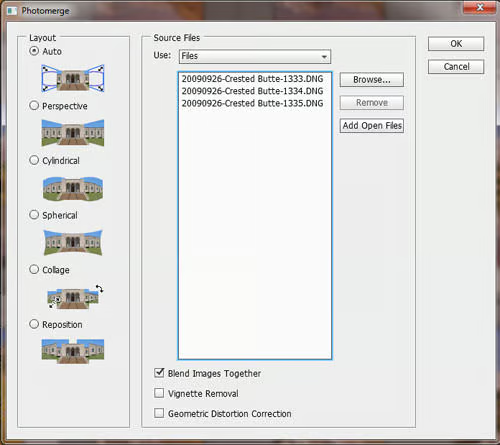
Import RAWs into Lightroom, apply basic lens corrections (disable auto distortion; fisheye models are best handled in the stitcher), set a consistent white balance, and sync settings. Export to 16-bit TIFF for stitching. In PTGui or Hugin, select the fisheye lens model and set overlap to roughly 25–35%. Fisheyes generally need less overlap than rectilinear lenses, but extra coverage helps with moving subjects and vignetting. Save lens parameters and control point settings as templates for future shoots. Why many pros rely on PTGui
Cleanup & Enhancement
- Nadir patch: export a layered panorama from PTGui and patch the tripod using Photoshop’s Clone/Healing or a dedicated nadir patch tool.
- Color and noise: balance temperature across HDR brackets; apply mild noise reduction for night skies and lift shadows carefully to avoid banding.
- Leveling: use horizon tools to correct roll/yaw/pitch and set a natural viewpoint at eye level.
- Export: save an equirectangular 2:1 JPEG/TIFF (e.g., 12,000×6,000 or larger) for web viewers and VR platforms.
Want a deep dive on gear choices and DSLR 360 workflows? This knowledge base covers body/lens selection and common pitfalls, from rig setup to publishing. DSLR 360 virtual tour guide
Watch: Panoramic Head Setup and Shooting Flow
The following video gives a concise, practical overview. Even if your exact head differs, the principles are the same: entrance pupil alignment, consistent exposure, clean overlap, and a tidy nadir.
For an additional fundamentals refresher focused on parallax and tripod technique, this Q&A-style primer is useful to review before your first field session. Techniques to shoot 360 panoramas
Useful Tools & Resources
Software
- PTGui panorama stitching
- Hugin (open source)
- Adobe Lightroom / Photoshop
- AI-powered tripod removal or nadir patch tools
Hardware
- Panoramic heads (Nodal Ninja, Leofoto, Sunwayfoto)
- Carbon fiber tripods with a leveling base
- Arca-compatible L-plates and rails
- Wireless remotes and intervalometers
- Pole extensions and vehicle mounts with tethers
Disclaimer: software and hardware names are provided for search convenience; confirm specifications and compatibility on official sites.
Common Mistakes & How to Avoid Them
- Parallax error → Solve with correct entrance pupil alignment and a calibrated panoramic head.
- Exposure flicker → Use full Manual mode and a locked white balance; avoid Auto ISO.
- Tripod shadows and clutter → Shoot a proper nadir and plan to patch it during post.
- Ghosting from movement → Shoot two passes and mask in the stitcher; increase overlap.
- Soft edges at wide apertures → Stop down to f/8–f/11 using an adapter with an aperture control lever.
- Flare with fisheye → Shade the lens with your hand just outside the frame; avoid pointing directly at strong light sources when possible.
Frequently Asked Questions
- Can I shoot handheld panoramas with the Canon EOS 6D / 6D Mark II?
You can, but expect more stitching errors. The fisheye’s wide coverage helps, yet handheld yaw increments are hard to keep even, and parallax creeps in without a nodal setup. For critical work, use a tripod and panoramic head.
- Is the Pentax DA 10–17mm wide enough for single-row 360?
Yes, if you manage overlap and vignetting. At 17 mm on full-frame, 6 around + zenith + nadir typically covers. At shorter focal lengths, you’ll see heavy vignetting on full-frame, so either shoot 8 around and crop edges or plan an APS-C crop in post and still do 6 around.
- Do I need HDR for interiors with bright windows?
Most of the time, yes. Bracketing ±2 EV (3–5 frames) per angle preserves window detail and clean shadows. Stitch HDR-merged frames or let PTGui blend LDR tiles with exposure fusion.
- How do I avoid parallax issues with this lens and adapter?
Use a panoramic head and align the entrance pupil by sliding the camera forward/back on the rail until near/far objects don’t shift during a pan. Mark your rail for 10 mm and 17 mm positions. Recheck if you change adapters or clamps.
- What ISO range is safe on the 6D/6D Mark II for low light?
For tripod-based panoramas, ISO 100–800 is the sweet spot. 1600 is still usable for action or wind-prone setups. Keep ISO low for cleaner skies and smoother gradients in equirectangular exports.
- Can I set up Custom Shooting Modes for pano?
Yes. Assign a C1 preset with Manual exposure, locked WB, mirror lock-up/Live View, and your preferred bracketing. It speeds up on-site work and keeps files consistent between locations.
- How do I reduce flare with a fisheye?
Keep strong light sources slightly off-axis, use your hand or a flag just outside the frame, and clean the front element often. Consider an extra frame with the sun shaded and blend it in post.
- Which tripod head works best here?
A two-axis panoramic head with precise fore-aft adjustment and a rotator with detents at 45°/60° is ideal. Ensure it supports the camera weight firmly with zero play when locked.
Safety, Compatibility, and Honest Limitations
This setup is powerful but unconventional. Because the Pentax DA 10–17mm is an APS-C K-mount lens, using it on a Canon full-frame body requires a correct K→EF adapter and careful aperture control. Expect vignetting below ~15 mm and plan your frame counts accordingly. In windy or elevated scenarios (rooftops, poles), always tether your rig and prefer faster shutter speeds, even if it means raising ISO a bit.
For the cleanest results, calibrate nodal positions for your specific adapter and quick release plate, label them, and keep a small field notebook. If in doubt, shoot an extra pass—redundancy is cheaper than a reshoot.