Why This Camera & Lens Are Great for Panoramas
If you’re learning how to shoot panorama with Canon EOS 6D / 6D Mark II & Peleng 8mm f/3.5, you’ve picked a combo that is both accessible and highly effective. The Canon EOS 6D (20.2MP full-frame, ~6.55µm pixel pitch) and 6D Mark II (26.2MP full-frame, ~5.76µm pixel pitch) are known for excellent high-ISO behavior, clean colors, and reliable ergonomics. The 6D Mark II adds Dual Pixel AF in Live View and a fully articulated screen, both of which help with manual focusing and creative camera placement. Dynamic range at base ISO is very usable on both bodies (roughly ~12 EV class), and practical HDR bracketing easily extends window-to-shadow detail for interiors.
The Peleng 8mm f/3.5 is a circular fisheye on full frame, delivering approximately 180° field of view across the frame. For spherical 360° capture, that means fewer shots, faster coverage, and fewer stitch seams to manage—particularly handy for crowded scenes or changing light. It’s a fully manual lens with an aperture ring and manual focus, so exposure and WB locking are straightforward. Expect noticeable flare if the sun hits the front element and some chromatic aberration, which are manageable in post. Best sharpness is typically around f/8.
Quick Setup Overview
- Camera: Canon EOS 6D / 6D Mark II — Full-frame 24×36mm sensors; 6D = 20.2MP; 6D Mark II = 26.2MP. Strong high-ISO performance; reliable Live View focusing; articulated screen on 6D Mark II.
- Lens: Peleng 8mm f/3.5 — Circular fisheye on full-frame. Sharpest around f/8, moderate CA/flare, fully manual focus and aperture.
- Estimated shots & overlap (field-tested):
- Fast 360: 4 shots around (yaw 90°) at slight tilt up (+5° to +10°) + 1 nadir patch (tripod removal).
- Extra-safe overlap: 6 shots around (yaw 60°) + nadir (best for interiors/HDR).
- In a pinch: 3 shots around (yaw 120°) with careful tilt; stitching becomes less reliable near the zenith.
- Difficulty: Easy–Moderate (easy capture, moderate post if you’re new to fisheye workflows).
Planning & On-Site Preparation
Evaluate Shooting Environment
Before you unfold the tripod, scan the scene. Are there moving crowds, reflective windows, or strong point light sources? For glass interiors, shoot slightly off-angle and keep at least 50–80 cm from the glass to reduce ghosting and reflections. Outdoors at sunset, watch for sun flares; consider using your hand or a flag just outside the frame to block direct sun on the lens when possible. In tight interiors, be meticulous with parallax (nodal) alignment—nearby objects will reveal errors.
Match Gear to Scene Goals
The 6D/6D Mark II sensors handle low light well, so ISO 100–400 is ideal, ISO 800–1600 remains quite usable with good noise reduction. The Peleng fisheye requires fewer shots, minimizing time on-site and reducing the chance of people or clouds shifting between frames. The tradeoff is fisheye distortion (normal and expected) and flare sensitivity—both manageable with good technique and software.
Pre-shoot Checklist
- Charge batteries and carry spares; bring ample, fast cards. Clean the lens front/rear and the sensor.
- Level the tripod; confirm your panoramic head’s nodal alignment marks for this body/lens are known.
- Safety: In wind or on rooftops, lower your tripod, use a weight bag, and tether the rig; do not use a pole in gusts.
- Backup workflow: After a full rotation, shoot a second pass—especially for paid work or fast-changing light.
Essential Gear & Setup
Core Gear
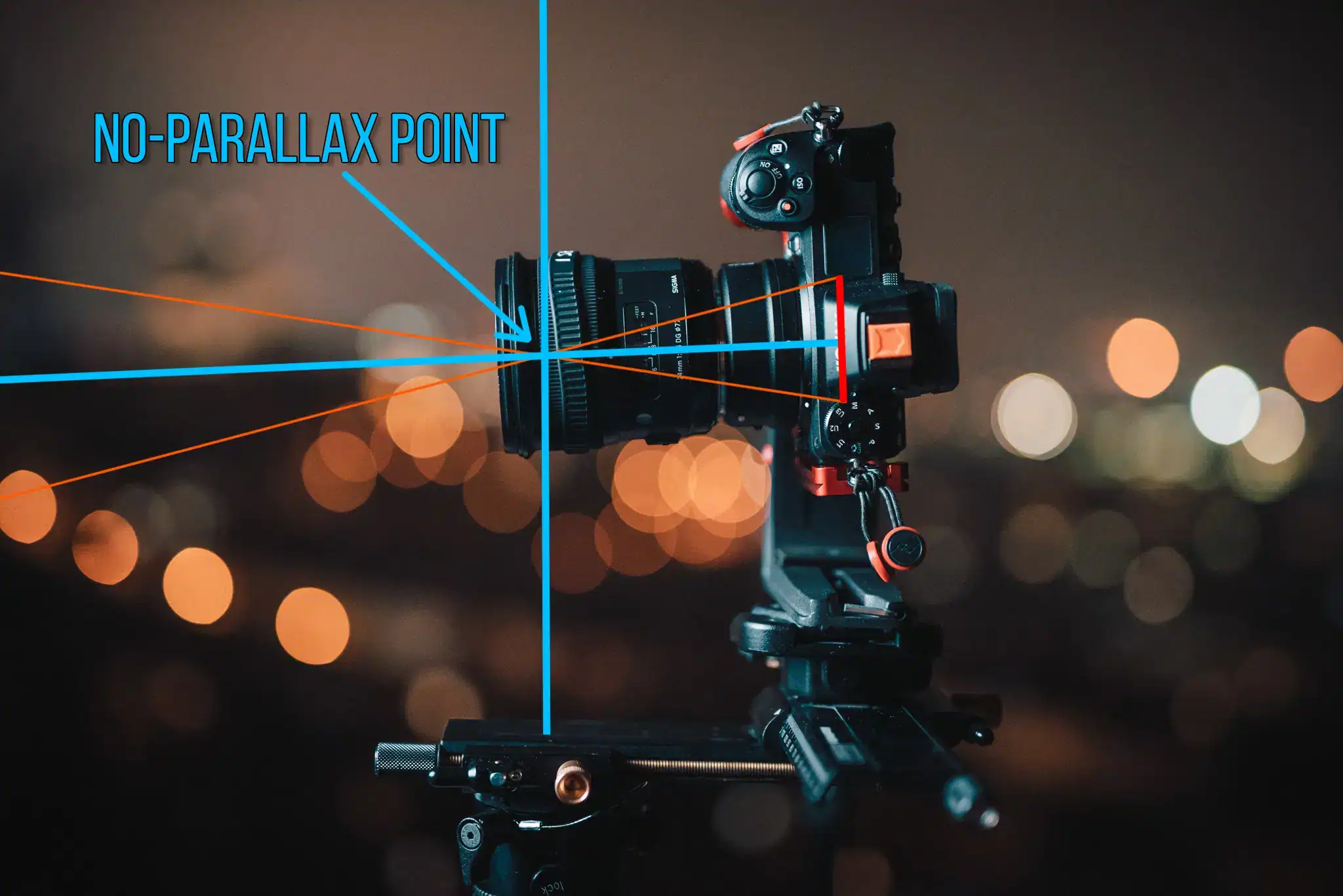
- Panoramic head: Lets you rotate around the lens’s no-parallax (entrance pupil) point, minimizing parallax and easing stitching. Mark repeatable fore-aft and vertical offsets once dialed in.
- Stable tripod with leveling base: A leveling base speeds setup; a flat, level platform ensures consistent overlap and straight horizons.
- Remote trigger or Canon Camera Connect app: Reduces vibrations and avoids touching the camera between frames.
Optional Add-ons
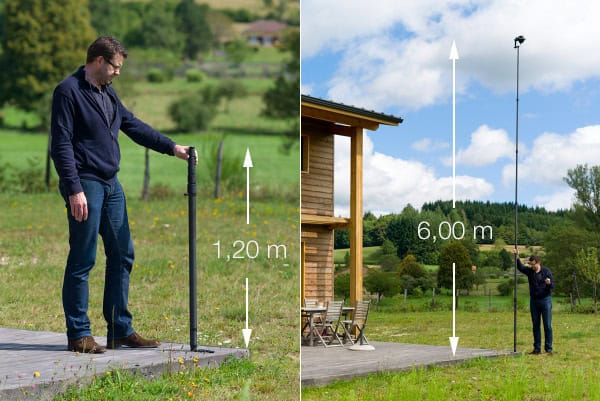
- Vertical pole or car mount: Great for elevated views. Always tether gear, watch wind load, and avoid long exposures when the rig is flexing.
- Portable LED panels for dim interiors: Lower ISO, keep colors consistent when mixing light sources.
- Weather protection: Rain covers, microfiber cloths, and a small blower for dust and drizzle.
For deeper understanding of panoramic head setup and technique, see this panoramic head tutorial which illustrates entrance pupil alignment and typical head configurations. Learn more about panoramic head basics.
Step-by-Step Shooting Guide
Standard Static Scenes
- Level tripod and align the nodal point: On the panorama head, start with a known baseline offset for your 6D/6D Mark II + Peleng 8mm. Then fine-tune using the classic “two-stick” method (align a near object and a far object, rotate—if they shift relative to each other, adjust fore-aft until they don’t). Mark your rails for repeatability.
- Manual exposure and white balance: Set Manual mode; meter the brightest part of the scene you want detail in, then set exposure so that highlights are protected (check histogram). Lock WB (e.g., Daylight or a custom Kelvin). Shoot RAW.
- Capture with tested overlap: For the Peleng 8mm circular fisheye on full-frame, do 4 shots around with 90° yaw. Tilt up by +5° to +10° to help cover the zenith. Keep overlap at 30–40% between frames. Rotate smoothly and wait for vibrations to settle before each shot.
- Nadir shot: Tilt down to shoot a clean ground frame for tripod removal or step aside and shoot a handheld nadir patch. Take an extra safety nadir in case one is soft.
HDR / High Dynamic Range Interiors
- Bracket exposure: Use AEB with ±2 EV or ±3 EV (3 or 5 frames). Keep WB locked and aperture fixed (typically f/8). Use lowest ISO practical (100–200).
- Consistent cadence: Shoot all brackets at one position before rotating to the next. Note the bracket sequence in case you need manual sorting later.
Low-Light / Night Scenes
- Use longer exposures on tripod: Start at f/4–f/5.6, 1/10–1/30 s, ISO 400–800. On 6D/6D Mark II, ISO 1600–3200 is still usable with moderate noise reduction, but prioritize tripod time over ISO gains.
- Minimize vibrations: Use a remote or 2s self-timer, Live View, and enable Mirror Lockup on the 6D/6D Mark II. Avoid touching the rig during exposures.
Crowded Events
- Two passes method: First do a fast, well-overlapped rotation to secure coverage. Second pass, wait for gaps in motion (people moving out of key seams) and reshoot problematic sectors for later masking.
- Shutter strategy: Faster shutter (1/200 s+) at ISO 800–1600 to freeze motion if you need it, accepting a touch more noise.
Special Setups (Pole / Car / Drone)
- Pole: Keep the rig as light as possible; tether everything. Don’t extend fully in strong wind. Use faster shutter speeds to freeze sway (1/250 s+ if possible) and avoid bracketing unless the scene demands it.
- Car mount: Avoid highways; use short exposure times and pull over safely. Ensure suction mounts and safety cables are rated for the load.
Recommended Settings & Pro Tips
Exposure & Focus
| Scenario | Aperture | Shutter | ISO | Notes |
|---|---|---|---|---|
| Daylight outdoor | f/8–f/11 | 1/100–1/250 | 100–200 | Lock WB (Daylight); check sun angle to reduce flare |
| Low light/night | f/4–f/5.6 | 1/10–1/60 | 400–800 | Tripod + remote; 6D/6D II still fine at ISO 1600–3200 with NR |
| Interior HDR | f/8 | Bracket ±2 EV | 100–400 | Keep WB locked; shoot all brackets per position |
| Action / moving subjects | f/5.6–f/8 | 1/200+ | 400–800 | Two-pass method; prioritize clean seams |
Critical Tips
- Manual focus and hyperfocal: On the Peleng, set focus near the hyperfocal distance at f/8 (roughly 0.5–1 m). Confirm via Live View at 10x on a mid-distant subject; once sharp, don’t touch it.
- Nodal calibration for this combo: Start with your upper rail so the entrance pupil aligns above the rotation axis. As a baseline, expect the entrance pupil for an 8mm circular fisheye to sit a few centimeters behind the front element—fine-tune using the two-stick method and mark your rails for a repeatable “6D + Peleng” position.
- Lock white balance: Mixed lighting can cause seam color shifts; set a fixed Kelvin or custom preset per scene.
- Shoot RAW: Maximizes dynamic range and color latitude; necessary for serious HDR panoramas.
- Stabilization: The Peleng has no IS and the 6D/6D II have no IBIS. On tripod, turn off any stabilization on other lenses; for this combo it’s not applicable.
Stitching & Post-Processing
Software Workflow
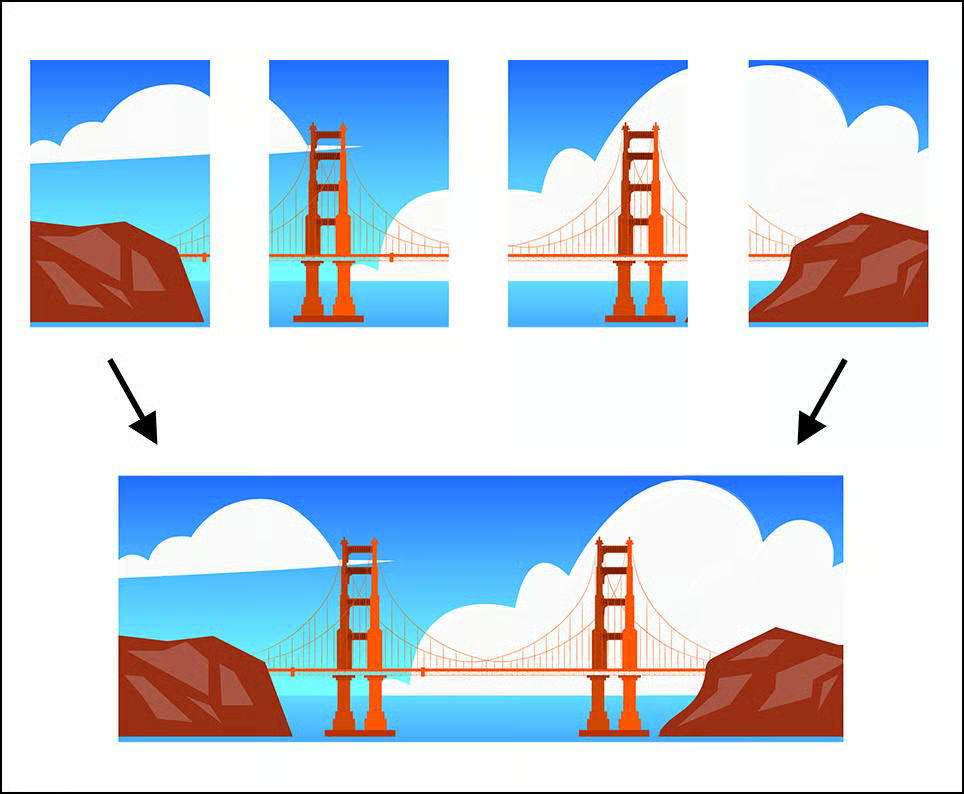
Import your RAWs, apply basic lens corrections (chromatic aberration removal is useful even for fisheye), and keep exposure/WB matched across the set. In PTGui or Hugin, select “circular fisheye” for lens type, set focal length to 8mm, and let the optimizer find control points. With 4-around sets, you’ll generally get instant alignment if nodal point is correct. For HDR, you can merge brackets first (Maintain consistent contrast/noise), then stitch, or stitch bracket sets and tonemap within PTGui. For a friendly overview of why PTGui remains a go-to tool, see this review. Why PTGui is a top-tier panorama tool.
Cleanup & Enhancement
- Nadir patch: Export with a hole or visible tripod, then retouch in Photoshop using clone/heal, or drop in a branded floor patch. PTGui’s Viewpoint correction or AI tools can help.
- Color and noise: Tweak white balance, apply modest noise reduction (especially ISO 1600–3200), and add subtle contrast/clarity.
- Leveling: Set horizon and verticals; correct yaw/pitch/roll. The 6D Mark II’s in-camera level helps prevent big fixes later.
- Export: For VR players, export an equirectangular JPEG at 8K–12K long edge depending on client needs and content detail. Check platform specs (e.g., Meta/Oculus) before final output. Read DSLR 360 photo guidance for VR platforms.
Note: Recommended overlaps for circular fisheye shots are ~30–40%; rectilinear lenses typically need ~20–25% overlap but many more frames. For technical background on achievable spherical resolution from DSLR + fisheye combos, this wiki is helpful. Understand DSLR spherical resolution
Useful Tools & Resources
Software
- PTGui panorama stitching
- Hugin open-source panorama suite
- Adobe Lightroom / Photoshop for RAW, color, and retouching
- AI tripod removal or content-aware fill tools
Hardware
- Panoramic heads (Nodal Ninja, Leofoto) with clear rail markings
- Carbon fiber tripods with leveling bases
- Wireless remote shutters
- Pole extensions and car mounts (rated, with tethers)
Disclaimer: Names are provided for search reference; always check official documentation for current features, compatibility, and safety limits.
For a broader DSLR 360 virtual tour gear overview, this guide is a solid read. DSLR virtual tour camera & lens guide
Real-World Case Studies
Indoor Real Estate – Bright Windows
Mount the 6D/6D Mark II on a leveled tripod with the Peleng at f/8. Set ISO 100–200. Use AEB ±2 EV (5 frames if windows are extremely bright). Shoot 6 around at yaw 60° to give the stitcher ample overlap around window frames (high-contrast edges). Keep WB locked to a fixed Kelvin. In post, blend HDR first, then stitch. Nadir patch with a simple floor texture.
Outdoor Sunset – High Contrast
Arrive early and pre-calibrate the nodal point. Meter for the sky near the sun, then add HDR if you need shadow detail. A 4-around sequence can be shot quickly to minimize light changes between frames. Use a hand to flag direct sun glancing off the front element—just keep the hand outside the circular image area.
Event Crowds – Minimizing Ghosts
Go for 4 around at 1/200 s, f/5.6–f/8, ISO 800–1600. Do a second pass and wait for gaps; mask in the clean frames during stitching. Keep the head markings and flow consistent; the fewer variables, the fewer seam issues.
Rooftop or Pole – Safety First
On rooftops, lower the center column, add a sandbag to the hook, and tether the camera to a fixed point. If using a pole, avoid gusty wind, reduce extension, and aim for faster shutter speeds. Consider skipping HDR and using a single, carefully exposed sequence to reduce time aloft. Never leave the rig unattended.
Common Mistakes & How to Avoid Them
- Parallax error: Not aligning the entrance pupil causes ghosting near objects. Calibrate once, then mark your rails.
- Exposure/WB flicker: Auto modes lead to banded skies and mismatched walls. Lock exposure and WB.
- Tripod in frame: Always capture a nadir patch or plan a clean floor plate for retouching.
- Flare and veiling glare: Shield the lens from low sun; avoid shooting directly into lights if possible.
- Underexposed shadows at night: Favor longer tripod exposures over high ISO. The 6D/6D II handle ISO 1600–3200, but noise piles up across multi-frame stitches.
Frequently Asked Questions
-
Can I shoot handheld panoramas with the Canon 6D / 6D Mark II?
Yes—for quick, informal 360s outdoors with distant subjects, a handheld 4-around pass can stitch. However, for interiors or nearby objects, use a tripod and a panoramic head to eliminate parallax and ensure professional results.
-
Is the Peleng 8mm f/3.5 wide enough for a single-row 360?
Absolutely. As a circular fisheye on full frame, 4 shots around (plus a nadir patch) reliably cover a full sphere with ample overlap. For tricky interiors, do 6 around for extra seam flexibility.
-
Do I need HDR for interiors with bright windows?
Usually yes. Bracketing ±2 EV (3–5 frames) preserves window detail while keeping interior shadows clean. Merge brackets consistently before or during stitching, with WB and aperture locked.
-
How do I avoid parallax with this combo?
Use a panoramic head and align the entrance pupil (no-parallax point). Start with a known fore-aft offset for 8mm fisheyes and fine-tune via the two-stick test. Once set, mark your rails so you can reassemble the rig quickly next time.
-
What ISO range is safe on the 6D / 6D Mark II in low light?
Base ISO 100–200 yields the cleanest files. ISO 400–800 is generally clean, and ISO 1600–3200 remains usable with thoughtful noise reduction—especially when exposures are consistent across frames.
-
Can I set Custom Shooting Modes for panoramas?
Yes. Program a custom mode (C1/C2/C3 on the 6D Mark II; C1/C2 on the 6D) with Manual exposure, RAW, fixed WB, 2s timer or remote, Mirror Lockup, and f/8. It saves time and protects you from accidental auto settings.
-
How can I reduce flare with a fisheye?
Keep the front element spotless, shoot slightly off-axis from strong light sources, and use your hand as a flag just outside the circular image circle. Take a second frame without the hand for clean compositing if needed.
-
What’s the best tripod head for this setup?
Look for panoramic heads with precise fore-aft and vertical rails, clear markings, and a rotator with fixed click-stops (e.g., 90°/60°). Nodal Ninja and comparable heads from Leofoto are proven options.
Safety, Reliability & Workflow Trust
Always tether elevated or car-mounted rigs. In wind, reduce height and keep your body close to the tripod to shield it. For mission-critical shoots, run a second full rotation for redundancy and keep a backup card. Maintain a simple, repeatable workflow: calibrate once, mark your head, lock settings, and follow the same rotation order every time. For additional panoramic fundamentals and community insights, these Q&A and tutorial resources are excellent. Best techniques for 360 panoramas