
Why This Camera & Lens Are Great for Panoramas
If you’re wondering how to shoot panorama with Canon EOS 6D / 6D Mark II & Nikon AF-S 8-15mm f/3.5-4.5E ED Fisheye, you’re aiming for a powerful combination of a full-frame DSLR and an ultra-wide, professional fisheye zoom. The Canon EOS 6D (20.2 MP, ~6.55 µm pixel pitch) and 6D Mark II (26.2 MP, ~5.76 µm pixel pitch) both deliver full-frame image quality with solid high-ISO performance and pleasing color science. At base ISO, you can expect around ~12 EV dynamic range on the 6D and just under that on the 6D Mark II—more than enough for daylight panoramas and, with bracketing, for window-heavy interiors too. Both bodies feature Live View and Canon’s Camera Connect app for remote triggering; the 6D Mark II adds Dual Pixel AF which makes quick prefocus easier before switching to manual for pano capture.
The Nikon AF-S 8-15mm f/3.5-4.5E ED is a versatile fisheye that delivers a circular fisheye at 8mm and a diagonal (full-frame) fisheye at 15mm. For panoramic shooters, this is gold: at 8mm you can finish a 360 quickly with fewer shots (faster capture in dynamic scenes), and at 15mm you get cleaner edge detail and more overlap for bulletproof stitching. Optically, the lens is sharp stopped down, with controlled CA for a fisheye and strong flare resistance when you mind your angles.
Important mount note: the 6D/6D Mark II are Canon EF-mount, while this Nikon lens is F-mount and uses an E-type electromagnetic diaphragm. You’ll need a Nikon F-to-Canon EF adapter that explicitly supports E-type electronic aperture control. Without a compatible electronic adapter, the aperture will stay wide open and you’ll be forced to shoot at f/3.5–4.5, which is not ideal for panos. Some adapters with “internal iris” degrade image quality—avoid if possible. If you can’t secure reliable electronic aperture control, a native Canon EF 8-15mm fisheye is the safer choice. With that caveat handled, this combo can produce fast, clean 360° panos with professional results.
Quick Setup Overview
- Camera: Canon EOS 6D / 6D Mark II — Full-frame (36×24 mm), 20.2 MP (6D) or 26.2 MP (6D II); strong high-ISO, base DR ~12 EV (6D), Wi‑Fi remote shooting; no in-body stabilization.
- Lens: Nikon AF-S 8-15mm f/3.5-4.5E ED — Fisheye zoom; circular at 8mm, diagonal at 15mm; sharpest around f/5.6–f/8; good control of CA when stopped down.
- Estimated shots & overlap:
- 8mm (circular fisheye): 4 shots around (90° apart) + zenith + nadir, ~30–40% overlap.
- 12–13mm (near full-frame coverage): 6 shots around + zenith + nadir, ~30% overlap.
- 15mm (diagonal fisheye): 6 around + zenith + nadir; add extra around shots outdoors in windy conditions for safety.
- Difficulty: Intermediate (due to adapter and nodal alignment requirements).
Planning & On-Site Preparation
Evaluate Shooting Environment
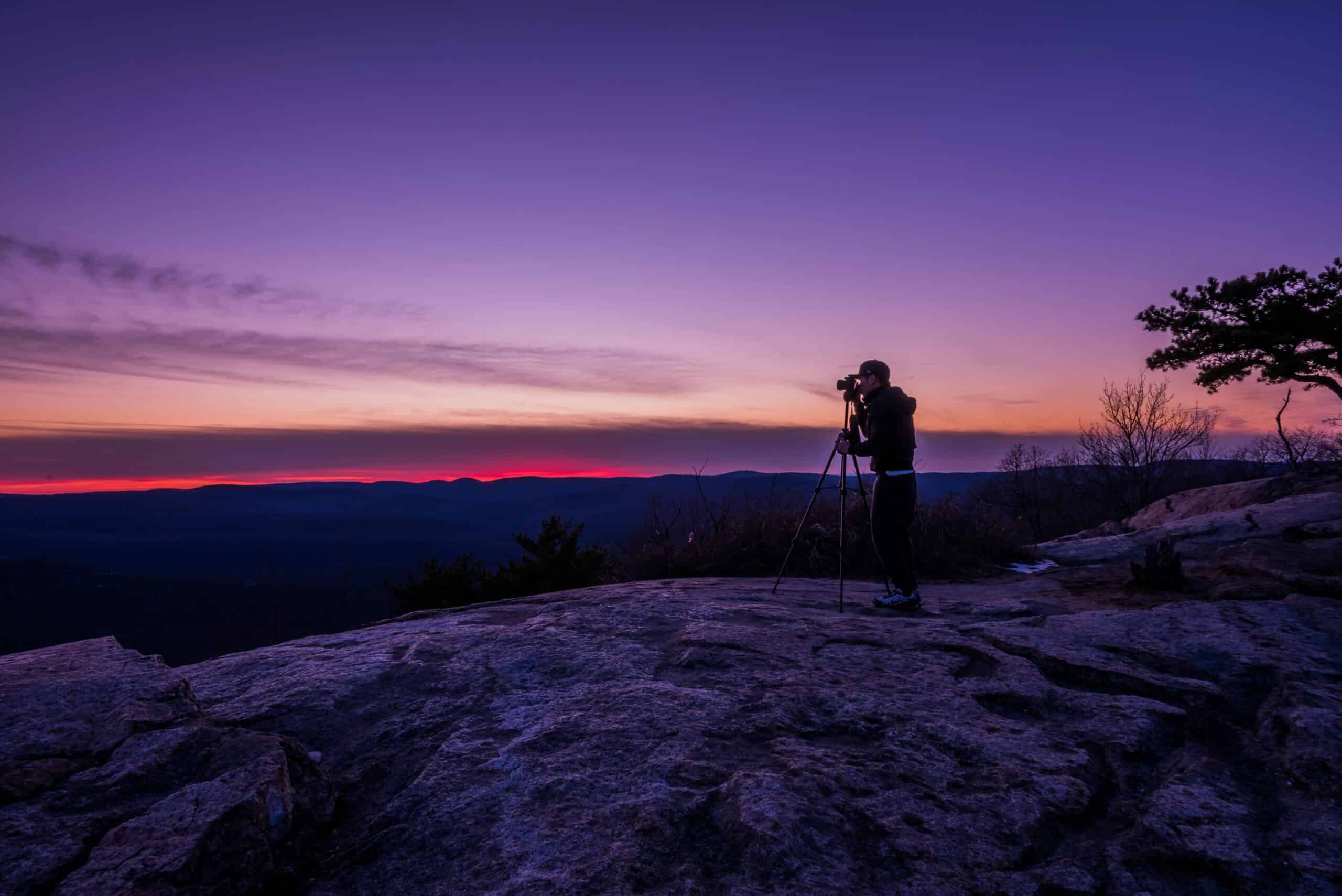
Before you set up, scan the environment. Look for reflective surfaces (windows, polished floors, cars), moving subjects, and light direction. If shooting through glass, keep the front element as close as possible (1–3 cm) to reduce reflections and ghosting, and shade the lens with your hand or a flag. For sunset or backlit skies, plan a bracketed HDR pano to protect highlights while keeping shadow texture. Check wind speeds for rooftop or pole work; anything above 15–20 km/h can cause vibration and alignment drift, especially with a tall pole.
Match Gear to Scene Goals
The 6D/6D Mark II’s full-frame sensors deliver clean files at ISO 100–400 for daylight and ISO 800–1600 in dim interiors, especially if you’re stitching many frames (noise averages out). The fisheye zoom’s two personalities help: 8mm for rapid 360s (fewer shots, great for events or windy rooftops), 15mm for higher detail and safer overlap (ideal for real estate interiors and cityscapes). If your interior has bright windows, plan ±2 EV brackets per view; the 6D line handles bracket merges well in post.
Pre-shoot Checklist
- Power and storage: Full battery plus a spare; high-capacity SD (UHS-I is fine). The 6D/6D II have single card slots—back up to a laptop or shoot a second pass as redundancy.
- Optics: Clean front/rear elements; blow dust off the sensor to avoid cloning later.
- Support: Leveling base secured; pano head balanced; nodal point preset.
- Safety: For rooftops/poles, use a safety tether; avoid edges and overhead lines; watch wind gusts.
- Adapter check: Confirm your Nikon F-to-Canon EF adapter provides electronic aperture control for E-type lenses and passes EXIF if possible. Run a quick aperture test shot before the job.
- Backup workflow: If in doubt, shoot an extra full round at a different exposure.
Essential Gear & Setup
Core Gear
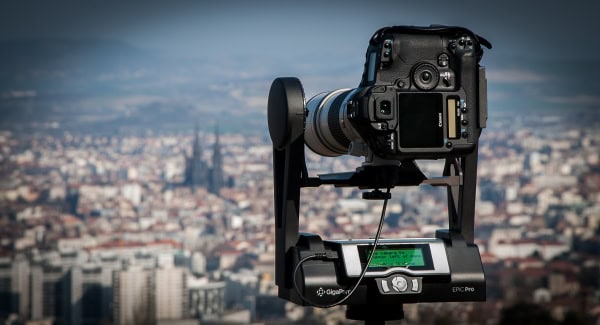
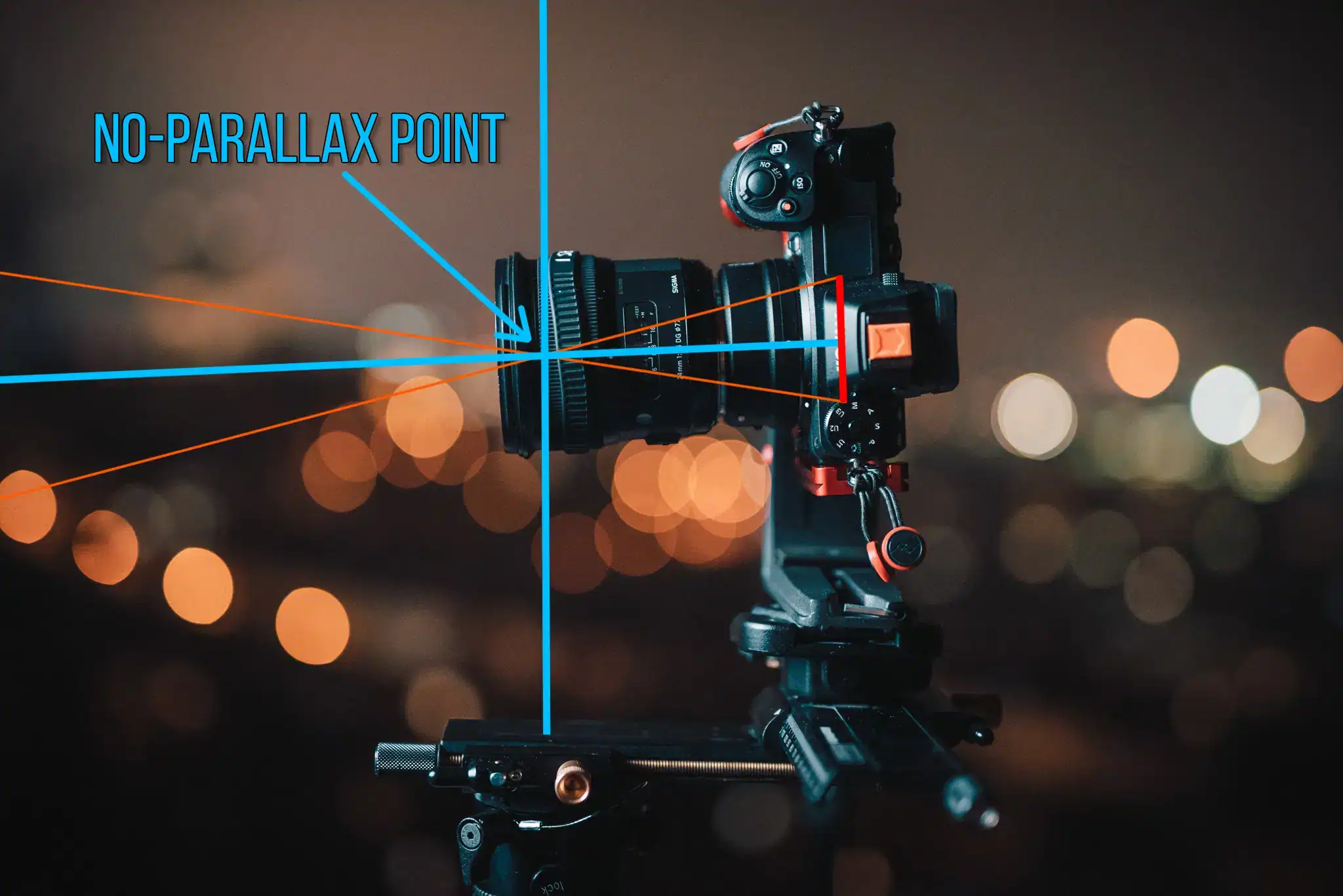
- Panoramic head: Enables rotation around the lens’s entrance pupil (nodal point) to avoid parallax. Calibrate both fore-aft and vertical offsets for your exact focal length (8, 12–13, 15mm settings).
- Stable tripod with leveling base: A leveling base saves time and ensures your panorama horizon is true, reducing post corrections.
- Remote trigger or Canon Camera Connect: Fire the shutter without touching the camera to minimize vibrations. The 6D/6D II Wi‑Fi app is perfect for this.
Optional Add-ons
- Pole or car mount: For aerial viewpoints and moving shots. Use guy lines on tall poles, keep rotations slow, and enable short shutter speeds to mitigate vibration.
- Lighting aids: Portable LED panels or bounced flash for dim interiors, but keep lighting consistent across frames.
- Weather protection: Rain covers, microfiber cloths, and lens hoods to control flare and precipitation on the front element.
Step-by-Step Shooting Guide
Standard Static Scenes
- Level and lock: Level your tripod via the leveling base; lock the pano head’s tilt/roll axes so the camera rotates perfectly horizontally.
- Align the nodal point: Place two light stands or vertical objects—one near, one far—overlapping in the frame. Rotate the head; if the objects shift relative to each other, slide the camera fore-aft on the rail until the shift disappears. Repeat at your working focal length (8, 12–13, 15mm) and note the rail markings.
- Manual exposure and WB: Set Manual mode. Meter a mid-tone, then lock exposure and white balance (Daylight/Cloudy or a Kelvin value). Shoot RAW for headroom.
- Focus: Switch to Live View, zoom in, focus ~⅓ into the scene or at the hyperfocal distance, then switch to manual focus to lock.
- Capture sequence:
- 8mm circular: 4 around at 90°, then a zenith and a nadir. If time-pressured, 3 around at 120° can work outdoors with clean skies.
- 15mm diagonal: 6 around at 60°, plus zenith and nadir. Add one extra overlap frame if there’s intricate detail or people.
- Nadir shot: Tilt down for a clean floor plate to patch out the tripod later, or shoot an offset handheld nadir plate keeping the nodal point over the same ground point.
HDR / High Dynamic Range Interiors
- Bracket: Use ±2 EV (3 or 5 frames) at each yaw position to balance bright windows and shadowy interiors. Keep ISO 100–200 when possible.
- Lock WB and focus: Consistent color across brackets speeds up batch processing and avoids stitching seams.
- Use self-timer/remote: Prevent micro-blur during bracket sequences—especially important at slower shutter speeds.
Low-Light / Night Scenes
- Exposure: Open to f/4–f/5.6, shutter 1/30–1/60 sec minimum if wind is present, ISO 400–1600 on the 6D/6D II (800–1600 is a sweet spot). Long-exposure noise reduction can be off to keep cadence consistent.
- Stability: Use remote trigger and mirror lockup (or Live View) to reduce vibration. Since the 6D bodies lack IBIS and the lens has no VR, all stability comes from your support system.
Crowded Events
- Two-pass strategy: Do a first pass for coverage, then a second pass waiting for gaps to capture clean patches of background.
- Short shutters: Aim for 1/200+ sec at f/5.6–f/8, ISO 400–800 to freeze motion. You can mask moving people during stitching.
Special Setups (Pole / Car / Rooftop)
- Safety first: Use a tether on rooftops and poles, and avoid extended reach in crowds. For car mounts, choose smooth roads and lower speeds.
- Vibration control: Increase shutter speed and reduce the number of shots (e.g., 8mm circular fisheye, 3–4 around) to shorten total capture time in wind.
Recommended Settings & Pro Tips
Exposure & Focus
| Scenario | Aperture | Shutter | ISO | Notes |
|---|---|---|---|---|
| Daylight outdoor | f/8–f/11 | 1/100–1/250 | 100–200 | Lock WB (Daylight/5500K); keep overlap consistent |
| Low light/night | f/4–f/5.6 | 1/30–1/60 | 400–1600 | Tripod + remote; monitor wind; avoid very long exposures for moving clouds |
| Interior HDR | f/8 | Bracket ±2 EV | 100–400 | Expose for windows, blend for interior detail |
| Action / moving subjects | f/5.6–f/8 | 1/200+ | 400–800 | Fast capture sequence; consider 8mm for fewer shots |
Critical Tips
- Manual focus and hyperfocal: Prefocus in Live View and switch to MF. At 8–15mm, depth of field is generous; f/8 usually keeps everything sharp.
- Nodal point calibration: Mark your pano rail for 8, ~12–13, and 15mm settings. Re-check if you change the adapter or quick-release plate thickness.
- White balance lock: Use a fixed WB or Kelvin value to prevent color shifts across frames or brackets.
- RAW capture: Maximizes DR and color latitude for HDR blending and seam matching.
- Stabilization: The 6D/6D II have no IBIS and the 8–15 has no VR—good support is mandatory. Use a sandbag on windy days.
- Adapter reality check: Verify aperture control before the job. If unavailable, consider shooting at the lens’s wide-open aperture only as a last resort or use a native EF fisheye alternative.
Stitching & Post-Processing
Software Workflow
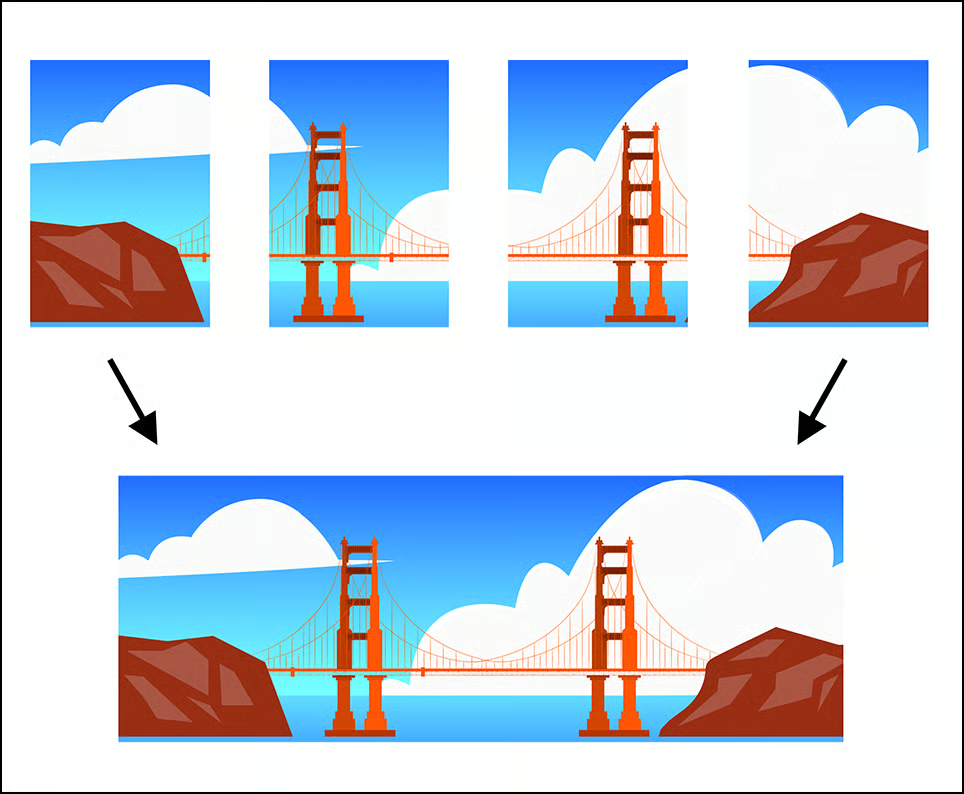
For best results, use dedicated stitching tools like PTGui or Hugin. Fisheye images are straightforward to stitch because they require fewer frames, but they demand accurate nodal alignment. Typical overlap recommendations: 25–30% for fisheye sequences and 20–25% for rectilinear. Export a 2:1 equirectangular panorama (for example, 8000×4000 px for web VR) and keep a 16-bit TIFF master for future edits. If you bracketed, either merge to HDR first per camera angle (then stitch), or use PTGui’s exposure fusion/HDR functions during stitching. For a deeper understanding of pano heads and setup, see this panoramic head tutorial by 360 Rumors at the end of your gear calibration notes. Panoramic head setup tutorial
Cleanup & Enhancement
- Nadir patch: Export a nadir view and clone the tripod out, or use a logo patch. Many AI tools can accelerate this step.
- Color and noise: Apply global white balance tweaks, gentle noise reduction for ISO 800–1600 shots, and sharpen only after stitching.
- Horizon leveling: Adjust roll/yaw/pitch to ensure a level horizon—PTGui and Hugin both provide horizon tools.
- Delivery: Export compressed JPEG (quality 9–11) for web VR. Keep a high-res master TIFF for future outputs.
Video: Visual Walkthrough
Watching the process helps. Here’s a concise video that complements the steps above.
For a professional review of PTGui’s strengths and workflow tips, this article provides a solid overview. PTGui review and best practices
Useful Tools & Resources
Software
- PTGui — robust control points, HDR fusion, masking
- Hugin — open-source alternative
- Lightroom / Photoshop — color, cleanup, output
- AI tripod removal tools — speed up nadir patching
Hardware
- Panoramic heads (Nodal Ninja, Leofoto, Sunwayfoto)
- Carbon fiber tripods with leveling bases
- Wireless remote shutters or Canon Camera Connect
- Pole extensions / vehicle mounts with safety tethers
Want an end-to-end DSLR 360 overview? Oculus provides a concise guide for creators. Using a DSLR to shoot and stitch a 360 photo
If you’re planning resolution targets and coverage math for different lenses, the PanoTools wiki is a helpful reference. DSLR spherical resolution explained
Common Mistakes & How to Avoid Them
- Parallax error → Calibrate the nodal point precisely for each focal length you use.
- Exposure flicker → Manual exposure and locked white balance across the entire sequence.
- Tripod shadows/footprint → Shoot a clean nadir plate; patch in post.
- Ghosting from movement → Use faster shutter speeds, shoot double passes, and mask in post.
- Adapter issues → Test aperture control with the Nikon E lens before the job; bring a backup plan.
- Wind vibration → Heavier tripod, lower center column, sandbag, and fewer shots at 8mm.
Frequently Asked Questions
- Can I shoot handheld panoramas with the Canon EOS 6D / 6D Mark II?
Yes for quick, non-critical stitches (especially at 8mm), but expect more stitching errors and parallax. Use high shutter speeds and rotate from your torso. For professional results, a leveled tripod and pano head are strongly recommended.
- Is the Nikon 8–15mm wide enough for single-row 360s?
Absolutely. At 8mm circular fisheye, 3–4 shots around plus zenith and nadir cover a full sphere. At 15mm diagonal fisheye, 6 around plus zenith/nadir is a reliable single-row workflow with excellent overlap.
- Do I need HDR for interiors with bright windows?
Usually yes. The 6D/6D Mark II base DR is solid, but interiors with bright windows often require ±2 EV bracketing to hold both view and room detail. Merge brackets before stitching or use stitching software that blends HDR exposures well.
- How do I avoid parallax issues?
Use a calibrated panoramic head and rotate around the lens’s entrance pupil. Align near/far vertical objects and slide the camera along the rail until they no longer shift between yaw positions. Recheck after changing focal length.
- What ISO range is safe on these cameras in low light?
ISO 100–400 for base quality; ISO 800–1600 remains clean enough for pano work (noise averages during stitching). ISO 3200 is usable in a pinch but plan to denoise in post.
- Any special setup for the Nikon E lens on Canon EF?
Yes. You need an F-to-EF adapter that explicitly supports E-type electronic aperture control. Test aperture changes in-camera and confirm EXIF. If you can’t control aperture electronically, consider a native Canon EF fisheye to avoid being stuck wide open.
Field-Proven Scenarios
Indoor Real Estate
Use 15mm for more overlap and edge detail. Shoot at f/8, ISO 100–200 with ±2 EV brackets. Keep the camera at ~1.4–1.6 m height for natural perspective and strive for verticals that are straight by carefully leveling the head. Stitch in PTGui with vertical lines as control references.
Sunset Rooftop
Wind is the enemy. Go 8mm to reduce frames; aim for f/5.6, 1/125–1/250 sec, ISO 200–400. Shoot a second, slightly darker set to protect highlights at the sun’s position. Fuse exposures selectively during post.
Event Crowds
Time your rotation during lulls. Use 8mm for speed; keep shutter at 1/200+ sec. If someone crosses a seam, mask using a clean frame from your second pass.
Visual Examples
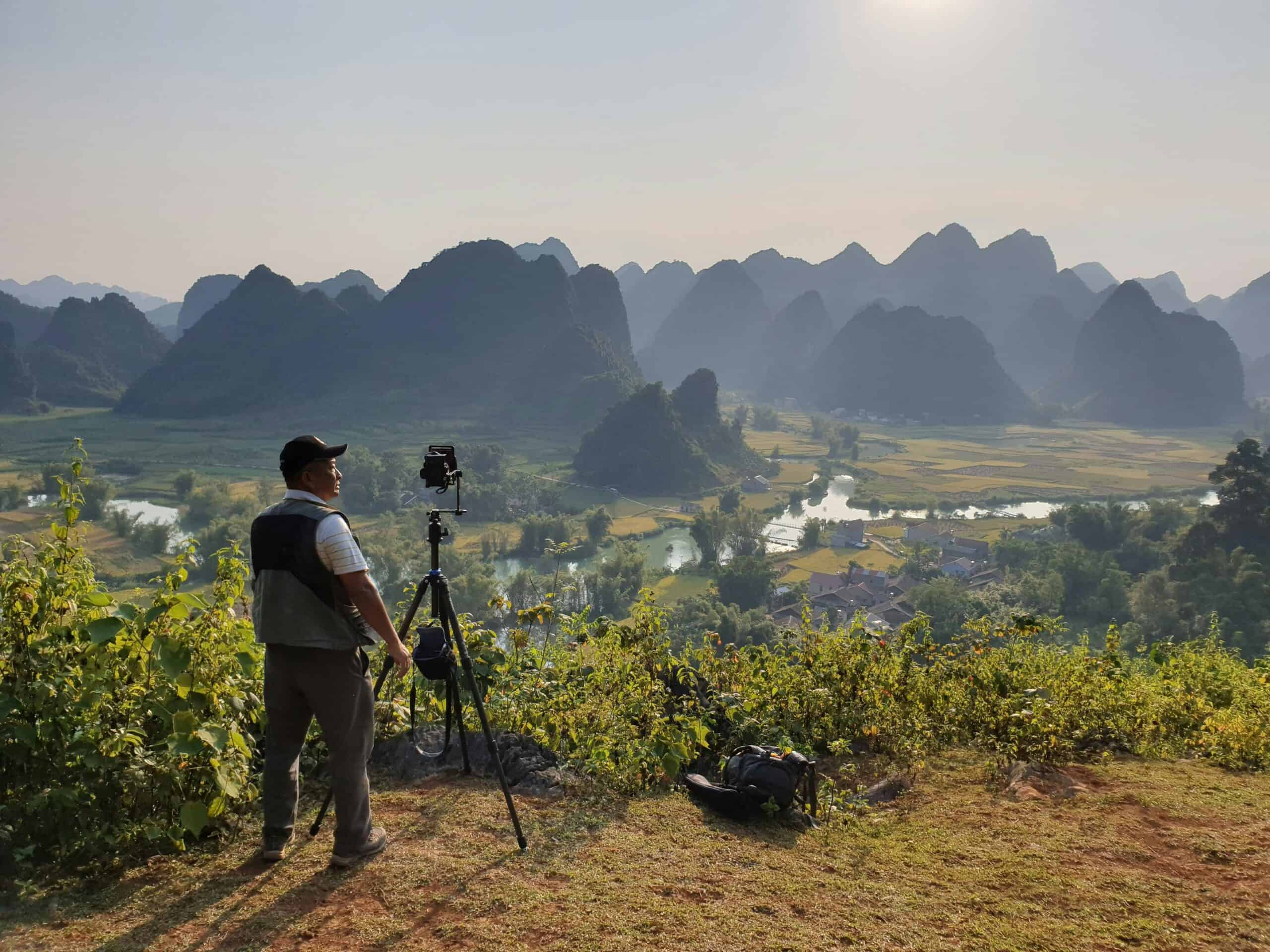
These quick visuals reinforce key concepts you’ll use on location.
Authoritative References
Deepen your pano skills with these trusted guides:
– Panoramic head setup fundamentals: 360 Rumors panoramic head tutorial
– DSLR to VR workflow overview: Oculus Creator: DSLR 360 photo guide
– PTGui best practices and review: Fstoppers PTGui review
Note: Always verify your stitching software’s current documentation for the latest workflow improvements.