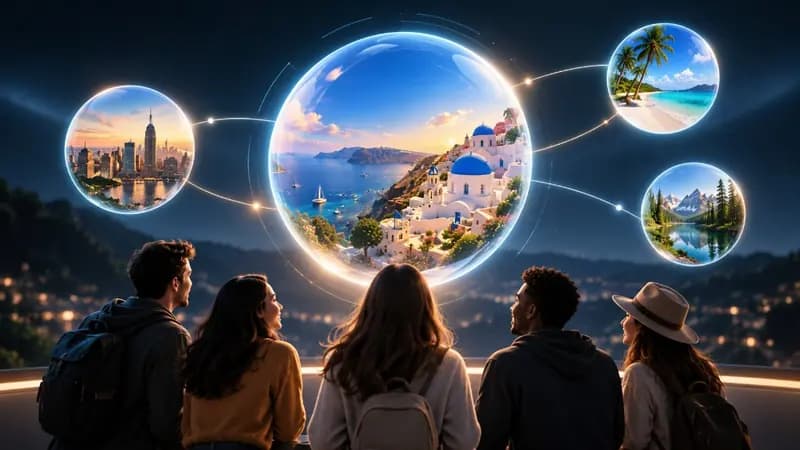
Why This Camera & Lens Are Great for Panoramas
If you want to know how to shoot panorama with Canon EOS 6D / 6D Mark II & Canon EF 8-15mm f/4L Fisheye USM, you’re pairing a proven full-frame DSLR with Canon’s most versatile fisheye. The EOS 6D (20.2 MP, full-frame) and EOS 6D Mark II (26.2 MP, full-frame) offer big sensors with clean high-ISO performance and forgiving pixel pitch for long-exposure night panoramas. The EF 8–15mm f/4L Fisheye USM gives you two looks on full frame: a 180° circular fisheye at 8mm (fastest capture, fewest shots) and a 180° diagonal fisheye at 15mm (more pixels at the edges, slightly more shots). This combo is EF-mount native, autofocuses quickly for setup, and focuses manually with a deep depth of field at short focal lengths.
In practical terms: the 6D/6D Mark II are stable, familiar DSLRs with good battery life for long sessions. At 8mm, your fisheye covers huge angles, minimizing parallax issues and cutting shot counts to a handful. At 15mm, you’ll capture more resolution per direction (useful for high-res real estate and virtual tours) while still keeping overlapping areas generous for reliable stitching. The result is a flexible, field-ready setup that works indoors, outdoors, day or night—provided you align the nodal point and lock your exposure settings.
Quick Setup Overview
- Camera: Canon EOS 6D / 6D Mark II — Full-frame 36×24 mm sensor; 6D: 20.2 MP (approx. 6.55 μm pixel pitch), 6D Mark II: 26.2 MP (approx. 5.76 μm pixel pitch). Native ISO 100–25600 (6D) and 100–40000 (6D Mark II), both expandable to ISO 50–102400.
- Lens: Canon EF 8–15mm f/4L Fisheye USM — fisheye zoom; circular at 8mm (180° circle) and diagonal at 15mm (180° diagonal). Very sharp by f/5.6–f/8; minimal lateral CA after software correction; typical fisheye distortion handled by stitching software.
- Estimated shots & overlap (field-tested, safe margins):
- 8mm circular fisheye (FF): 4 shots around at 90° yaw + optional zenith + nadir (recommended for clean top/bottom).
- 12–15mm diagonal fisheye (FF): 6 shots around at 60° + zenith + nadir (safer for interiors and complex geometry).
- Overlap target: ~30% around at 8mm, ~25–30% at 12–15mm.
- Difficulty: Easy–Intermediate (novice-friendly with a panoramic head and a quick nodal calibration).
Planning & On-Site Preparation
Evaluate Shooting Environment
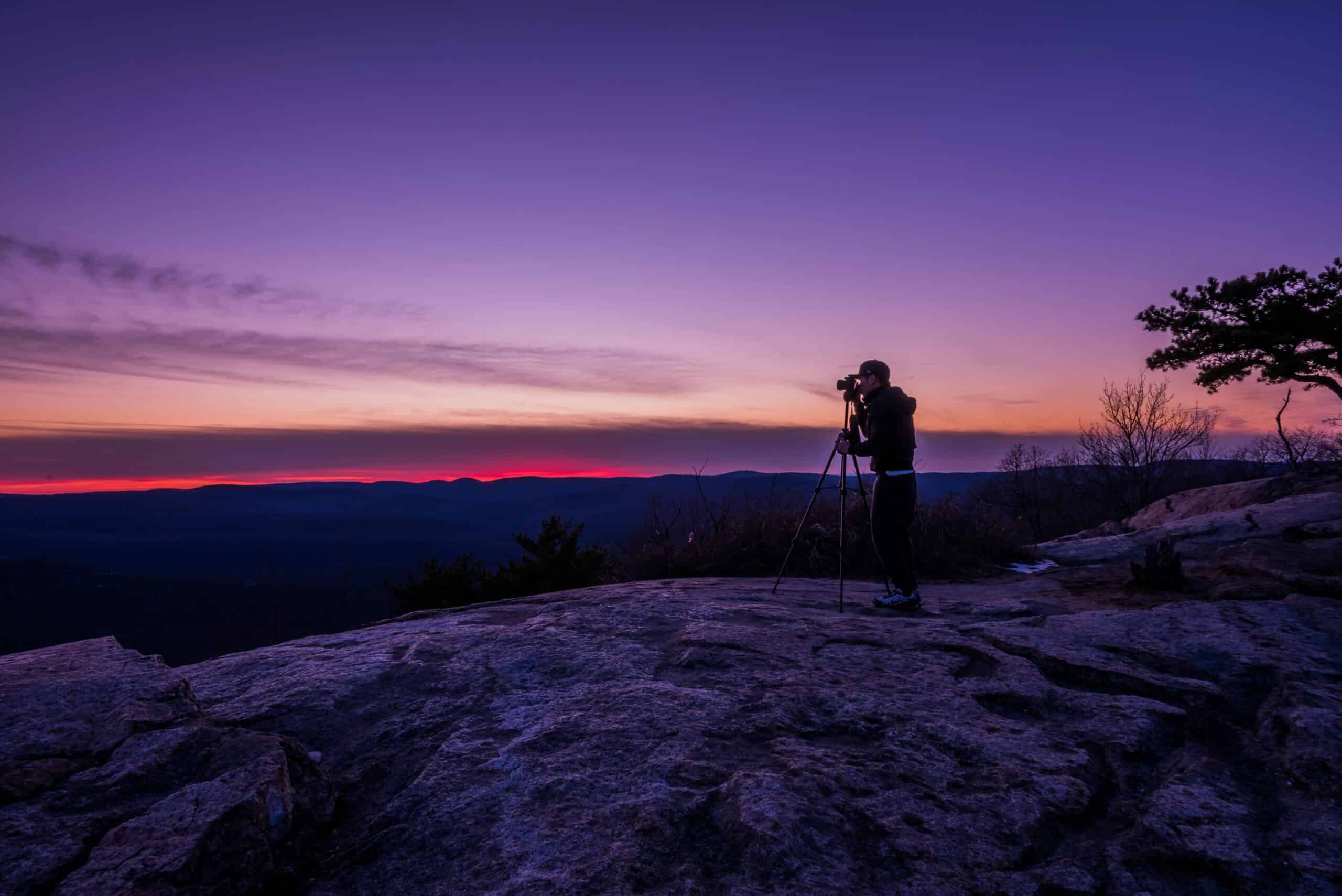
Walk the scene first. Note where the sun or bright windows are, any shiny/reflective surfaces (glass, polished floors), and moving elements (people, traffic, foliage). If shooting through glass, get the front element as close as safely possible (a few centimeters) to reduce reflections and flare; use a black cloth or rubber lens hood to tame reflections. Watch for obstacles near the lens—fisheyes see everything and will include tripod legs, feet, or railings if not carefully positioned.
Match Gear to Scene Goals
The 6D/6D Mark II sensors have strong high-ISO tolerance for their class. For interiors, start at ISO 100–400 and bracket; for night exteriors, ISO 800–1600 is usable with careful exposure on both bodies (the 6D is especially clean at higher ISO, the 6D Mark II offers more resolution but slightly finer-pitch noise). The fisheye advantage is speed: fewer frames means fewer moving-people ghosts and less chance of exposure change mid-sequence. The trade-off is fisheye distortion, which stitching software corrects but can stretch edges, so avoid placing critical lines very close to the edge of the frame at 15mm.
Pre-shoot Checklist
- Charge batteries; bring spares and ample storage (RAW + brackets fill cards quickly).
- Clean lens front element; check sensor for dust (f/8–f/11 shows dust easily on skies/walls).
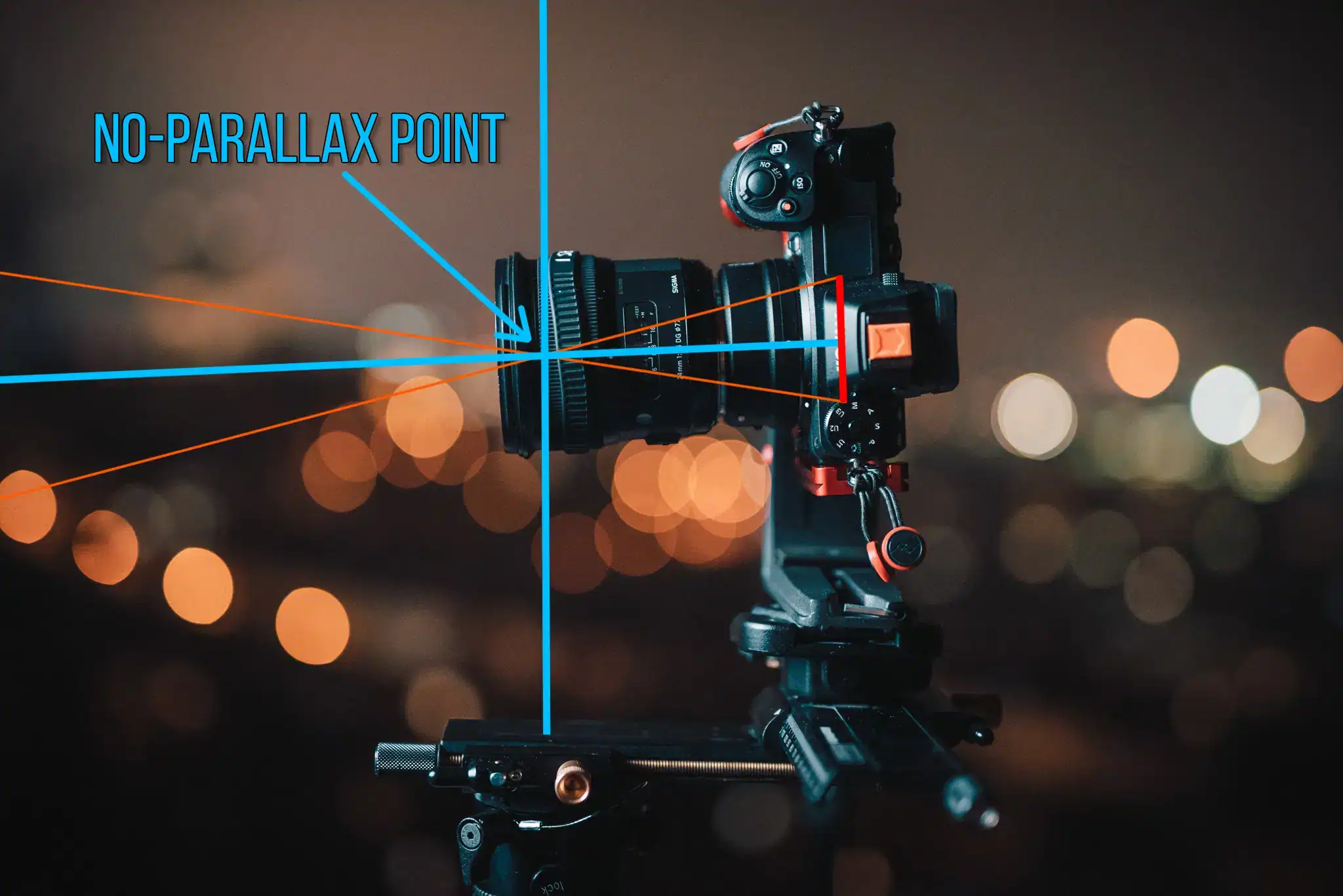
- Level the tripod; calibrate your panoramic head to the lens’s entrance pupil (no-parallax point).
- Safety: Assess wind, rooftop edges, railings, and traffic. Use a tether/strap for poles or car mounts.
- Workflow safety: Shoot a backup round after your main sequence, especially when crowds or clouds move.
Real-World Case Notes
- Indoor real estate: Use 12–15mm, 6 around + Z+N with ±2 EV brackets. Keep ISO 100–200 and lock white balance to “Daylight” or “Custom Kelvin.”
- Outdoor sunset: 8mm for speed; shoot 4 around + Z+N, bracket ±2 EV, and work quickly before light changes.
- Event crowds: Two passes—first to cover, second to capture cleaner sectors when people move. Mask later in post.
- Rooftop or pole: Prefer 8mm to minimize frames aloft; secure gear with a safety line, avoid gusty conditions.
- Car-mounted: Scout a safe location, park stable, use 8mm, and engage Live View to minimize mirror vibration.
Essential Gear & Setup
Core Gear
- Panoramic head: Allows yaw in exact increments and aligns the lens over the rotation axis for parallax-free stitching. With a fisheye, precise nodal alignment minimizes ghosting around near objects.
- Stable tripod with leveling base: Fast leveling saves time and ensures a straight horizon in the stitch.
- Remote trigger or app: Use Canon Camera Connect (Wi‑Fi/Bluetooth on 6D/6D II) or a cable release for vibration-free exposures.
Optional Add-ons
- Pole or car mount: Always use safety tethers. Mind wind loading; rotate slower to reduce sway.
- Lighting aids: LED panels or bounced flash for dark interiors; keep lighting consistent across frames.
- Weather protection: Rain covers and microfiber cloths; fisheyes are prone to flare from stray droplets.
Video: Panoramic Head Basics
Understanding nodal alignment visually helps tremendously. The following video is a good primer before your first field session.
For a deeper, step-by-step written guide to professional panoramic head setup, see this excellent overview by Meta’s Creator resources at the end of this section. Set up a panoramic head to shoot high-end 360 photos.
Step-by-Step Shooting Guide
Standard Static Scenes
- Level tripod and align the nodal point: Place two light stands or verticals (one near, one far). Pan left/right; adjust the fore-aft rail so the near object doesn’t shift against the far object. Mark your rail positions for 8mm and 15mm on tape for repeatability.
- Manual exposure and locked white balance: Set M mode; determine exposure for midtones (histogram slightly right without clipping). Lock WB to Daylight/Custom Kelvin to avoid stitch color shifts.
- Capture the round:
- 8mm circular: 4 shots around at 90°. Add a zenith (tilt up ~90°) and a nadir (tilt down ~90°) for clean poles.
- 12–15mm diagonal: 6 shots around at 60° yaw steps + zenith + nadir. Slight overlap between up/down frames improves blending.
- Nadir (ground) shot: If your panoramic head allows, offset the tripod slightly and re-shoot the ground patch to make tripod removal easy in post.
HDR / High Dynamic Range Interiors
- Bracket ±2 EV (3 frames) for each yaw position to balance bright windows with interior shadows. If needed, add 5 or 7 frames manually in severe contrast.
- Keep WB locked across brackets. Use Live View to reduce mirror shock; set a 2-second timer or remote.
- Disable long exposure NR to maintain sequence cadence; handle noise in post where you can batch-process.
Low-Light / Night Scenes
- Use a sturdy tripod and avoid wind. Start at f/4–f/5.6, ISO 800–1600 (6D and 6D II are usable here), and lengthen shutter to taste (1–8 seconds). Add brackets if highlights demand it.
- Use Live View to lift the mirror and a remote to avoid vibrations. Consider mirror lockup if not using Live View.
- Take a dark-frame reference if you expect hot pixels, but keep the flow steady to avoid light changes between frames.
Crowded Events
- Two-pass method: First pass for full coverage quickly; second pass re-shoot frames when gaps open in the crowd.
- Keep shot count minimal (8mm circular fisheye) to reduce ghosting. In post, mask from the cleaner pass into the base stitch.
Special Setups (Pole / Car / Drone)
- Pole: Use 8mm, 4-around only, and keep exposures short. Tether the pole, and don’t shoot in strong wind. Rotate slowly and pause for each frame.
- Car-mounted: Park safely; avoid traffic. Use suction mounts rated for your load with safety lines. Watch for vibrations and shoot at higher shutter speeds.
- Drone: Not typical for this DSLR combo, but you can hoist from fixed points; safety and legality first.
Recommended Settings & Pro Tips
Exposure & Focus
| Scenario | Aperture | Shutter | ISO | Notes |
|---|---|---|---|---|
| Daylight outdoor | f/8–f/11 | 1/100–1/250 | 100–200 | Lock WB (Daylight); watch for flare with the sun in frame |
| Low light/night | f/4–f/5.6 | 1/30–8s | 800–1600 | Tripod + remote; use Live View to reduce vibration |
| Interior HDR | f/8 | Bracket ±2 EV | 100–400 | Balance windows and lamps; keep WB locked |
| Action / moving subjects | f/5.6–f/8 | 1/200+ | 400–800 | Freeze motion; do a second pass for cleanup |
Critical Tips
- Focus: Use manual focus. At 8mm and f/8, set focus about 0.5–1 m; everything from roughly 0.3 m to infinity will be acceptably sharp. Confirm with Live View magnification.
- Nodal calibration: Use near/far alignment tests and mark your rail for 8mm and 15mm. Re-check if you change any plate or clamp.
- White balance: Lock it. Mixed lighting can shift per frame if left on Auto and complicate stitching.
- RAW capture: Always shoot RAW for HDR and color latitude. JPEG is suitable only for quick social shares.
- Stabilization: Neither the 6D/6D II nor the EF 8–15 has IBIS/IS to disable. If you ever swap to a stabilized lens on tripod, turn IS off.
- Diffraction: The 6D sweet spot is around f/8–f/11; the 6D II starts to show diffraction past f/11. Prefer f/8 where possible.
- Mirror shock: Use Live View and/or a 2s timer. Even small shocks show at longer exposures.
For a deeper look at spherical resolution trade-offs by focal length and shot count, see this technical reference. DSLR spherical resolution (Panotools).
Stitching & Post-Processing
Software Workflow
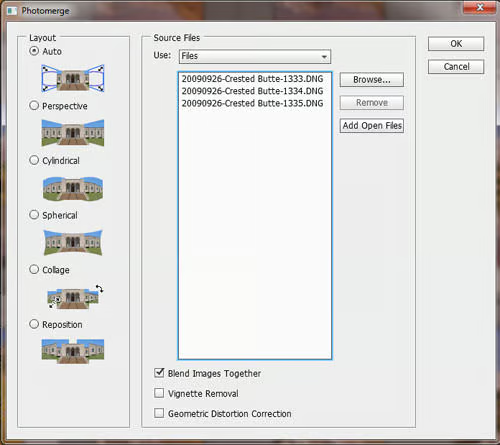
Fisheye panoramas are straightforward in modern software. PTGui and Hugin both handle fisheye projections, lens models, and HDR merges well. With a circular fisheye (8mm), you’ll have fewer frames to align, which reduces control-point complexity. With a diagonal fisheye (12–15mm), the stitch remains very robust if you maintain ~25–30% overlap. Export an equirectangular projection for VR (2:1 aspect) at the target resolution. Many real estate tours start at 8K (8000×4000) and scale up as needed.
PTGui is the industry workhorse for speed and batch work; it also excels at HDR panoramas with exposure fusion or full HDR blending. Hugin is a capable open-source option if you are starting out. PTGui review: why pros rely on it.
Cleanup & Enhancement
- Nadir patch/tripod removal: Use PTGui’s Viewpoint correction, or export to Photoshop/Affinity Photo to clone/patch. Many virtual tour platforms accept a nadir logo patch.
- Color and noise: Sync white balance and tone in Lightroom first; apply noise reduction to HDR night scenes.
- Leveling: Use the horizon tool in PTGui/Hugin and set verticals upright. Small pitch/roll errors are noticeable in VR.
- Sharpening: Apply modest capture sharpening to the final equirectangular, not to individual frames (avoid seam differences).
- Export: Equirectangular JPEG for VR (quality 90–95%) or 16-bit TIFF master for archival edits.
Want a structured DSLR-to-360 overview? Meta’s Creator docs summarize the capture-to-stitch pipeline for VR publishing. Using a DSLR to shoot and stitch a 360 photo.
Useful Tools & Resources
Software
- PTGui panorama stitching (HDR + templates)
- Hugin open source panorama stitcher
- Lightroom / Photoshop (RAW, tone, retouch, nadir patch)
- AI tripod removal tools (Content-Aware Fill, generative tools)
Hardware
- Panoramic heads: Nodal Ninja, Leofoto, Bushman
- Carbon fiber tripods for stability/weight
- Leveling bases and rotators (click-stops at 60°/90°)
- Wireless remote shutters or Canon Camera Connect
- Pole extensions / car mounts with safety tethers
Disclaimer: brand names are for search reference only—verify current specs and compatibility on official sites.
Common Mistakes & How to Avoid Them
- Parallax error → Always align the entrance pupil; re-check after any gear change.
- Exposure flicker → Use Manual mode, fixed ISO, and locked White Balance.
- Tripod shadows/legs → Shoot a dedicated nadir or plan to patch in post.
- Ghosting from movement → Use fewer frames (8mm), shoot a second pass, mask selectively.
- Night noise → Favor lower ISO with longer exposures; shoot RAW and apply noise reduction in post.
- Rushed rotations → Keep your yaw increments consistent; use click-stop rotators for accuracy.
For broader pano best practices consolidated from many shooters, the community Q&A below is a solid reference. Best techniques for 360 panoramas.
Frequently Asked Questions
- Can I shoot handheld panoramas with the EOS 6D / 6D Mark II?
Yes for quick outdoor scenes, but a tripod and panoramic head are strongly recommended for 360° work. Handheld, keep to 8mm, rotate around your body’s approximate nodal point (hold the camera over your toes), and overshoot for extra overlap. Expect more alignment fixes and occasional stitching artifacts.
- Is the EF 8–15mm wide enough for a single-row 360?
Absolutely. At 8mm (circular) you can cover with 4 shots around plus zenith/nadir. At 12–15mm (diagonal), plan on 6 around + Z+N for high-quality results with better edge detail.
- Do I need HDR for interiors with bright windows?
Usually yes. Bracket ±2 EV (3 frames) at each yaw position to preserve window highlights and interior shadows. For extreme contrast, manually capture 5–7 frames. Blend in PTGui or merge to HDR in Lightroom before stitching.
- How do I avoid parallax issues with this fisheye?
Calibrate the entrance pupil on your panoramic head: near/far alignment test, then mark the rail positions for 8mm and 15mm. Keep the camera level and rotate only around the vertical axis during capture.
- What ISO range is safe on these bodies in low light?
For critical quality, aim for ISO 100–400 indoors with longer shutters or bracketing. Night exteriors: ISO 800–1600 is workable on both the 6D and 6D Mark II; expose to protect highlights and denoise in post. Beyond ISO 3200 you’ll see more color noise and reduced dynamic range.
- Can I set Custom Modes (C1/C2) for faster pano setup?
Yes. Save Manual exposure, fixed WB, RAW, MF, and 2s timer to a custom mode for daylight; save a second preset with AEB for HDR interiors. This reduces setup time and errors when moving between locations.
- How do I reduce flare with the fisheye?
Shield the front element from direct sun with your hand (keep it out of frame), shoot multiple passes with the sun at different yaw angles, and pick the cleanest frame during masking. Keep the glass spotless—smudges flare easily on fisheyes.
- What’s the best tripod head for this setup?
A two-axis panoramic head with fore–aft and lateral rails (e.g., Nodal Ninja style) and a click-stop rotator (60°/90°) is ideal. For speed, pre-mark your rail positions for 8mm and 15mm.
Safety, Quality, and Backup Workflow
Always tether on rooftops and poles. Keep a hand on the rig in gusts. Use lens hoods, covers, or a microfiber cloth in misty conditions—fisheyes magnify flare and droplets. After the main capture, do a quick backup sweep of the scene (a second round with the same settings) in case someone walked through a frame or a car moved. Back up cards immediately after the shoot and keep a duplicate set off your person. If a frame is questionable (shake, blink, flare), re-shoot just that direction; PTGui lets you swap individual images easily.
Bonus: Visual Aids
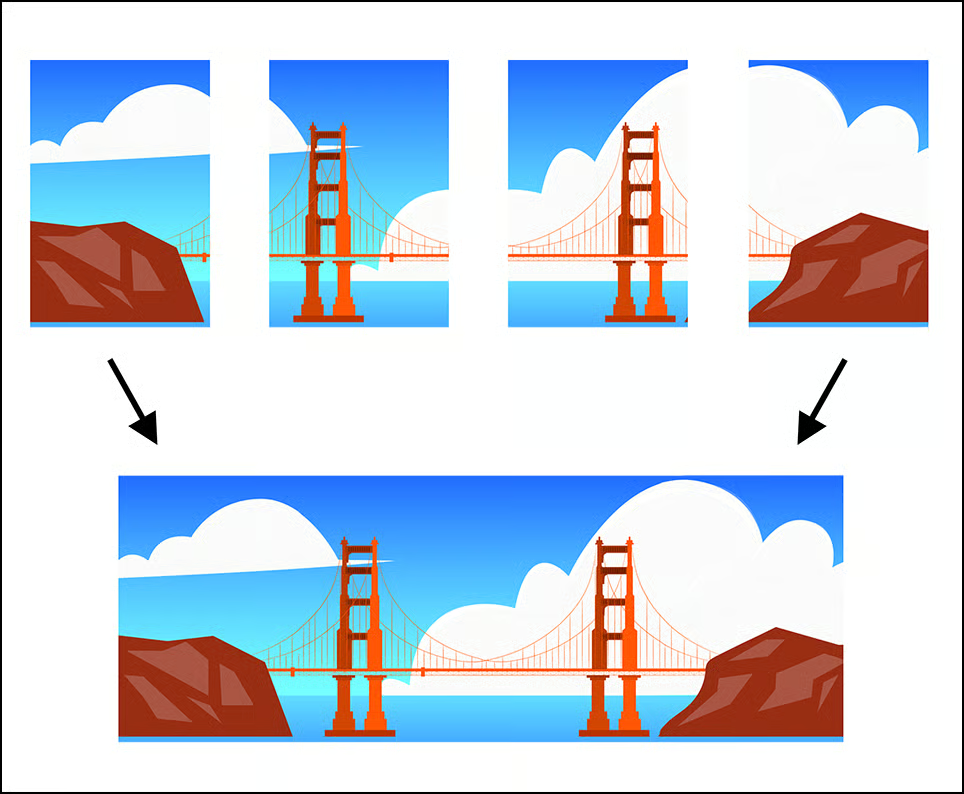
Further Reading
To study panoramic head techniques and alternatives, this tutorial is a great primer written for photographers transitioning to high-end 360 capture. Panoramic head setup for high-end 360.
For PTGui-specific opinions from working professionals, this review explains why it remains the go-to for fast, reliable results. Why PTGui is a favorite for pros.
Resolution math for 360s and shot-count strategy is covered here for deeper technical planning. PanoTools: DSLR spherical resolution.