Why This Camera & Lens Are Great for Panoramas
The Canon EOS 6D / 6D Mark II paired with the 7Artisans 10mm f/2.8 II Fish-Eye is a capable, budget-friendly combo for 360° panoramas and ultra-wide VR photos. Both 6D bodies are full-frame DSLRs, so you get true full-frame coverage from the 10mm diagonal fisheye, a huge field of view per shot, and fewer frames per panorama. The 6D generation is known for clean high-ISO performance and solid battery life—perfect for long pano sessions. The 7Artisans 10mm II is a manual-focus, manual-aperture diagonal fisheye with approximately 178° diagonal FOV; stopped down to f/5.6–f/8, it delivers sharp results with manageable chromatic aberration, making stitching straightforward in PTGui or Hugin.
On the EOS 6D (20.2 MP, ~6.55 µm pixel pitch) and 6D Mark II (26.2 MP, ~5.76 µm pixel pitch), you can expect generous dynamic range at base ISO (roughly 12 EV class) and clean files up to ISO 1600–3200 when needed. The Mark II brings better live view AF and ergonomics, while the original 6D still shines in low light. The EF mount works seamlessly with the EF version of this lens; controls are fully manual, which is ideal for locking exposure and focus for consistent stitching. As a fisheye, geometric distortion is part of the look, but modern stitchers handle fisheye projections natively, and you’ll benefit from fewer shots and faster capture times.
Quick Setup Overview
- Camera: Canon EOS 6D / 6D Mark II — Full Frame 36×24 mm sensors; 6D: 20.2 MP (~6.55 µm pixels), 6D Mark II: 26.2 MP (~5.76 µm pixels). Native ISO: 100–25600 (6D), 100–40000 (6D Mark II), both expandable.
- Lens: 7Artisans 10mm f/2.8 II Fish-Eye — manual focus and aperture, diagonal fisheye (~178°), best sharpness around f/5.6–f/8; moderate CA correctable in post.
- Estimated shots & overlap (tested guidelines on full frame):
- Safe single row: 6 shots around at 0° pitch (60° increments), ~30% overlap + 1 zenith + 1 nadir.
- Open sky/exteriors: 5 around can work; interiors/tight spaces: 6–8 around for safer coverage.
- HDR interiors: same pattern, but bracket each angle (e.g., 3–5 exposures ±2 EV).
- Difficulty: Easy–Moderate (manual lens, simple workflow; nodal calibration required for best results).
Planning & On-Site Preparation
Evaluate Shooting Environment
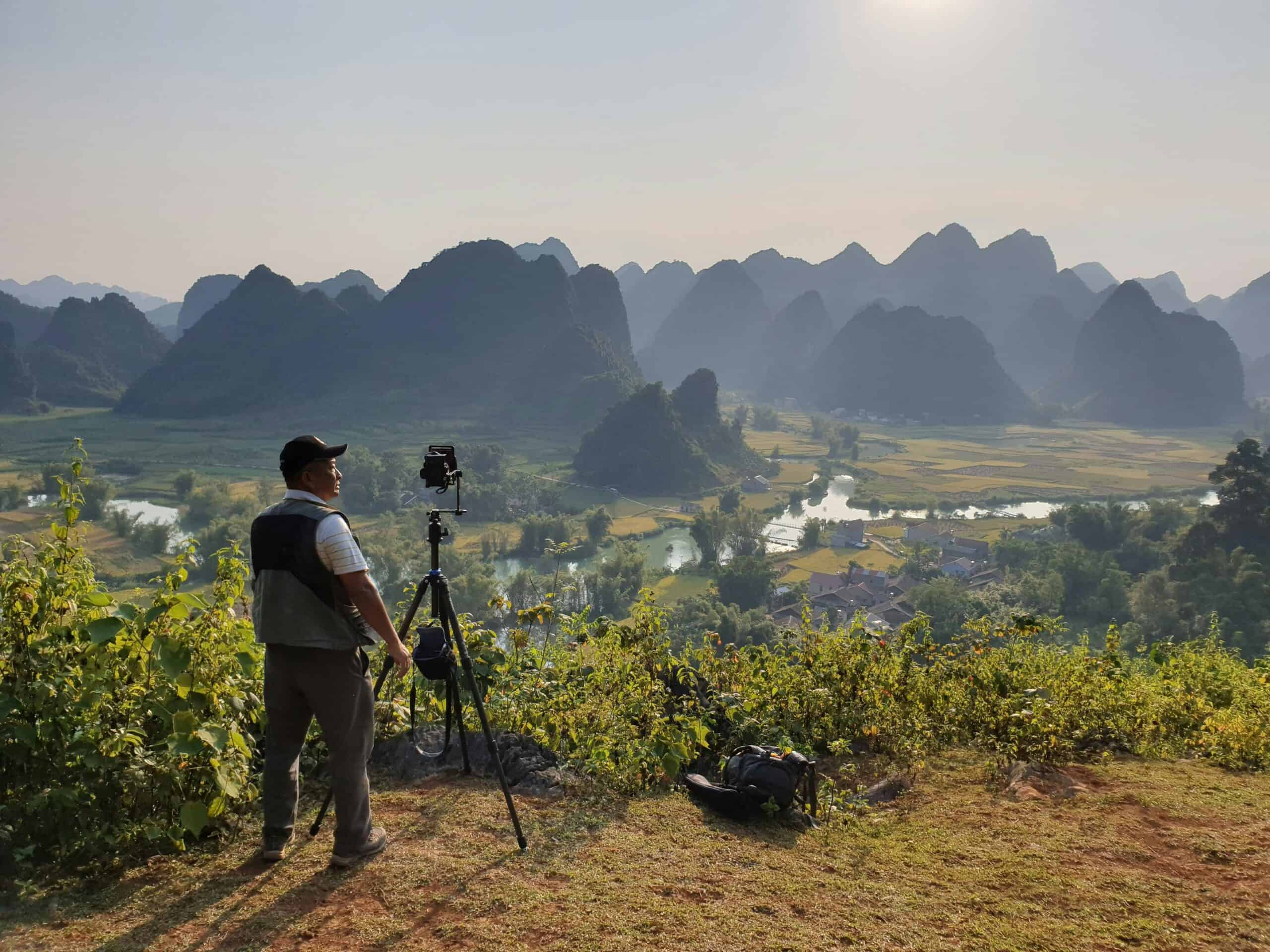
Start by reading the light and the amount of motion in the scene. For interiors with windows, expect extreme contrast; plan to bracket HDR. Outdoors at sunset, consider the sun’s position to avoid flare and to balance exposure. In crowds, anticipate movement and occlusions. Near glass or reflective metal, give yourself distance (1.5–2 m if possible) and shoot at a slight angle to reduce reflections. If you must press to glass, cup the lens with a rubber hood or cloth to prevent light leaks and ghosting.
Match Gear to Scene Goals
The 6D/6D Mark II sensors provide dependable dynamic range at ISO 100–200 for clean panoramas. Indoors, ISO 400–800 is a safe range on both; the original 6D is especially clean in low light. The 7Artisans 10mm fisheye minimizes shot count—great for fast captures (events, rooftop winds, car-mounted sequences). Distortion is expected but helpful to cover more of the sphere per frame; your stitcher will handle fisheye projections natively. For architectural lines, plan to level meticulously and consider a few extra shots for cleaner edges and better control points.
Pre-shoot Checklist
- Charge batteries and carry spares; format two cards to rotate for backup.
- Clean front/rear elements; check sensor for dust (it shows in skies and walls).
- Level the tripod; confirm panoramic head calibration for this camera/lens combo.
- Safety: watch wind loads on rooftops/poles; tether the rig above people or traffic.
- Workflow backup: shoot a second safety round, and if doing HDR, consider 5-frame brackets in tricky light.
Essential Gear & Setup
Core Gear
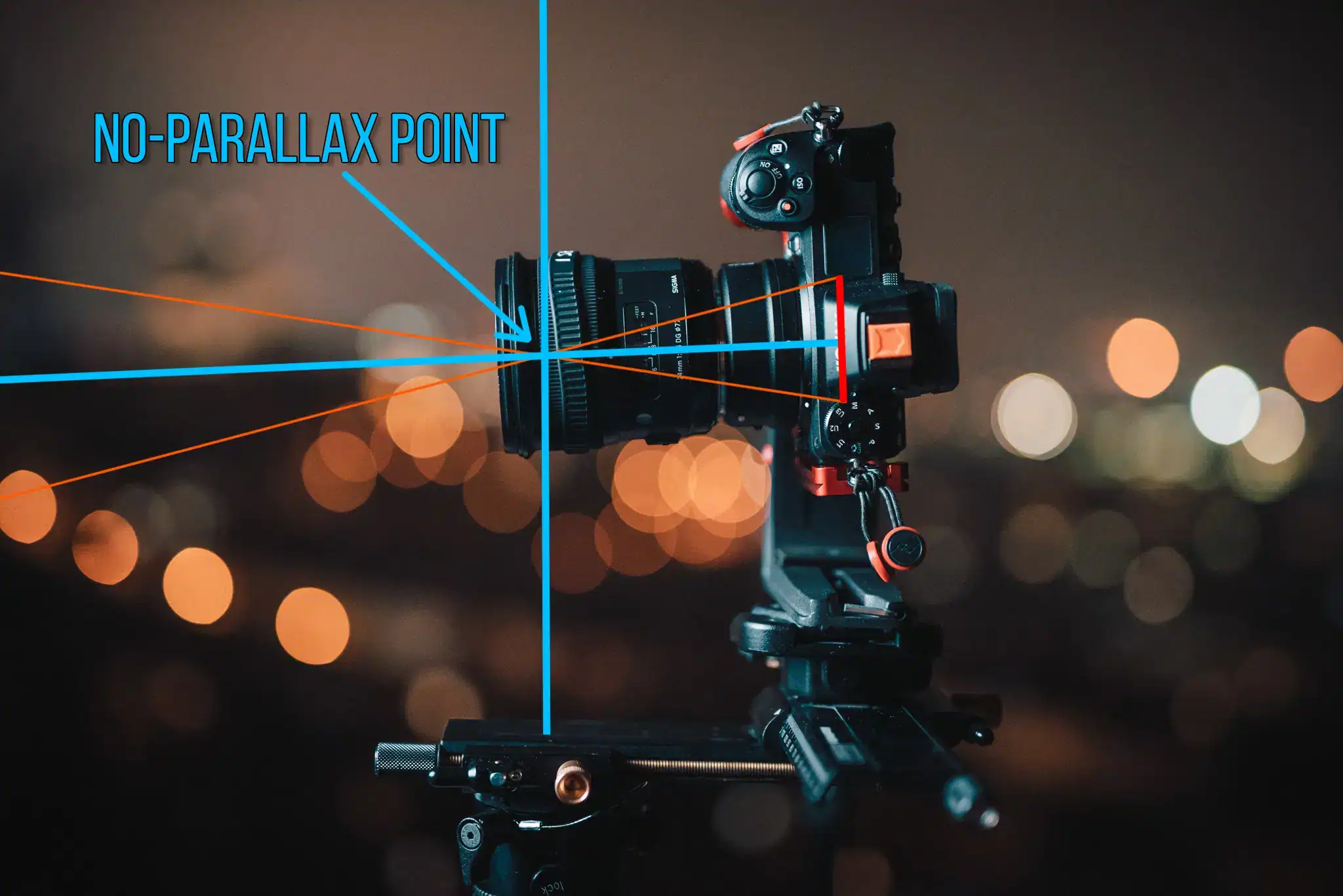
- Panoramic head: This lets you place the lens’s entrance pupil (nodal point) on the rotation axis to avoid parallax between frames. With a fisheye, accurate nodal alignment greatly reduces stitching errors around near objects.
- Stable tripod with leveling base: A leveling base or half-ball makes it fast to level the rig so your horizon is consistent.
- Remote trigger or 2-sec timer: Avoid vibrations when pressing the shutter, especially at slow speeds for HDR or night work.
Optional Add-ons
- Pole or car mount: Always tether your camera; beware of wind and vibration. On high poles, pre-focus and reduce shot count to minimize sway.
- Lighting aids: Small LED panels or flash for interiors; bounce light to avoid hotspots and color shifts.
- Weather protection: Rain covers, silica gel, and a microfiber cloth for rapid weather changes.
Step-by-Step Shooting Guide
Standard Static Scenes
- Level the tripod and align the nodal point. On your panoramic head, slide the camera forward/back until nearby and distant features do not shift relative to each other as you pan. Mark the rail position for the 7Artisans 10mm so you can repeat it next time.
- Set manual exposure and lock white balance. Start at ISO 100–200, f/8 for depth and sharpness, then set shutter to expose mid-tones properly. Lock WB to Daylight (outdoors) or a fixed Kelvin indoors to avoid color mismatch across frames.
- Capture the sequence with overlap. For this lens on full frame, a robust pattern is 6 around at 0° pitch with about 30% overlap, then 1 zenith and 1 nadir. Rotate consistently in 60° increments; use the head’s detents if available.
- Shoot a nadir (ground) patch. After the main sequence, tilt the camera down or shift the tripod to capture a clean floor patch to remove the tripod in post.
HDR / High Dynamic Range Interiors
- Bracket exposures ±2 EV (3–5 frames). With windows and lamps, 5 frames (-4, -2, 0, +2, +4) captures more range, especially on the 6D Mark II, which has slightly less highlight headroom at base ISO than some newer sensors.
- Keep WB fixed and avoid auto ISO. Shoot RAW for maximum dynamic range and color latitude.
Low-Light / Night Scenes
- Use longer exposures instead of high ISO. The 6D/6D II files are clean up to ISO 800–1600, but a tripod + longer shutter gives cleaner results for panoramas. Start at f/4–f/5.6, ISO 200–800, and let shutter times extend to 1–4 seconds as needed.
- Trigger remotely and wait for vibrations to settle. Use mirror lockup or Live View to reduce mirror slap on DSLRs.
Crowded Events
- Make two passes. First pass for coverage; second pass capture gaps when people move. This gives options to mask ghosted subjects later.
- Keep the camera height consistent. Even small height changes cause alignment issues in crowds.
Special Setups (Pole / Car / Drone)
- Secure and tether. Use safety lines and clamp gear properly. With a pole, pre-focus at the hyperfocal distance and shoot a minimal pattern (e.g., 5–6 around only) to reduce sway time.
- Mind wind and vibration. Slow your rotation and increase overlap if the rig moves between shots. For vehicle mounts, shoot at low speeds on smooth surfaces.
Field-Proven Case Studies
Indoor Real Estate
Place the tripod near the room center, level carefully, and shoot 6 around + zenith. Bracket 5 exposures for windows. Set f/8, ISO 100–200, and pick shutter to expose the mid-frame. Use the nadir patch with a small offset after the main set to remove the tripod.
Outdoor Sunset
With the sun low, aim to capture the brightest panels first to avoid rapidly changing highlights. Consider 3-frame brackets. Shield the lens from direct sun when possible to reduce flare; a microfiber cloth is essential for sea spray or mist.
Event Crowds
Raise the camera above head height. Shoot two rounds; in post, mask people moving between frames. If you must shoot faster, accept minor ghosting and reduce the number of around shots to 5 with larger overlap.
Rooftop / Pole
Pre-mark your nodal position. Use f/8, manual focus at ~0.4–0.5 m (hyperfocal) for the 10mm. Keep the pattern minimal (5–6 around). Tether everything.
Car-Mounted Capture
Park safely; vibration will blur long exposures. Use faster shutter (1/125–1/250) and ISO 400–800 in daylight. Always shoot with the engine off to reduce shake.
Recommended Settings & Pro Tips
Exposure & Focus
| Scenario | Aperture | Shutter | ISO | Notes |
|---|---|---|---|---|
| Daylight outdoor | f/8–f/11 | 1/100–1/250 | 100–200 | Lock WB to Daylight for consistent color |
| Low light/night | f/4–f/5.6 | 1/30–1/2s+ | 200–800 | Tripod + remote; use Live View to reduce mirror slap |
| Interior HDR | f/8 | Bracket ±2 EV | 100–400 | 5 frames for bright windows; RAW recommended |
| Action / moving subjects | f/5.6–f/8 | 1/200+ | 400–800 | Freeze motion; do a second pass for clean plates |
Critical Tips
- Manual focus at hyperfocal distance: With a 10mm on full frame at f/8, hyperfocal is roughly 0.4–0.5 m; set focus slightly under 0.5 m to keep near-to-infinity sharp.
- Nodal calibration: Start with the camera slid forward so the front element is roughly above the rotation axis; fine-tune by aligning a near vertical object against a distant background and panning. Mark your rail once dialed in.
- White balance lock: Avoid Auto WB; use Daylight outdoors, a preset indoors, or a fixed Kelvin value (e.g., 4000–5200 K depending on lights).
- RAW over JPEG: You’ll need the dynamic range and color latitude, especially for HDR and mixed lighting.
- Stabilization: The 6D/6D II have no in-body IS, and the 7Artisans lens has no IS—ideal for tripod shooting since there’s no IS to turn off.
Stitching & Post-Processing
Software Workflow
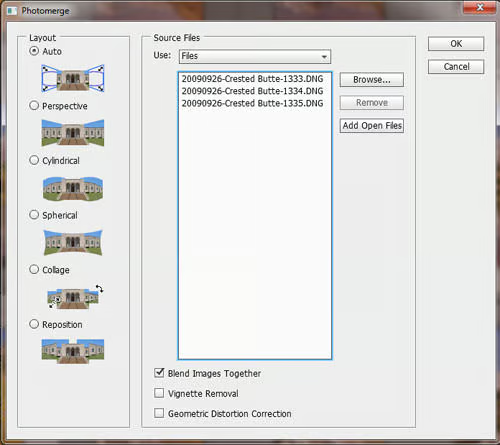
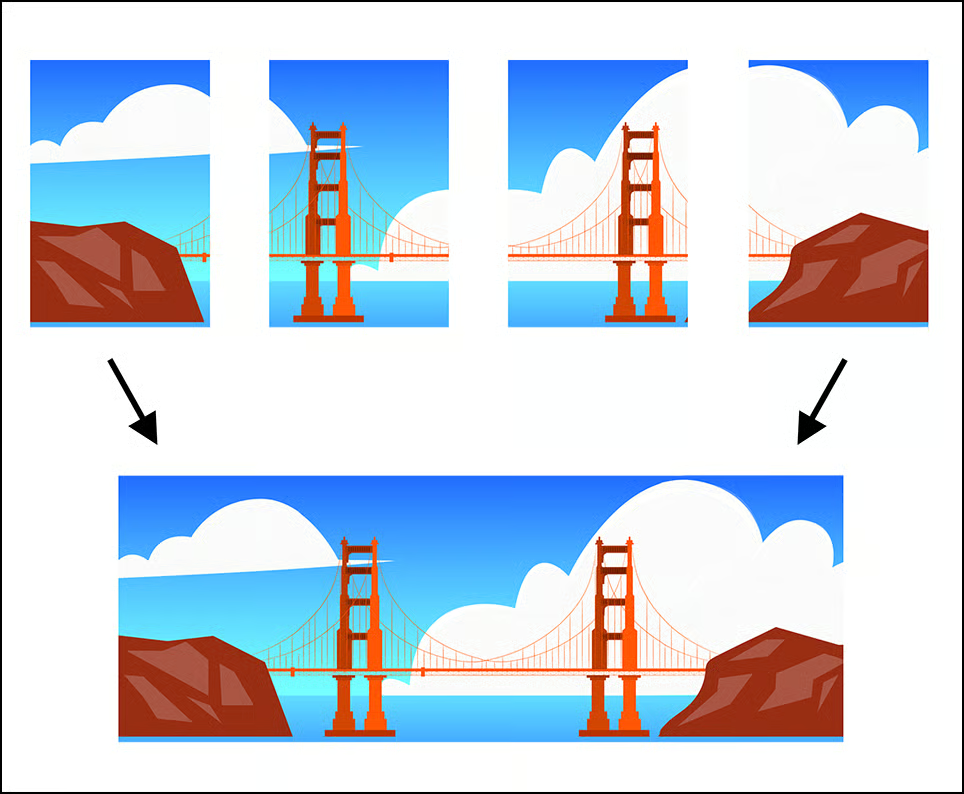
Import your sequence into a dedicated stitcher like PTGui (fast, robust control points) or the open-source Hugin (highly capable with more manual steps). For fisheyes, set the lens type to “full-frame/diagonal fisheye,” and let the software estimate the FOV from EXIF or define it manually (~178° diagonal for this lens). Typical overlap recommendations are 25–35% for fisheyes; your 6-shot pattern at 60° steps is a proven baseline. After alignment, use the optimizer, then level the horizon and set your output projection to Equirectangular (2:1) for 360 viewers. For pano software comparisons and practical tips, see a concise PTGui review and why many pros prefer it for complex sets at the end of this section. PTGui: pro-grade panorama stitching overview
Cleanup & Enhancement
- Nadir patch: Export a layered panorama, then clone or patch the tripod in Photoshop/Affinity. Some AI tools can remove the tripod circle quickly.
- Color & noise: Match white balance across brackets during HDR merge. Apply mild noise reduction at ISO 800+ and mask it away from fine textures.
- Leveling: Use yaw/pitch/roll controls to correct horizon drift and verticals, crucial for interiors.
- Export: For VR, output equirectangular JPEG or TIFF at 2:1 ratio (e.g., 12000×6000). Keep a 16-bit master if you plan further edits.
Recommended Learning Resources
For a visual walkthrough of panoramic head setup and capture fundamentals, this short video is helpful. Combine it with your own nodal calibration practice for the 10mm lens: Setting up a panoramic head: best practices
If you’re new to DSLR-based 360 capture and VR output requirements, Meta’s creator guide covers stitching and export expectations for equirectangular assets: Using a DSLR to shoot and stitch a 360 photo
Useful Tools & Resources
Software
- PTGui panorama stitching
- Hugin open source
- Lightroom / Photoshop for RAW and retouching
- AI tripod removal tools (Content-Aware Fill, Generative Expand)
Hardware
- Panoramic heads (Nodal Ninja, Leofoto) with fore-aft and lateral adjustments
- Carbon fiber tripods for stability with manageable weight
- Leveling bases or half-balls
- Wireless remote shutters or intervalometers
- Pole extensions / car suction mounts with safety tethers
Disclaimer: brand names are for search reference; verify specs and compatibility with your exact camera/lens.
Common Mistakes & How to Avoid Them
- Parallax error: Calibrate the nodal point and keep camera height fixed between shots.
- Exposure flicker: Shoot full manual; lock ISO, aperture, shutter, and white balance.
- Tripod shadows or footprints: Capture a nadir patch and plan to retouch.
- Ghosting from movement: Do a second pass and mask moving subjects in post.
- Night noise and blur: Use a stable tripod, remote trigger, and lower ISO rather than pushing to 3200+ without need.
Visual Aids
Frequently Asked Questions
- Can I shoot handheld panoramas with the Canon 6D / 6D Mark II?
Yes, for quick partial panos or when a tripod isn’t permitted, but expect more stitching errors. Keep the camera rotating around the lens, not your body, use higher shutter speeds (1/250+), and increase overlap to 40–50%. For full 360×180, a tripod and pano head are strongly recommended.
- Is the 7Artisans 10mm f/2.8 II wide enough for a single-row 360?
Yes for the around row. On full frame, 6 shots around (60° steps) plus a zenith and a nadir is a safe, high-quality pattern. In very open exteriors, you can sometimes get away with 5 around, but interiors benefit from 6–8 around for stronger control points.
- Do I need HDR for interiors with bright windows?
Usually yes. Bracket ±2 EV (3–5 frames). This protects highlights in windows while preserving indoor detail. Merge HDR per angle before stitching or use a stitcher that supports exposure fusion.
- How do I avoid parallax issues with this lens?
Use a panoramic head and align the entrance pupil over the rotation axis. Calibrate by aligning a near object against a distant background and panning; adjust the rail until relative motion disappears. Mark the rail setting for repeatability with the 10mm.
- What ISO range is safe on the 6D / 6D Mark II in low light?
For critical pano quality, ISO 100–400 is ideal; 800 is very usable; 1600–3200 is acceptable when you need faster shutters. Prefer longer exposures on a tripod to keep ISO low, especially for large VR outputs.
- Can I store pano settings on the 6D Mark II?
Yes. Save a custom mode (C1/C2) with Manual exposure, fixed WB, RAW, 2-sec timer or remote, and mirror lockup/Live View enabled. This speeds up on-site setup.
- How can I reduce fisheye flare?
Avoid direct strong backlight when possible, shade the lens with your hand or a flag, clean the front element often, and plan your rotation to place the sun between frames or at a manageable angle for later masking.
Further Reading
For a deeper dive into head setup and shooting fundamentals, this panoramic head tutorial is a solid reference: Panoramic head fundamentals and alignment
Safety, Limitations, and Data Management
Always tether the rig on rooftops, poles, and vehicle mounts; never shoot above people without a safety line. The 7Artisans 10mm is fully manual—great for consistency, but remember to double-check focus and aperture before every sequence. The 6D series lacks in-body stabilization and has an optical viewfinder; use Live View for precise focus at 10× magnification and to mitigate mirror shock. Keep a redundant backup: dump cards to a laptop or SSD after each location, and consider shooting a second coverage round to guard against stitching surprises. Finally, keep a rain cover handy; a single drop on a fisheye front element can ruin multiple frames.