Why This Camera & Lens Are Great for Panoramas
If you want to learn how to shoot panorama with Canon EOS 5D Mark IV & Sony FE 12-24mm f/4 G, you’re pairing a proven full-frame workhorse with an ultra-wide, rectilinear zoom. The Canon EOS 5D Mark IV’s 30.4MP full-frame sensor (36×24 mm, pixel pitch ~5.36 µm) provides excellent dynamic range at base ISO, reliable color, and robust RAW files that stitch cleanly. The Sony FE 12–24mm f/4 G delivers a sweeping field of view with low distortion for a rectilinear design, making it ideal for multi-row panoramas where straight lines must remain straight (architecture, real estate, interiors).
Key advantages for panoramas: the 5D Mark IV’s Dual Pixel live view makes precise manual focus easy; its weather sealing and battery life are excellent for long outdoor sessions; and 30MP is a sweet spot for 8K–16K equirectangular outputs after stitching. The FE 12–24mm’s bulbous front element and fixed f/4 aperture keep it compact and sharp, especially at f/8–f/11 where corners improve and chromatic aberration is well-controlled for an ultra-wide.
Important compatibility note
The Sony FE 12–24mm f/4 G is a Sony E‑mount lens. It does not natively mount on a Canon EOS 5D Mark IV (EF mount) because of flange distance differences; practical adapters from Sony E lens to Canon EF body are not available for field use without optical compromises. For a native EF alternative with similar coverage, consider the Canon EF 11–24mm f/4L or EF 16–35mm f/4L IS. If you already own the Sony lens, apply all the optical and shooting guidance below (it’s the same for a 12–24mm rectilinear on full frame), but mount it on a compatible Sony body. The techniques remain identical.
Quick Setup Overview
- Camera: Canon EOS 5D Mark IV — Full-frame (36×24 mm), 30.4 MP, strong dynamic range at ISO 100–200, clean files up to ISO 1600–3200 when exposed well.
- Lens: Sony FE 12–24mm f/4 G — Rectilinear ultra-wide zoom, sharp from f/5.6–f/11, moderate barrel/mustache distortion at 12mm (easily corrected), bulbous front element (no front filters), minimal focus ~0.28 m.
- Estimated shots & overlap (full-frame, rectilinear):
- At 12mm: 3-row × 6 around (≈18) + zenith + nadir = ~20 shots (≈40–45% horizontal overlap).
- At 16mm: 3-row × 8 around (≈24) + Z + N = ~26 shots.
- At 24mm: 4-row × 8 around (≈32) + Z + N = ~34–36 shots.
- Difficulty: Moderate (easier with a calibrated panoramic head).
Planning & On-Site Preparation
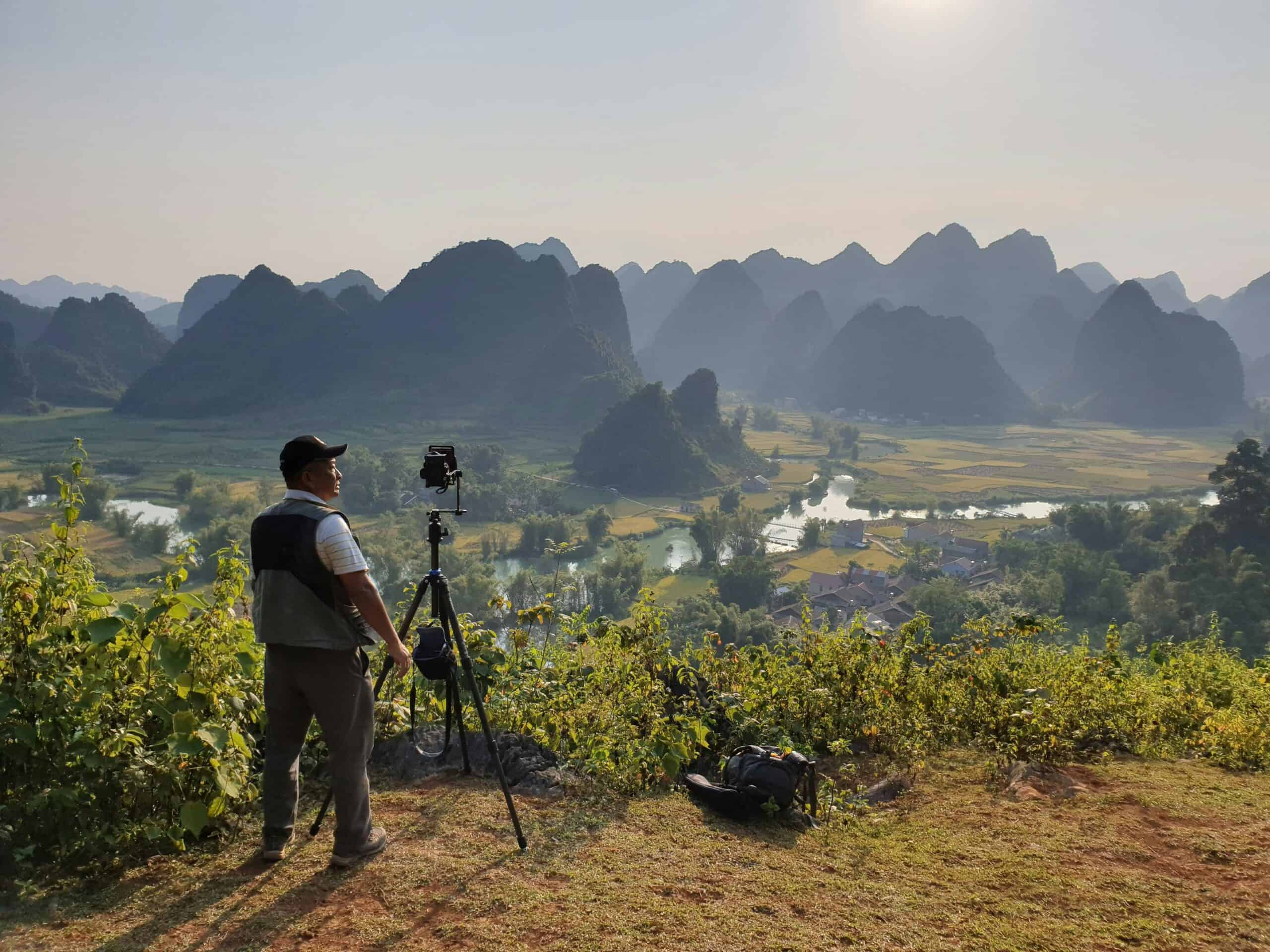
Evaluate Shooting Environment
Assess light direction, contrast, and movement first. For interiors with bright windows, plan for HDR bracketing to prevent blown highlights. In outdoor scenes, mind the sun angle to reduce flare—especially important with bulbous-front ultra-wides. Around glass or reflective surfaces, shoot as perpendicular as possible and keep the lens 5–15 cm from the glass to reduce interior reflections; shade the lens with your hand or a black cloth (no filter threads here). Watch for moving elements (trees, crowds, vehicles) that may cause stitching ghosts, and decide if you’ll mask in post (PTGui, Hugin) or capture a second pass with better timing.
Match Gear to Scene Goals
The 5D Mark IV provides dependable low-ISO dynamic range for high-contrast scenes, making it suitable for architectural interiors and sunset cityscapes. A 12–24mm rectilinear lens lets you keep straight lines straight while covering a very wide angle, ideal for real estate and interiors where a fisheye’s curvature is undesirable. For low light, the 5D Mark IV handles ISO 800–1600 gracefully; with careful exposure and NR, ISO 3200 is usable. If you need fewer shots and can tolerate fisheye curvature (correctable in software), a fisheye lens can cut capture time significantly—but the 12–24mm gives you cleaner geometry and easier alignment of straight edges.
Pre-shoot Checklist
- Power & storage: fully charged batteries; dual cards; enable file numbering continuity for tracking brackets.
- Optics clean: bulbous-front UWA needs meticulous cleaning; bring a blower and lens cloth.
- Tripod: level base; legs weighted or spiked for wind; pano head calibrated to the lens’s no-parallax point.
- Safety: tether on rooftops; check wind gusts for poles/car rigs; mind bystanders and traffic.
- Backup workflow: if time allows, shoot a second, slightly different pass; it saves edits when people move.
Essential Gear & Setup
Core Gear
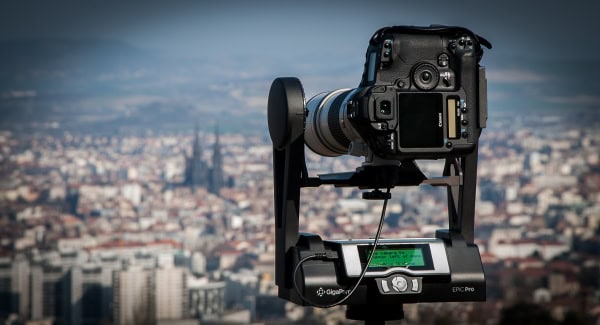
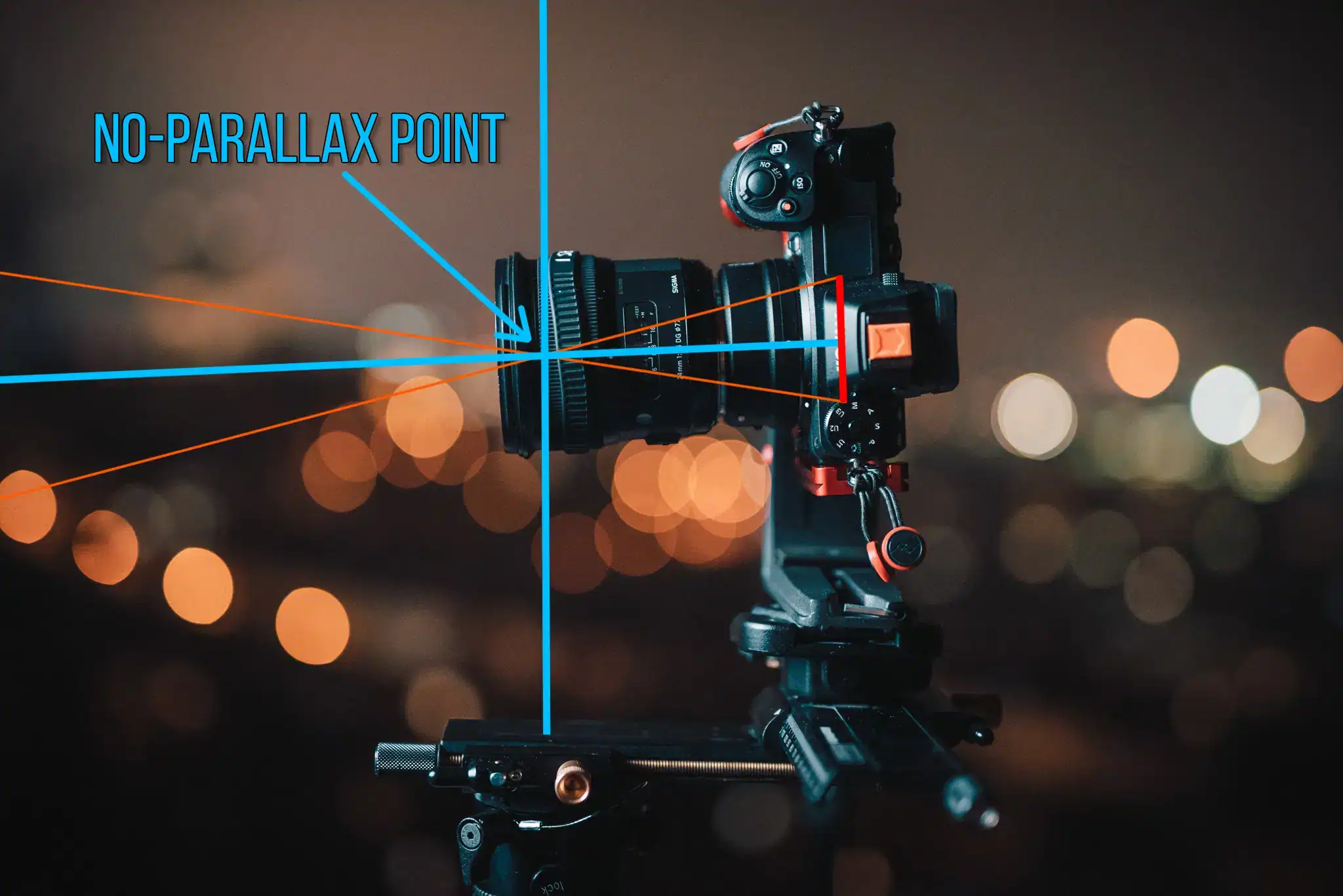
- Panoramic head: Align the lens’s entrance pupil (no-parallax point) over the rotation axis to eliminate parallax. This is essential for clean stitches when objects are near the camera.
- Stable tripod with leveling base: A leveling base lets you keep horizons true and rotate level for the “around” shots.
- Remote trigger/app: Use a cable release or Canon Camera Connect. In Live View, use silent shooting to reduce vibration.
Optional Add-ons
- Pole or car mount: Use a safety tether and check wind. Slow your rotation and shorten exposures to counter vibrations.
- Lighting aids: LED panels or bounced flash for deep interiors; keep lighting consistent across frames.
- Weather protection: Rain cover for the 5D Mark IV and a microfiber for the lens; wind is the true enemy of sharp multi-row sets.
Step-by-Step Shooting Guide
Standard Static Scenes
- Level and align the nodal point. Level the tripod with the leveling base. On the pano head, slide the camera so the lens’s entrance pupil sits exactly above the rotation axis. Test by aligning near/far objects and rotating: if they shift relative to each other, adjust forward/back until the shift disappears.
- Manual exposure and locked white balance. Set Manual (M), choose f/8–f/11 for sharpness, expose to protect highlights, and lock WB (Daylight outside, 3500–4500K indoors). Disable Auto Lighting Optimizer and any exposure-varying automation.
- Capture with reliable overlap. At 12mm: 6 around per row, 3 rows (−45°, 0°, +45°) gives good vertical coverage. Rotate 60° between frames. Slightly more overlap (40–45%) is safer with rectilinear UWA.
- Nadir shot for tripod removal. Either shoot a dedicated nadir by tilting the head down and offsetting the tripod or capture a handheld nadir and patch in post.
HDR / High Dynamic Range Interiors
- Bracket ±2 EV (3 or 5 frames) at each position to balance windows and interior shadows. The 5D Mark IV’s 30MP RAW files handle highlight recovery well, but it’s still best to protect highlights in the base exposure.
- Lock WB and focus. Merge brackets first (HDR per position), then stitch the tonemapped set. This prevents WB and microcontrast shifts across the panorama.
Low-Light / Night Scenes
- Use a solid tripod, Live View, silent shutter mode, and a remote release. Set f/4–f/5.6 and target shutter speeds in the 1/10–1 s range depending on wind. ISO 400–1600 is typically clean on the 5D Mark IV when exposed properly; push to ISO 3200 only if necessary.
- Long exposures? Turn off Long Exposure NR and apply noise reduction in post to keep a consistent cadence across frames.
Crowded Events
- Shoot two passes. First pass for the full stitch, second pass for clean plates of key areas when gaps appear. You’ll mask these later in PTGui/Hugin.
- Favor faster shutter speeds (1/125–1/250) at f/5.6–f/8 and ISO 800–1600 to reduce motion blur.
Special Setups (Pole / Car / Drone)
- Pole: Keep the pole vertical, use a safety tether, and avoid gusty wind. Shorten exposure times to minimize sway-induced blur.
- Car mounts: Secure suction mounts to clean metal/glass, add safety lines, and plan routes to minimize vibration. Use shorter focal (12–14mm) and faster shutter speeds.
Want to see nodal setup done right? This concise video walk-through helps visualize the process:
Recommended Settings & Pro Tips
Exposure & Focus
| Scenario | Aperture | Shutter | ISO | Notes |
|---|---|---|---|---|
| Daylight outdoor | f/8–f/11 | 1/100–1/250 | 100–200 | Lock WB (Daylight); use 3 rows at 12mm |
| Low light / night | f/4–f/5.6 | 1/10–1 s | 400–1600 | Tripod + remote; Live View silent mode |
| Interior HDR | f/8 | Bracket ±2 EV | 100–400 | HDR-merge first, then stitch |
| Action / moving subjects | f/5.6–f/8 | 1/200+ | 400–800 | Double pass and mask movement |
Critical Tips
- Manual focus at hyperfocal. At 12mm and f/8 on full frame, hyperfocal distance is ≈0.6–0.7 m; set MF there to keep everything sharp from about 0.35 m to infinity.
- Nodal calibration. Start with the lens foot aligned so the center of the front element sits above the rotation axis; refine by checking near/far object alignment as you pan.
- White balance lock. Use Kelvin or a preset. Avoid AWB to prevent color shifts that complicate stitching and blending.
- RAW always. Panoramas benefit from RAW latitude for highlight recovery, shadow lift, and WB consistency.
- Stabilization. The 5D Mark IV has no IBIS and the FE 12–24 G has no IS. With other IS lenses on a tripod, turn IS off to prevent drift.
Stitching & Post-Processing
Software Workflow
For reliable control points, masking, and HDR workflows, PTGui is industry-standard; Hugin is a powerful open-source alternative. Rectilinear ultra-wides require more frames than fisheyes but produce straighter lines with less defishing. Aim for ~30–45% overlap at 12–16mm. A 12mm, 3-row, 6-around capture on the 5D Mark IV typically yields a 12K–16K wide equirectangular file depending on stitching parameters and downsampling. For virtual tour platforms, export 8–12K JPEG or 16-bit TIFF for further editing. See a detailed PTGui review for advanced masking and HDR merging advantages at the stitching stage. PTGui review: advanced panorama stitching
Cleanup & Enhancement
- Nadir patch: Capture a dedicated nadir tile, or use AI-based tripod removal tools and clone stamping.
- Color & NR: Match global color first, then localize corrections. Apply noise reduction selectively to shadows.
- Leveling: Adjust yaw/pitch/roll to keep the horizon and verticals correct, especially in architecture.
- Export: For VR platforms, export equirectangular JPEG/TIFF at 8K–16K. Keep a layered master PSD/PSB for revisions.
For broader background and planning a DSLR workflow for 360 photos, this overview is helpful. Using a DSLR to shoot and stitch a 360 photo
Useful Tools & Resources
Software
- PTGui panorama stitching
- Hugin (open source)
- Lightroom / Photoshop for RAW and finishing
- AI tripod removal or content-aware fill tools
Hardware
- Panoramic heads (Nodal Ninja, Leofoto)
- Carbon fiber tripods and leveling bases
- Wireless remote shutters
- Pole extensions / car mounts with safety tethers
To master nodal alignment with a panoramic head, this illustrated tutorial is excellent. Panoramic head setup tutorial
Disclaimer: Software/hardware names are provided for research; check official documentation for current features.
Common Mistakes & How to Avoid Them
- Parallax error → Calibrate the entrance pupil precisely; re-check after zoom or focus changes.
- Exposure flicker → Use full Manual mode and locked WB; disable exposure-altering automation.
- Tripod shadows/footprints → Shoot a nadir tile and patch in post.
- Ghosting from movement → Shoot a second pass for clean plates and mask in the stitcher.
- High ISO noise → Favor tripod and longer exposures over ISO push; expose to protect highlights and lift shadows in RAW.
Frequently Asked Questions
- Can I shoot handheld panoramas with the Canon EOS 5D Mark IV?
Yes for quick single-row panos, but for full 360×180 with a 12–24mm rectilinear, a tripod and pano head are strongly recommended. Handheld increases parallax and alignment errors, especially with near objects.
- Is the Sony FE 12–24mm f/4 G wide enough for single-row 360?
Not for full spherical coverage. At 12mm rectilinear, you’ll typically use three rows (−45°, 0°, +45°) plus zenith/nadir shots to cover the full sphere. Single-row works for cylindrical or partial panos.
- Do I need HDR for interiors with bright windows?
Most likely. Bracket ±2 EV (3 or 5 shots) at each position to retain window detail and clean shadows. Merge HDR first, then stitch to avoid WB/contrast mismatches across frames.
- How do I avoid parallax issues with this ultra-wide zoom?
Use a calibrated panoramic head. Align the lens’s entrance pupil over the rotation axis. Recalibrate if you change focal length or focus distance. Even small misalignments cause stitching errors on nearby objects.
- What ISO range is safe on the 5D Mark IV for low light panos?
ISO 100–400 is ideal; ISO 800–1600 is still clean with proper exposure. ISO 3200 is usable in a pinch. Prefer longer exposures on a stable tripod rather than pushing ISO.
Practical Case Studies
Indoor Real Estate (Bright Windows)
At 12mm, shoot 3 rows of 6 frames, plus zenith/nadir. Bracket ±2 EV (5-shot series). Lock WB at ~4000K, focus manually at ~0.7 m. Merge HDR per frame set, then stitch in PTGui. Use vertical line constraints and control point cleanup for straight walls. Patch the nadir with a cloned floor tile or AI remove.
Outdoor Sunset Cityscape
Arrive 30 minutes before sunset to lock composition. Level the tripod, shoot at f/8, ISO 100–200, adjust shutter for highlights. Do a main pass at peak color and a second pass 10 minutes later to mix sky layers if needed. Mask moving water/traffic in the stitcher.
Crowded Event
Prioritize shutter speed: f/5.6–f/8, 1/200–1/250, ISO 800–1600. Do a full pass, then a second pass targeting areas where people stepped aside. In PTGui, use masks to select the cleaner tiles for each problematic region.
Rooftop Pole Shooting
Keep the pole vertical and your shutter fast. Use 12mm to reduce the number of frames and exposure time. Take a ground-level nadir tile separately and patch. Safety: always tether and avoid high winds; a swinging rig can be dangerous.
Safety, Limitations & Data Integrity
Weather and wind are primary risks for tall rigs; never leave gear unattended, and always tether on rooftops or poles. The 5D Mark IV and rectilinear ultra-wides are heavy—confirm tripod load ratings. For data protection, use dual-slot redundancy, rotate cards after critical shoots, and keep a second copy of RAWs before formatting. The FE 12–24mm’s bulbous front element is vulnerable—use the cap religiously and pack a protective wrap. If you need foundational theory or a second perspective on panoramic technique, this Q&A overview is a worthwhile read. Best techniques to take 360 panoramas
Visual Inspiration
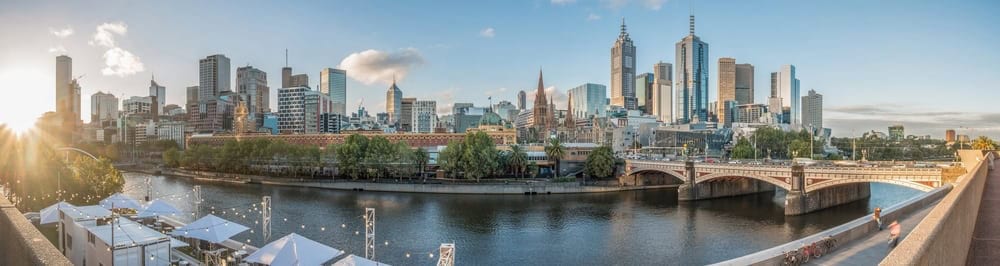
Rectilinear ultra-wide panoramas preserve straight lines while opening the scene dramatically—perfect for architecture and interiors.
Further Reading
For a step-by-step guide to perfect panoramic head setup (including entrance pupil calibration), this piece is concise and practical. Set up a panoramic head to shoot high-end 360 photos