
Why This Camera & Lens Are Great for Panoramas
Looking to learn how to shoot panorama with Canon EOS 5D Mark IV & Sigma 14-24mm f/2.8 DG DN Art? This guide explains the complete workflow for capturing high-quality 360° panoramas with a full-frame DSLR and an ultra‑wide rectilinear zoom, plus practical tips from field use. The Canon EOS 5D Mark IV is a 30.4MP full-frame DSLR (36×24mm sensor) renowned for balanced image quality: approx. 13.5 EV dynamic range at base ISO, robust color depth, and reliable ergonomics. Its pixel pitch is about 5.36 µm, which helps deliver clean files at ISO 100–800 and usable results up to ISO 1600–3200 when exposure is nailed—great for interior HDR and twilight scenes.
Important mount note: the Sigma 14–24mm f/2.8 DG DN Art is designed for mirrorless mounts (e.g., Sony E, L‑Mount) and is not natively compatible with the EF mount of the 5D Mark IV. If you are using a 5D Mark IV, choose the Sigma 14–24mm f/2.8 DG HSM Art for Canon EF (optically similar, rectilinear 114° diagonal FOV at 14mm). The guidance in this article applies to both versions in terms of framing, overlap, and technique. If you truly have the DG DN version, use it on a compatible mirrorless body, or reconsider the EF HSM version for this Canon DSLR. Mount compatibility aside, a 14–24mm rectilinear zoom is excellent for multi‑row panoramas: distortion is well-controlled compared to a fisheye, and edges remain more natural—ideal for real estate, architecture, and landscapes.
The 5D Mark IV’s Live View with Silent LV mode (electronic first curtain shutter) reduces vibration, and its dependable manual controls make locking exposure and white balance easy. Combined with a leveled tripod and a panoramic head aligned to the lens’s entrance pupil (nodal point), you’ll get clean stitches with minimal parallax errors.
Quick Setup Overview
- Camera: Canon EOS 5D Mark IV — Full Frame, 30.4MP, excellent color and DR at base ISO, solid high‑ISO up to ~1600 for critical work.
- Lens: Sigma 14–24mm f/2.8 DG DN Art (mirrorless) / DG HSM Art (Canon EF) — rectilinear ultra‑wide zoom; sharp across frame by f/5.6–f/8, some vignetting at 14mm f/2.8, minimal CA when stopped down.
- Estimated shots & overlap (full spherical 360×180):
- At 14mm: 8 shots per row × 3 rows (−45°, 0°, +45°) + 1–3 zenith + 1–3 nadir = ~26–30 images with 25–30% overlap.
- Speed setup at 14mm: 6 shots per row × 3 rows (+/−60°, 0°) + zenith + nadir = ~20–22 images (use 30–35% overlap).
- At 24mm: 10 per row × 3 rows + zenith + nadir = ~32–34 images (30–35% overlap recommended).
- Difficulty: Intermediate (easier with a calibrated panoramic head and click‑stops).
Planning & On-Site Preparation
Evaluate Shooting Environment
Before you set up, read the light. For exteriors, consider sun angle and wind; for interiors, note mixed lighting, reflective surfaces (glass, polished floors), and moving subjects (people, curtains, trees). If you must shoot through glass, place the lens hood as close to the glass as possible (1–2 cm) to reduce reflections and flare; shoot perpendicular to the glass to minimize double reflections. Avoid bright point sources near the frame edge at 14mm to reduce flare and coma.
Match Gear to Scene Goals
The 5D Mark IV’s dynamic range and RAW latitude pair well with a fast f/2.8 ultra‑wide for both interiors and landscapes. For indoor real estate, ISO 100–400 with HDR bracketing keeps windows and room detail intact. Outdoors at sunset, bracket or expose for highlights—this body recovers shadows cleanly at base ISO. Rectilinear 14–24mm reduces fisheye distortion, delivering straight lines—vital for architecture—but requires more frames than a fisheye 8–12mm. If you need fewer shots, consider a fisheye alternative; if you value straighter edges and easier verticals, stick with the 14–24mm.
Pre-shoot Checklist
- Charge batteries; carry spares. Format fast UHS‑I/CF cards. Clean lens front element and view sensor for dust.
- Level your tripod; pre‑calibrate your pano head for the lens’s entrance pupil at 14mm and 24mm.
- Safety: assess wind (especially on rooftops or poles), add a safety tether, and keep bystanders away from legs and weights.
- Backup workflow: after one full pass, shoot a second safety pass if time permits—especially for critical jobs or windy scenes.
Essential Gear & Setup
Core Gear
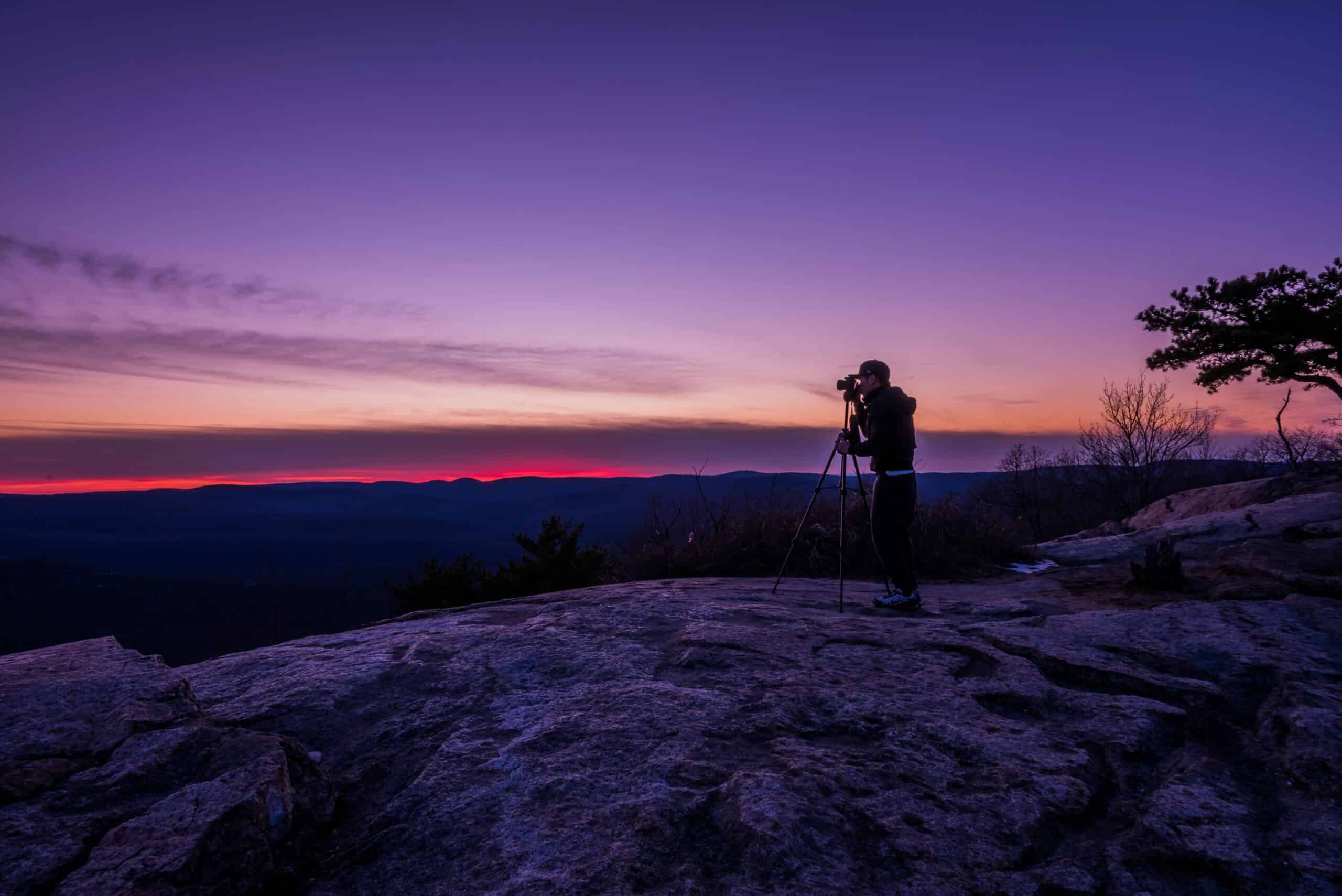
- Panoramic head: Allows rotation around the lens entrance pupil (nodal point), eliminating parallax when foreground and background shift relative to each other. Use a multi‑row head for full spheres with rectilinear UWA lenses.
- Stable tripod with leveling base: Speeds up leveling and keeps your horizon consistent across rows.
- Remote trigger/app: Use a cable release or the Canon app. On the 5D Mark IV, Live View + Silent LV Mode 1 (EFCS) reduces vibration.
Optional Add-ons
- Pole or car mount: Ensure a safety line; account for wind load and vibration. Slow your rotation and increase overlap.
- Lighting aids: Small LED panels or bounced flash can lift shadows in deep interiors (avoid mixed color temps if possible).
- Weather protection: Rain covers and lens cloths; the 5D Mark IV has weather sealing but wipe off droplets between shots.
Step-by-Step Shooting Guide
Standard Static Scenes
- Level the tripod and align nodal point: Slide the camera forward/backward on the pano head until foreground and background objects remain aligned when you pan. Mark the rail positions for 14mm and 24mm for repeatability.
- Manual exposure and locked white balance: Set M mode, choose a constant WB (Daylight/Tungsten/Custom). This prevents exposure flicker and color shifts that cause seams.
- Capture with tested overlap: For 14mm, shoot 8 images per row at −45°, 0°, and +45° (every 45° around). Add 1–3 shots for the zenith and 1–3 for the nadir. Use a remote and 2‑sec timer if needed.
- Nadir capture: After the main set, tilt down and shoot the ground for tripod patching. If you can, move the tripod aside and take a handheld nadir from the same viewpoint for easier patching later.

HDR / High Dynamic Range Interiors
- Bracket ±2 EV (3–5 frames): Many interiors benefit from 5D Mark IV AEB set to 5 frames at ±2 EV. At minimum, do −2/0/+2 EV. Keep WB locked.
- Stay at ISO 100–200: Use tripod‑friendly shutter speeds. The 5D Mark IV’s base ISO delivers the cleanest shadows in HDR merges.
- Maintain the same bracket sequence across the entire pano: Consistent exposure sets make stitching and HDR merging predictable.
Low-Light / Night Scenes
- Use longer exposure and a stable mount: f/4–f/5.6, 1/10–1/30s on tripod is fine. Enable Live View + Silent LV Mode to minimize shake.
- ISO guidance: Aim for ISO 100–400 on tripod. If needed, ISO 800–1600 is workable with careful exposure; expose to protect highlights and reduce shadow push.
- Turn off IS/OS if present when on a tripod to avoid micro-blur. The 5D Mark IV has no IBIS, so stabilization is lens‑dependent.
Crowded Events
- Two passes: First for composition and coverage, second for clean plates when people move out of key areas.
- Mask in post: Use masks in PTGui/Photoshop to blend frames and remove ghosting.
Special Setups (Pole / Car / Drone)
- Secure gear: Use a rated clamp/mount and a safety tether. Keep bystanders clear. Check fasteners before each rotation.
- Mitigate vibration: Shoot at faster shutter speeds, add overlap (35–40%), and consider taking two full passes.
Recommended Settings & Pro Tips
Exposure & Focus
| Scenario | Aperture | Shutter | ISO | Notes |
|---|---|---|---|---|
| Daylight outdoor | f/8–f/11 | 1/100–1/250 | 100–200 | Lock WB (Daylight); profile correct vignetting later |
| Low light/night | f/4–f/5.6 | 1/10–1/60 (tripod) | 100–800 | Live View + Silent LV Mode; remote trigger |
| Interior HDR | f/8 | Bracket ±2 EV (3–5 frames) | 100–400 | Keep brackets consistent across the pano |
| Action / moving subjects | f/5.6–f/8 | 1/200+ | 400–800 | Shorten shutter to freeze people/cars; do a second pass |
Critical Tips
- Manual focus at hyperfocal: At 14mm f/8 on full frame, hyperfocal is roughly 0.8–0.9 m. Focus there, then switch to MF and tape the ring.
- Nodal point calibration: Start with the camera plate such that the entrance pupil is about 9–10 cm forward of the sensor mark at 14mm and ~7–8 cm at 24mm (approximate starting values; verify for your copy). Mark your rails for quick setup.
- White balance lock: Choose one WB for the entire set to avoid visible seams; for mixed lighting, shoot a custom WB or correct globally later.
- RAW over JPEG: The 5D Mark IV’s CR2/CR3 files hold more highlight and shadow detail—vital for HDR merges and difficult stitches.
- Vibration control: Use Live View with Silent LV Mode 1 (EFCS) and a 2‑sec timer or remote to minimize mirror/shutter shock.
Stitching & Post-Processing
Software Workflow
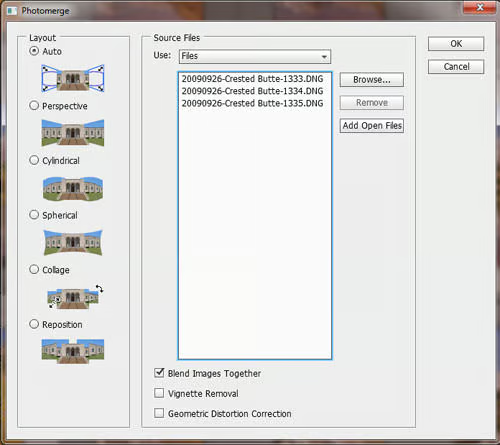
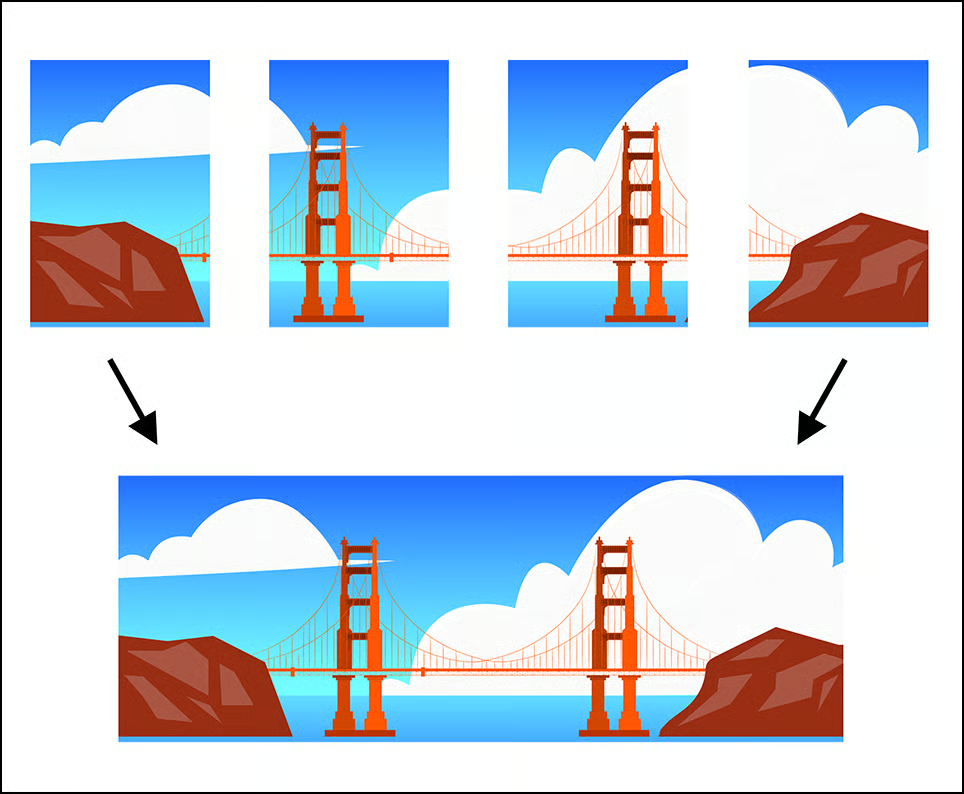
For best results, use specialized stitching tools. PTGui is a gold standard for complex multi‑row panoramas, with robust control point generation, HDR merge, masking, and Viewpoint Correction for nadir patching. Hugin is an excellent open‑source alternative. Lightroom/Photoshop can stitch simpler sets but struggle with complex multi‑row or near‑foreground scenes. With rectilinear 14–24mm, expect to shoot more frames than a fisheye but enjoy straighter lines and more predictable geometry. For overlap: 25–30% is typical for ultra‑wide lenses; at 24mm, 30–35% helps control points at edges.
Once stitched, export an equirectangular 2:1 image (e.g., 12,000×6,000 px for 72MP) for VR platforms or a high‑quality TIFF for further editing. If you intend to upload to VR viewers, ensure correct metadata and horizon leveling.
Further reading: a practical overview of panoramic focal lengths and stitching considerations is available at B&H Explora, and PTGui’s strengths are reviewed by Fstoppers for advanced workflows. Panoramas and focal lengths explained. Why PTGui excels for complex panoramas.
Cleanup & Enhancement
- Tripod/nadir patch: Use PTGui Viewpoint Correction or clone/heal in Photoshop. Shoot a handheld nadir plate for best results.
- Color and contrast: Apply lens profiles, correct vignetting, then do global color. Avoid per‑frame corrections that induce seams.
- Noise reduction: Apply modest NR to shadow brackets; avoid smearing detail.
- Horizon and leveling: Use pitch/roll/yaw controls in PTGui/Hugin to level the horizon and set north.
- Export: Save a 16‑bit TIFF master and a JPEG for delivery. For VR, export equirectangular JPEG at 8–12K width.
Industry tutorials on panoramic head setup and 360 photo pipelines can be found at Oculus Creator and 360Rumors. Panoramic head setup for high‑end 360 photos. Panoramic head fundamentals.
Disclaimer: Always consult the latest documentation for your software version for features and menus that may have changed.
Useful Tools & Resources
Software
- PTGui (Windows/macOS) — advanced control, HDR merge, masking, viewpoint correction
- Hugin — open-source stitching with strong control point tools
- Lightroom / Photoshop — RAW development and finishing
- AI tools — content-aware fill or generative tools for tripod removal
Hardware
- Panoramic heads — Nodal Ninja, Leofoto, or similar multi‑row systems with click‑stops
- Carbon fiber tripods — stable but light for field work
- Leveling bases — rapid and precise setup
- Wireless remote shutters — reduce vibration and speed up capture
- Pole extensions / car mounts — for elevated or vehicle‑based shots (use tethers and check wind)
Disclaimer: Brand names for reference only. Verify specs and compatibility with your camera and lens.
Common Mistakes & How to Avoid Them
- Parallax error: Always align the entrance pupil; check foreground/background alignment while panning.
- Exposure flicker: Use manual exposure and a fixed white balance for all frames.
- Insufficient overlap: Aim for 25–30% at 14mm and 30–35% at 24mm, especially in low‑detail scenes.
- Tripod shadows and missing nadir: Shoot dedicated nadir plates and plan sun position to avoid harsh tripod shadows.
- Noise and color shifts at night: Keep ISO low on tripod, expose carefully, and avoid mixed WB changes between frames.
- Lens flare and ghosting: Shield the front element with your hand or hood shadow; avoid bright lights just outside the frame.
Real-World Scenarios & Field Advice
Indoor Real Estate (Windows + Lamps)
Use ISO 100–200, f/8, and 5‑frame ±2 EV bracketing. Keep the camera height consistent (about 1.2–1.4 m) for natural perspective. Shoot additional frames for mirrors and reflective surfaces to mask yourself and the tripod later.
Outdoor Sunset Landscape
Meter for highlights at ISO 100 and bracket if necessary. At 14mm, use 8×3 frames so the sky gradient stitches smoothly. If wind moves foliage, capture a second pass for the foliage region to blend with minimal ghosting.
Crowded Event
Use 1/200s at f/5.6–f/8, ISO 400–800. Do two passes: one for the background plates, one timed for gaps in moving crowds. Mask moving people in post for a cleaner composite.
Rooftop or Pole Shooting
Increase overlap to 35–40% and shoot two full rotations. Use a safety tether, keep the setup below the roof edge to reduce wind buffeting, and watch for vibrations. Heavier poles require guy wires in strong winds.
Frequently Asked Questions
- Can I shoot handheld panoramas with the Canon EOS 5D Mark IV?
Yes, for simple cylindrical or single‑row panos. However, for 360×180 spheres—especially with foreground elements—use a tripod and a panoramic head to eliminate parallax. Handheld multi‑row sets often require more masking in post and may fail in tight interiors.
- Is the Sigma 14–24mm f/2.8 DG DN Art wide enough for single‑row 360?
No. A single row at 14mm rectilinear won’t cover zenith and nadir. Plan on 2–3 rows plus dedicated zenith/nadir shots. If you want fewer frames, consider a fisheye (e.g., 8–12mm) and a single‑row technique.
- Do I need HDR for interiors with bright windows?
Usually yes. The 5D Mark IV has good dynamic range, but windows are often 6–10 stops brighter than interiors. Bracket ±2 EV (3–5 frames) to preserve both exterior views and interior detail, then merge HDR during stitching.
- How do I avoid parallax issues?
Calibrate the entrance pupil for your lens on a panoramic head. Start with the lens about 9–10 cm forward of the sensor mark at 14mm (approximate), test with a near object and distant background, and fine‑tune until there is no relative shift while panning.
- What ISO range is safe on the 5D Mark IV in low light?
On tripod, keep ISO 100–400 for the cleanest files. ISO 800–1600 is workable when needed; expose carefully to minimize shadow lifting. For HDR brackets, stay at ISO 100–200 if you can.
- Can I set up Custom Shooting Modes (C1/C2) for panorama work?
Yes. Save a panorama preset with Manual exposure, fixed WB, Live View + Silent LV Mode, MF, and your preferred bracketing. This speeds up setup and keeps settings consistent across shoots.
- Does the DG DN version fit my 5D Mark IV?
No, DG DN is for mirrorless mounts. For the 5D Mark IV, use the Sigma 14–24mm f/2.8 DG HSM Art for Canon EF. There is no practical adapter from DN to EF.
- What tripod head should I choose for this setup?
A multi‑row panoramic head with precise fore‑aft and lateral adjustments (e.g., Nodal Ninja or Leofoto) and a leveling base. Click‑stops help maintain consistent overlap at each row.
Deeper Learning & Standards
Want a broader perspective on gear choices and virtual‑tour pipelines? See this DSLR virtual tour camera and lens guide for context on fisheye vs rectilinear trade‑offs. DSLR virtual tour camera & lens guide.
If you’re building 360 images for VR platforms, Meta’s workflow notes on DSLR 360 shooting and stitching provide a helpful checklist from capture to export. Using a DSLR to shoot and stitch a 360 photo.
Safety, Reliability & Backup Workflow
Always tether gear on rooftops, poles, or near crowds. In wind, shorten center column, hang a weight from the tripod, and use a safety strap. Keep a microfiber cloth handy for the bulbous 14–24mm front element; one fingerprint can ruin a row. For reliability, shoot a backup rotation—especially if pedestrians or clouds change the scene during capture. Back at your workstation, maintain a simple folder structure: 01_RAW, 02_HDR (if used), 03_Stitch, 04_Master_TIFF, 05_JPEG_Delivery. This safeguards your workflow and makes revisions easy.
