Why This Camera & Lens Are Great for Panoramas
If you’re wondering how to shoot panorama with Canon EOS 5D Mark IV & Pentax DA 10-17mm f/3.5-4.5 ED Fisheye, you’re pairing a robust full-frame DSLR with a compact, ultra‑wide fisheye that can dramatically cut your shot count for 360° capture. The 5D Mark IV’s 30.4 MP full-frame sensor (36 × 24 mm, ~5.36 μm pixel pitch) delivers strong dynamic range (~13.5 EV at base ISO), excellent color, and dependable weather-sealed performance. The Pentax DA 10–17 is a diagonal fisheye designed for APS‑C, but when adapted to EF mount it produces a circular/strongly vignetted image on full frame that is ideal for quick spherical panoramas (fewer images, easier stitching), especially if you embrace the circular coverage in your stitcher.
Key considerations: this lens is Pentax K-mount and requires a K-to-EF adapter to fit the 5D Mark IV. Most adapters are purely mechanical; you’ll focus manually and manage aperture via an adapter with a lever or preset ring. Because the lens is APS-C, expect heavy vignetting on full frame—useful for “circular fisheye” workflows. Many pano shooters even shave the built‑in hood (at your own risk) to widen usable coverage. Autofocus is not essential for 360 photos; fisheyes have immense depth of field, and manual focus at the hyperfocal distance is the norm for reliable stitches.
Quick Setup Overview
- Camera: Canon EOS 5D Mark IV — Full-frame 30.4 MP CMOS, ~13.5 EV DR at ISO 100; clean ISO 100–1600 (3200 if needed); Dual Pixel AF for easy live view focusing; no IBIS (use tripod).
- Lens: Pentax DA 10–17mm f/3.5–4.5 ED Fisheye — K-mount APS‑C diagonal fisheye; strong barrel distortion by design; best sharpness typically f/5.6–f/8; moderate CA that corrects well in RAW.
- Adapter: K-to-EF mechanical adapter with aperture control lever or preset ring recommended; check mirror clearance at 10 mm; always test carefully.
- Estimated shots & overlap (field-tested):
- At 10 mm on FF (circular fisheye coverage): 3–4 shots around at 0° pitch (30–35% overlap) + zenith + nadir. Safe set: 4-around + Z + N.
- At ~14–17 mm on FF (heavy vignette but larger image circle): 6 shots around + Z + N; increase overlap to ~35–40% for margin.
- Difficulty: Moderate — simple capture once nodal point is calibrated; extra care required for adapting the lens and managing aperture.
Planning & On-Site Preparation
Evaluate Shooting Environment
Scan for reflective surfaces (glass, polished floors), moving elements (trees, people, traffic), and direct light sources that can flare a fisheye. If shooting behind glass, place the lens as close as possible (1–2 cm) to minimize reflections and ghosting; use a black cloth hood if needed. Consider light direction: with a fisheye, the sun easily enters the frame. If the sun is present, plan a zenith shot where you block flare with your body and blend later.
Match Gear to Scene Goals
The 5D Mark IV’s dynamic range handles mixed lighting better than older DSLRs; paired with bracketing, it’s excellent for interiors with bright windows. For indoor real estate, stick to ISO 100–400; outdoors at sunset, ISO 100–200 with longer shutters is fine. The Pentax 10–17 fisheye reduces the number of shots needed for a 360 photo: fewer frames means fewer stitch seams and faster capture—great in wind, crowds, or pole-mounted work. The trade‑off is pronounced fisheye distortion and a circular image on full frame that requires defish or spherical projection in stitching software.
Pre-shoot Checklist
- Power & storage: full battery, spare batteries, and high-speed cards. The 5D4’s RAW files add up quickly when bracketing.
- Optics clean: fisheyes amplify smudges; clean the front element and check the sensor for dust (especially for sky zenith shots).
- Tripod & head: level the tripod; verify panoramic head calibration (nodal point marks). Bring an L‑bracket or rail system.
- Adapter & aperture control: practice setting the aperture with your adapter; confirm repeatability and EXIF notes since metadata won’t auto‑log.
- Safety: if on rooftops, windy areas, or using a pole/car mount, tether the rig; check local regulations; wear a harness where required.
- Backup workflow: always shoot an extra safety pass around. If people or cars move, a second pass saves your stitch.
Essential Gear & Setup
Core Gear
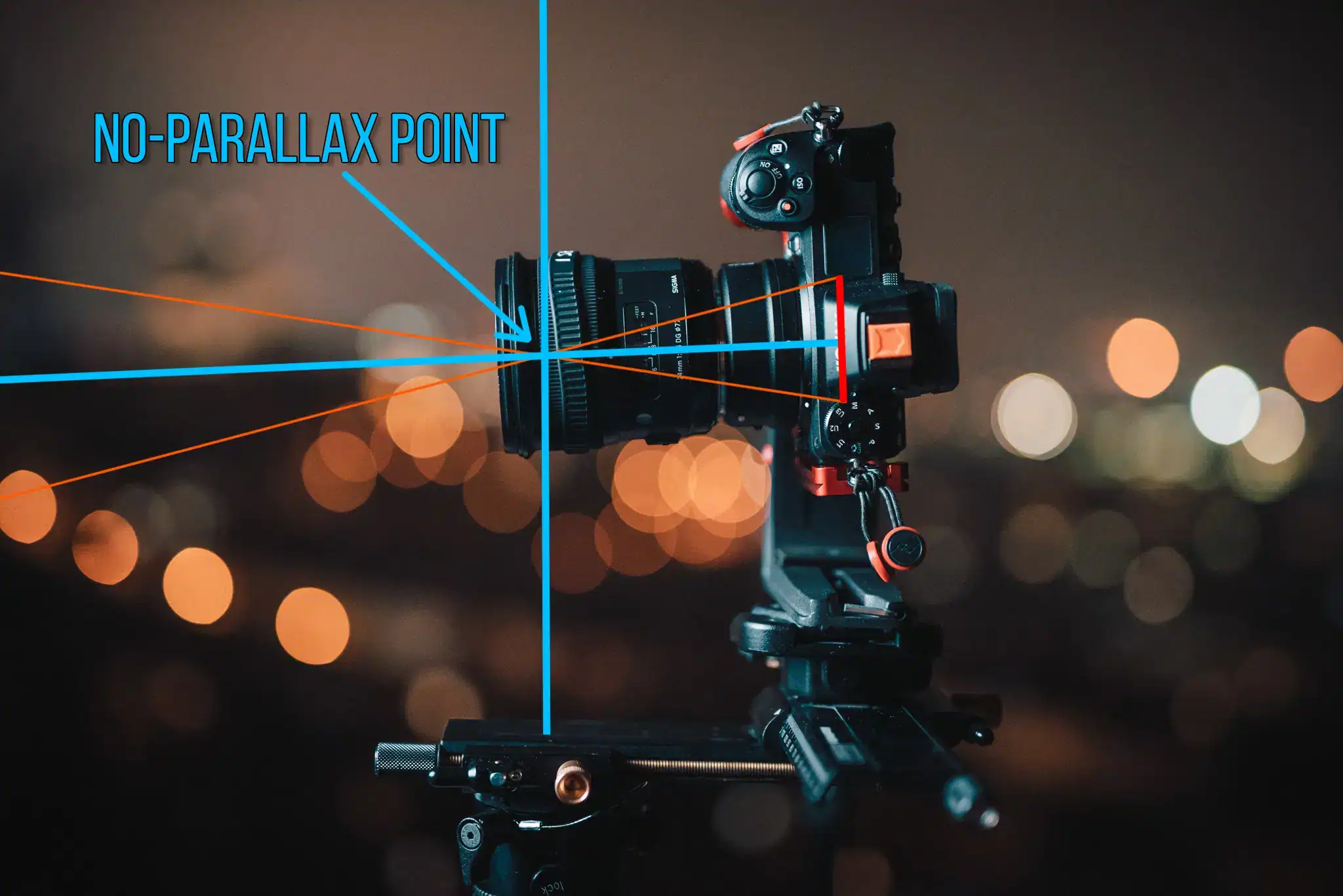
- Panoramic head: Align the lens’s entrance pupil (often called “nodal point”) over the yaw axis to eliminate parallax between foreground and background. This is non‑negotiable for clean stitches with near objects.
- Stable tripod with leveling base: A leveling base speeds setup and keeps your horizon straight, minimizing post corrections.
- Remote trigger or app: Use Canon’s remote or the camera’s self-timer. In Live View Silent Mode 1, the 5D4 minimizes vibrations.
Optional Add-ons
- Pole or car mount: Great for elevated or moving perspectives. Use safety tethers, guy lines, and avoid high wind; rotate slower to reduce motion blur.
- Lighting aids: Small LED panels or bounced flash for interior shadows. Keep lighting fixed throughout the set to avoid exposure shifts.
- Weather gear: Rain covers, silica gel, and gaffer tape for unforeseen conditions.
Step-by-Step Shooting Guide
Standard Static Scenes
- Level and calibrate: Level the tripod, set the panoramic head to your saved marks for the 5D4 + DA 10–17 (via adapter). Check by rotating left/right while sighting two vertical edges at different distances—if they don’t shift relative to each other, parallax is under control.
- Manual exposure and WB: Set Manual mode. Typical daylight start: f/8, ISO 100–200, 1/100–1/250 s. Lock white balance (Daylight, Cloudy, Tungsten, or a Kelvin value). Disable Auto Lighting Optimizer and any auto dynamic features.
- Focus: Switch to Live View, magnify 10×, and manual focus slightly beyond the hyperfocal. At 10 mm and f/8 on full frame, hyperfocal is roughly ~0.4–0.5 m; focusing there yields near‑to‑infinity sharpness. Tape the focus ring if needed.
- Capture sequence:
- At 10 mm (circular coverage): shoot 4 around at 0° pitch, 90° increments; add a zenith (+90°) and a nadir (−90°). For extra safety in complex scenes, do 6 around at 60° increments.
- At 14–17 mm: 6 around at ~60°, plus zenith and nadir. Increase overlap to ~35–40% if objects are close.
- Nadir clean-up: After the first set, tilt the head slightly off center or move the tripod between exposures to reveal ground area, enabling easy tripod removal in post.
HDR / High Dynamic Range Interiors
- Bracket exposures: Use the 5D4’s AEB for 3 to 5 frames at ±2 EV (or ±3 EV for extremely bright windows). Keep aperture constant; vary shutter speed.
- Lock WB and Picture Style: Consistency prevents color shifts. Shoot RAW to maximize dynamic range and flexible highlight recovery.
- Order and rhythm: Always rotate in the same direction. If you do “HDR then rotate,” repeat consistently for every yaw position to simplify batch stitching.
Low-Light / Night Scenes
- Stable mount & timing: Use a sturdy tripod. With no IBIS in the 5D4, stability is crucial. Expect 1–10 s exposures; use Live View Silent Mode and a remote.
- ISO guidance: Aim for ISO 100–400 if you have time; ISO 800–1600 is acceptable with noise reduction. Try not to exceed ISO 3200 unless motion forces you to.
- Watch light pollution and flare: Shield streetlights with your body for one frame if needed and mask later.
Crowded Events
- Two-pass method: Shoot a fast pass for coverage, then a second pass waiting for gaps to minimize ghosting. This provides “clean plates” for masking.
- Higher shutter speed: Aim for 1/200 s or faster at f/5.6–f/8; bump ISO to 400–800 if necessary to freeze motion.
Special Setups (Pole / Car / Drone)
- Pole shooting: Keep the rig as light as possible. Tether the camera, pre‑focus and lock everything. Rotate slowly to reduce sway and motion blur.
- Car-mounted: Use suction cups rated for your load, plus secondary safety lines. Stop the car before every frame set; avoid moving capture unless you’re doing hyperlapse/street scenes with deliberate motion blur.
Recommended Settings & Pro Tips
Exposure & Focus
| Scenario | Aperture | Shutter | ISO | Notes |
|---|---|---|---|---|
| Daylight outdoor | f/8–f/11 | 1/100–1/250 | 100–200 | Lock WB (Daylight/Cloudy). Use Live View Silent Mode 1. |
| Low light/night | f/4–f/5.6 | 1/30–8 s | 100–800 (1600 if needed) | Tripod, remote, mirror-sparing Live View. Long exposure NR optional. |
| Interior HDR | f/8 | Bracket ±2 EV | 100–400 | Balance windows & lamps; keep WB fixed and consistent order. |
| Action / moving subjects | f/5.6–f/8 | 1/200–1/500 | 400–800 | Freeze people, shoot a second pass for clean plates. |
Critical Tips
- Manual focus near hyperfocal: At 10 mm and f/8 on FF, ~0.4–0.5 m sets you from ~0.2 m to infinity. Confirm in Live View.
- Nodal point calibration: Use a rail; align the entrance pupil over the rotation axis. Mark your settings on the rail so you can repeat them quickly.
- White balance lock: Avoid AWB shifts that cause visible seams. Use a fixed Kelvin or a specific preset.
- RAW shooting: Always shoot RAW for maximum dynamic range and easier CA/fringe correction on a fisheye.
- Stabilization: The 5D Mark IV body has no IBIS; if you ever adapt an IS lens, turn IS off on a tripod to prevent drift.
- Aperture control with adapter: Practice stopping down consistently; some adapters have detents, others don’t. Keep notes for repeatability.
Stitching & Post-Processing
Software Workflow
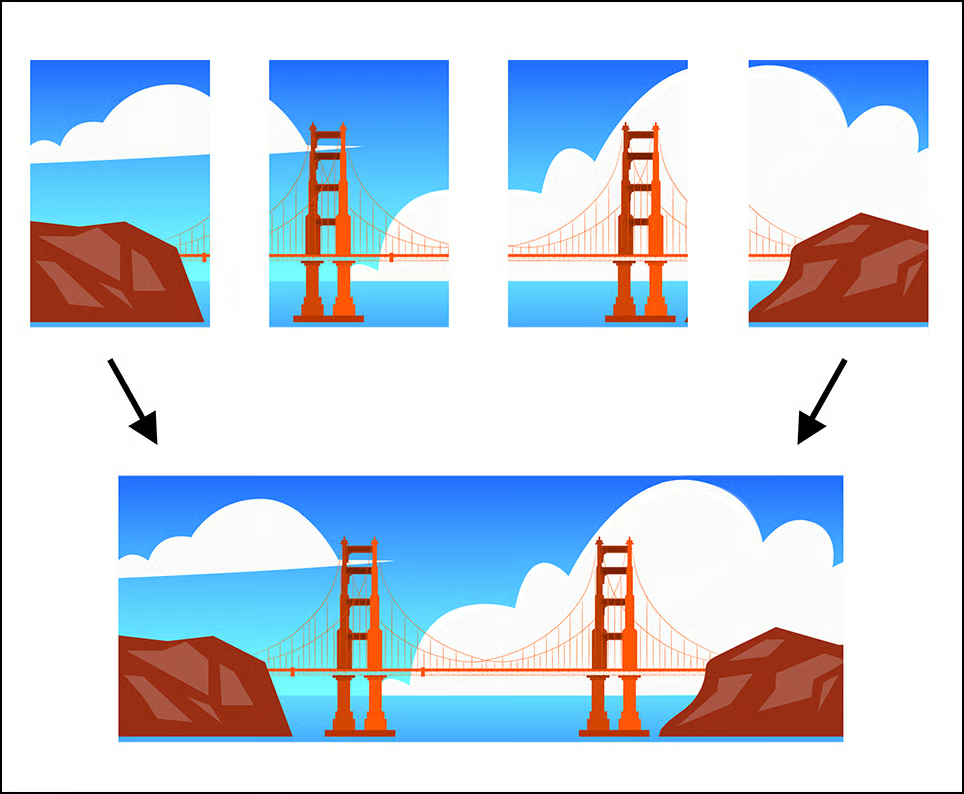
PTGui and Hugin handle fisheye projection exceptionally well. With the DA 10–17 on a full-frame 5D Mark IV, choose Lens Type = Fisheye in your stitcher, and estimate FOV (often ~180° at the working end for circularish coverage). Circular fisheyes typically need ~30–35% overlap; rectilinear wides can work with 20–25% but require more frames. If HDR, either pre-merge brackets per angle or use PTGui’s built‑in HDR fusion. PTGui’s lens parameter optimization will refine FOV and distortion for tight stitches. After stitching to equirectangular, finish color and sharpening in Lightroom/Photoshop and export for web/VR.
For a detailed tool overview, see a practical PTGui review explaining strengths for complex panoramas. Fstoppers: PTGui for panoramic stitching
Cleanup & Enhancement
- Nadir patch: Use content-aware fill, AI tools, or a photographed floor patch. Many pano editors let you export a down‑view patch for easy clone/heal work.
- Color consistency: Sync white balance across all frames. Apply gentle noise reduction for ISO 800–1600 night work.
- Leveling: Use your stitcher’s horizon tools to set straight horizons and correct roll/yaw/pitch.
- Export: Save a 16‑bit TIFF master. For VR, export equirectangular JPEG at 12000×6000 or 8000×4000 depending on needs. Check platform specs (Meta, Google, etc.).
For in‑depth, production‑grade DSLR/360 workflows, the Oculus Creator guide is a solid reference. Using a DSLR to shoot and stitch a 360 photo
Useful Tools & Resources
Software
- PTGui for professional fisheye stitching and HDR fusion.
- Hugin (open source) for flexible control points and projections.
- Lightroom / Photoshop for RAW development and cleanup.
- AI tripod removal tools for fast nadir patches.
Hardware
- Panoramic heads (e.g., Nodal Ninja, Leofoto) with fore‑aft rails for entrance pupil alignment.
- Carbon fiber tripods with leveling bases for fast setup.
- Wireless remote shutters or intervalometers.
- Pole extensions and car mounts with safety tethers.
Want a deeper look at panoramic head setup? This tutorial is a great primer. Panoramic head setup and alignment
Video: A clear demonstration of setting up a panoramic head and shooting a 360 set.
Field Examples & Case Studies
Indoor Real Estate (Bright Windows)
Use tripod + panoramic head. Start at ISO 100–200, f/8, bracket ±2 EV (3–5 frames). Shoot 4-around + Z + N at 10 mm to minimize frames. Keep lights either all on or all off to reduce color mismatches. In PTGui, enable HDR fusion and set a fixed white balance; patch the nadir with a floor tile shot afterward.
Outdoor Sunset (High Contrast)
At sunset, meter for the sky, then bracket to protect shadows. ISO 100, f/8, shutter varies; aim 1/60–1/125 for moving leaves. If wind shakes trees, capture a “sky set” and a “ground set” and mask later. Avoid pointing the fisheye directly at the sun for every frame—time your rotation for minimal flare and use your body as a flag in one shot if needed.
Event Crowds (People Moving)
Shoot at f/5.6–f/8, 1/200+, ISO 400–800. Do two passes: a fast pass for base coverage and a second pass when people clear key angles. Use masks to replace ghosted areas with cleaner frames. If someone walks close to the lens (fisheye exaggerates proximity), wait for a gap to avoid parallax issues.
Rooftop / Pole Shooting (Wind & Safety)
Elevated shots are dramatic but risky. Keep the pole vertical, rotate slowly, and add overlap (6-around) to hedge against movement. Use a safety lanyard. In post, expect to level more aggressively and potentially warp edges slightly to align frames.
For more foundational techniques from the wider panoramic community, this Q&A thread remains handy. Best techniques to take 360 panoramas
Safety, Limitations & Honest Notes About This Combo
- Adapter reality: You must use a K‑to‑EF adapter. Most adapters are mechanical; aperture control may be via a lever/preset ring. Test and practice to ensure consistent f‑stops.
- Mirror clearance: At the widest focal lengths, verify that the rear element does not interfere with the 5D4 mirror. Test carefully at 10 mm; use Live View and avoid reckless dry firing at ultra‑short distances.
- Vignetting on FF: The image circle is small (APS‑C lens on FF). Embrace circular fisheye workflows; cropping and defishing are managed in stitchers like PTGui/Hugin.
- Lens hood shaving: Some shooters shave the built‑in hood to gain coverage on FF. This is irreversible and at your own risk; verify before modifying any lens.
- Weather & wind: Fisheyes see everything—including gust-induced motion. Anchor your tripod, use a weight bag, and keep hands off during exposures.
- Data safety: Shoot an extra rotation set. Back up cards onsite if possible. Keep consistent naming conventions for easy batch processing.
Common Mistakes & How to Avoid Them
- Parallax error → Use a panoramic head and align the entrance pupil; mark your rails for repeat setups.
- Exposure flicker → Manual mode, fixed WB, consistent bracketing. Avoid auto ISO and auto picture styles.
- Tripod shadows in the nadir → Shoot a dedicated nadir patch or use an offset shot for clean cloning.
- Ghosting from moving subjects → Capture a second pass and mask in post. Increase shutter speed if possible.
- Night noise → Keep ISO low when you can; favor longer shutters on a solid tripod. Use gentle noise reduction.
Frequently Asked Questions
- Can I shoot handheld panoramas with the Canon EOS 5D Mark IV?
Yes, but it’s risky with near objects. Handheld works for distant landscapes; use very high overlap (50%+), fast shutter speeds, and a single row. For reliable 360° with close foregrounds, a pano head is strongly recommended.
- Is the Pentax DA 10–17mm wide enough for single-row 360 on full frame?
As an APS‑C fisheye on FF, it produces a circular/strongly vignetted image at the wide end. That’s actually useful for 360: 3–4 shots around plus zenith and nadir can cover the sphere. If you zoom toward 17 mm, expect to need 6-around + Z + N.
- Do I need HDR for interiors with bright windows?
Often yes. The 5D4 has good dynamic range, but windows can be 6–10 stops brighter than interiors. Bracket ±2 EV (3–5 exposures) so you can retain window detail and clean shadows without noise.
- How do I avoid parallax issues with this adapted lens?
Mount on a panoramic head with fore‑aft and lateral adjustment. Calibrate the entrance pupil by aligning near/far edges and rotating—no relative shift means you’re set. Save rail marks for quick repeatability.
- What ISO range is safe on the 5D Mark IV in low light?
For tripod work, ISO 100–400 is ideal; 800–1600 remains very usable with light noise reduction. 3200 is workable if you must freeze motion; expect more cleanup in post.
Bonus Pro Tips For Faster, Cleaner 360s
- Create custom modes: Save a pano setup (Manual exposure, fixed WB, Live View Silent Mode, 2 s timer, RAW) to C1 or C2 so you can recall it instantly.
- Use consistent rotation increments: Mark your rotator at 60° or 90° stops depending on shot count. Consistency simplifies post.
- Lens data in stitching: Since EXIF won’t record the adapted lens, tell PTGui/Hugin the lens type (fisheye) and let it optimize FOV. Save this as a template.
- Batch your HDR: If your scenes are similar, pre‑merge brackets per yaw position for speed, or use PTGui’s built‑in HDR to keep everything aligned.
- Learn from standards: Industry practices around pano heads and 360 capture save time and headaches. How to set up a panoramic head (Oculus Creator)