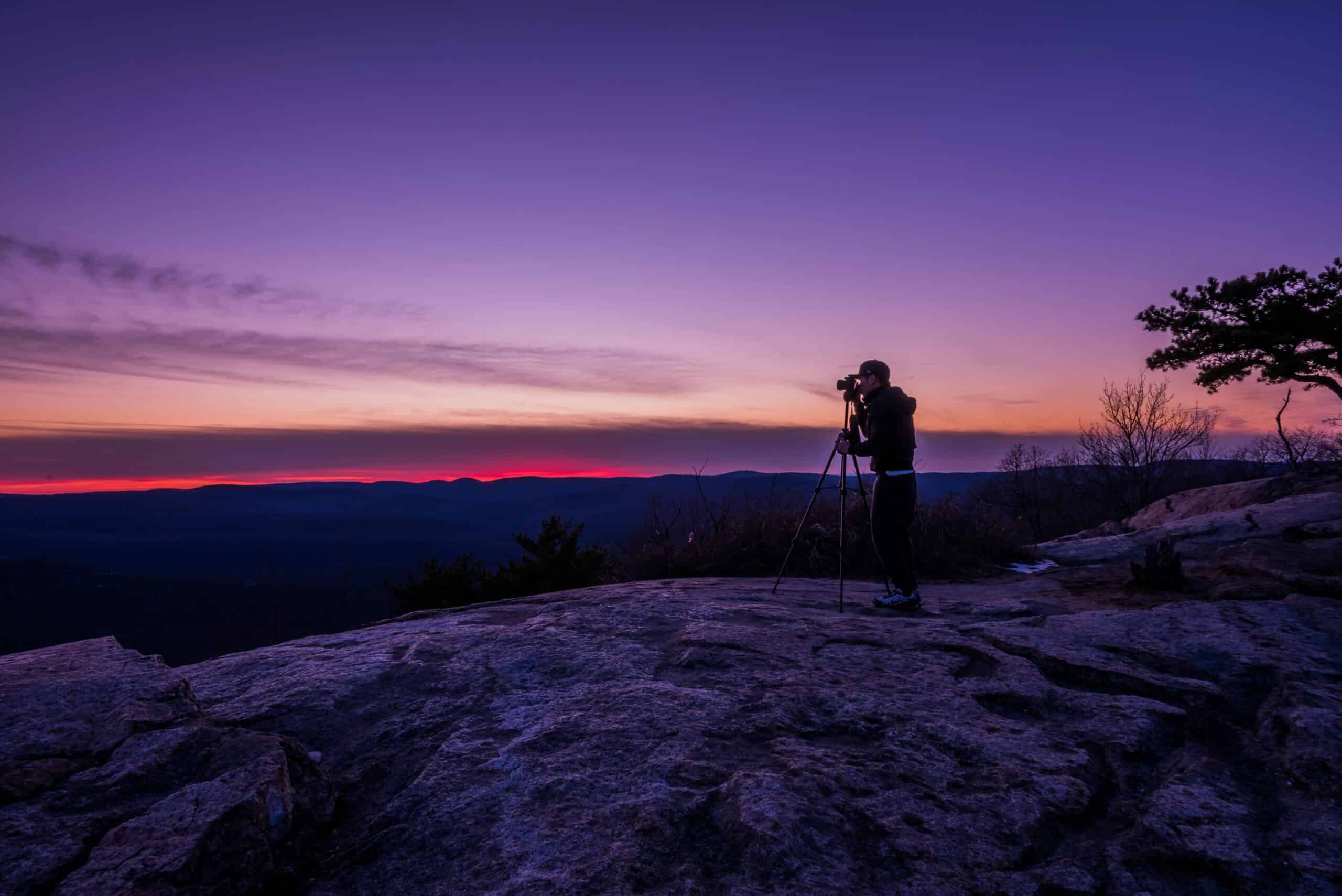
Why This Camera & Lens Are Great for Panoramas
The Canon EOS 5D Mark IV is a proven full-frame DSLR with a 30.4MP sensor, excellent color science, and robust ergonomics—an ideal backbone for high-resolution 360 photos and gigapixel panoramas. The Nikon Z 20mm f/1.8 S is a modern rectilinear prime known for edge-to-edge sharpness, low coma, and high contrast, making it a stellar wide-angle choice for nightscapes, interiors, and architectural work where straight lines matter.
Important compatibility note: the Nikon Z 20mm f/1.8 S is a Nikon Z-mount lens. There is no practical adapter to mount Z lenses on Canon EF bodies (the Z mount’s much shorter flange focal distance and fully electronic aperture/focus control prevent a functional EF adapter). If your goal is specifically how to shoot panorama with Canon EOS 5D Mark IV & Nikon Z 20mm f/1.8 S, you have two workable paths:
- Use the Canon EOS 5D Mark IV with a functionally equivalent EF-mount 20mm rectilinear lens (e.g., Canon EF 20mm f/2.8 USM, Sigma 20mm f/1.4 Art, Tamron/Samyang 20mm options). The shooting method, overlap, and nodal alignment steps in this guide apply directly to any 20mm rectilinear prime on full frame.
- Or use the Nikon Z 20mm f/1.8 S on a Nikon Z body for capture, then follow the same pano principles and stitching workflow shown here.
For clarity and to be maximally helpful, the settings and field techniques below are described for the 5D Mark IV with a 20mm rectilinear prime on full frame, which matches the field of view and pano method you’d use with the Nikon Z 20mm as well.
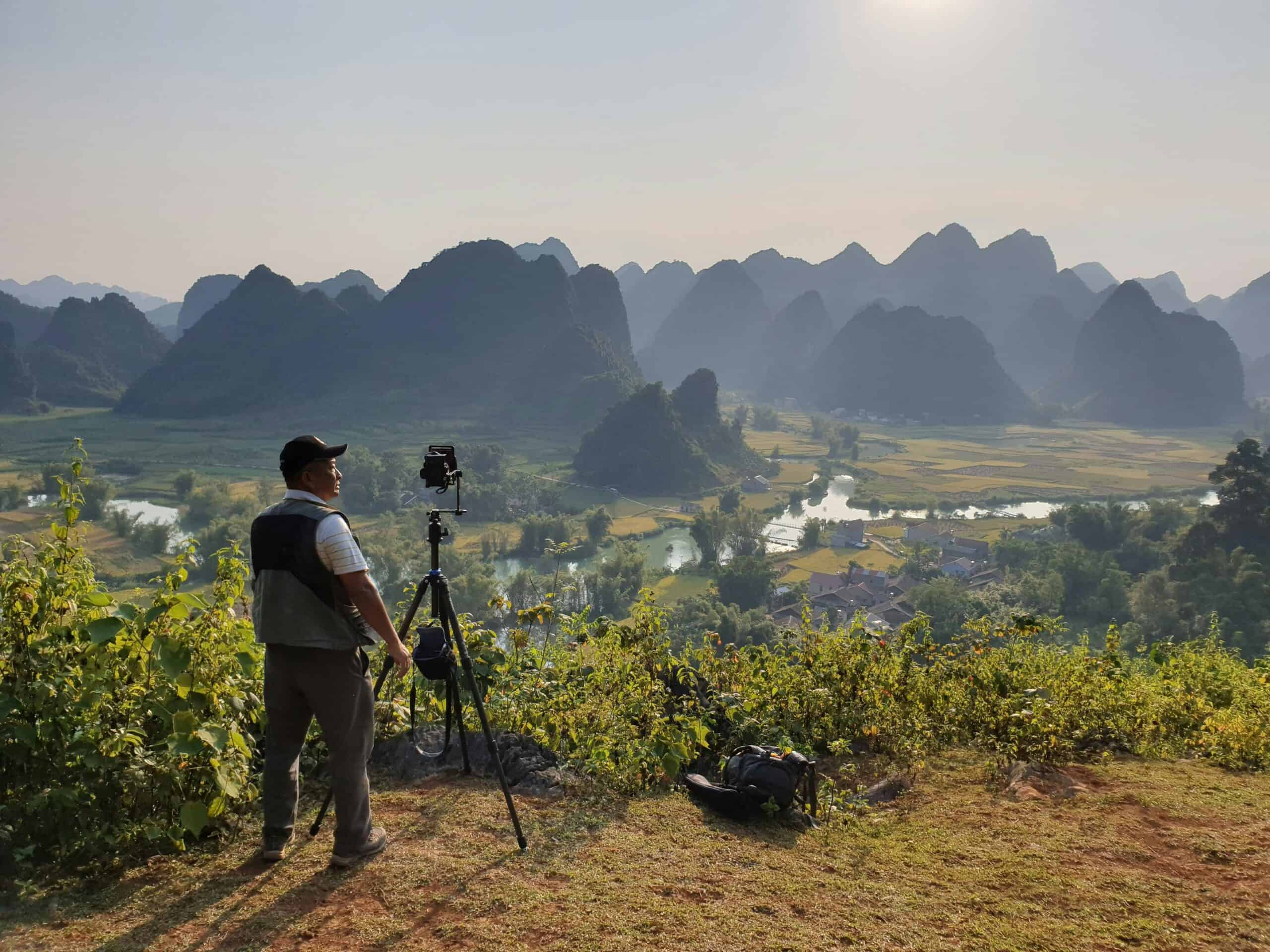
Quick Setup Overview
- Camera: Canon EOS 5D Mark IV — Full-frame (36×24 mm), 30.4MP, pixel pitch ~5.36 µm, base ISO 100 with excellent color and ~13.6 EV dynamic range at ISO 100.
- Lens: Nikon Z 20mm f/1.8 S (rectilinear, wide-angle) — exceptionally sharp across the frame, low CA, minimal coma; on Canon 5D Mark IV use an equivalent EF-mount 20mm rectilinear prime for the same pano flow.
- Estimated shots & overlap (full spherical 360×180 at 20mm FF):
- Safe multi-row: 8 around at -30°, 8 around at +30°, plus 1 zenith and 1–2 nadir shots = 18–20 frames with ~30% overlap.
- Alternative: 6 around × 3 rows (~-50°, 0°, +50°) + zenith + nadir = ~20 frames.
- Cylindrical (not full 360×180): 7–8 around at ~30% overlap.
- Difficulty: Intermediate (rectilinear 20mm requires good nodal alignment and disciplined overlap, but yields low distortion architecture-friendly results).
Reference for coverage and resolution planning: see spherical resolution guidelines for DSLRs. More on spherical resolution planning.
Planning & On-Site Preparation
Evaluate Shooting Environment
Before setting up, scan the scene. Note reflective surfaces (glass, polished floors), moving elements (people, trees, cars), and lighting extremes (sunset backlight, bright windows). If shooting through glass, place the lens hood nearly touching the glass to reduce flare and ghosting; keep the glass clean and shoot at a slight angle to avoid direct reflections. Avoid placing the sun on the frame boundary when using a rectilinear wide-angle to reduce streaking flare.
Match Gear to Scene Goals
The 5D Mark IV’s ~13.6 EV dynamic range at base ISO helps retain highlight detail in skies and windows, especially when combined with HDR bracketing. Its ISO performance is clean up to ~ISO 800–1600, so low-light interiors or blue-hour cityscapes remain highly usable. A 20mm rectilinear lens keeps straight lines straight, ideal for architecture and real estate: fewer shots than longer focal lengths but more than a fisheye—still manageable and with crisp edges for accurate stitching.
Pre-shoot Checklist
- Power and storage: fully charged batteries, spare battery, and two cards (write RAW to both or use one as overflow).
- Optics clean: front/rear elements, UV filter (if any), and sensor check. Dust shows up when cloning nadirs.
- Tripod leveling: use a leveling base or half-ball; ensure your panoramic head’s rotator is level.
- Pano head calibration: pre-mark the rail for the lens’s no-parallax (entrance pupil) position; test on-site if needed.
- Safety: assess wind if on rooftops, secure bag, tether pole/car mounts, and avoid public obstructions.
- Backup workflow: shoot an extra safety lap at the end; it’s cheap insurance against stitching gaps or motion ghosts.
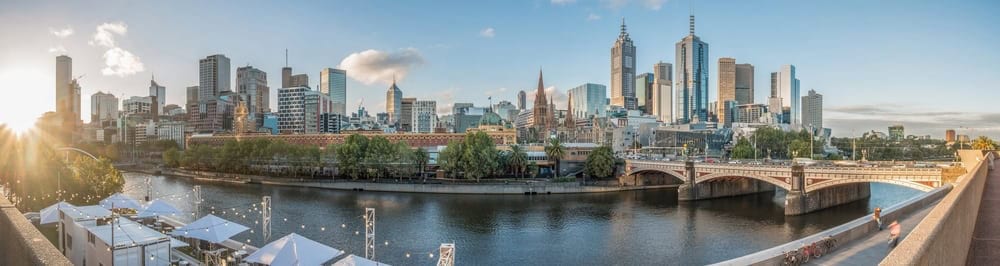
Essential Gear & Setup
Core Gear
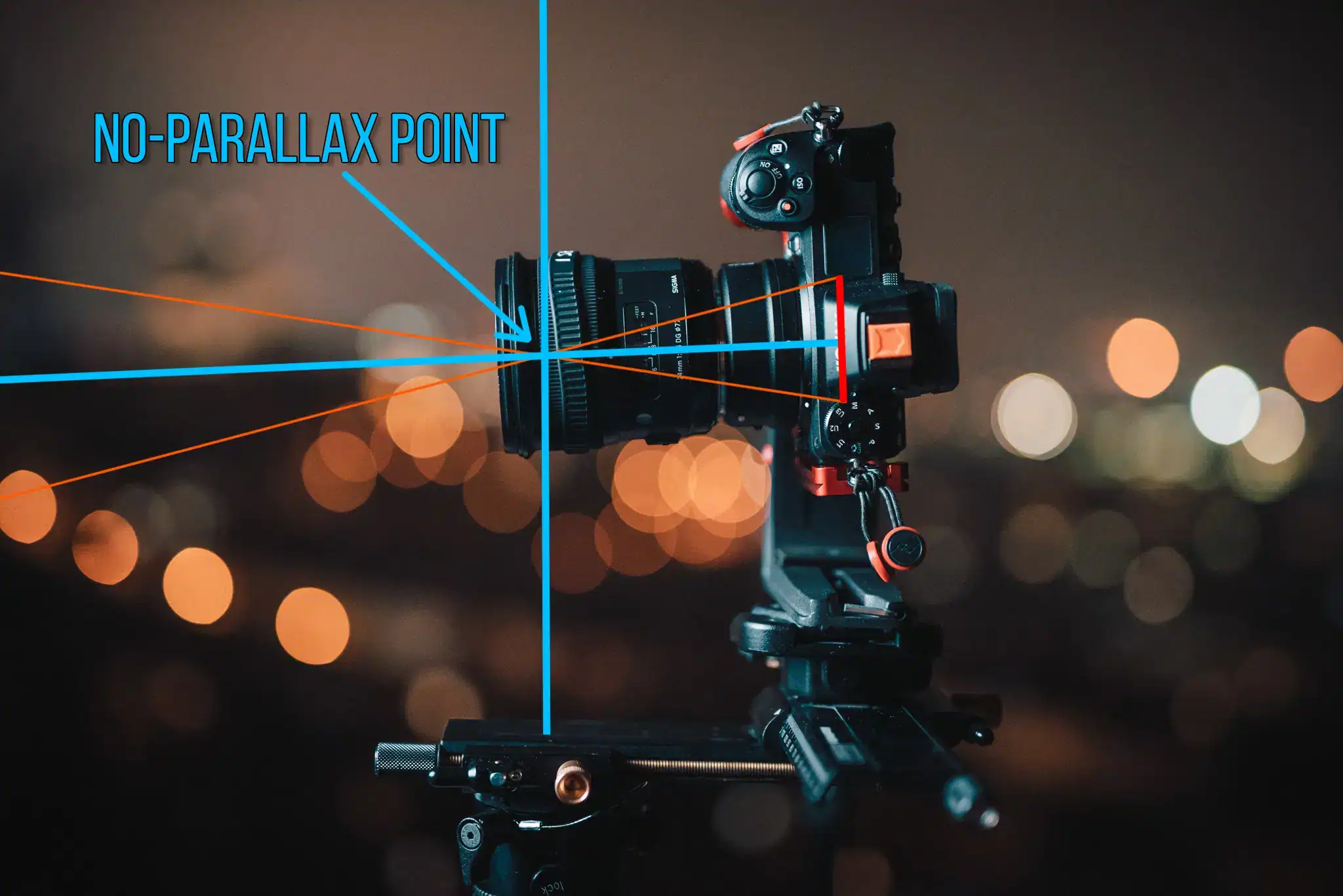
- Panoramic head: enables precise nodal alignment to eliminate parallax, the single biggest cause of stitching errors. Adjust fore–aft on the rail until foreground and background elements don’t shift relative to each other when you pan.
- Stable tripod with a leveling base: leveling keeps the rotator axis true, so your horizon won’t wander between frames.
- Remote trigger or Canon Camera Connect app: reduces vibrations; use 2-sec self-timer or Live View with electronic first curtain (Silent LV shooting) on the 5D Mark IV.
Optional Add-ons
- Pole or car mount: use safety tethers; account for wind load and vibration. Keep shutter speeds higher and rotation slower when elevated.
- Lighting aids: a small LED panel for interiors; bounce light to lift shadows without hotspots.
- Weather protection: rain cover or umbrella; keep a microfiber handy for mist and spray.
New to setting up a panoramic head? This tutorial explains the concepts from zero to clean, professional results. Panoramic head basics and best practices.
Step-by-Step Shooting Guide
Standard Static Scenes
- Level and center: level your rotator; ensure the camera is exactly over the tripod’s center. Use a bubble level or your pano head’s indicators.
- Nodal alignment: with a foreground object (e.g., light stand) and a distant background edge, pan left/right while adjusting the fore–aft rail until relative motion disappears. Mark the rail for your 20mm lens. Recheck after moving locations.
- Manual exposure and locked WB: set aperture (usually f/8–f/11), meter the midtones, and switch to Manual. Lock white balance to Daylight or a fixed Kelvin to prevent color shifts between frames.
- Focus: switch to manual focus and set near the hyperfocal distance. For 20mm at f/8 on full frame, hyperfocal is about 1.7 m; focus there to keep everything from ~0.9 m to infinity sharp.
- Capture sequence: for full spherical, shoot two rows (e.g., +30° and -30°) at 45° increments (8 shots per row) with ~30% overlap. Then shoot a zenith (+90°) frame, and 1–2 nadir frames for tripod removal. Rotate consistently in one direction to stay organized.
- Log: keep a small note or voice memo of row angles and overlap—very helpful for complex scenes.
HDR / High Dynamic Range Interiors
- Bracket exposure: set AEB to ±2 EV (3 or 5 frames if needed). Use a constant aperture (e.g., f/8) and bracket shutter speeds.
- Lock WB and focus: do not let the camera change focus or color temperature between brackets; this ensures clean merges and stitches.
- Sequence: capture the entire pano at each viewpoint with the same bracket pattern; keep timing consistent to minimize movement variance.
Low-Light / Night Scenes
- ISO strategy: the 5D Mark IV is clean at ISO 100–800; ISO 1600 is still solid. Prefer longer shutter times over high ISO when on a tripod.
- Vibration control: use Live View with electronic first curtain and a remote release. If using a stabilized EF lens, turn IS off on tripod.
- Shutter: 1/30–several seconds depending on scene. If there’s wind, shield the setup or increase shutter speed slightly.
Crowded Events
- Two-pass method: first pass for composition/coverage, second pass when gaps open in the crowd.
- Mask in post: use PTGui/Hugin masks to choose clean areas from each pass and remove ghosts.
- Faster shutters: use 1/200+ if you want to freeze people and flags; accept higher ISO if needed.
Special Setups (Pole / Car / Drone)
- Pole work: tether the gear, avoid overhead wires, and mind wind gusts. Rotate slowly; shoot shorter exposures and consider higher ISO to maintain sharpness.
- Car-mounted: avoid flexible mounts; choose smooth pavement. Plan for quick shooting at stops; pre-focus and lock settings.
Recommended Settings & Pro Tips
Exposure & Focus
| Scenario | Aperture | Shutter | ISO | Notes |
|---|---|---|---|---|
| Daylight outdoor | f/8–f/11 | 1/100–1/250 | 100–200 | Lock WB to Daylight or fixed Kelvin |
| Low light/night | f/4–f/5.6 | 1/30–multi-sec | 200–800 (to 1600 if needed) | Tripod + remote; use Live View EFCS |
| Interior HDR | f/8 | Bracket ±2 EV | 100–400 | Balance windows and lamps |
| Action / moving subjects | f/5.6–f/8 | 1/200+ | 400–800 | Freeze motion; consider two-pass capture |
Critical Tips
- Manual focus at hyperfocal: about 1.7 m for 20mm f/8 on full frame. Tape the focus ring if it’s loose.
- Nodal calibration: set a foreground object and a distant background edge; adjust your rail until there’s no relative shift when panning.
- White balance lock: set a fixed WB; auto WB causes color flicker across frames and brackets.
- RAW capture: maximizes dynamic range and color latitude; crucial for HDR merges and seamless color harmonization.
- Stabilization: the 5D Mark IV has no IBIS. If your EF lens has IS, turn it off on tripod; leave it on only for handheld tests.
- Mirror/shutter shock: use Live View silent shooting (EFCS) or Mirror Lockup with a 2-sec timer to prevent micro-blur.
Stitching & Post-Processing
Software Workflow
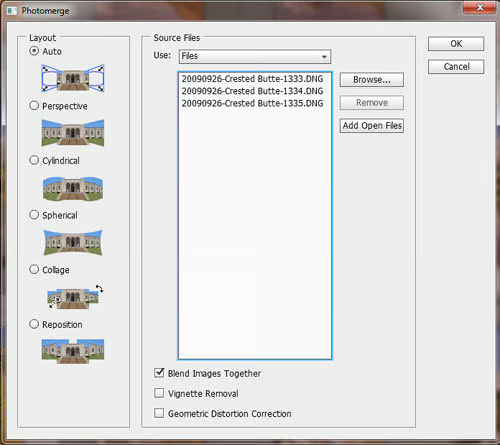
For rectilinear 20mm panos, PTGui and Hugin handle multi-row stitches reliably. Import RAW files, apply consistent base adjustments (lens profile, same WB), then stitch with plenty of control points. Rectilinear lenses need more shots than fisheyes but often stitch with fewer edge distortions. Aim for ~25–30% overlap around and between rows. For HDR, either pre-merge brackets to 32-bit intermediates per viewpoint or let PTGui handle exposure fusion. A balanced approach is to tone-map gently and do the final color in Lightroom/Photoshop. For a commercial overview: Why PTGui is a go-to for pro panoramas. For end-to-end DSLR 360 tips, see the VR platform’s own guidance: Shooting and stitching a 360 photo with a DSLR or mirrorless.
Cleanup & Enhancement
- Nadir patching: use a dedicated nadir shot and patch in Photoshop, or rely on AI tripod removal tools if the surface is repetitive.
- Color consistency: unify WB and tint across rows; a single HSL tweak can tie a scene together.
- Noise reduction: apply luminance NR to shadow brackets; don’t over-smooth textures (wood, fabric, foliage).
- Leveling: use horizon and vertical lines for upright corrections; zero roll/pitch for VR display comfort.
- Export: for VR, export equirectangular at 2:1 ratio (e.g., 12,000×6,000 px JPEG/PNG). Keep a 16-bit TIFF master archived.
Want a visual explanation of core pano shooting concepts? This short video is a helpful companion to reading.
Also see a concise primer on pano focal lengths and layout trade-offs. Focal lengths for panoramas explained.
Disclaimer: software evolves; verify the latest PTGui/Hugin documentation for current features and best practices.
Useful Tools & Resources
Software
- PTGui panorama stitching
- Hugin (open-source)
- Lightroom / Photoshop for color and cleanup
- AI tools for tripod/nadir removal
Hardware
- Panoramic heads: Nodal Ninja, Leofoto, Really Right Stuff
- Carbon fiber tripods with leveling bases
- Wireless remote shutters or intervalometers
- Pole extensions and robust car mounts with safety tethers
Disclaimer: Names provided as search references—always check official specifications and compatibility.
Common Mistakes & How to Avoid Them
- Parallax errors: solve by aligning the entrance pupil using a pano head and testing with foreground/background pairs.
- Exposure flicker: shoot in full Manual with a fixed WB and disabled Auto Lighting Optimizer.
- Tripod shadows and footprints: shoot a dedicated nadir and patch; watch sunlight angles outdoors.
- Motion ghosting: do two passes and mask in post; speed up exposure for moving crowds.
- Night noise: prefer longer exposures over pushing ISO; use remote release and wind shielding.
Frequently Asked Questions
- Can I mount the Nikon Z 20mm f/1.8 S on my Canon EOS 5D Mark IV?
No. The Nikon Z mount’s short flange distance and fully electronic interface mean there’s no practical adapter for Canon EF DSLRs. Use an EF-mount 20mm rectilinear lens for identical pano results on the 5D Mark IV, or use the Z 20mm on a Nikon Z body.
- Is a 20mm rectilinear lens wide enough for single-row 360?
For a full spherical 360×180, you generally need multi-row at 20mm. A reliable pattern is 8 shots around at -30°, 8 around at +30°, plus zenith and 1–2 nadir shots (18–20 total). For cylindrical panoramas, a single row of 7–8 shots often suffices.
- Do I need HDR for interiors with bright windows?
Often yes. Use ±2 EV bracketing (3–5 frames) at a constant aperture. Merge to HDR per view or let PTGui fuse during stitching to retain outside view and interior detail.
- How do I avoid parallax issues?
Mount on a panoramic head and align the entrance pupil by sliding the camera along the rail until foreground/background objects don’t shift while panning. Mark that position for your 20mm lens so you can re-set it quickly on location.
- What ISO range is safe on the 5D Mark IV in low light?
ISO 100–800 is very clean; ISO 1600 remains good for most commercial uses. On a tripod, prefer longer shutter times over higher ISO to maintain maximum detail for stitching.
Real-World Field Notes (What Actually Works)
Indoor Real Estate
Shoot at f/8, manual focus at ~1.7 m, ISO 100–200, and bracket ±2 EV for windows. If ceiling fans or curtains move, capture a second neutral exposure at higher shutter speed to mask motion later. Keep lights either all on or all off to avoid mixed color temperatures or correct with gels.
Outdoor Sunset
Meter the brightest highlight you want to preserve, then set your base exposure in Manual. Consider 5-frame brackets for extreme dynamic range. Work quickly as sky color changes between rows; start near the sun and move away so the most difficult exposures are captured first.
Events with Crowds
Plan for two passes and use 1/200s+ when possible. If people are critical, shoot a few clean frames per sector to have replaceable “background plates.” Mark your tripod position with tape if you must step away briefly.
Rooftop or Pole
Use a safety tether, keep the center of gravity over the legs, and consider sandbags. Shoot at slightly higher ISO to keep shutter speeds short (1/125–1/250) and minimize wind-induced blur. Rotate smoothly; avoid jerky movements that complicate overlap.