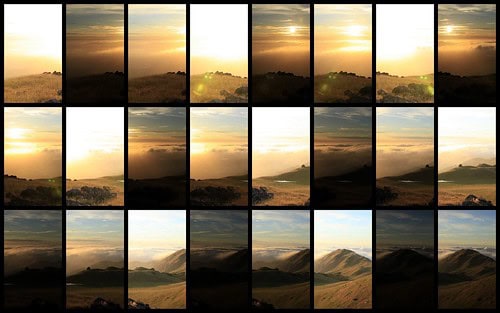
Why This Camera & Lens Are Great for Panoramas
This guide explains how to shoot panorama with Canon EOS 5D Mark IV & Fujifilm XF 8-16mm f/2.8 R LM WR, with real-world settings, workflows, and safety tips. First, an important compatibility note: the Fujifilm XF 8-16mm is an X-mount APS-C rectilinear ultra-wide lens and cannot be mounted on the Canon EOS 5D Mark IV (EF mount, full frame) due to flange distance and mount differences. If you intended to use the XF 8-16mm, pair it with a Fujifilm X-series body (e.g., X-T or X-H). If you are locked to the 5D Mark IV, choose an equivalent ultra-wide EF-mount lens (recommendations below). All field techniques, overlap rules, and stitching settings in this article apply identically across both paths.
Why this combo (or its FF-equivalent) works so well for panoramas:
- Canon EOS 5D Mark IV: 30.4 MP full-frame CMOS with ~5.36 µm pixel pitch, robust Dual Pixel AF in Live View, and excellent dynamic range near base ISO (about 13+ EV). That means clean shadows, workable highlights, and stable color for bracketed HDR panoramas.
- Fujifilm XF 8-16mm f/2.8 R LM WR: a rectilinear ultra-wide with weather sealing and excellent corner performance when stopped to f/5.6–f/8. On APS-C, 8mm ≈ 12mm full-frame equivalent FOV, ideal for multi-row 360° capture with moderate shot counts.
- Rectilinear vs fisheye: Rectilinear lenses (like the XF 8-16mm and EF 11-24mm) preserve straight lines—great for architecture and real estate—but require more images than a fisheye. The upside is cleaner edges and fewer “fisheye” distortions to fix later.
- Mount equivalence: For a Canon 5D Mark IV, the practical EF alternatives to mirror the XF 8-16mm’s coverage are EF 11–24mm f/4L, EF 16–35mm f/4L IS, Sigma 12–24mm. We’ll give tested shot counts for 12mm and 24mm full-frame equivalents that match XF 8–16mm on APS-C.
Quick Setup Overview
- Camera: Canon EOS 5D Mark IV — Full Frame, 30.4 MP, ~5.36 µm pixel pitch, strong DR at ISO 100–200, clean up to ISO 1600 when exposed well.
- Lens: Fujifilm XF 8-16mm f/2.8 R LM WR — rectilinear APS-C ultra-wide (FF equiv. 12–24mm), very sharp at f/5.6–f/8, minor lateral CA possible, weather sealed. Note: not mountable on EOS 5D Mark IV; use it on a Fujifilm X body or use a full-frame EF ultra-wide alternative on the 5D Mark IV.
- Estimated shots & overlap (tested patterns, rectilinear):
- At 12mm FF equivalent (XF 8mm on APS‑C, or EF 11–12mm on 5D4):
- Balanced quality: 8 shots around at +30°, 8 shots around at −30°, + zenith + nadir = 18–20 images total (≈30–40% overlap).
- Higher quality: 3 rows of 8 (−45°, 0°, +45°) + zenith + nadir = ~26–28 images.
- At 24mm FF equivalent (XF 16mm on APS‑C, or ~24mm EF):
- 12 around × 3 rows + zenith + nadir = ~38–40 images (≈30% overlap).
- At 12mm FF equivalent (XF 8mm on APS‑C, or EF 11–12mm on 5D4):
- Difficulty: Intermediate (requires panoramic head calibration and good exposure discipline).
Planning & On-Site Preparation
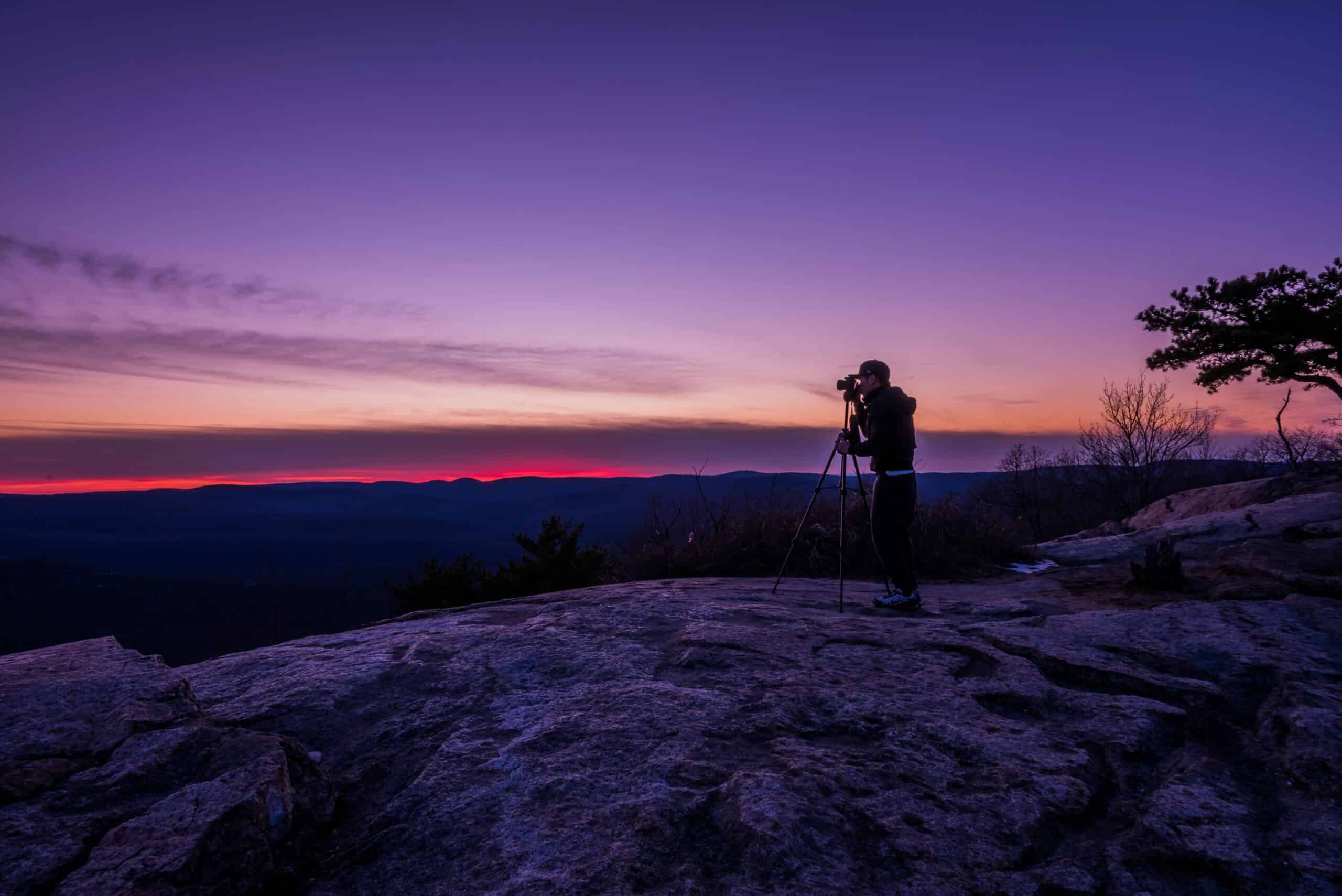
Evaluate Shooting Environment
Scan for moving objects (people, cars, trees in wind), reflective surfaces (glass, polished floors), and light sources (direct sun, mixed interior lighting). If you’re near glass, keep the lens a few centimeters away and shoot at a slight angle to reduce reflections and flare. For windows behind you, shade the lens with your body or a flag. Avoid rotating while people walk close to the camera—parallax artifacts become harder to fix.
Match Gear to Scene Goals
The 5D Mark IV offers clean files at ISO 100–400 and remains very usable up to ISO 1600–3200 when exposed to the right. That’s ideal for HDR panoramas with bright windows or sunset skylines. The XF 8-16mm (on a Fuji body) or an EF ultra-wide on the 5D Mark IV gives rectilinear rendering for architecture. Rectilinear means you’ll take more frames than a fisheye but keep straight lines straight—critical for real estate, interiors, and cityscapes. For faster capture with fewer frames, consider a fisheye on the 5D Mark IV (e.g., 8mm circular or 12mm diagonal fisheye), but be aware of curvature and edge stretching.
Pre-shoot Checklist
- Power and media: full batteries, ample memory; plan 100–300 RAW frames if bracketing.
- Clean optics and sensor: dust and smears can repeat across tiles; fix now, not later.
- Tripod leveling and pano head calibration: ensure your rotator clicks or degree marks are accurate and that the nodal point is dialed for your focal length.
- Safety: secure tripod leg spread on rooftops; tether gear on poles or car mounts; beware of wind gusts and vibration.
- Backup workflow: after your main sequence, shoot a second safety round—especially if crowds or clouds moved during the first pass.
Essential Gear & Setup
Core Gear
- Panoramic head: aligns the lens around its no-parallax point (entrance pupil) so foreground and background don’t shift between frames. This minimizes stitching errors on close objects.
- Stable tripod with a leveling base: faster to level than tripod legs and keeps your horizon consistent across rows.
- Remote trigger or camera app: fire the shutter without touching the camera to prevent micro-blur, especially for long exposures or HDR brackets.
Optional Add-ons
- Pole or car mount: great for elevated viewpoints or drive-by coverage. Use safety tethers, check wind loads, and reduce speeds/rotation to avoid vibration.
- Lighting aids: small LED panels or bounced flash to even out dark interiors. Keep lighting consistent across all frames.
- Weather protection: rain covers and lens hoods reduce flare and protect from drizzle; wipe off sea spray immediately.
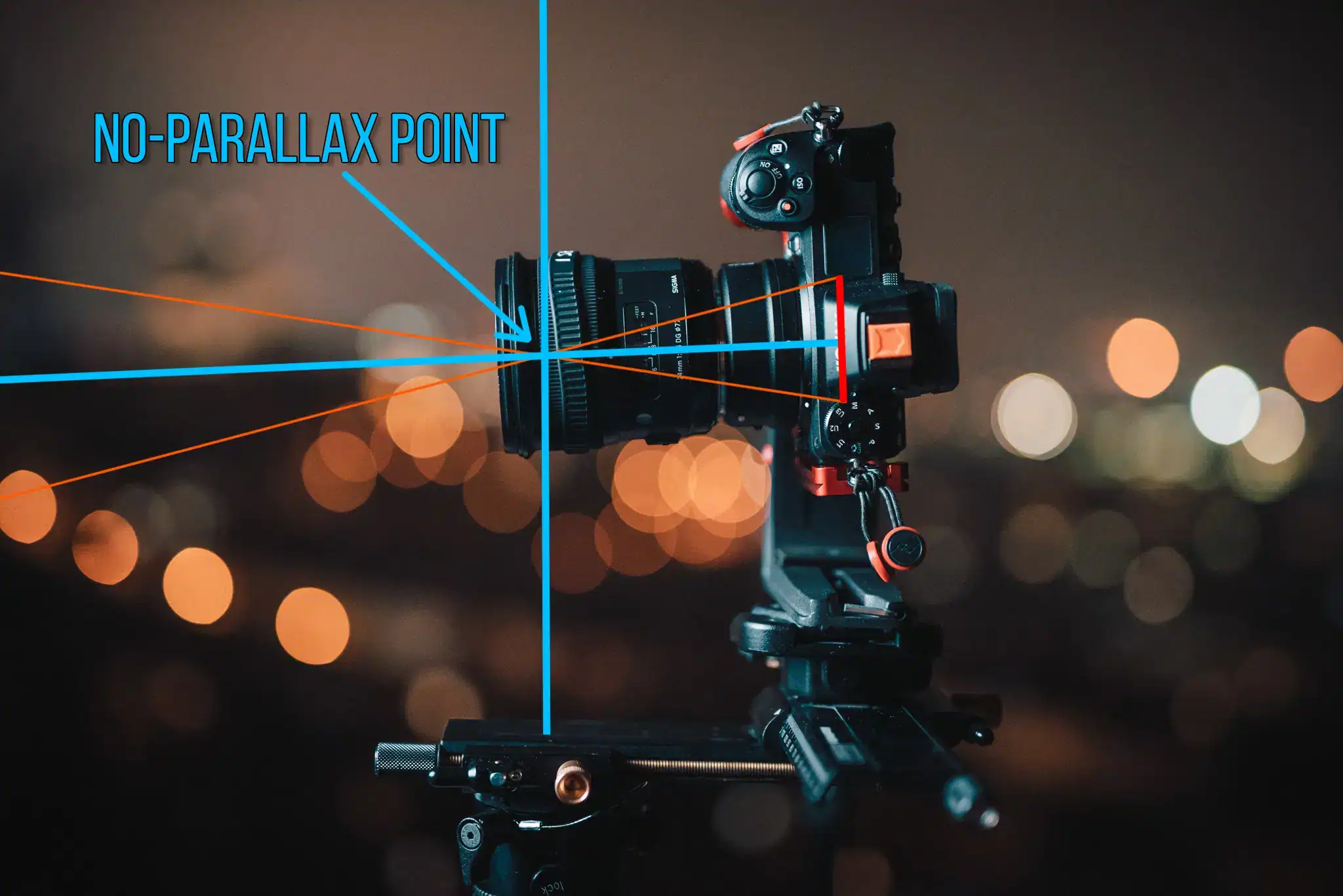
For a deeper walkthrough on panoramic heads and parallax, see this panoramic head tutorial. Panoramic head setup guide
Step-by-Step Shooting Guide
Standard Static Scenes
- Level the tripod and align the nodal point: Set the nodal slide so that when you rotate left/right, nearby objects don’t shift against the background. Use two vertical objects (one near, one far) and adjust until their relative position stays fixed.
- Lock manual exposure and white balance: Meter a mid-tone portion of the scene, set exposure in Manual (M), and choose a fixed WB (Daylight/Tungsten as appropriate). This avoids flicker and color shifts between tiles.
- Choose the right pattern:
- 12mm FF eq (XF 8mm APS-C): 8 shots around at +30°, 8 around at −30°, then 1–2 for the zenith and 1–2 for the nadir.
- 24mm FF eq (XF 16mm APS-C): 12 shots around × 3 rows (−45°, 0°, +45°), plus zenith and nadir.
Aim for 30–40% horizontal overlap and about 30% vertical overlap.
- Take a dedicated nadir frame: Tilt the camera down to capture the ground free of tripod legs if your head allows, or shoot a “patch” frame after moving the tripod slightly.
HDR / High Dynamic Range Interiors
- Bracket ±2 EV (3–5 frames): This balances bright windows and shadowy corners. Keep shutter speed as the only variable (fix aperture and ISO) for consistent sharpness.
- Lock WB: Mixed lighting can shift per bracket; fixed WB simplifies batch processing and color consistency.
- 5D Mark IV tip: The 5D4’s shadow recovery is excellent at ISO 100–200; for interiors, ISO 100–400 with bracketed exposures is a safe sweet spot.
Low-Light / Night Scenes
- Long exposures: Use f/4–f/5.6 at ISO 100–400 when possible and let shutter run long (1–8 seconds). The 5D4 handles this cleanly on a solid tripod.
- Remote triggering: Enable mirror lock-up (if using the OVF) or use Live View with silent shutter to minimize vibration.
- Noise management: The 5D4 is clean to ISO 800–1600; if you must go higher, expose slightly to the right without clipping highlights and denoise in post.
Crowded Events
- Two-pass method: First pass for complete coverage, second pass capturing “clean plates” when gaps appear in the crowd.
- Masking later: In PTGui or Photoshop, blend the cleaner regions to remove ghosted people or cars.
Special Setups (Pole / Car / Drone)
- Pole shooting: Tether the camera, reduce rotation speed, and use a shorter exposure to mitigate sway. Consider a lighter body-lens combo if winds are above 15–20 km/h.
- Car-mounted: Use vibration-damped mounts, drive slowly, and shoot shorter exposures. Plan empty streets or early mornings to avoid parallax from close traffic.
Recommended Settings & Pro Tips
Exposure & Focus
| Scenario | Aperture | Shutter | ISO | Notes |
|---|---|---|---|---|
| Daylight outdoor | f/8–f/11 | 1/100–1/250 | 100–200 | Lock WB to Daylight; avoid auto modes |
| Low light/night | f/4–f/5.6 | 1/30–8s | 100–800 | Tripod + remote; favor lower ISO and longer shutter |
| Interior HDR | f/8 | Bracket ±2 EV | 100–400 | Balance windows and lamps; keep ISO fixed |
| Action / moving subjects | f/5.6–f/8 | 1/200+ | 400–800 | Double-pass and mask in post |
Critical Tips
- Manual focus: Set focus near the hyperfocal distance at your working aperture (e.g., f/8) and switch AF off. Dual Pixel AF in Live View helps confirm focus before locking.
- Nodal calibration: With the camera on your pano head, align two objects at different distances and rotate. Adjust the fore-aft rail until there is no relative shift. Mark the rail positions for 8mm, 12mm, 16mm, and 24mm equivalents for repeatability.
- White balance lock: Set a fixed WB to prevent color seams across stitches, especially with mixed light sources indoors.
- RAW over JPEG: Shoot RAW for maximum dynamic range and color latitude. This is particularly important for HDR panoramas.
- Stabilization: The XF 8-16mm has no OIS and the 5D Mark IV body has no IBIS. If you use an EF lens with IS on a tripod, switch IS off to avoid drift.
Stitching & Post-Processing
Software Workflow
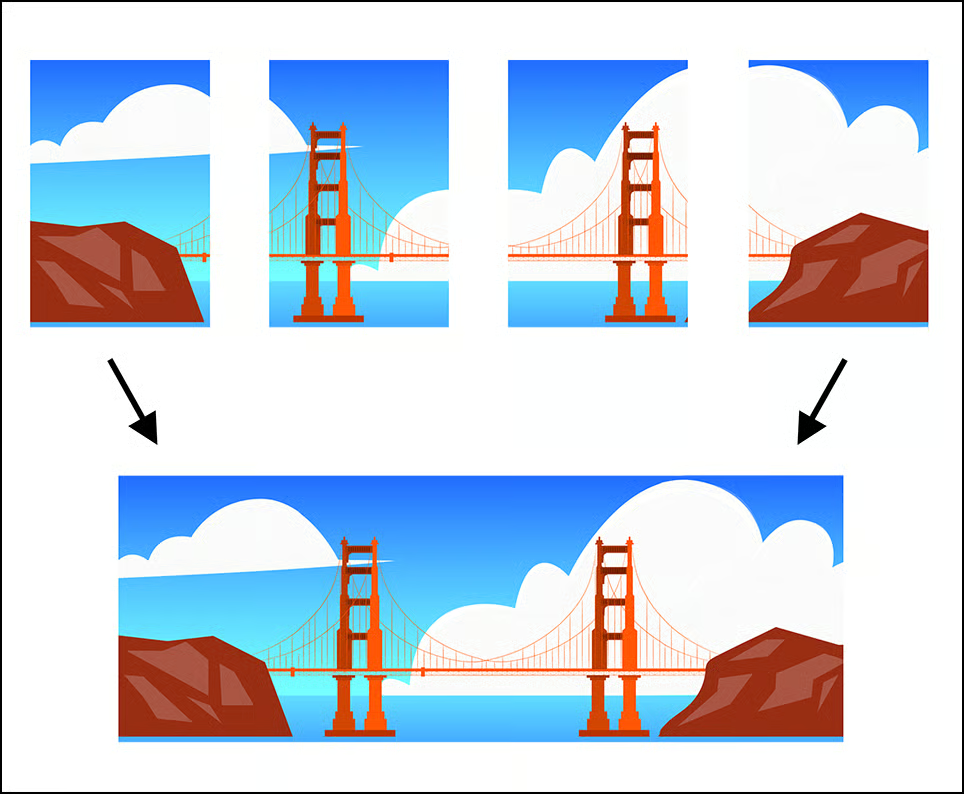
After culling and basic RAW adjustments (tone curve, lens corrections off initially for consistency), export 16-bit TIFFs or send RAWs directly to PTGui/Hugin. For rectilinear ultra-wide sequences, maintain 25–35% overlap to help control points. Fisheye workflows need fewer shots but may require “defish” projection choices. PTGui remains an industry standard for speed and control; Hugin is a capable open-source alternative. Why many pros favor PTGui for complex panoramas
Cleanup & Enhancement
- Nadir patching: Shoot a clean ground plate and clone it in Photoshop, or use AI-based tripod removal tools. Keep texture and perspective consistent.
- Color and noise: Equalize exposure across tiles, remove color casts, and apply selective noise reduction for shadow regions, especially in HDR merges.
- Leveling: Use the horizon and verticals to adjust roll/pitch/yaw for a natural look, especially for real estate and cityscapes.
- Export: For VR, output a 2:1 equirectangular JPEG or 16-bit TIFF; maintain consistent metadata for virtual tour platforms.
For broader DSLR/ML 360 workflows, this creator guide is a solid reference. Using a DSLR or mirrorless to shoot and stitch a 360 photo
Video: Panoramic Head Basics
Prefer learning visually? This concise panoramic head setup video complements the steps above:
Useful Tools & Resources
Software
- PTGui panorama stitching
- Hugin open source panorama tool
- Lightroom / Photoshop for RAW, masking, and cleanup
- AI tripod removal tools (various plugins/services)
Hardware
- Panoramic heads (Nodal Ninja, Leofoto, Really Right Stuff)
- Carbon fiber tripods for stability-to-weight ratio
- Leveling bases and click-stop rotators
- Wireless remote shutters or tethering apps
- Pole extensions and vibration-damped car mounts
Disclaimer: software/hardware names are provided for research; verify latest specs and support on official sites.
Field-Proven Case Studies
Indoor Real Estate (Mixed Light, Tight Spaces)
Use 12mm FF equivalent (XF 8mm on APS-C or EF 11–12mm on the 5D4 alternative). Shoot 2 rows of 8 (±30°) plus zenith and nadir with ±2 EV bracketing. Fix WB at 4000–4500K if tungsten dominates or around 5000K for neutral LEDs. The 5D Mark IV at ISO 100–200 keeps windows recoverable; blend HDR before stitching or let PTGui handle bracket fusion. Straight lines remain straight with the rectilinear lens—important for client trust.
Outdoor Sunset (High DR, Wind)
Stabilize the tripod, use a sandbag if it’s breezy. Shoot at f/8, ISO 100, let shutter vary widely in a 5-frame ±2 EV bracket. If clouds move fast, reduce overlap slightly but maintain at least ~30%. Shoot an extra safety round right away; the second pass often blends better for moving clouds.
Event Crowds (Ghosting Control)
Shoot 8–12 around quickly at 0° first, then repeat, waiting for gaps in pedestrian flow where needed. In PTGui, use masking to keep the clean subjects from the second pass and hide ghosted areas from the first pass. The 5D4’s Dual Pixel AF in Live View helps speed focus confirmation; then switch to MF to lock it.
Rooftop or Pole Shooting (Safety First)
On rooftops, keep the center of gravity low, strap the tripod, and minimize sail area (no dangling straps). For poles, lighter gear and faster shutter speeds reduce blur. If the pole flexes, shoot more overlap and multiple passes, then choose the sharpest tiles at stitch time.
Compatibility Note & Practical Alternatives
The Fujifilm XF 8-16mm f/2.8 R LM WR is not physically compatible with the Canon EOS 5D Mark IV. To match its field of view and rectilinear rendering on the 5D Mark IV, use EF-mount ultra-wides such as EF 11–24mm f/4L, EF 16–35mm f/4L IS (wider end), or Sigma 12–24mm. If you own the XF 8-16mm, pair it with a Fujifilm X body—shooting technique and stitching workflow remain the same as outlined here.
For resolution planning and shot count estimates by focal length and sensor, see the community’s spherical resolution references. DSLR spherical resolution guide
Common Mistakes & How to Avoid Them
- Parallax errors: Always calibrate and rotate around the lens’s entrance pupil; add more overlap if foreground objects are close.
- Exposure flicker: Manual exposure and fixed WB are mandatory; avoid Auto ISO and Auto WB for panoramas.
- Tripod shadows and footprints: Shoot a nadir tile and patch cleanly in post.
- Ghosting from motion: Use the two-pass method and masking in PTGui/Photoshop.
- Night noise: Favor low ISO with longer shutter on a stable tripod; denoise in post only as needed.
- Insufficient overlap: Keep at least 25–35% overlap horizontally and vertically for reliable control point generation.
Frequently Asked Questions
- Can I shoot handheld panoramas with the Canon EOS 5D Mark IV?
Yes for simple flat panoramas, but for 360×180° spherical work, use a tripod and panoramic head. Handheld introduces parallax and alignment issues—especially indoors with close objects. If you must go handheld, use faster shutter speeds, higher overlap (~50%), and expect extra masking in post.
- Is the Fujifilm XF 8-16mm wide enough for a single-row 360?
As a rectilinear lens (FF eq. 12–24mm), single-row 360° is not practical—vertical coverage won’t reach the zenith and nadir. Plan on 2–3 rows plus dedicated zenith/nadir frames. This is identical whether you use XF 8-16mm on a Fuji body or an EF 11–12mm rectilinear on the 5D Mark IV.
- Do I need HDR for interiors with bright windows?
Often yes. Use ±2 EV bracketing (3–5 frames). The 5D Mark IV handles base-ISO brackets cleanly; merge at RAW stage or let PTGui blend exposures. Lock WB to avoid inconsistent color across brackets.
- How do I avoid parallax issues?
Calibrate the nodal (no-parallax) point for each focal length on your panoramic head and mark the rail. Keep the camera level and use consistent click stops. More overlap helps the stitcher find reliable control points when foreground objects are close.
- What ISO range is safe on the 5D Mark IV for low light?
ISO 100–800 is ideal for tripod-based panoramas. ISO 1600–3200 remains usable for night scenes if you expose well and denoise lightly. Prefer lower ISO with longer exposures whenever stability allows.
- Can I set up Custom Shooting Modes (C1/C2/C3) for panoramas on the 5D Mark IV?
Yes. Save a pano profile with Manual exposure, fixed WB, RAW, MF, and your preferred bracketing sequence (if needed). This speeds up on-site setup and reduces mistakes.
- Best tripod head for this setup?
A two-axis panoramic head with fore-aft and lateral adjustment rails (e.g., Nodal Ninja, Leofoto, RRS) is ideal. Ensure it supports your camera’s weight and offers degree marks or click stops for repeatable rotations.
Safety, Data Integrity & Trust Tips
- Wind awareness: On rooftops or open areas, hang a small weight from the tripod to lower the center of gravity. Avoid extending center columns.
- Weather sealing: The 5D Mark IV is well-sealed; the XF 8-16mm is WR. Still, protect from driven rain and salt spray; dry and clean promptly.
- Redundancy: Use dual card slots or back up to a phone/tablet on-site. If a sequence is critical, shoot a second pass immediately.
- Licensing and permissions: For commercial interiors and rooftops, secure permission and follow building safety protocols.
For an additional walkthrough on high-end 360 techniques, see the panoramic head setup principles. Panoramic head setup principles
Visual Inspiration & Diagrams