Why This Camera & Lens Are Great for Panoramas
The Canon EOS 5D Mark IV is a proven full-frame DSLR with a 30.4MP sensor (36×24 mm, ~5.36 µm pixel pitch) that delivers robust dynamic range at base ISO, reliable color, and excellent RAW flexibility—key ingredients for clean, stitchable 360 photos. Pairing a high-quality ultra-wide rectilinear zoom like the Canon RF 15–35mm f/2.8L IS USM gives you versatile focal coverage for single-row and multi-row panoramas, from sweeping exteriors at 15 mm to ultra-detailed gigapixel-style mosaics at 35 mm.
Important mount note: the RF 15–35mm is an RF-mount lens. The 5D Mark IV is an EF-mount DSLR. There is no adapter to mount RF lenses on EF bodies. To follow this guide precisely with a 5D Mark IV, use an equivalent EF lens (e.g., EF 16–35mm f/2.8L III USM or EF 16–35mm f/4L IS USM). If you have the RF 15–35mm, use it on an EOS R-series body. All techniques, shot counts, and settings below apply directly to a rectilinear 15–35mm on full frame—only the mount differs.
Why this combo works for panoramas: a large sensor gives cleaner files for HDR panoramas and low-light interiors, the 15–35 mm range covers most panorama use-cases (single-row, multi-row, and gigapixel), and the rectilinear projection keeps lines straighter for architecture and real estate. Just remember: rectilinear lenses need more frames than fisheyes, but reward you with less edge stretching and more natural results.
Quick Setup Overview
- Camera: Canon EOS 5D Mark IV — Full-frame (36×24 mm), 30.4MP, ~5.36 µm pixel pitch, very usable at ISO 100–800 for pano work, ~13 stops DR at base.
- Lens: Canon RF 15–35mm f/2.8L IS USM — rectilinear ultra-wide zoom with excellent sharpness from f/4–f/8, well-controlled CA. Note: use equivalent EF 16–35mm on 5D Mark IV, or use the RF lens on a Canon R-body.
- Estimated shots & overlap (full-frame, portrait orientation, ~30% overlap):
- At 15–16 mm (rectilinear): 12 around (0° yaw), +8 at +45°, +8 at −45°, plus 2–3 zenith/nadir. Total ~30–31 frames for 360×180.
- At 24 mm: ~16 around, +12 at +45°, +12 at −45°, + 3 zenith/nadir. Total ~43 frames.
- At 35 mm (for high detail): ~24 around, +18 at +45°, +18 at −45°, + 3 zenith/nadir. Total ~63 frames.
For a simple cylindrical pano (not full 360×180), you can do 10–12 frames around at 15–16 mm.
- Difficulty: Intermediate (rectilinear ultra-wide requires solid nodal alignment and steady overlap discipline).
Planning & On-Site Preparation
Evaluate Shooting Environment
Before you start, assess light direction, dynamic range, and potential motion. Interiors with bright windows demand HDR bracketing. Exteriors at sunset can clip highlights quickly. Watch out for reflective surfaces (glass, polished floors, cars) and try to shoot with the front element at a slight angle to avoid obvious reflections. If you must shoot against glass, keep the lens as close as possible (1–3 cm) to minimize flare/ghosting and cup your hand or use a rubber hood to seal stray light.
Match Gear to Scene Goals
The 5D Mark IV’s RAW files are resilient, and ISO 100–400 gives maximum dynamic range. You can safely push to ISO 800 (and even 1600 in emergencies) if you are bracketing or if a faster shutter is needed. A rectilinear lens at 15–16 mm preserves straight lines—ideal for architecture and real estate—but needs more frames than a fisheye to complete a 360 sphere. If you often shoot tight interiors, consider a fisheye alternative for fewer frames; if quality and natural geometry are the priority, the 15–35mm rectilinear is excellent.
Pre-shoot Checklist
- Charge batteries; carry spares. Empty, fast cards with redundancy (dual card slots help).
- Clean the lens and sensor; dust spots are very visible across stitched skies and walls.
- Level your tripod and verify your panoramic head’s nodal alignment for 15, 24, and 35 mm marks.
- Safety: check wind if shooting on rooftops, use tethers on poles or car mounts, and never shoot over crowds with unsecured gear.
- Backup workflow: shoot at least one extra safety pass—it’s cheap insurance against stitching gaps.
Essential Gear & Setup
Core Gear
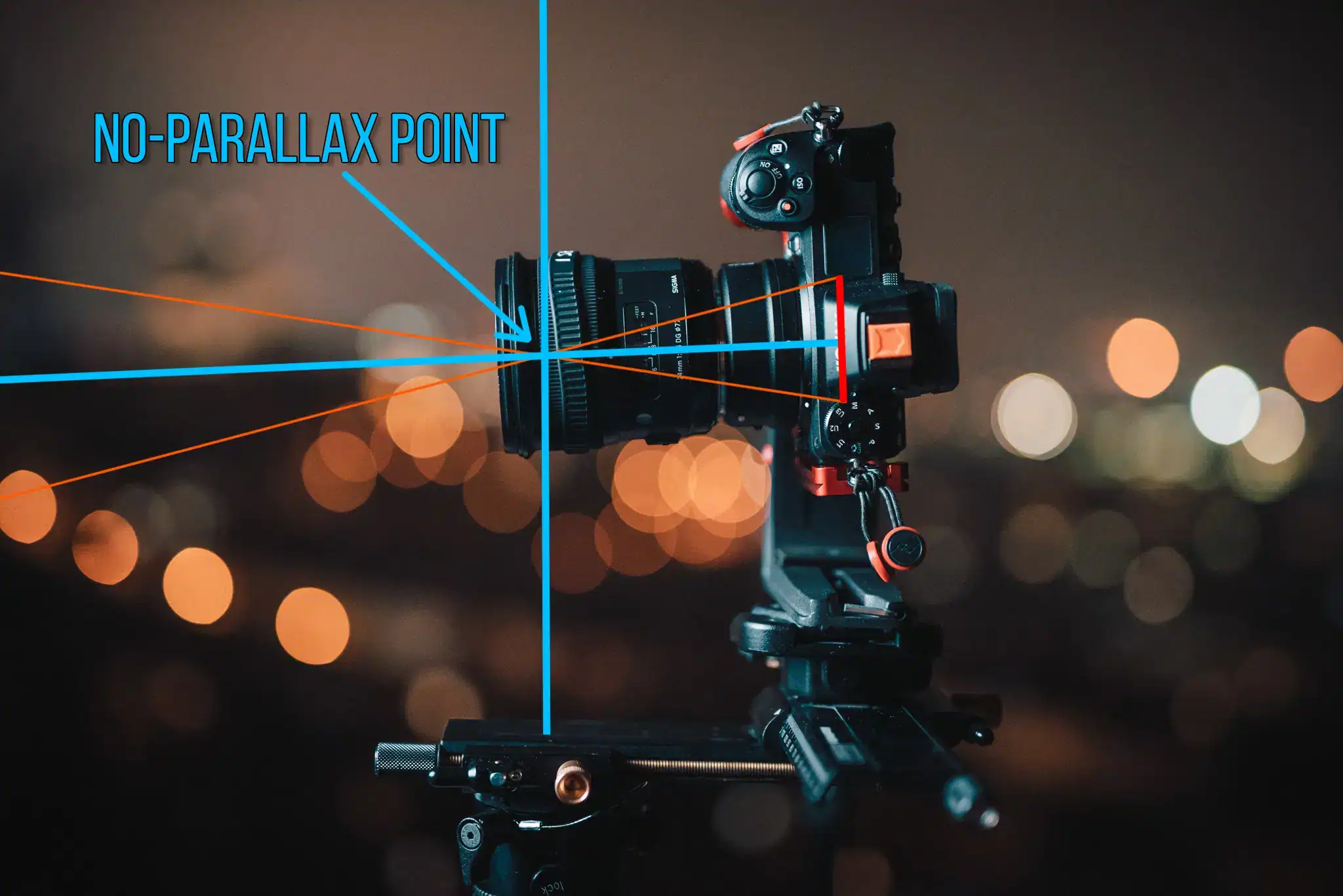
- Panoramic head with fore-aft and lateral adjustments. Proper nodal (no-parallax) alignment ensures foreground and background align across frames, eliminating stitching errors.
- Stable tripod with a leveling base. Leveling the rotator saves time and keeps the horizon consistent.
- Remote trigger or Canon app control to avoid vibration; on the 5D Mark IV, Live View with 2-second timer or mirror lock-up further reduces shake.
Optional Add-ons
- Pole or car mount: always use safety tethers; beware of wind and vibrations. Rotate more slowly and consider higher shutter speeds.
- Lighting aids: small LEDs or bounced flash for dark interiors; avoid mixed color temperatures if possible.
- Weather protection: rain covers, desiccant packs, and microfiber cloths for front element cleaning.
For a deeper dive into panoramic head setup best practices, see this panoramic head tutorial, which mirrors industry standards and field norms. Panoramic head setup guide
Step-by-Step Shooting Guide
Standard Static Scenes
- Level and align the nodal point. Level the tripod at the rotator. Mount the camera in portrait orientation on the pano head. Adjust the rail so objects close to the lens don’t shift relative to the background as you pan. Mark your rail positions for 15, 24, and 35 mm for quicker setups next time.
- Manual exposure and locked white balance. Switch to M mode and meter for midtones. For most daylight scenes: f/8, ISO 100–200, shutter to taste. Lock white balance (Daylight/Cloudy or a Kelvin value) to ensure consistent color across frames.
- Use consistent overlap. At 15–16 mm, shoot 12 frames around at 0°, then 8 at +45°, 8 at −45°, and 2–3 for the zenith and nadir. Rotate evenly, ideally using click-stops or a marked rotator.
- Nadir (ground) shot. After the main set, capture a nadir shot for tripod removal. Use a nadir adapter or shift the tripod slightly and shoot downward, ensuring enough overlap with adjacent frames for viewpoint correction in software.
HDR / High Dynamic Range Interiors
- Bracket smartly. For interiors with bright windows, use ±2 EV (3 or 5 frames) at each camera angle. Keep ISO at 100–200 to maximize DR.
- Lock WB and focus. Mixed lighting can cause color shifts; lock WB and shoot RAW. Manual focus at the hyperfocal distance (often ~1–1.5 m at 15–16 mm and f/8 on full frame) keeps the entire scene sharp.
- Consistency. Do not change aperture or focus between bracketed sets. Use a remote trigger to avoid nudging the head.
Low-Light / Night Scenes
- Lower ISO, longer shutter. Aim for ISO 100–400 where possible; the 5D Mark IV handles ISO 800–1600 decently, but longer exposures deliver cleaner skies.
- Stability. Turn image stabilization off on tripod-mounted lenses, enable Live View with silent shooting to reduce mirror shock, and use a remote or 2-second timer.
- Avoid light trails overlaps. If moving lights are present, consider shorter exposures and more frames to minimize ghosting during stitching.
Crowded Events
- Double-pass method. Do one fast pass to get complete coverage, then a second pass waiting for gaps in traffic for problem areas.
- Mask in post. Blend the cleaner, emptier frames during stitching. Prioritize consistent overlap and don’t chase the crowd mid-rotation.
Special Setups (Pole / Car / Drone)
- Secure everything. Use a short pole if possible, add tethers, and avoid shooting over people. For car rigs, dampen vibrations and avoid high speeds.
- Faster shutters. Atop a pole or moving platform, prefer 1/250–1/500 s and consider ISO 400–800 at f/5.6–f/8 to ensure crisp frames.
Recommended Settings & Pro Tips
Exposure & Focus
| Scenario | Aperture | Shutter | ISO | Notes |
|---|---|---|---|---|
| Daylight outdoor | f/8–f/11 | 1/100–1/250 | 100–200 | Lock WB (Daylight/Cloudy); shoot RAW |
| Low light/night | f/4–f/5.6 | 1/30–1/60 (tripod) or 1/125+ (handheld) | 400–800 (up to 1600 if needed) | Remote trigger; Live View to reduce vibration |
| Interior HDR | f/8 | Bracket ±2 EV (3–5 frames) | 100–400 | Balance windows vs. shadows; keep WB and focus locked |
| Action / moving subjects | f/5.6–f/8 | 1/200+ | 400–800 | Two-pass method; mask later |
Critical Tips
- Manual focus at hyperfocal. At 15–16 mm and f/8 on FF, focusing ~1–1.5 m keeps most scenes sharp; turn off AF to avoid refocusing mid-rotation.
- Nodal calibration. Place a near object and align panorama rails so that foreground and background do not shift while panning. Mark your rail positions for common focal lengths.
- White balance lock. Mixed lighting? Set a Kelvin value (e.g., 5000–5600 K) or use a custom WB card; avoid Auto WB for multi-frame panos.
- RAW over JPEG. RAW maximizes dynamic range and gives you consistent color and noise control in post, crucial for HDR panoramas.
- Stabilization. The 5D Mark IV lacks IBIS; if your EF lens has IS, turn it off on a tripod. If you’re handholding a quick pano, keep IS on and use faster shutters.
- Mirror/shutter shock. Use Live View “silent” mode or mirror lock-up with a remote release for the cleanest frames.
Stitching & Post-Processing
Software Workflow
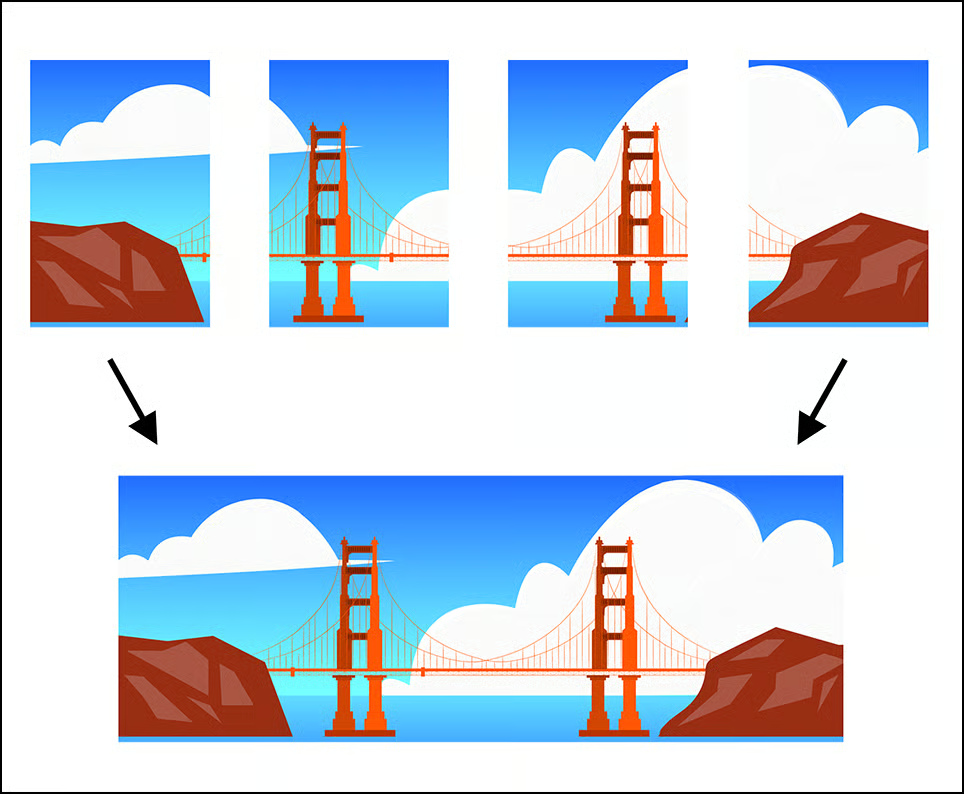
Import RAWs and apply a consistent profile and WB. Pre-merge HDR brackets (in Lightroom/Photoshop) or let your stitching software handle exposure fusion. PTGui is the industry workhorse for complex multi-row rectilinear sets; Hugin is a capable open-source alternative. Fisheyes typically need fewer shots and can be simpler to align; rectilinear lenses require more frames but deliver clean, straight architecture. Use ~25–30% overlap for fisheye and ~20–30% for rectilinear as a general rule. A practical overview of PTGui’s strengths for professional panoramas can be found here: Why PTGui excels for panorama stitching
Cleanup & Enhancement
- Nadir patch. Use a viewpoint-corrected nadir shot, or patch with AI content-aware tools and a logo plate.
- Color and contrast. Even out exposure between frames, correct mixed lighting casts, and apply gentle clarity/sharpening after stitching.
- Noise reduction. Apply NR selectively to shadows and skies; keep details intact on textures and edges.
- Leveling and horizon. Fix roll/yaw/pitch in your stitcher’s panorama editor so the horizon is dead level.
- Export for VR. Deliver equirectangular 2:1 at 8K–16K JPEG for web VR. For multi-row at 35 mm, 16K–24K is common. See this VR creator reference for DSLR-based 360 photo pipelines: Shooting and stitching a 360 photo with a DSLR
Resolution expectations
A 30.4MP frame multiplied across 30–60 images can yield 150–300MP final panoramas after overlap and cropping. Exact resolution depends on overlap, coverage, and lens FOV. For theoretical planning, the spherical resolution primer here is helpful: DSLR spherical resolution explained
Recommended tutorial video
Want a visual walkthrough of shooting and stitching? This video gives a clear, practical perspective on the workflow from capture to post:
For more structured guidance on setting up a panoramic head and workflow, see this step-by-step professional guide: Set up a panoramic head to shoot high-end 360 photos
Useful Tools & Resources
Software
- PTGui for advanced stitching, masking, and viewpoint correction
- Hugin (open-source) for robust control point editing
- Lightroom / Photoshop for RAW consistency, HDR merge, and final retouch
- AI tools for tripod/nadir removal and sky cleanup
Hardware
- Panoramic heads (Nodal Ninja, Leofoto, Fanotec) with precise rails
- Carbon fiber tripods with a leveling base for fast setup
- Wireless remotes or app triggers
- Pole extensions and secure car mounts with safety tethers
Disclaimer: software/hardware names are provided as search references. Check official sites for the latest specs and compatibility.
Common Mistakes & How to Avoid Them
- Parallax error: Misaligned nodal point creates stitching ghosts. Calibrate rails and mark them for each focal length.
- Exposure flicker: Auto exposure or Auto WB changes tonality and color per frame. Use manual exposure and a locked WB.
- Tripod shadows and footprints: Always shoot a nadir frame and plan to patch it.
- Insufficient overlap: Aim for 25–30% overlap so your stitcher can find plenty of control points.
- High ISO noise at night: Use a tripod, slower shutter, and lower ISO, then stack NR in post if needed.
- Rushing in the wind: Wait for lulls, weigh down your tripod, and keep the center column down for stability.
Frequently Asked Questions
- Can I shoot handheld panoramas with the Canon EOS 5D Mark IV?
Yes, for simple cylindrical panos in good light. Use 1/200 s or faster, ISO 200–800, and overlap 30–40%. For 360×180 or HDR interiors, a leveled tripod and panoramic head are strongly recommended.
- Is the Canon RF 15–35mm f/2.8L IS USM wide enough for single-row 360?
As a rectilinear lens, 15–16 mm on full frame is wide, but not wide enough for a single-row spherical 360 with a clean zenith and nadir. Plan on multi-row capture. For single-row spherical, a full-frame fisheye (e.g., 8–12 mm) is typical.
- Do I need HDR for interiors with bright windows?
Often yes. Bracket ±2 EV (3–5 frames) at each view to preserve window detail and clean interior shadows. Keep aperture and focus fixed, and lock white balance to avoid color shifts.
- How do I avoid parallax issues with this setup?
Use a panoramic head and align the lens’s entrance pupil (no-parallax point). Calibrate with a near object (0.5–1 m) and a far object, adjust rails until there’s no relative shift when panning, then mark those rail positions for 15, 24, and 35 mm.
- What ISO range is safe for the 5D Mark IV in low light?
For tripod-based panoramas, ISO 100–400 is ideal. ISO 800 is still clean for most scenes; only push to 1600 if shutter speed is critical. When possible, extend shutter time rather than raising ISO.
- Can I set up Custom Shooting Modes (C1/C2) for pano?
Yes. Save manual exposure, fixed WB, manual focus, and your preferred drive/timer to a Custom Mode. It speeds up on-location setup and prevents accidental auto settings.
Real-World Scenarios & Field Advice
Indoor Real Estate (Bright Windows)
At 15–16 mm, set f/8, ISO 100–200, and bracket ±2 EV. Start with the room’s key vantage point; watch for mirrors and reflective chrome. Aim for 12/8/8 multi-row and a zenith to keep ceilings clean. Use a nadir shot with a small floor logo patch for a professional finish.
Outdoor Sunset Cityscape
Shoot a base exposure for midtones, then a second pass 15–20 minutes later if the sky’s intensity changes. If lights turn on, consider blending the two passes for a balanced “blue hour” look. Keep ISO 100–200 and use 1/60–1/200 s with f/8; add a third “lights” pass if needed for neon and windows.
Event Crowds
Use 1/200 s at f/5.6–f/8, ISO 400–800. Take two rotations—one fast for coverage and a second selectively when gaps open. Prioritize the background architecture; people can be masked later, but missing wall/sky details are harder to fix.
Rooftop or Pole Shooting
Wind is your biggest enemy. Keep the pole short, use 1/250–1/500 s, and stabilize with a guy line where possible. Always tether your camera, and avoid positioning over pedestrian traffic. Plan fewer, faster frames with extra overlap (35–40%) to compensate for slight motion.
Compatibility & Best-Practice Reminder
If your goal is specifically “how to shoot panorama with Canon EOS 5D Mark IV & Canon RF 15–35mm f/2.8L IS USM,” remember that the RF lens does not mount to EF DSLRs. Either:
- Use a comparable EF lens (EF 16–35mm f/2.8L III or EF 16–35mm f/4L IS) on the 5D Mark IV, or
- Use the RF 15–35mm on an EOS R-series body (R5, R6, etc.).
The techniques, overlap patterns, and settings in this guide apply exactly the same to any rectilinear 15–35mm on full frame.
Safety, Care, and Reliability
- Use a weighted hook or sandbag on the tripod center to resist gusts.
- On rooftops and poles, employ safety tethers. Never overhang gear above people.
- Turn off stabilization on tripod. Use Live View to reduce mirror/shutter shock.
- Run dual-card backup if available; if not, back up to a laptop/SSD between locations.
- Shoot a second safety pass whenever time allows—small effort, huge peace of mind.
Visual Aids