Why This Camera & Lens Are Great for Panoramas
The Canon EOS 5D Mark IV paired with the Canon EF 8–15mm f/4L Fisheye USM is a proven, professional-grade combo for 360 photo and panoramic work. The 5D Mark IV is a 30.4MP full-frame DSLR (36 × 24 mm) with a pixel pitch of ~5.36 µm, offering solid base-ISO dynamic range (around 13.5 EV at ISO 100) and excellent RAW flexibility. It provides dependable color, long-exposure stability, and robust build quality that holds up during multi-shot sequences on a tripod or a pole. Dual Pixel AF is helpful to nail an initial focus before switching to manual, and the shutter/mirror are well-damped for tripod use, especially when you enable Live View or mirror lockup.
The EF 8–15mm is a fisheye zoom that gives you two useful modes on full frame: a circular fisheye at 8mm (180° field of view in all directions inside a circular image) and a diagonal/full-frame fisheye at 15mm (180° diagonal FOV filling the frame). For spherical 360° capture, this means fewer shots than a rectilinear lens while maintaining sharpness. At f/5.6–f/8, the lens is crisp across the frame for panorama stitching, with typical fisheye characteristics: strong barrel distortion (which stitching software expects) and some lateral CA near the edges that can be corrected in post. The lens hood must be removed at 8mm to avoid hard vignetting and is usually fine at 15mm.
In short: the 5D Mark IV’s reliable sensor and the 8–15mm fisheye’s extreme FOV make a fast, high-quality, and versatile setup for panoramas and 360 photos, whether you’re doing real estate interiors, outdoor landscapes, or pole-mounted aerial perspectives.
Quick Setup Overview
- Camera: Canon EOS 5D Mark IV — Full Frame, 30.4MP (6720 × 4480), ~13.5 EV base-ISO dynamic range, strong RAW latitude.
- Lens: Canon EF 8–15mm f/4L Fisheye USM — fisheye zoom; circular at 8mm, diagonal/full-frame fisheye at 15mm; optimal sharpness around f/5.6–f/8; minor CA near edges; remove hood at 8mm.
- Estimated shots & overlap (field-tested):
- 8mm (circular fisheye on FF): 4 shots around (yaw 0/90/180/270) + nadir; zenith optional but recommended for high ceilings.
- 12mm (partial diagonal on FF): 6 shots around at 60° yaw + zenith + nadir.
- 15mm (diagonal/full-frame fisheye on FF): 6–8 shots around (45–60° yaw) + zenith + nadir for safe overlaps.
- Recommended overlap: 25–35% with fisheye for robust control points.
- Difficulty: Moderate (easy capture once nodal alignment is set; post-processing is straightforward in PTGui/Hugin).
Planning & On-Site Preparation
Evaluate Shooting Environment
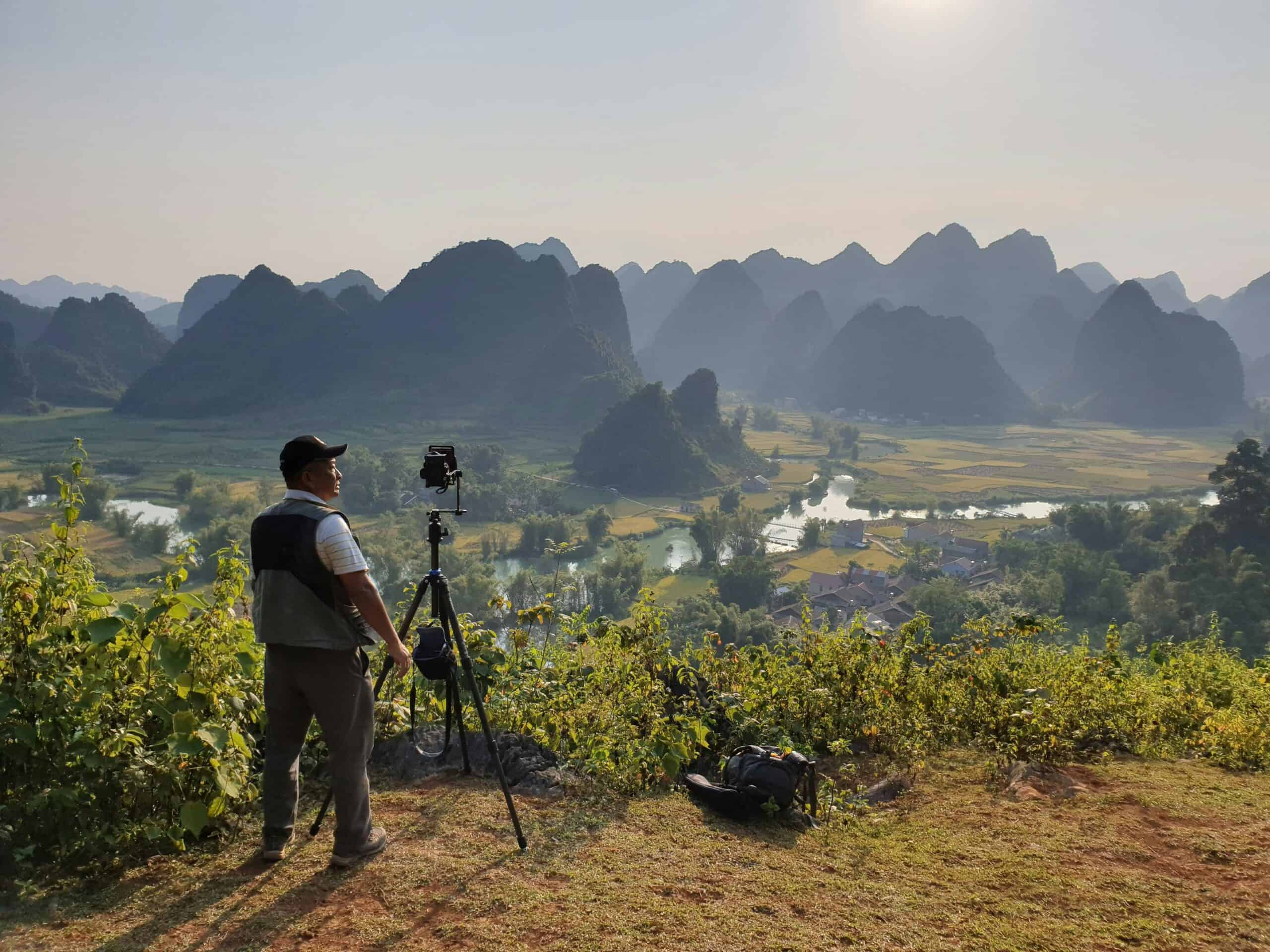
Walk the scene and identify lighting extremes, moving subjects, reflective surfaces, and wind. For interiors with glass or mirrors, minimize angles that show your tripod or yourself, and keep the lens a safe distance from glass (15–30 cm or more) to reduce flare and ghosting. For outdoor sunsets or cityscapes, look for shadow directions and consider the sun’s position relative to the fisheye to manage flare.
Match Gear to Scene Goals
The 5D Mark IV’s RAW flexibility and approximately 13.5 EV of dynamic range at ISO 100 help in scenes with bright windows and deep shadows. Indoors, it’s safe to work from ISO 100–800 with minimal noise; ISO 1600–3200 remains usable if needed, especially with noise reduction. The EF 8–15mm fisheye drastically reduces the number of shots needed for a full sphere, speeding up capture in dynamic environments (events, streets) and reducing inconsistencies across frames. Be mindful: fisheye projection exaggerates edges; keep critical straight lines away from frame borders when possible.
Pre-shoot Checklist
- Charge batteries; bring spares. Format fast, reliable memory cards.
- Clean the front element and sensor; fisheye lenses show dust and smudges easily.
- Level your tripod and verify panoramic head calibration (nodal/entrance pupil alignment).
- Safety first: evaluate wind, edges (rooftops), and vibration risks. Use a tether/leash on poles or car mounts.
- Backup workflow: shoot a second pass if time allows (especially indoors) to cover stitching gaps or moving subjects.
Essential Gear & Setup
Core Gear
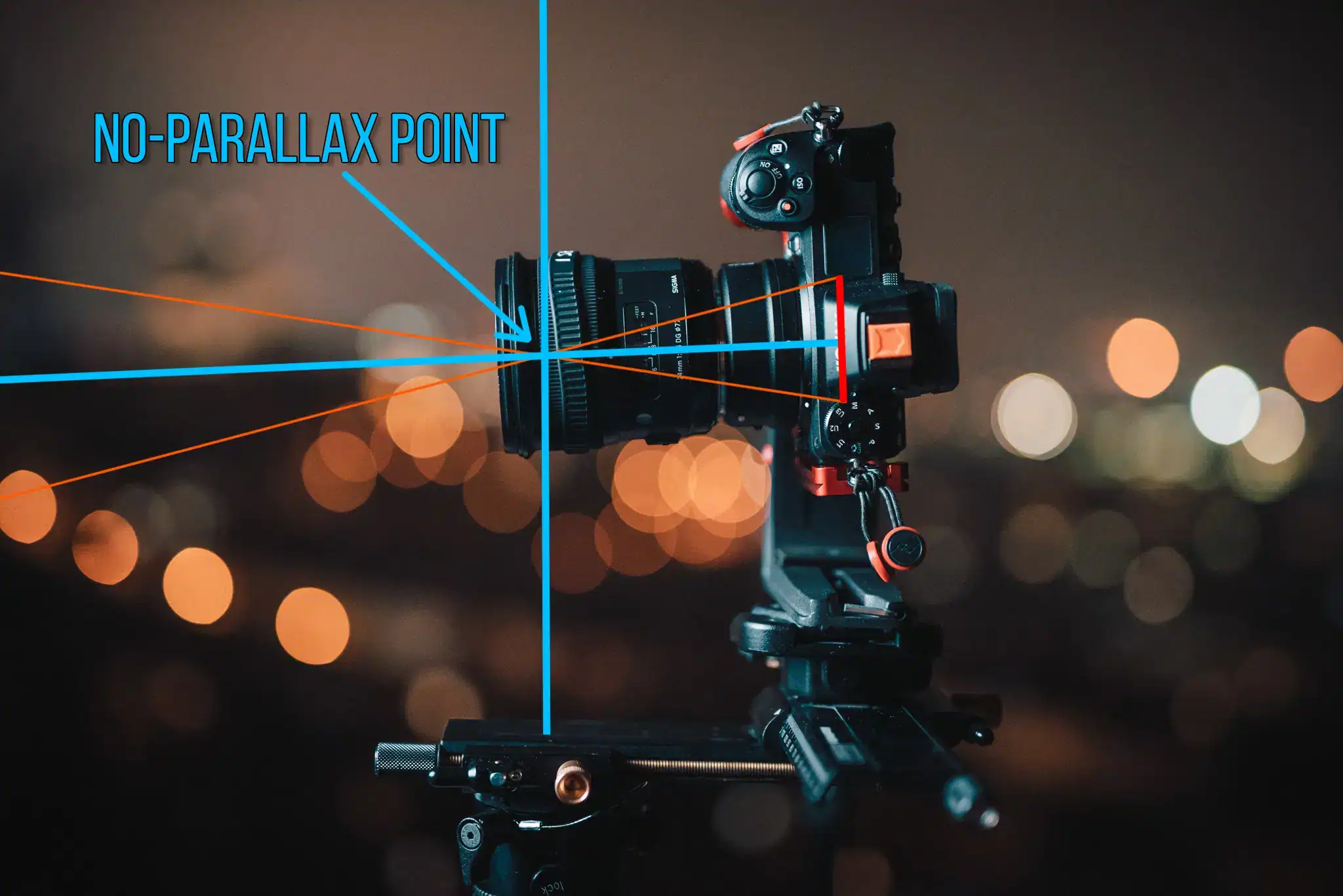
- Panoramic head: Critical for aligning rotation around the lens’s entrance pupil (no-parallax point) to eliminate parallax between near/far objects. This ensures clean control points and minimal ghosting.
- Stable tripod with a leveling base: Leveling makes yaw increments even and prevents stitching tilt. A bubble level or built-in leveling head helps greatly.
- Remote trigger or Canon Camera Connect app: Trigger without touching the camera. Use Live View or mirror lockup to minimize shutter shock.
Optional Add-ons
- Pole or car mount: Use a safety tether, keep exposures short (raise ISO if needed), and plan for wind. Avoid overextending a pole in gusts.
- Lighting aids: Small LED panels or bounced flash for dim interiors (avoid mixed color temperatures).
- Weather protection: Rain cover for the 5D Mark IV; microfiber cloths for the fisheye front element.
For a deeper primer on panoramic heads and technique, see this practical panoramic head tutorial. Panoramic head fundamentals
Step-by-Step Shooting Guide
Standard Static Scenes
- Level the tripod and align the nodal point. Use a nodal rail: set the camera in landscape orientation on your panoramic head. Place two vertical objects (one near, one far) in overlap; rotate left/right and adjust the rail until there’s no relative shift. Mark the rail positions for 8mm and for 15mm on tape for quick recall.
- Set manual exposure and lock white balance. Meter for the mid-tones (try ISO 100–200, f/8, adjust shutter). Lock WB to Daylight, Tungsten, or Kelvin for consistency across frames.
- Capture the series with consistent yaw increments. For 8mm circular: 4 around at 90°. For 15mm: 6–8 around at 45–60°. Use Live View, 2s self-timer or remote, and avoid touching the rig.
- Take a nadir shot (point down). Tilt the head straight down and capture the floor/ground for tripod removal. If ceilings are special (domes), also capture a zenith shot (point up).
HDR / High Dynamic Range Interiors
- Bracket ±2 EV. The 5D Mark IV’s AEB supports 2–7 frames; a common set is 3 frames at -2/0/+2 EV or 5 frames at 1 EV steps for bright windows.
- Lock WB and keep aperture constant (f/8). Vary shutter speed only. Disable Long Exposure NR to keep cadence steady; do noise reduction later on merged HDRs or on stitched output.
Low-Light / Night Scenes
- Use a sturdy tripod and remote. Start at f/4–f/5.6, ISO 200–800, and drag shutter (1/8–1 s). The 5D Mark IV can handle ISO 1600–3200 when necessary, but prioritize clean ISO and longer exposures if the rig is stable.
- Use Live View to avoid mirror shock. For very long exposures, cover the viewfinder to prevent light leaks.
Crowded Events
- Shoot two passes. First pass for coverage; second pass waits for gaps to reduce ghosting. Keep your overlap generous (30–40%).
- In post, mask moving people between passes. If time is short, use 8mm to minimize shot count and finish the rotation quickly.
Special Setups (Pole / Car / Drone)
- Secure the gear with a tether. On a pole, keep the footprint lightweight; consider 8mm to reduce shots/time. On cars, use vibration-damped mounts and shoot at higher shutter speeds.
- Plan for wind and vibrations: increase ISO to keep shutter fast (1/250–1/500) and minimize blur. Rotate slowly and steadily.
Case Studies
Indoor Real Estate
Mount the 5D Mark IV on a leveled panoramic head. At 15mm, shoot 6 around + zenith + nadir at f/8, ISO 100, with a 3-shot HDR bracket of -2/0/+2 EV. Lock WB to a Kelvin value (~3200–4000K) to minimize mixed lighting shifts. This workflow balances window highlights and interior shadows cleanly.
Outdoor Sunset Overlook
Use 8mm to minimize time as light changes quickly. Try ISO 100–200, f/8, adjust shutter for the brightest region to protect highlights, or bracket if the sun is in-frame. Watch for flare; shield the lens with your hand just outside the frame or time the rotation so the sun hits a seam area.
Rooftop / Pole Capture
At 8mm, 4 around + nadir is fast and stable on a pole. Keep ISO 400–800 and shutter 1/250–1/500 to beat wind. Use a safety tether and avoid overhanging edges. Consider a second pass for redundancy if conditions are gusty.
Recommended Settings & Pro Tips
Exposure & Focus
| Scenario | Aperture | Shutter | ISO | Notes |
|---|---|---|---|---|
| Daylight outdoor | f/8–f/11 | 1/100–1/250 | 100–200 | Lock WB (Daylight/Kelvin); shield fisheye from direct sun |
| Low light/night | f/4–f/5.6 | 1/8–1 s (tripod) | 200–800 | Live View, remote trigger; 1600–3200 acceptable if wind/vibration demand speed |
| Interior HDR | f/8 | Bracket ±2 EV | 100–400 | Windows vs. lamps; constant WB and aperture |
| Action / moving subjects | f/5.6–f/8 | 1/200+ | 400–800 | Minimize ghosting; shoot two passes |
Critical Tips
- Manual focus at or near hyperfocal: At 15mm f/8 on full frame, hyperfocal is roughly ~0.95 m. Pre-focus in Live View, then switch AF off to keep focus locked.
- Nodal (no-parallax) calibration: Use a near/far alignment test and mark rail positions for 8mm and 15mm on your head. Recheck if you change focal length.
- White balance lock: Use a fixed Kelvin or a preset; avoid Auto WB to prevent stitching seams from color shifts.
- RAW over JPEG: The 5D Mark IV’s RAW files provide headroom for highlight recovery and color correction—vital for HDR panoramas.
- Stabilization: The EF 8–15 has no IS; the 5D Mark IV has no IBIS. If you ever use an IS lens on a tripod, disable IS to prevent micro-blur.
- Lens hood: Remove it at 8mm to avoid vignetting. At 15mm, you can keep it to reduce flare and protect the front element.
For understanding how focal length and projection affect final resolution and coverage, see this reference on spherical resolution. DSLR spherical resolution explained
Stitching & Post-Processing
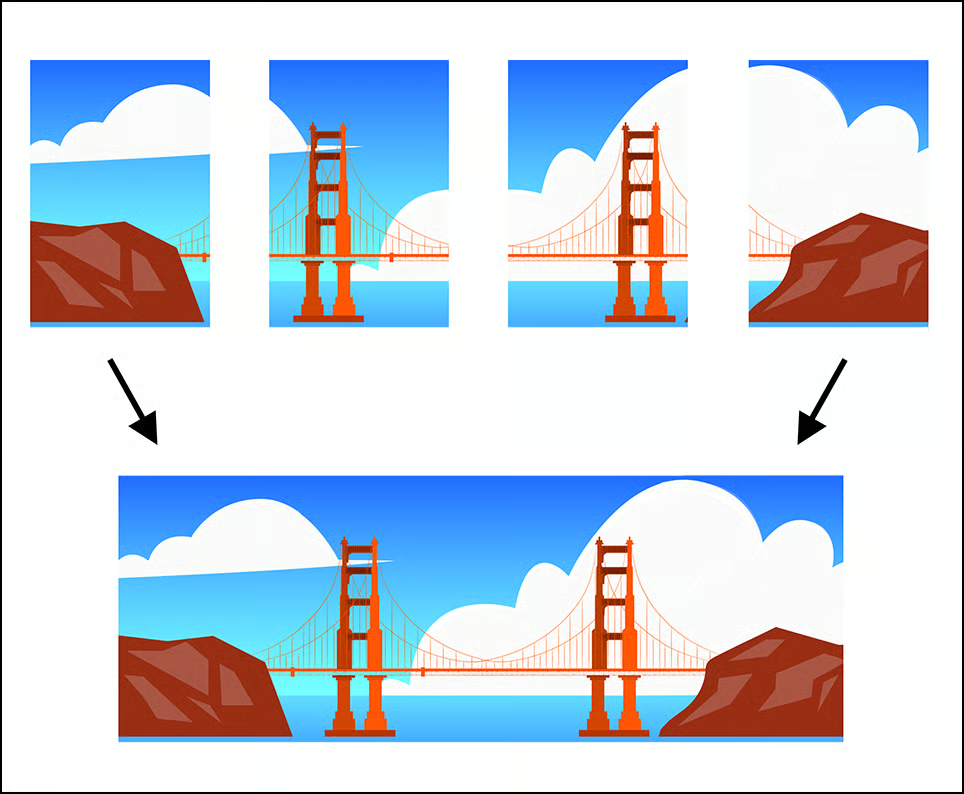
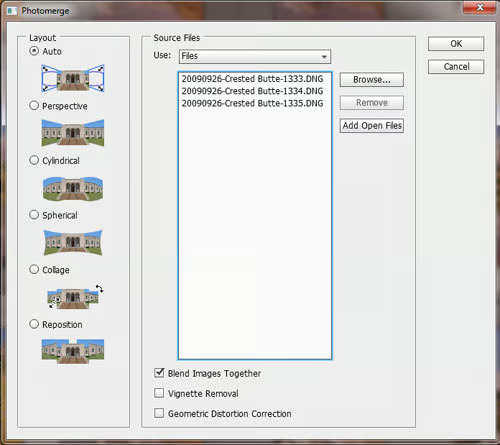
PTGui and Hugin are the go-to tools for stitching fisheye panoramas. With the EF 8–15mm, PTGui typically identifies the fisheye projection automatically; confirm “Fisheye” lens type (circular at 8mm, full-frame at 15mm). Fisheyes need fewer shots and stitch quickly; rectilinear lenses require more frames but are less distorted around edges. A 25–35% overlap is a good target for fisheyes; 20–25% is fine for rectilinear lenses. You can color-match and lens-correct inside PTGui or do it in Lightroom before stitching (for single-exposure sets) or after HDR merges if bracketing.
Software Workflow
- Import frames (or HDR-merged frames) into PTGui/Hugin. For HDR brackets, either let PTGui blend HDR or pre-merge in Lightroom before stitching.
- Confirm lens type: fisheye. For 8mm circular, PTGui uses circular fisheye geometry; for 15mm, use full-frame fisheye. Let it generate control points.
- Optimize and check seams. If you shot a nadir, enable “Viewpoint Correction” (PTGui Pro) for tripod removal.
- Level the horizon and set the center view. Correct roll/pitch/yaw so verticals are straight, especially for interiors.
- Export as 16-bit TIFF or high-quality JPEG equirectangular (2:1). Common outputs: 12000 × 6000 px (12K) or 16000 × 8000 px (16K) depending on your target platform and shot count.
PTGui’s speed and masking tools are helpful for crowds or complex interiors; see this overview. PTGui overview and review
Cleanup & Enhancement
- Nadir patch: Clone out the tripod or use an AI tripod removal tool. If you shot a dedicated nadir, blend with viewpoint correction for a clean floor.
- Color & noise: Correct white balance, apply gentle noise reduction for higher ISO captures, and harmonize tones across the sphere.
- Level and straighten: Ensure the horizon is perfectly level and verticals are upright to avoid a tilted feel in VR.
- Export formats: Equirectangular JPEG for most web/VR players, 16-bit TIFF for archival or further grading.
Recommended video: fundamentals of panoramic head setup and stitching.
For an end-to-end DSLR 360 workflow overview (shoot + stitch + publish), this guide is a helpful reference. DSLR/Mirrorless to 360 photo pipeline
Disclaimer: software evolves. Confirm features and steps in the latest documentation of your chosen app.
Useful Tools & Resources
Software
- PTGui (fast, robust stitching; HDR and masking tools)
- Hugin (open-source panorama stitching)
- Lightroom / Photoshop (RAW processing, HDR merge, cleanup)
- AI tripod removal tools (content-aware fill, generative tools)
Hardware
- Panoramic heads (e.g., Nodal Ninja, Leofoto) with rail markings for 8mm and 15mm positions
- Carbon fiber tripods for stability/weight balance
- Leveling bases for fast setup
- Wireless remote shutters or smartphone trigger
- Pole extensions and car mounts with safety tether
Disclaimer: Brand names are included for search convenience; verify specs and compatibility on official sites.
Common Mistakes & How to Avoid Them
- Parallax error: Always rotate around the entrance pupil. Recalibrate after changing focal length between 8mm and 15mm.
- Exposure flicker: Lock exposure and white balance; avoid Auto ISO and Auto WB across the sequence.
- Tripod shadows/footprint: Shoot a nadir, or plan to patch later.
- Ghosting from movement: Increase overlap, shoot two passes, and mask in PTGui.
- Flare with fisheye: Use your hand/flag just out of frame to block the sun; rotate so the sun falls on a seam.
- Dirty front element: Clean before each series; fisheyes make smudges obvious, especially against skies or windows.
For a concise Q&A on DSLR/virtual tour choices and practices, this field guide is useful. DSLR/Virtual Tour FAQ
Frequently Asked Questions
- Can I shoot handheld panoramas with the Canon EOS 5D Mark IV?
Yes, for simple single-row panoramas outdoors. For full 360 spheres (especially interiors), use a tripod with a panoramic head to avoid parallax. Handheld 360s are possible with 8mm if subjects are distant, but expect more stitching cleanup.
- Is the Canon EF 8–15mm f/4L Fisheye USM wide enough for single-row 360?
At 8mm (circular fisheye), 4 shots around often cover the sphere with a nadir (and optionally a zenith) shot. At 15mm (diagonal/full-frame fisheye), plan 6–8 shots around plus nadir/zenith for reliable overlap.
- Do I need HDR for interiors with bright windows?
Usually yes. The 5D Mark IV has solid dynamic range, but in real estate with bright windows, bracket ±2 EV (3 or 5 frames). Merge HDRs first or let PTGui blend them before stitching.
- How do I avoid parallax issues with this lens?
Use a panoramic head and align the entrance pupil. Calibrate separately for 8mm and 15mm using the near/far object method, then mark your rail so you can repeat it quickly.
- What ISO range is safe on the 5D Mark IV in low light?
For tripod-based panos, try ISO 100–400 first. ISO 800 is generally clean in RAW; 1600–3200 remain usable with good noise reduction. Favor longer exposures over ISO when the rig is stable.
- Can I set Custom Modes (C1/C2/C3) for panoramic shooting?
Yes. Save a “Pano” preset with Manual exposure, fixed WB (Kelvin), RAW, single-shot drive, mirror lockup or Live View, and your preferred bracketing. This speeds up field work.
- How do I reduce flare with a fisheye?
Keep the sun near a seam, shield with your hand or a flag just outside the frame, and consider using the hood at 15mm. Clean the front element religiously.
- What panoramic head features work best for this setup?
A two-axis head with a sliding nodal rail, precise yaw increments (15°/30° detents are handy), and a leveling base. Make sure it supports the 5D Mark IV’s weight securely.
Safety, Field Notes & Real-World Advice
Wind is the enemy of sharp 360s. If you must shoot on a rooftop or with a pole, shorten exposure times by raising ISO, and consider doing two full rotations for redundancy. On reflective floors/glass, step back to control reflections and leave yourself room to patch the nadir. The 5D Mark IV is weather-sealed, but rain can water-spot a fisheye instantly—carry a microfiber and a small umbrella or rain cover. Always tether your camera on poles or car rigs, and keep bystanders at a safe distance while rotating the setup.
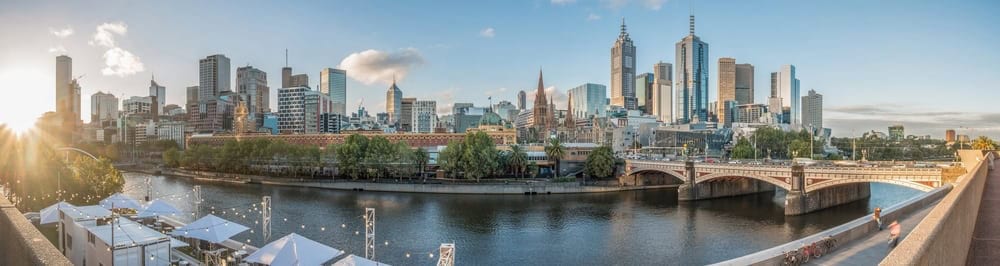
Bonus: Visual Examples
Wrap-Up
If your goal is speed plus quality, learning how to shoot panorama with Canon EOS 5D Mark IV & Canon EF 8–15mm f/4L Fisheye USM is a smart path. Calibrate the entrance pupil once, shoot in manual with fixed white balance, and rely on a consistent capture pattern (4-around at 8mm or 6–8-around at 15mm, plus nadir and zenith). Process in PTGui/Hugin, level the result, and export a high-resolution equirectangular. With this workflow, you’ll be ready for real estate, tourism, events, and VR tours with predictable, professional results.