Why This Camera & Lens Are Great for Panoramas
If you want a reliable, high‑quality workflow for 360° photos, learning how to shoot panorama with Canon EOS 5D Mark IV & AstrHori 12mm f/2.8 Fisheye is a smart move. The 5D Mark IV is a 30.4MP full‑frame DSLR with excellent color science, dependable metering, and robust build quality. Its sensor offers around 13.6 EV of dynamic range at base ISO and a pixel pitch of about 5.36 μm, which gives you solid noise performance up to ISO 1600–3200 when needed. Paired with the AstrHori 12mm f/2.8 diagonal fisheye (full‑frame), you get an expansive ~180° diagonal field of view, enabling fewer shots per sphere and faster capture—especially valuable in changing light or scenes with movement.
The AstrHori 12mm is a manual‑focus fisheye with prominent field curvature and typical fisheye distortion. For spherical panos, the distortion isn’t a problem—stitching software expects it. Edge softness and some chromatic aberration can appear at wider apertures; stopping down to f/5.6–f/8 typically sharpens edges. On the 5D Mark IV (EF mount), make sure you’re using the EF version of the lens. Because this is a DSLR body (no IBIS), tripod stability and a panoramic head are essential for clean stitches and accurate parallax control.
Quick Setup Overview
- Camera: Canon EOS 5D Mark IV — Full Frame, 30.4MP (6720×4480), pixel pitch ~5.36 μm, DR ~13.6 EV at ISO 100.
- Lens: AstrHori 12mm f/2.8 Fisheye — full‑frame diagonal fisheye (~180° diagonally), manual focus, best sharpness around f/5.6–f/8, some edge CA typical for fisheyes.
- Estimated shots & overlap:
- Safe capture: 6 around (every 60°) + 1 zenith + 1 nadir (≈25–30% overlap).
- Speed run: 4 around (every 90°) + zenith + nadir if you tilt up slightly; overlap can be thin—use only in simple scenes.
- HDR interiors: same frames as above, but bracket 3–5 shots, ±2 EV.
- Difficulty: Easy–Medium (manual focus + nodal alignment required).
Planning & On-Site Preparation
Evaluate Shooting Environment
Before you set up, read the scene. Look for moving elements (crowds, cars, flags in wind), high contrast (bright windows vs dark interiors), and reflective surfaces (glass, polished floors). If you’re shooting near glass, keep the front element a few centimeters off the surface and shoot at an angle to reduce reflections and flare. For outdoor sunsets, plan to work quickly so all frames are captured under consistent light.
Match Gear to Scene Goals
The 5D Mark IV’s dynamic range and color depth help with interiors and sunsets. It handles ISO 100–800 cleanly; ISO 1600–3200 is still usable with good noise reduction. The AstrHori 12mm fisheye means fewer frames, which reduces ghosting in changing scenes. The trade‑off is fisheye distortion and some edge softness—fine for spherical panos, but be cautious if you plan rectilinear crops. For real estate, the fewer‑shots advantage speeds capture between rooms; for outdoor skyline panos it helps beat waving trees and tourists.
Pre-shoot Checklist
- Charge batteries and carry spares; format fast UHS‑I CF/SD cards; clean front/rear elements and your sensor.
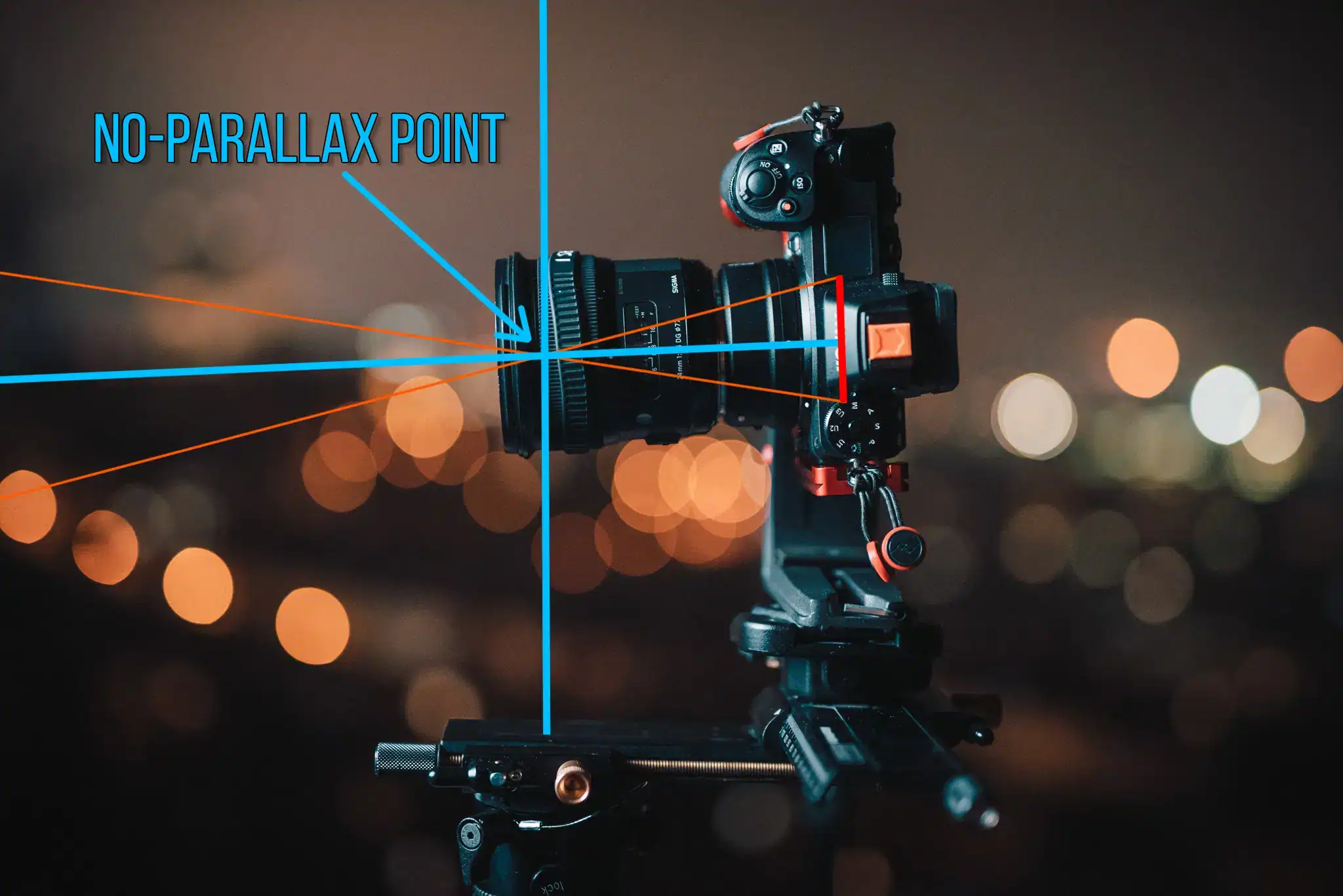
- Level your tripod, confirm the panoramic head is calibrated to the lens’s no‑parallax point (entrance pupil).
- Safety: weigh down the tripod in wind; use a safety tether on rooftops or when using a pole; avoid car mounts on unsafe roads.
- Backup workflow: capture a second pass if time allows; consider a quick extra nadir frame for easier tripod removal.
Essential Gear & Setup
Core Gear
- Panoramic head: Align the rotation axes with the lens’s entrance pupil to eliminate parallax when foreground and background overlap. This is crucial for perfect stitches in tight interiors and scenes with near objects.
- Stable tripod with leveling base: A leveling base speeds your setup and keeps rotations in a flat plane, reducing horizon fixes later.
- Remote trigger or app: Use a cable release or 2s timer to prevent vibration. Mirror lockup can help on long exposures.
Optional Add-ons
- Pole or car mount: Great for crowds and elevated perspectives. Use a guy line or tether; watch wind loads. Slow your rotation to mitigate vibration blur.
- Lighting aids: Small LED panels for dark corners in interiors; keep color temperature consistent to avoid WB headaches.
- Weather protection: Rain covers, silica packs, and a microfiber kit for mist and sea spray.
Step-by-Step Shooting Guide
Standard Static Scenes
- Level tripod & align nodal point: On the 5D Mark IV + AstrHori 12mm, a good starting entrance pupil position is roughly a few centimeters behind the front element (often around 35–45 mm), but always fine‑tune by aligning a near/ far object and rotating to check for parallax shift. Mark this position on your rail for repeatability.
- Manual exposure & locked white balance: Set M mode. Meter the midtones and choose an exposure that protects highlights (especially outdoors). Set WB to Daylight (sun), Cloudy, or Kelvin; avoid Auto WB to keep color consistent across frames.
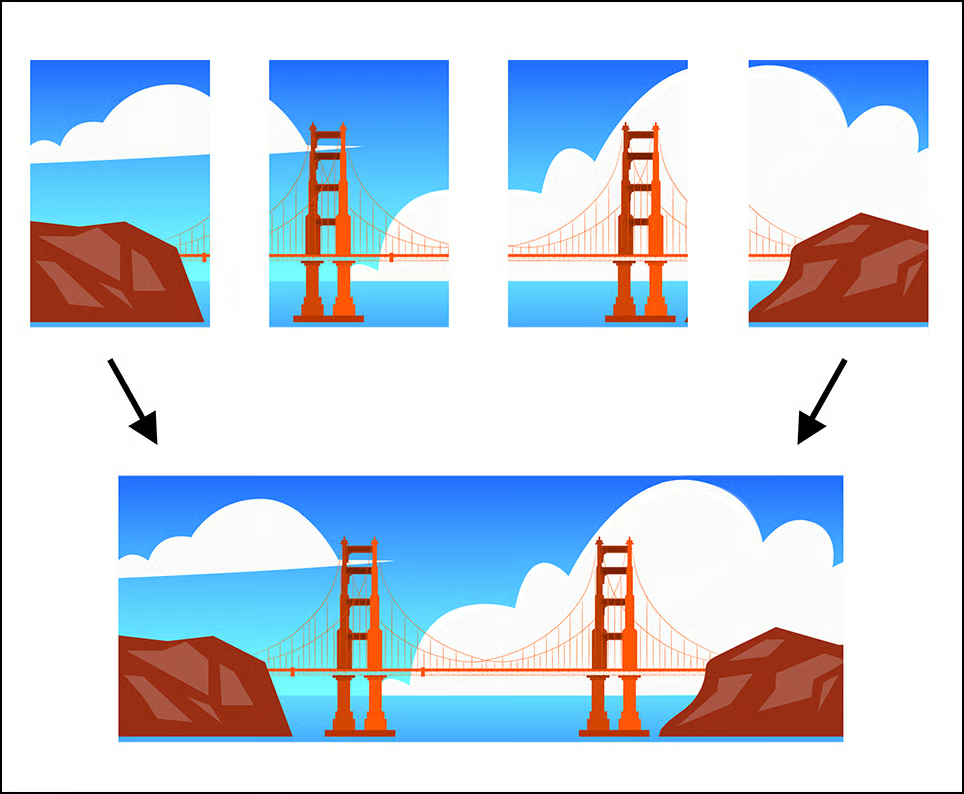
- Capture the round: With this 12mm fisheye, take 6 shots around at every 60° with 25–30% overlap. Keep the horizon centered. Then shoot 1 zenith (tilt up 90°) and 1 nadir (tilt down 90°) for a full sphere.
- Nadir cleanup: Move the tripod slightly and shoot a handheld nadir frame, or shoot a separate nadir with the rig shifted to ease tripod removal in post.
HDR / High Dynamic Range Interiors
- Bracket exposures: Use ±2 EV, 3–5 frames per view depending on window brightness. Keep shutter speed variable and ISO/Aperture locked.
- Consistent WB: Keep WB fixed across brackets; mixing will cause color shifts that complicate stitching and blending.
- De‑ghost strategy: For moving curtains or people, capture an extra neutral exposure per view to mask in post if needed.
Low-Light / Night Scenes
- Long exposure: Shoot at f/4–f/5.6 and use shutter speeds in the 1/8–2s range if needed. The 5D Mark IV is clean at ISO 100–800; ISO 1600–3200 is acceptable with careful noise reduction.
- Stability: Use a remote, 2s timer, or mirror lockup. Turn Long Exposure NR off in camera (do it later in post to avoid doubling capture time).
- Avoid bright light sources in frame edges: With fisheyes, strong oblique light can flare; shade with your hand or re‑angle slightly.
Crowded Events
- Two passes: First, shoot a fast set to lock in exposure and coverage. Second, wait for gaps in traffic for critical frames you’ll use to patch moving elements.
- Higher shutter speeds: Aim for 1/200–1/500s at f/5.6–f/8 and ISO 400–800 to freeze people. Capture extras at frames where motion is problematic.
- Mask in post: Use PTGui’s masking or a pixel editor to select the cleanest people positions.
Special Setups (Pole / Car / Drone)
- Pole work: Secure the camera with a safety tether, keep the pole vertical, and rotate slowly to minimize wobble. Use the 6‑around pattern; avoid long shutter speeds in wind.
- Car mounts: Tighten all clamps, use vibration dampers, and stop down to f/8 with 1/250s+ shutter to beat vibration blur. Scout safe, legal locations.
- Drone note: The 5D Mark IV is too heavy for typical drones; use a drone‑specific workflow instead.
Recommended Settings & Pro Tips
Exposure & Focus
| Scenario | Aperture | Shutter | ISO | Notes |
|---|---|---|---|---|
| Daylight outdoor | f/8–f/11 | 1/100–1/250 | 100–200 | Lock WB (Daylight/5200–5600K) |
| Low light/night | f/4–f/5.6 | 1/8–1/60 (tripod) | 100–800 (1600–3200 if needed) | Use remote; consider mirror lockup |
| Interior HDR | f/8 | Bracket ±2 EV (3–5 frames) | 100–400 | Protect window highlights |
| Action / moving people | f/5.6–f/8 | 1/200+ | 400–800 | Freeze motion; shoot extra frames for masking |
Critical Tips
- Manual focus: Pre‑focus at or near the hyperfocal distance. On a 12mm at f/8, focusing ~0.7–1 m keeps near to infinity sharp. Tape the focus ring.
- Nodal point calibration: Start with the entrance pupil approximately 35–45 mm behind the front element; fine‑tune using a near/far alignment test. Mark the rail for quick setup.
- White balance lock: Use preset or Kelvin; mixing WB across frames creates stitching seams and color shifts.
- RAW first: 14‑bit RAW gives you DR and WB flexibility. JPEG is fine for quick work but limits recovery.
- Stabilization: The 5D Mark IV has no IBIS; the AstrHori lens has no IS. If you swap to an IS lens, turn IS off on a tripod to avoid micro‑jitters.
Stitching & Post-Processing
Software Workflow
For this fisheye workflow, PTGui and Hugin are industry standards. Import all frames, set lens type to “full‑frame fisheye,” and ensure the horizontal FOV is correct (~180° diagonal, the software will estimate). Use 25–30% overlap around and include zenith/nadir frames. Fisheye shots generally stitch faster and more consistently than rectilinear ultrawides because coverage is broader with fewer frames. For comparison, rectilinear lenses often require more shots and stricter overlap management. After stitching, output an equirectangular projection (2:1) for VR or virtual tour platforms.
PTGui offers robust control point generation, masking, HDR fusion, and exposure matching. Hugin is powerful and free, with a steeper learning curve. For quick color edits, Lightroom or Photoshop works well after you export the stitched pano. After you’re comfortable, create PTGui templates for this exact body/lens to speed up future jobs. For a hands‑on review of PTGui’s capabilities, see this overview at the end of this paragraph. PTGui reviewed on Fstoppers
Cleanup & Enhancement
- Nadir patch: Use PTGui’s Viewpoint correction or clone in Photoshop. Keep a clean handheld nadir shot to make patching effortless.
- Color correction: Apply WB and contrast globally first. Use local adjustments only after the stitch to avoid seams.
- Noise reduction: Apply luminance NR sparingly; mask the sky and midtones separately if needed.
- Level horizon: In PTGui, set pitch/roll/yaw so verticals are straight and the horizon is level. Re-project if necessary.
- Export: 8K–16K equirectangular JPEG/TIFF for VR; consider 16‑bit TIFF masters for archival quality.
Want a structured primer on setting up a panoramic head and stitch flow? This Oculus Creator guide explains a professional DSLR workflow. Set up a panoramic head for high‑end 360 photos
Useful Tools & Resources
Software
- PTGui panorama stitching
- Hugin open source
- Lightroom / Photoshop
- AI tripod/nadir removal tools
Hardware
- Panoramic heads: Nodal Ninja, Leofoto, or equivalent rail systems
- Carbon fiber tripods for stability vs weight
- Leveling bases (half-ball or 3‑way leveling)
- Wireless shutter or intervalometer
- Pole extensions / car suction mounts with tethers
For a deeper understanding of entrance pupil alignment and pano fundamentals, this tutorial is a respected reference. Panoramic head tutorial on 360Rumors
Common Mistakes & How to Avoid Them
- Parallax error → Always calibrate the nodal point; keep the camera rotating around the entrance pupil.
- Exposure flicker → Use manual exposure and locked WB; avoid Auto ISO unless you fully understand its behavior.
- Tripod shadows/footprints → Shoot a clean nadir or plan a patch in post.
- Ghosting from motion → Shoot a quick second pass; use masking/de‑ghosting in PTGui.
- Night noise and blur → Keep ISO modest (100–800 if possible), use longer shutters and a stable rig; avoid touching the camera.
- Lens flare → Shade the front element between frames; avoid shooting directly into bright lights at oblique angles.
Real-World Case Studies
Indoor Real Estate (Bright Windows)
Use the 6‑around + zenith + nadir workflow. Set f/8, ISO 100–200, and bracket ±2 EV (3–5 frames). Lock WB to 5000–5600K if the property uses daylight LEDs; otherwise pick a fixed Kelvin that matches most lights and correct mixed lighting in post. The 5D Mark IV files handle highlight recovery well—expose so windows retain detail, then lift shadows in HDR fusion.
Outdoor Sunset Skyline
Work quickly: light changes every minute. Shoot a single exposure per frame at ISO 100, f/8, 1/125–1/250s. If the sun is inside a frame, add one darker exposure for safety. Expect flare on a fisheye—use your hand as a flag off‑frame. Use PTGui to equalize exposure across the round.
Crowded Event
Go for 6‑around at f/5.6, 1/250s, ISO 400–800. Capture extra frames where people overlap. Mask later to choose clean subjects. A monopod or compact tripod helps mobility while keeping a rotating head.
Rooftop / Pole Shooting
On a pole, keep shutter speed higher (1/250–1/500s) even at ISO 800–1600. Tether the gear, mind wind, and rotate gently. You’ll trade some noise for sharpness—better than motion blur. Keep your overlap ≥30% to help the stitcher cope with small pole wobbles. For a step‑by‑step DSLR pano overview, this guide is useful context. Using a DSLR to shoot and stitch a 360 photo
Frequently Asked Questions
-
Can I shoot handheld panoramas with the 5D Mark IV?
Yes for simple cylindrical panos; for full 360×180° spheres, handheld with a fisheye is possible but risky due to parallax and inconsistent pitch/roll. For professional results, use a tripod and panoramic head.
-
Is the AstrHori 12mm wide enough for a single‑row 360?
Yes. A 12mm full‑frame fisheye typically needs 6 shots around plus zenith and nadir. Some scenes allow 4 around if you tilt up slightly, but overlap can be thin.
-
Do I need HDR for interiors with bright windows?
Usually. Bracket ±2 EV with 3–5 frames. The 5D Mark IV has solid DR, but window‑bright scenes benefit from HDR fusion to avoid blown highlights and muddy shadows.
-
How do I avoid parallax issues?
Calibrate the entrance pupil on your panoramic head. Use a near/far alignment test and set the rotation axes to pass through that point. Mark your rail so you can repeat it quickly next time.
-
What ISO range is safe on this camera in low light?
For top quality, aim for ISO 100–800 on a tripod. ISO 1600–3200 remains usable with careful noise reduction. Expose to protect highlights and extend shutter speed instead of pushing ISO.
Safety, Reliability & Backup Workflow
On rooftops or poles, always tether the camera and keep bystanders clear. In wind, hang weight from the tripod and lower leg sections first. Keep a microfiber cloth handy for the fisheye’s large front element. After each sequence, review a few frames to confirm sharpness and overlap. Back up in the field to a second card or portable SSD. For client work, shoot a full second pass if time allows—backup coverage saves reshoots.